
Kentucky Ranks Fifth Most Dangerous for Left Turns: Road Trip Safety and Driving Guide

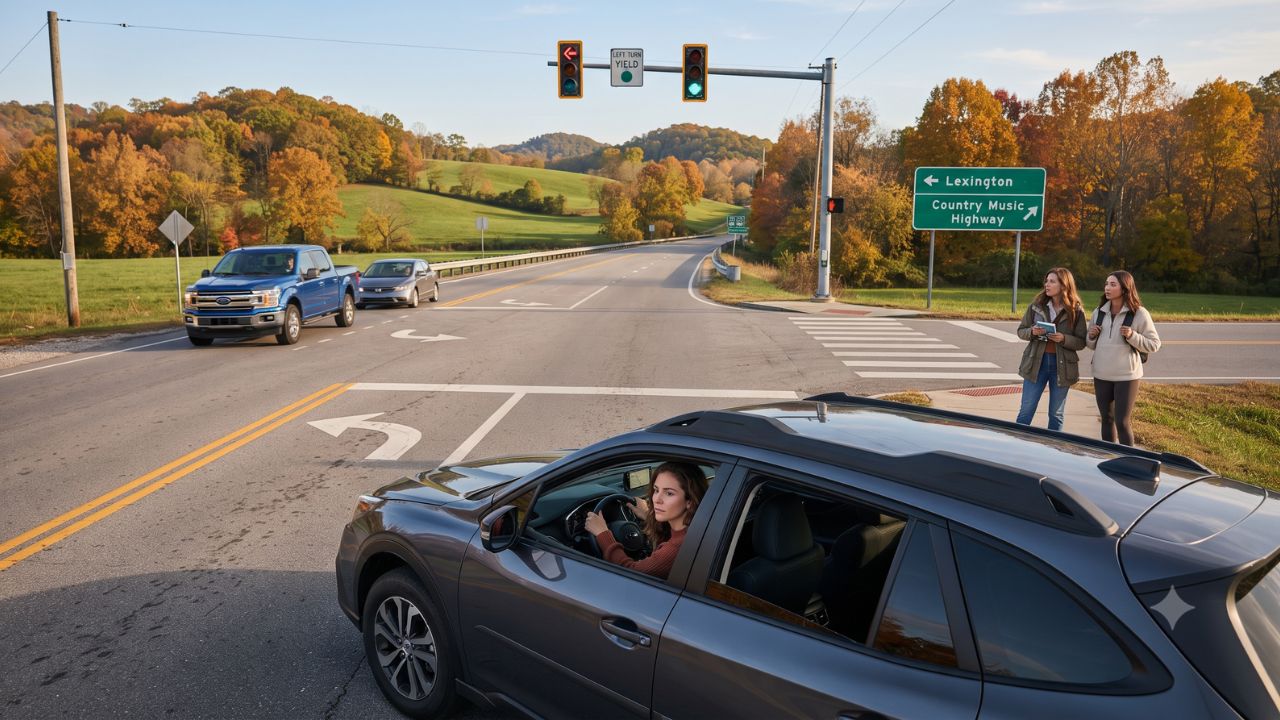
Despite Kentucky's reputation for pastoral horse farms and peaceful country lanes, executing a left turn across its roadways ranks among the most hazardous maneuvers in the United States. Federal crash records indicate that left-turning drivers in the Commonwealth become involved in fatal collisions at a rate roughly 60 percent higher than the national benchmark, while distracted left-turn incidents exceed the countrywide norm by an alarming 7.8 times.
For travelers journeying between Louisville's historic urban districts, the equine estates of Lexington, and the deep caverns of Mammoth Cave National Park, road trips represent the quintessential way to experience Kentucky. Yet a comprehensive road safety study released by personal injury firm Sweet James highlights severe intersection vulnerabilities that every self-drive visitor must understand before setting out.
Analyzing records from the National Highway Traffic Safety Administration's (NHTSA) Fatality Analysis Reporting System (FARS) between 2020 and 2024, the investigation evaluated all 50 states and Washington, D.C., across 11 specific risk factors. Kentucky received an overall Left Turn Fatal Crash Risk Index score of 56.68 out of 100, ranking fifth nationally behind Arizona, Florida, Delaware, and South Carolina.
Federal Crash Records Reveal Elevated Intersection Risks Across the Bluegrass State
Kentucky registered 9.73 left-turning drivers involved in fatal crashes per 100,000 residents aged 15 and older, significantly above the national baseline of 6.10. The state's fifth-place position stems from a dangerous convergence of driver inattention and roadway geometry. In the category of distracted driving, Kentucky posted a rate of 3.06 distracted left-turning motorists involved in fatal wrecks per 100,000 residents aged 15 and older. This was the second-highest rate in the nation, trailing only Louisiana's 3.09 and towering over the national average of just 0.39.
Senior motorists face disproportionate exposure at Kentucky junctions. Across the country, drivers aged 75 and older registered the highest rate of fatal left-turn collisions of any demographic group. In Kentucky, that metric climbed to 24.98 per 100,000 residents aged 75 and older, the second-highest tally in the United States behind South Carolina at 25.68, with Florida placing third at 22.19. The analysis additionally positioned Kentucky among the top 10 states for hit-and-run occurrences connected to fatal left-turn collisions.
Nationally, turning left across oncoming traffic represents an inherently demanding driving action. Sweet James researchers calculated that left-turning motorists were involved in fatal crashes at 14.37 times the rate of right-turning drivers during the five-year study window. This aligns with earlier NHTSA studies showing that turning left was the critical pre-crash event in 22.2 percent of intersection collisions, compared to a mere 1.2 percent involving right turns.
Left-Turn Fatal Crash Risk Index: Top 10 State Rankings
The Sweet James composite index synthesizes multiple risk indicators, illustrating that elevated left-turn dangers cluster heavily across southern and southwestern travel corridors.
| National Rank | State | Risk Index Score (out of 100) | Fatal Left-Turn Rate per 100K Residents (Age 15+) | Notable Risk Characteristic |
|---|---|---|---|---|
| 1 | Arizona | 74.27 | 12.47 | Highest overall composite risk index in the US |
| 2 | Florida | 70.50 | 12.93 | Highest direct fatal left-turn involvement rate |
| 3 | Delaware | 59.95 | 10.15 | Elevated junction density and corridor congestion |
| 4 | South Carolina | 59.47 | 11.84 | Highest senior driver fatality rate (25.68 per 100K) |
| 5 | Kentucky | 56.68 | 9.73 | Distracted left-turn rate 7.8 times national norm |
| 6 | Nevada | 52.22 | 8.60 | High-speed suburban arterial intersections |
| 7 | Mississippi | 49.01 | 10.10 | Rural highway crossings with limited signalization |
| 8 | Louisiana | 48.37 | 7.67 | Highest distracted left-turn rate in nation (3.09) |
| 9 | Tennessee | 48.03 | 9.17 | Mountain pass junctions and urban sprawl |
| 10 | New Mexico | 47.50 | 9.51 | High-speed multi-lane rural highway intersections |
Why Kentucky Byways Challenge Road Trippers: Topography, Distilleries, and Unsignalized Crossroads
Exploring Kentucky by car is an incomparable American journey, yet the physical terrain often conceals hazards from unfamiliar drivers. The Kentucky Bourbon Trail connects heritage distilleries scattered across rolling hills, limestone creek beds, and rural counties between Bardstown, Frankfort, and Lawrenceburg. Many of these routes, such as McCracken Pike near Millville or Glenns Creek Road, feature two-lane asphalt ribbons framed by historic dry-stone rock fences, narrow shoulders, and sudden crests.
When vacationers travel at 45 to 55 miles per hour along rural highways like US-60, US-68, or US-127, identifying distillery entrances or scenic pull-offs requires split-second judgment. A driver glancing down at a smartphone GPS display while attempting an unprotected left turn across opposing traffic faces blind dips where oncoming vehicles can appear in seconds.
Engineering differences compound this vulnerability. While modern suburban avenues utilize dedicated turn bays, rural Kentucky crossroads frequently feature unsignalized two-way stops where highway traffic moves without pausing. Judging closing speeds of approaching pickup trucks, farm equipment, and tractor-trailers across high-speed lanes demands complete focus and patience.
Visitor Insider Tips: Navigating the Bourbon Trail and Scenic Byways Safely
- Adopt the Right-Turn Loop Strategy: When leaving popular distilleries or rural dining spots along high-speed two-lane corridors like US-60 or the Bluegrass Parkway feeder roads, avoid cutting across two lanes of oncoming traffic from an unsignalized driveway. Turn right with the flow of traffic, proceed half a mile to a roundabout or signalized junction, and complete a legal turnaround.
- Master Daylight Transitions: With daylight saving time concluding on 1 November 2026, sunset shifts abruptly to approximately 17:15 across central Kentucky. Twilight arrives rapidly in deep hollows and forested ridges. Complete distillery visits and rural drives before 16:30 to avoid navigating unlit country curves in total darkness.
- Pre-Set Navigation Before Driving: Mobile coverage drops intermittently in the limestone valleys surrounding the Kentucky River and around Mammoth Cave. Download offline regional maps on your phone prior to leaving Louisville or Lexington so you are never fumbling with dashboard screens mid-drive. Official itinerary maps can be previewed directly at Kentucky Tourism.
- Yield to Agricultural Equipment: In Woodford, Bourbon, and Nelson counties, horse trailers and combine harvesters share narrow country lanes. Never attempt an aggressive left pass around slow-moving machinery near side roads or farm gates, as operators frequently turn left into unmarked fields.
- Plan Strategic Meal Breaks: Take daytime pauses in historic downtown centers rather than roadside convenience stops. The shaded squares of Bardstown, Midway, and Harrodsburg offer exceptional regional fare, including hot browns, country ham biscuits, and burgoo, allowing drivers to rest and recharge.
Preserving Rural Heritage While Modernizing Highway Infrastructure
Transportation safety in Kentucky intersects directly with cultural preservation. State transportation planners face the delicate challenge of making crossroads safer without demolishing the historic features that define the Bluegrass region. Widening roads often threatens hand-laid 19th-century limestone fences, heritage bur oak canopies, and historic farm boundaries.
Safety countermeasures recognized by the Federal Highway Administration offer effective solutions. Federal research confirms that installing dedicated left-turn lanes can decrease total intersection crashes by 28 to 48 percent depending on road configurations. Introducing protected left-turn green arrows, high-visibility reflective striping, and roundabout conversions at accident-prone rural crossroads allows communities to enhance safety while protecting the rural character that draws travelers from around the globe.
For visiting drivers, awareness is the ultimate safety tool. Approaching Kentucky's scenic routes with respect for local rhythms, avoiding dashboard distractions, and exercising patience at every junction ensures that your journey through bourbon country remains memorable for all the right reasons.
FAQ: Visiting Kentucky by Road 2026
Why does Kentucky rank so high for left-turn crash risk?
Kentucky ranked fifth nationally due to a fatal left-turn crash rate of 9.73 per 100,000 residents aged 15+, alongside a distracted driving involvement rate 7.8 times higher than the national average.
How does older driver safety factor into Kentucky's ranking?
Drivers aged 75 and older in Kentucky recorded 24.98 fatal left-turn crash involvements per 100,000 residents, the second-highest rate in the nation, trailing only South Carolina at 25.68.
What driving precautions should Bourbon Trail visitors take?
Travelers should set GPS routes before departing, avoid making unprotected left turns across high-speed rural highways, complete journeys before early autumn sunsets, and watch for slow agricultural machinery on two-lane roads.
How effective are dedicated left-turn lanes in preventing crashes?
Federal Highway Administration research shows that properly designed dedicated left-turn lanes reduce total collisions by 28 to 48 percent by separating turning vehicles from through traffic.
Taking the extra minute to turn right and loop back protects both the historic charm of Kentucky's country roads and the travelers who come to cherish them.
Related Travel Guides
Disclaimer
This article is for informational and educational purposes only. It does not constitute legal, financial, or professional advice. While we strive to provide accurate and up-to-date information, travel policies, regulations, and conditions change rapidly. Always verify information with official sources before making travel decisions. Nomad Lawyer makes no representations about the accuracy, reliability, completeness, or suitability of the information provided. Readers should consult qualified professionals for advice specific to their circumstances. The views expressed in this article are those of the author and do not necessarily reflect the views of Nomad Lawyer.
Raushan Kumar
Founder & Lead Developer
Full-stack developer with 11+ years of experience and a passionate traveller. Raushan built Nomad Lawyer from the ground up with a vision to create the best travel and law experience on the web.
Learn more about our team →