
Wildfires Shut Down Amtrak Routes in Florida, Stranding Hundreds
A 2,700-acre wildfire near Jacksonville forces wildfires shut down major Amtrak corridors in 2026, leaving hundreds of passengers stranded across Northeast Florida's busiest rail network.

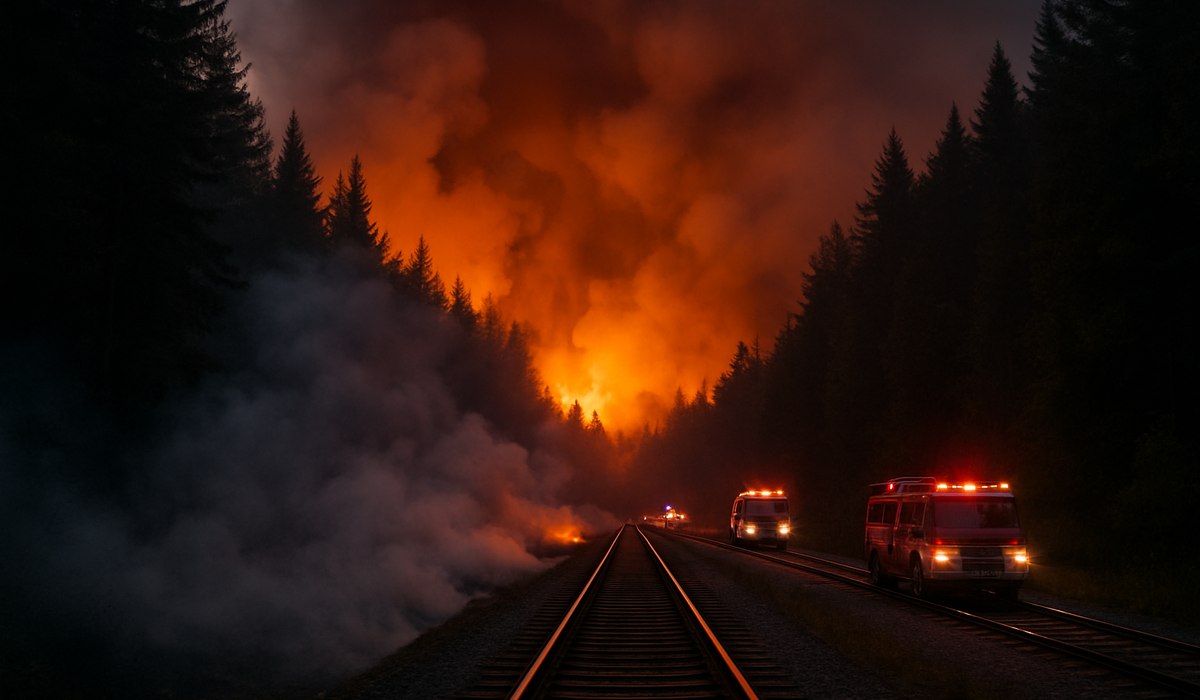
Image generated by AI
Critical Service Disruption Along Florida's Northeast Corridor
A rapidly expanding 2,700-acre wildfire straddling the Clay and Putnam County line south of Jacksonville has forced unprecedented rail service disruptions across Florida's most heavily traveled Amtrak corridor. The fire's intersection with critical track infrastructure prompted emergency shutdown of passenger rail movements, leaving hundreds of travelers stranded aboard stationary trains for extended periods. As firefighting crews prioritize flame containment and smoke management, rail dispatchers have halted service, canceled major routes, and implemented emergency rerouting protocols across multiple long-distance corridors serving the Southeast and Northeast.
Wildfire Intersects Critical Amtrak Infrastructure
The wildfire burning across both sides of the active rail corridor has created an unprecedented operational crisis for passenger rail service. Dense smoke and low visibility conditions have rendered rail passage unsafe for passenger trains, while firefighting crews require unobstructed access to tracks for equipment staging and containment operations. Regional fire management agencies coordinated with Amtrak dispatchers to implement the shutdown, prioritizing firefighter safety and flame suppression over rail operations. The combination of shifting wind conditions, rapidly advancing fire behavior, and active emergency response activity has created a constantly evolving operational environment where train movements cannot be safely resumed without clearance from incident command. As conditions remain volatile, rail service across the corridor remains suspended indefinitely, pending significant reduction in wildfire threat levels and restoration of clear track conditions.
Real-Time Operational Challenges and Passenger Impact
Passengers aboard the Silver Meteor service departing Miami for New York on Sunday experienced extended stranding, with trains held stationary in the wildfire zone for more than 24 hours before being ordered to reverse course back to South Florida. One train that departed Miami reached its turnaround point only after accumulating over 30 hours of total journey time, forcing passengers to arrange alternative accommodations and reschedule critical connections. Another northbound service scheduled between Orlando and New York stalled for 18+ hours while rail operations remained suspended ahead. Travelers reported limited access to food service, minimal opportunities for disembarkation along the right-of-way, and insufficient real-time communication regarding expected movement or revised arrival windows. Families traveling with children and passengers with medical conditions faced particular hardship during extended delays, while social media accounts documented widespread frustration and uncertainty about reaching final destinations on schedule.
Coordination Between Fire Management and Rail Dispatch
Amtrak's Operations Center coordinated directly with Clay and Putnam County fire management agencies to establish safe passage protocols for remaining train movements. Dispatchers now monitor real-time fire behavior data and shifting wind patterns before authorizing any train advancement through the affected zone. Train-by-train authorization replaced standard scheduling protocols, with each movement evaluated based on current firefighting activity and smoke conditions. Fire crews established equipment staging areas along the rail corridor, requiring rail traffic to remain suspended until critical suppression operations advance sufficiently to permit safe rail passage. This unprecedented level of emergency coordination reflects the severity of the wildfire threat and underscores the fundamental incompatibility between active firefighting operations and passenger rail movements in affected areas.
How to Book the Best Fare on Amtrak Routes
When rail service resumes along Florida's Northeast Corridor, advance booking through Amtrak's official website typically offers the lowest available fares, particularly for fixed-date travel beyond the immediate recovery window. Flexible travelers should consider booking mid-week departures rather than weekend services, which command premium pricing during high-demand seasons. Visit Trainline for comparison shopping across rail operators and bundled travel packages that may include hotel accommodations offsetting any price differences. Booking directly through Amtrak's website ensures access to immediate customer service should disruptions occur again, though third-party platforms frequently offer promotional discounts for new customers. Rail pass holders should verify that their passes remain valid for rerouted services and confirm seat reservations align with revised departure schedules.
What Travelers Should Know
Passengers currently booked on affected routes between Miami, Jacksonville, and points north must take immediate action:
-
Monitor Amtrak service alerts daily by checking Amtrak.com and confirming your specific train's operational status before traveling to the station.
-
Contact Amtrak customer service at 1-800-USA-RAIL to understand rerouting options, alternative departure dates, or full refund eligibility for canceled trains.
-
Arrange backup transportation (flights or rental cars) for time-sensitive connections, as rail service resumption timeline remains uncertain during active wildfire suppression operations.
-
Document all delays and expenses for potential reimbursement claims, including hotel stays, meal costs, and ground transportation required due to Amtrak service interruptions.
-
Reschedule non-essential travel to dates well beyond announced fire containment timelines to avoid additional disruption risk during the recovery period.
Critical Service Changes Summary
| Route Name | Normal Route | Current Status | Passenger Accommodations |
|---|---|---|---|
| Silver Meteor | Miami–New York | Starting Jacksonville; select trips canceled | Bus bridge Miami–Jacksonville |
| Silver Star | Tampa–New York | Suspended through Florida | Refund or rebooking available |
| Auto Train | Sanford–Lorton, VA | Canceled indefinitely | Full refund or $200 travel credit |
| Floridian | Miami–Chicago | Truncated to Savannah departures | Bus substitute or route change |
| Northeast Regional | Jacksonville–North Carolina | Delayed; subject to fire status | Hourly updates via app |
| Palmetto | Savannah–New York | Operating with minor delays | Status monitored continuously |
What This Means for Travelers
The wildfire-induced shutdown of Amtrak's primary Florida corridor demonstrates how natural disasters can rapidly disconnect established transportation networks affecting hundreds of passengers simultaneously. Recovery timelines remain uncertain, with rail service resumption entirely dependent on firefighting success and track clearance verification. Passengers face unprecedented uncertainty regarding arrival times, onward connections, and accommodation arrangements during what was intended as routine intercity travel. Business travelers and families with time-sensitive commitments must expect significant disruption and should immediately explore alternative transportation. This event underscores the critical importance of travel insurance providing coverage for wildfire-related cancellations and the necessity of maintaining flexibility in long-distance rail travel itineraries across fire-prone regions during peak fire seasons.
Frequently Asked Questions
Q: Will Amtrak refund my ticket if my train is canceled due to the wildfire? A: Yes. Amtrak offers full refunds or rebooking on future departures for any canceled train. Customers may also receive travel credits or compensation depending on Amtrak's service guarantee policies and the specific circumstances of cancellation.
Q: How long will the rail service remain suspended in Northeast Florida? A: Amtrak has not provided a specific reopening date. Service resumption depends entirely on wildfire containment, smoke clearing, and inspection of track conditions. Check Amtrak.com and subscribe to service alerts for daily updates.
Q: Can I use bus service as an alternative while trains are suspended? A: Limited bus bridge service operates between Jacksonville and Miami on certain routes. However, capacity is restricted, and passengers should expect overcrowding during peak travel periods. Book bus service through Amtrak directly.
Q: What should I do if I'm currently booked on an affected Amtrak route? A: Contact Amtrak's customer service immediately at 1-800-USA-RAIL. Discuss rebooking options on alternate dates, alternative routes, or full refunds. Confirm your train's operational status before traveling to any station.
Related Travel Guides
Disclaimer
This article is for informational and educational purposes only. It does not constitute legal, financial, or professional advice. While we strive to provide accurate and up-to-date information, travel policies, regulations, and conditions change rapidly. Always verify information with official sources before making travel decisions. Nomad Lawyer makes no representations about the accuracy, reliability, completeness, or suitability of the information provided. Readers should consult qualified professionals for advice specific to their circumstances. The views expressed in this article are those of the author and do not necessarily reflect the views of Nomad Lawyer.
Raushan Kumar
Founder & Lead Developer
Full-stack developer with 11+ years of experience and a passionate traveller. Raushan built Nomad Lawyer from the ground up with a vision to create the best travel and law experience on the web.
Learn more about our team →