
Florida wildfires leave Amtrak riders stuck nearly 24 hours in April 2026
Hundreds of Amtrak passengers endured nearly 24 hours stranded aboard trains halted by fast-moving Florida wildfires in April 2026, exposing critical gaps in rail emergency preparedness and infrastructure resilience during climate-driven transit disruptions.

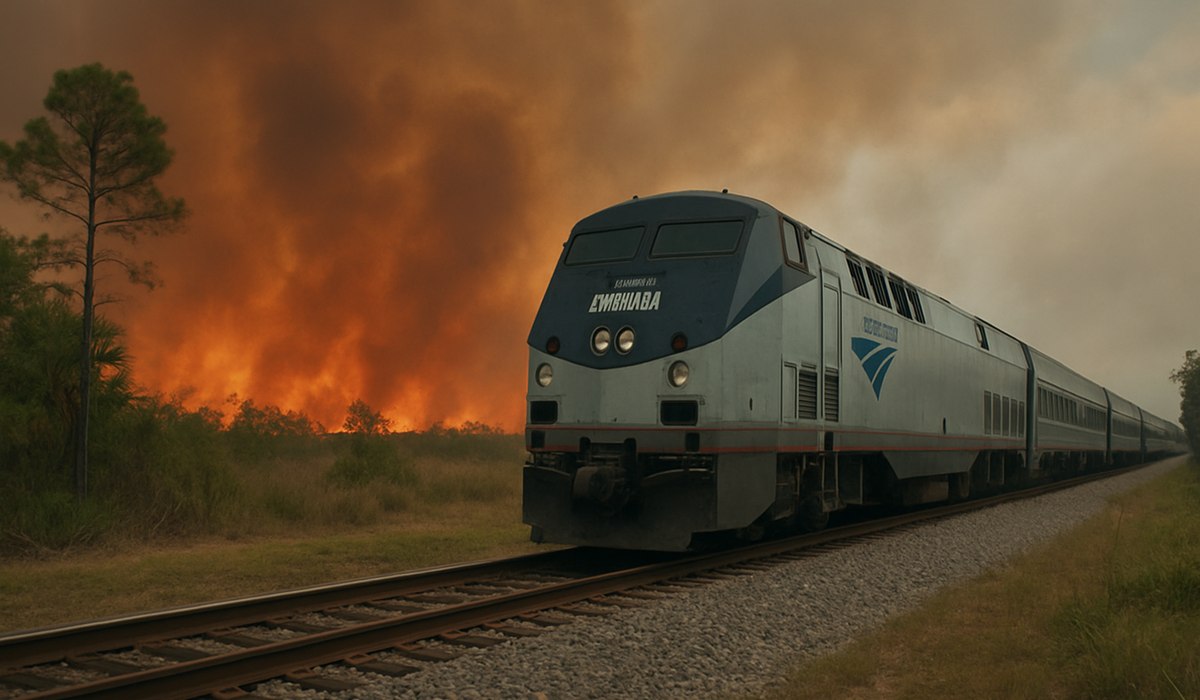
Image generated by AI
Hundreds of Amtrak Passengers Face Nearly 24-Hour Confinement as Florida Wildfires Leave Rails Impassable
Amtrak riders experienced one of the most severe service disruptions in recent years when fast-moving brush fires swept across north-central Florida on April 19, 2026, forcing train halts and leaving hundreds of passengers stranded in confined conditions. The incident unfolded along critical rail corridors connecting Miami to the Northeast, with at least two long-distance trains brought to emergency stops near Jacksonville and DeLand. Heavy smoke and unsafe visibility conditions prevented trains from proceeding safely, trapping travelers aboard overnight trains not designed for extended stationary stays. As conditions remained unstable for nearly a full day, passengers confronted overflowing sanitation systems, dwindling water supplies, and minimal communication from rail operators—a crisis that exposed serious vulnerabilities in how intercity rail infrastructure handles climate-driven emergencies.
Train Halted Along North Florida Wildfire Corridor
The disruption commenced late on Sunday, April 19, when brush fires ignited near the Clay and Putnam County line in north Florida, burning dangerously close to active Amtrak rail lines. The Silver Meteor and other Northeast-bound services rely on this corridor daily, and smoke intensity forced immediate halts to protect passenger and crew safety. At least one northbound train stopped south of Jacksonville while another remained stationary near DeLand as fire activity intensified throughout the evening and early morning hours.
Rail dispatchers faced a critical decision: whether to reverse direction, attempt rerouting, or wait for fire containment. Florida wildfires leave rail operators with limited operational flexibility, especially when trains occupy track sections threatened by active fire zones. After hours of assessment, Amtrak opted to move affected trains away from the highest-risk areas. One service reversed direction entirely rather than proceeding northward through the fire corridor. This decision prevented catastrophic safety risks but extended delays close to 24 hours for some travelers and triggered cascading cancellations across Florida's entire Amtrak network. For real-time service updates, consult Amtrak's official website directly before travel.
Passenger Conditions Deteriorate During Extended Delay
As confinement stretched beyond 12 hours, basic onboard infrastructure reached critical failure points. Long-distance trains maintain water supplies and waste capacity designed for scheduled journeys, typically 15-24 hours, but unplanned stoppages test these systems severely. Coach-class passengers reported inoperable or overflowing toilets, with some facilities becoming unsanitary within hours. Videos circulated on social media showing riders describing dwindling water supplies and crowded conditions as bathrooms failed progressively throughout the trapped train.
The disparity between accommodations proved stark and troubling. Sleeping-car passengers retained access to private restrooms and included meal service, while coach travelers faced deteriorating sanitation with no equivalent alternatives. Some passengers reported restricting food and water intake deliberately to minimize bathroom use—an unhealthy coping strategy born from desperation. Staff shortages limited restroom maintenance frequency, and waste removal systems eventually reached capacity. Amtrak has not publicly detailed specific failure numbers or mitigation measures deployed during the crisis, but the widespread social media documentation generated sustained criticism about emergency preparedness on long-distance routes.
Amtrak's Response and Service Recovery Efforts
Amtrak issued limited public statements during the incident, focusing primarily on safety justifications for halts rather than passenger welfare details. The railroad confirmed that affected services resumed within approximately 24 hours once fire activity sufficiently diminished near track sections. Two trains required extended monitoring of wildfire behavior before resuming northbound travel.
Recovery proved complicated by cascading effects. Cancellations rippled across subsequent schedules as delayed trains created downstream scheduling conflicts. Passengers faced rebooked journeys, missed connections, and requests for compensation or future travel credits. The company's communication protocols during the crisis drew criticism from affected riders who reported sparse updates and unclear timelines. Booking platforms like Trainline experienced surge demand as stranded passengers sought alternative routing options and rebooking assistance. Amtrak should provide clearer emergency communication procedures and passenger support protocols before future climate-driven disruptions occur.
Infrastructure Vulnerabilities Exposed by Climate Events
Florida wildfires leave rail systems exposed to climate risks intensifying across the southeastern United States. North-central Florida entered April 2026 under extreme drought classifications, with parched vegetation primed for rapid ignition and spread. State forestry agencies documented fires growing to several thousand acres within days, producing thick smoke affecting highways and rail corridors simultaneously.
The incident raises questions about infrastructure resilience investments and emergency protocols. Some local assessments suggest that rail activity itself may have contributed ignition sources to at least one fire, creating a troubling feedback loop where rail operations inadvertently increase wildfire risk. Climate scientists project that Southeast wildfire seasons will lengthen and intensify, meaning riders stuck in similar situations may become increasingly common without systemic improvements. Rail operators must invest in fire-resistant right-of-way management, early warning systems, and enhanced onboard emergency supplies. Long-distance train design standards should be reassessed to accommodate extended stationary periods during climate emergencies, including independent water reserves, waste management capacity, and communication systems.
How to Book the Best Fare
Strategic booking approaches can reduce your vulnerability to weather-related disruptions and maximize refund eligibility if cancellations occur:
Timing your purchase: Book rail tickets during off-peak seasons (late autumn and winter) when prices dip 15-25% below spring and summer rates. Early April through September typically sees higher base fares and reduced discount availability.
Flexible ticket options: Select refundable or flexible-date tickets when traveling through high-risk wildfire seasons (March through May). The premium cost proves worthwhile if service disruptions force rescheduling.
Route diversification: Avoid single-corridor bookings during wildfire seasons. Compare alternate routes through different geographic corridors that don't concentrate risk in fire-prone areas.
Multi-leg journeys: Breaking long-distance travel into shorter segments (Miami to Jacksonville, then Jacksonville to Savannah) reduces exposure time in any single corridor and provides exit points if conditions deteriorate.
Institutional knowledge: Consult Trainline's comparison tools to assess which operators offer superior refund policies and which routes feature redundant corridor options for weather resilience.
| Factor | April 2026 Incident Details | Passenger Impact |
|---|---|---|
| Onset Time | Sunday, April 19 at approximately 10 PM | Nighttime stranding on scheduled overnight service |
| Halted Trains | At least 2 confirmed (south of Jacksonville, near DeLand) | Hundreds of passengers total |
| Duration | Nearly 24 hours before resumption | Extended cabin confinement beyond design specifications |
| Primary Cause | Brush fires near Clay/Putnam County line | Heavy smoke and unsafe visibility conditions |
| Bathroom Status | Overflowing/inoperable facilities in coach cars | Sanitation crisis affecting majority of passengers |
| Water Supply | Dwindling reserves during extended stoppage | Passenger rationing to avoid bathroom use |
| Communication | Sparse updates from Amtrak during crisis | Passenger frustration and uncertainty |
| Affected Routes | Silver Meteor and other Northeast-bound services | Miami-to-Northeast corridor disruptions |
| Accommodations Disparity | Sleeping car vs. coach-class services | Unequal passenger experiences on same train |
| Regional Context | Extreme drought classifications in north-central Florida | Elevated seasonal |
Disclaimer
This article is for informational and educational purposes only. It does not constitute legal, financial, or professional advice. While we strive to provide accurate and up-to-date information, travel policies, regulations, and conditions change rapidly. Always verify information with official sources before making travel decisions. Nomad Lawyer makes no representations about the accuracy, reliability, completeness, or suitability of the information provided. Readers should consult qualified professionals for advice specific to their circumstances. The views expressed in this article are those of the author and do not necessarily reflect the views of Nomad Lawyer.
Raushan Kumar
Founder & Lead Developer
Full-stack developer with 11+ years of experience and a passionate traveller. Raushan built Nomad Lawyer from the ground up with a vision to create the best travel and law experience on the web.
Learn more about our team →