
Advanced Stealth Fighters Reshape Global Military Power: F-35, Raptor, and Chinese J-20 Lead New Age of Aerial Warfare
Breaking airline news and aviation industry updates for 2026.

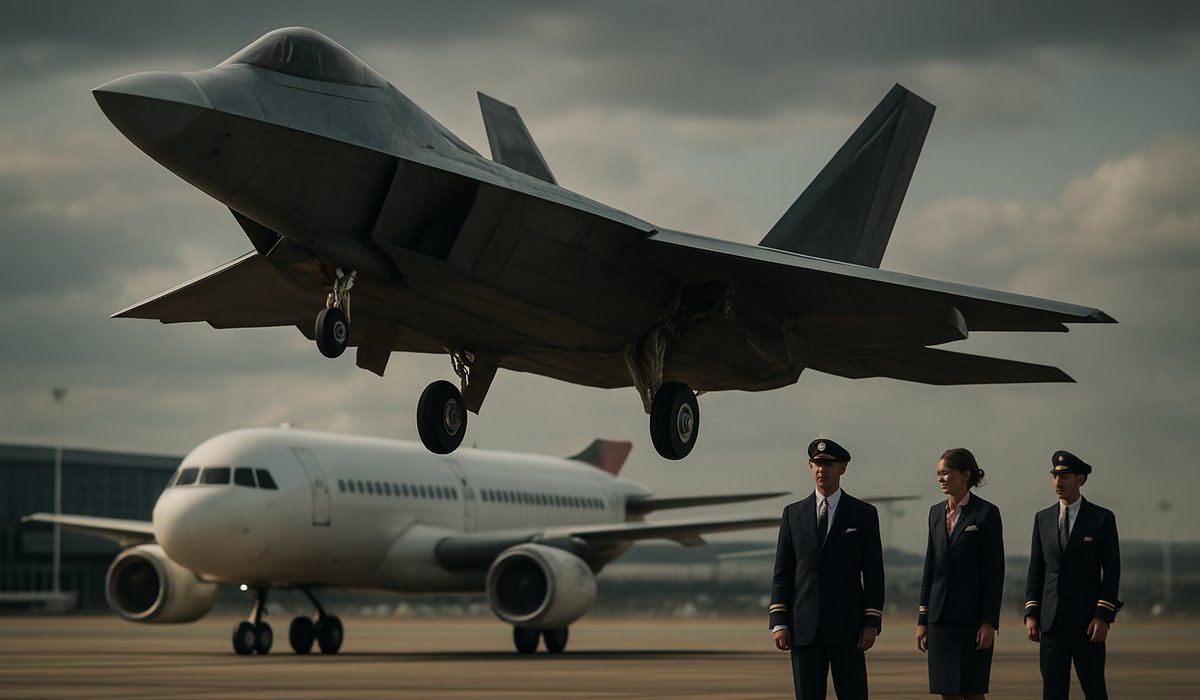
Image generated by AI
Advanced Stealth Fighters Reshape Global Military Power: F-35, Raptor, and Chinese J-20 Lead New Age of Aerial Warfare
Intelligence, speed, and first-strike capability now define dominance in 21st-century combat operations
The New Paradigm of Air Superiority
The nature of modern aerial combat has undergone a fundamental transformation. Rather than relying solely on speed or firepower, today's most formidable military aircraft dominate through a distinctly different mechanism: the ability to detect threats first, process battlefield information faster, and execute tactical decisions before adversaries can respond. This intelligence-driven approach now defines which nations maintain air superiority in active conflict zones worldwide.
By 2026, four aircraft systems have emerged as the cornerstone of global military aviation capability: America's F-35 Lightning II and F-22 Raptor, China's fifth-generation J-20, and Russia's Su-57 platform. These systems represent a generational leap in combat effectiveness, fundamentally altering how modern warfare is conducted across multiple theaters.
Deployment Numbers Reveal Strategic Shift
Deployment figures underscore the rapid militarization of advanced fighter technology. According to data released by Lockheed Martin, manufacturers of the F-35, more than 1,300 Lightning II aircraft have been delivered to allied nations and the United States Armed Forces. This represents the largest stealth fighter procurement program in aviation history.
Simultaneously, China's military expansion has accelerated considerably. Intelligence assessments indicate that Beijing's J-20 stealth fighter fleet has now exceeded 300 operational units—a significant expansion reflecting China's commitment to fifth-generation capability parity with Western powers. This doubling of China's advanced fighter inventory signals intensifying great-power competition in the Indo-Pacific region.
The Architecture of Tactical Advantage
What distinguishes these platforms from their predecessors transcends raw performance metrics. Modern combat effectiveness depends on sensor fusion, real-time data sharing, and decision-compression capabilities. Aircraft equipped with advanced avionics and integrated defense systems can identify targets, evaluate threats, and coordinate strikes within seconds—timeframes that render traditional air defense systems largely ineffective.
The F-35's distributed aperture system, the F-22's sensor integration, and China's J-20 architecture all prioritize information dominance. In practical terms, this means pilots who see the battlespace first, understand tactical developments faster, and execute strike options before detection holds decisive advantage.
Geopolitical Implications
This technological concentration among three powers—the United States, China, and Russia—reflects broader patterns of military competition. Allied nations in Europe and Asia are integrating F-35 fleets into their air forces, while potential adversaries accelerate indigenous development programs. The result is a world increasingly divided between operators of fifth-generation systems and those relying on legacy aircraft.
Defense analysts warn that this capability gap carries profound implications for regional stability and conflict escalation timelines. Nations without advanced stealth capability face unprecedented vulnerability in any future air campaign.
FAQ: Advanced Military Aircraft and Global Air Power
What makes the F-35 and F-22 superior to other fighter aircraft? These platforms combine stealth technology, advanced sensor fusion, and real-time data integration—enabling operators to detect and engage targets before being detected themselves. This "first-look, first-shot" advantage fundamentally shifts combat outcomes.
How many F-35s have been delivered worldwide? Lockheed Martin has delivered over 1,300 F-35 Lightning II aircraft to the United States and allied nations, making it the world's largest stealth fighter program.
What is China's J-20 aircraft, and how does it compare to American systems? China's J-20 is a domestically-developed, fifth-generation stealth fighter. Current fleet assessments indicate over 300 operational units, positioning it as a credible peer competitor to Western platforms.
Why is the F-22 Raptor still considered the most advanced fighter? The F-22 features superior sensor integration and processing speed compared to most peer competitors, though production ended at 187 aircraft due to cost constraints.
How does air superiority affect modern military conflicts? Control of airspace determines ability to conduct ground operations, conduct reconnaissance, and prevent adversary strikes—making air dominance potentially decisive in regional conflicts.
Related Travel Guides
Disclaimer
This article is for informational and educational purposes only. It does not constitute legal, financial, or professional advice. While we strive to provide accurate and up-to-date information, travel policies, regulations, and conditions change rapidly. Always verify information with official sources before making travel decisions. Nomad Lawyer makes no representations about the accuracy, reliability, completeness, or suitability of the information provided. Readers should consult qualified professionals for advice specific to their circumstances. The views expressed in this article are those of the author and do not necessarily reflect the views of Nomad Lawyer.
Raushan Kumar
Founder & Lead Developer
Full-stack developer with 11+ years of experience and a passionate traveller. Raushan built Nomad Lawyer from the ground up with a vision to create the best travel and law experience on the web.
Learn more about our team →