
The SR-71C 'Bastard': How a Catastrophic 1968 Crash Forced Lockheed into Aviation's Most Audacious Retrofit
Breaking airline news and aviation industry updates for 2026.

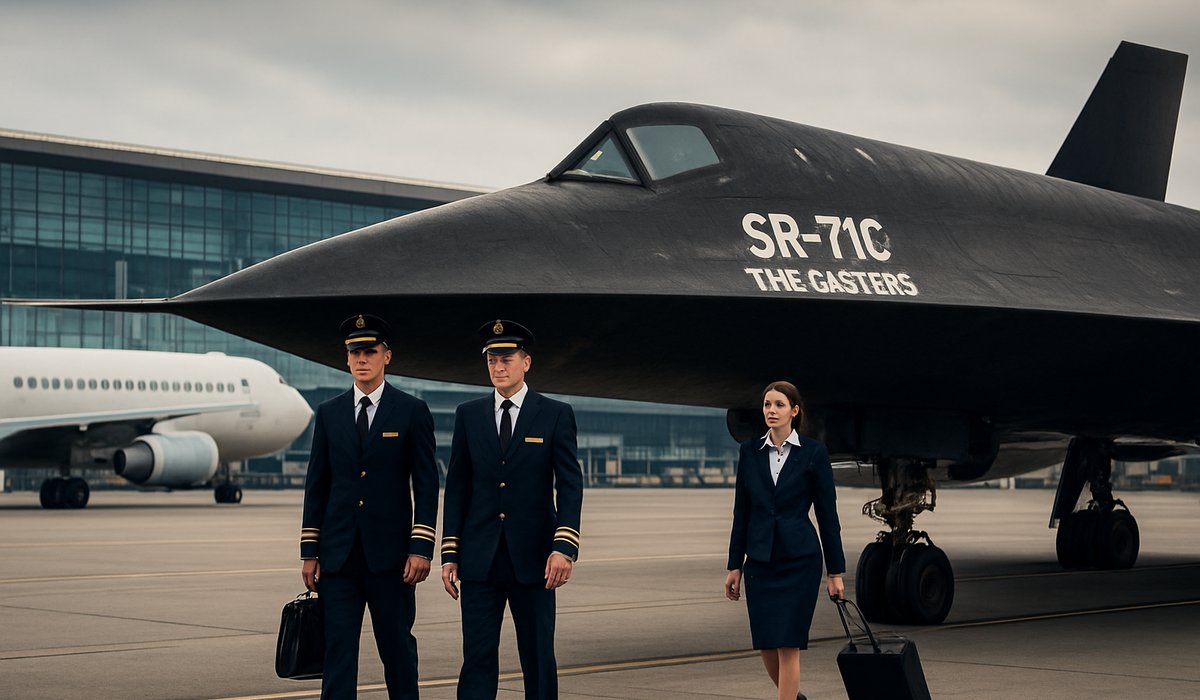
Image generated by AI
The SR-71C 'Bastard': How a Catastrophic 1968 Crash Forced Lockheed into Aviation's Most Audacious Retrofit
When a devastating accident grounded the Air Force's only training variant of the world's fastest spy plane, engineers achieved the impossible—rebuilding a reconnaissance aircraft into a dual-control trainer
The Crisis That Sparked Innovation
The loss of an SR-71B trainer aircraft during a botched emergency landing in 1968 triggered an unprecedented crisis within the United States Air Force's most secretive reconnaissance program. With the experimental jet obliterated, the military found itself with a crippling shortage: only a single functioning training variant remained to prepare pilots for operations aboard the legendary Blackbird—the world's fastest manned aircraft and crown jewel of Cold War espionage technology.
The accident exposed a critical vulnerability in the program's infrastructure. The SR-71B, one of just two trainer models ever constructed by Lockheed Martin's elite Skunk Works division, had been essential for transitioning operational pilots into the unforgiving demands of hypersonic flight. Its destruction didn't simply represent a loss of equipment—it threatened to stall the entire training pipeline and undermine the Air Force's reconnaissance capabilities at a moment of heightened geopolitical tension.
Engineering the Unconventional Solution
Faced with this operational bottleneck, Skunk Works engineers confronted an unconventional challenge: convert an existing SR-71A reconnaissance airframe—a single-seat variant optimized exclusively for intelligence gathering—into a dual-control training platform. The task was extraordinary, requiring the complete reconfiguration of a supersonic aircraft designed for solitary missions at altitudes exceeding 80,000 feet.
The resulting aircraft earned an informal designation that reflected its unusual genesis: the SR-71C, christened informally as "The Bastard" within aerospace circles. Unlike its predecessors, this hybrid represented something unprecedented—a reconnaissance platform retrofitted into an instructor-student configuration, combining elements never originally intended to coexist.
A Footnote in Blackbird History
While the SR-71C ultimately fulfilled its training role, it remains one of aviation's most peculiar footnotes. It was never designed with dual-control systems in mind, never built from the ground up as a trainer, and existed solely as a consequence of catastrophic loss and engineering desperation.
The aircraft symbolizes both the resilience of Cold War-era aerospace innovation and the precarious nature of specialized military programs dependent on limited airframes. It stands as testament to how critical infrastructure failures can catalyze extraordinary technical solutions—even when those solutions carry the irreverent nickname "The Bastard."
FAQ: Understanding the SR-71C and Blackbird Training Program
Q: Why was there only one SR-71B trainer available after 1968? A: The US Air Force originally possessed two SR-71B training variants. When one was destroyed during an emergency landing in 1968, pilot training capacity became severely constrained, leaving just a single operational trainer for the entire program.
Q: How did Skunk Works convert a reconnaissance aircraft into a trainer? A: Engineers retrofitted an existing SR-71A single-seat reconnaissance airframe with dual-control systems and instructor station capabilities—a complex modification never originally engineered into the aircraft's design.
Q: What made the SR-71C different from earlier Blackbird variants? A: The SR-71C was the only Blackbird variant created as a retrofit rather than purpose-built design, combining reconnaissance airframe elements with training functionality in a hybrid configuration.
Q: Did the SR-71C actually fly operational missions? A: The SR-71C functioned exclusively as a training platform; it was never intended for reconnaissance operations despite its foundation in an intelligence-gathering airframe.
Q: How does the SR-71C's story reflect Cold War aerospace priorities? A: The aircraft demonstrates how critical military programs accepted unconventional solutions and technical compromises to maintain operational capability during strategic competition.
Related Travel Guides
Disclaimer
This article is for informational and educational purposes only. It does not constitute legal, financial, or professional advice. While we strive to provide accurate and up-to-date information, travel policies, regulations, and conditions change rapidly. Always verify information with official sources before making travel decisions. Nomad Lawyer makes no representations about the accuracy, reliability, completeness, or suitability of the information provided. Readers should consult qualified professionals for advice specific to their circumstances. The views expressed in this article are those of the author and do not necessarily reflect the views of Nomad Lawyer.
Raushan Kumar
Founder & Lead Developer
Full-stack developer with 11+ years of experience and a passionate traveller. Raushan built Nomad Lawyer from the ground up with a vision to create the best travel and law experience on the web.
Learn more about our team →