
Airbus A380's Four-Engine Design Drains Airline Budgets: How Quad-Engine Giants Lost Economics Battle to Twin-Engine Rivals
Breaking airline news and aviation industry updates for 2026.

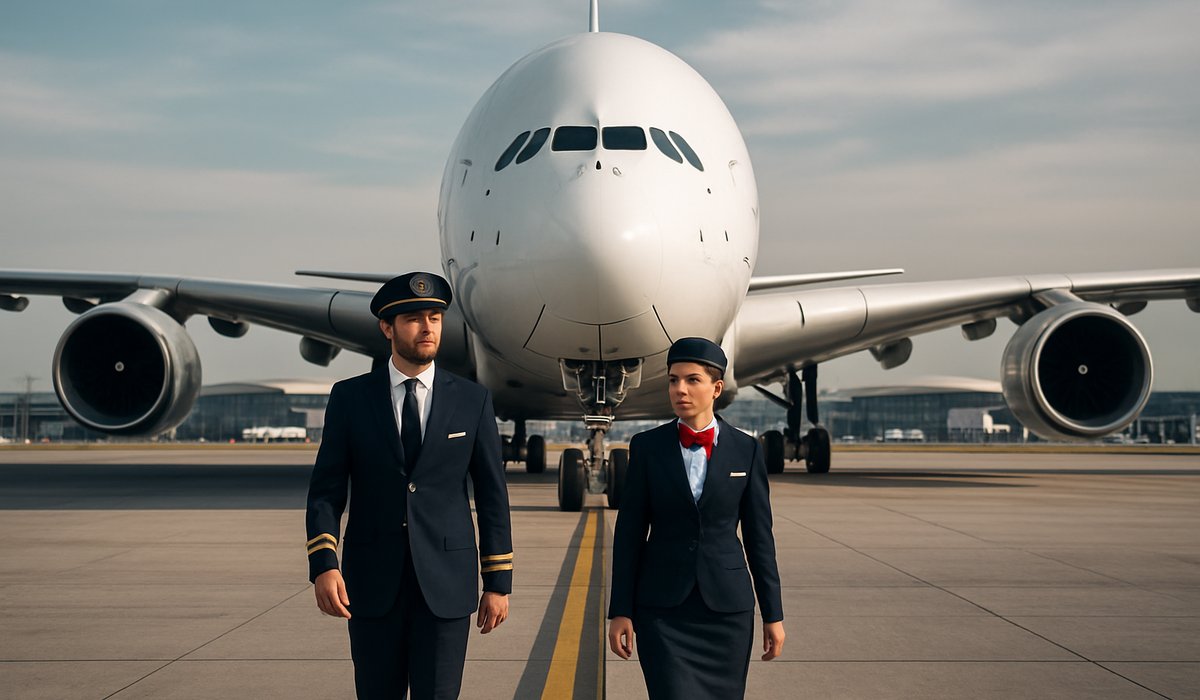
Image generated by AI
Airbus A380's Four-Engine Design Drains Airline Budgets: How Quad-Engine Giants Lost Economics Battle to Twin-Engine Rivals
The aviation industry's shift toward fuel-efficient twin-engine widebodies has rendered the superjumbo's engineering legacy financially uncompetitive, forcing carriers to reassess their fleet strategies
The Four-Engine Penalty: A Mounting Financial Crisis
The Airbus A380, aviation's most iconic double-decker superjumbo, faces an existential economic challenge that no amount of passenger appeal can overcome. Airlines operating the four-engine aircraft confront annual operational costs running millions of dollars higher than carriers flying modern twin-engine widebodies, a disparity that has fundamentally reshaped fleet economics across the global aviation sector.
The mathematics are brutal: each additional engine multiplies maintenance expenditures, fuel consumption per available seat, and regulatory compliance expenses. While the A380's cavernous cabin—capable of accommodating between 500 and 850 passengers across two decks—remains a beloved passenger experience, the financial burden of powering four separate turbofan engines has become increasingly difficult for airlines to justify in an era of heightened fuel prices and razor-thin profit margins.
Industry-Wide Shift Away From Four-Engine Aircraft
The aviation market has decisively voted with its checkbook. Over the past two decades, manufacturers and operators have embraced twin-engine widebody designs—including the Boeing 787 Dreamliner, Airbus A350, and Boeing 777X—whose advanced aerodynamics and engine efficiency dramatically reduce per-seat operating costs compared to their four-engine predecessors.
Modern twin-engine aircraft deliver superior fuel efficiency through lighter composite construction, aerodynamic refinement, and next-generation powerplants engineered for 25% better fuel economy than engines powering legacy aircraft. These technological advantages translate directly to bottom-line savings that dwarf the A380's structural benefits.
The Human Factor: Passenger Comfort Against Economic Reality
For travelers, the A380 remains unmatched. Its wider cabins, superior noise isolation, and generous legroom create a premium flying experience that six-across seating on competing widebodies cannot replicate. Yet passenger preference alone cannot offset the financial headwinds facing A380 operators.
Airlines grappling with volatile jet fuel prices—themselves influenced by geopolitical tensions and energy market volatility—increasingly find the A380's higher fuel burn unsustainable. The aircraft's four engines demand more frequent maintenance checks, higher spare parts inventory costs, and additional crew training expenses compared to twin-engine alternatives.
Strategic Implications for Global Aviation
The A380's economic crisis reflects broader industry transformation. Carriers including Emirates, Singapore Airlines, and Lufthansa—among the world's largest A380 operators—have begun evaluating fleet replacements, with many selecting twin-engine widebodies for growth routes previously served by superjumbos.
Airbus formally ended A380 production in 2021, unable to generate sufficient demand to maintain manufacturing viability. The decision underscored the reality that engineering excellence and passenger appeal cannot overcome fundamental economic disadvantages in an industry where per-seat costs determine profitability.
FAQ: Airline Operating Costs and Aircraft Economics
Why do four-engine aircraft cost more to operate than twin-engine planes? Four-engine designs require double the maintenance cycles, spare parts inventory, and fuel consumption per available seat compared to optimized twin-engine alternatives with superior aerodynamics and modern engine efficiency.
How much more expensive is the A380 to operate annually? Operational cost differentials vary by route and utilization, but industry analysts estimate annual penalties in the millions of dollars per aircraft when compared to twin-engine widebodies like the Boeing 787 or Airbus A350.
Are airlines still ordering the Airbus A380? No. Airbus discontinued A380 production in 2021 due to insufficient demand, with operators increasingly selecting fuel-efficient twin-engine aircraft for their fleet renewal strategies.
What impact do jet fuel prices have on four-engine aircraft viability? Volatile fuel markets amplify the A380's economic disadvantage, as higher per-gallon costs compound the aircraft's inherently higher fuel consumption compared to twin-engine rivals.
Which airlines operate the most A380s today? Emirates, Singapore Airlines, Lufthansa, and Air France maintain the world's largest A380 fleets, though all have announced plans to eventually retire these aircraft in favor of more economically efficient widebody alternatives.
Related Travel Guides
-
United States Canada Flight Disruption: Air Canada CRJ-900 Incident at LaGuardia
-
Los Cabos Hits $440 Daily Hotel Rate as US Leads Mexico's Tourism Surge in 2025
External Resources
Disclaimer
This article is for informational and educational purposes only. It does not constitute legal, financial, or professional advice. While we strive to provide accurate and up-to-date information, travel policies, regulations, and conditions change rapidly. Always verify information with official sources before making travel decisions. Nomad Lawyer makes no representations about the accuracy, reliability, completeness, or suitability of the information provided. Readers should consult qualified professionals for advice specific to their circumstances. The views expressed in this article are those of the author and do not necessarily reflect the views of Nomad Lawyer.
Raushan Kumar
Founder & Lead Developer
Full-stack developer with 11+ years of experience and a passionate traveller. Raushan built Nomad Lawyer from the ground up with a vision to create the best travel and law experience on the web.
Learn more about our team →