
Qantas Set to Launch World's Longest Commercial Flight: The Sydney-London Nonstop Route
Breaking airline news and aviation industry updates for 2026.

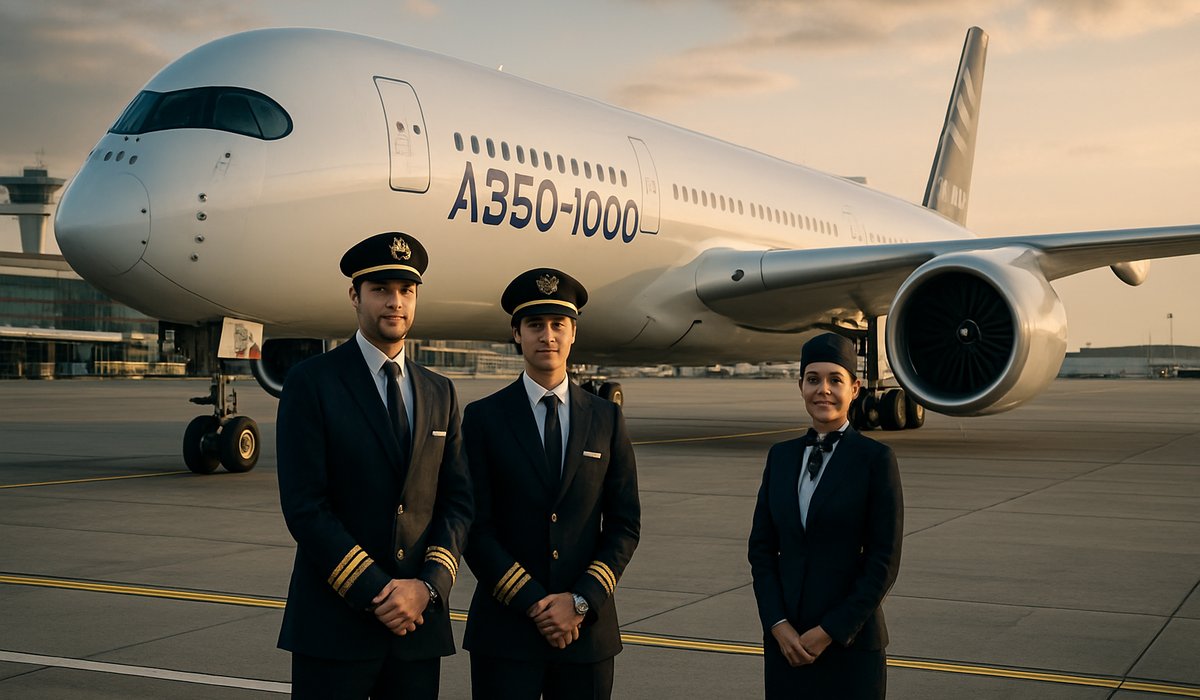
Image generated by AI
Qantas Set to Launch World's Longest Commercial Flight: The Sydney-London Nonstop Route
The Australian carrier's ambitious ultra-long-range service relies exclusively on Airbus A350-1000 technology to cover nearly 10,000 nautical miles in over 20 hours
Breaking New Ground in Aviation
Qantas is preparing to make aviation history by establishing the longest commercial flight ever operated, connecting Sydney directly to London in a journey spanning 9,188 nautical miles and lasting more than 20 hours. The ambitious route represents a watershed moment for the global aviation industry, fundamentally reshaping long-haul travel networks and placing extraordinary demands on both aircraft engineering and crew endurance protocols.
Why Only One Aircraft Can Make the Journey
The extreme distance and duration of this route eliminates virtually all competitors from consideration. The Airbus A350-1000 emerges as the sole aircraft capable of meeting the rigorous technical and operational requirements necessary for sustained transatlantic-Pacific service at this scale.
The A350-1000 combines exceptional fuel efficiency with extended range capabilities that far exceed conventional wide-body jets. Its composite airframe construction, advanced aerodynamics, and next-generation engines deliver the weight savings and performance characteristics essential for carrying sufficient fuel reserves while maintaining payload capacity and passenger comfort across 20+ flight hours.
Competing aircraft—including the Boeing 777X and even earlier A350 variants—fall short of the necessary combination of range, fuel capacity, and operational efficiency. The A350-1000 uniquely satisfies the convergence of engineering, regulatory, and economic factors that make this route viable.
Industry Implications and Competitive Landscape
The introduction of this service fundamentally alters expectations around ultra-long-range travel. Airlines operating competing routes must now confront the competitive pressure of genuine nonstop connectivity, potentially disrupting hub-and-spoke models that have dominated intercontinental travel for decades.
This development also underscores the growing strategic importance of next-generation wide-body aircraft in modern fleet planning. As fuel costs remain volatile and environmental regulations tighten, carriers increasingly depend on advanced platforms like the A350-1000 to maintain profitability on premium long-haul services.
What This Means for Passengers
While the historic route promises convenience for premium travelers, the operational complexity of such journeys—including extended crew duty time protocols and specialized ground services—will likely command premium pricing that reflects the aircraft's exclusive capabilities and operational costs.
FAQ: Understanding Qantas's Sydney-London Service
What makes the Sydney-London route the world's longest commercial flight? At 9,188 nautical miles and exceeding 20 hours duration, this Qantas service surpasses all existing nonstop commercial routes, breaking previous distance and flight-time records.
Why can only the Airbus A350-1000 operate this route? The A350-1000's combination of superior fuel efficiency, extended range, lightweight composite construction, and advanced engine technology uniquely satisfy the technical requirements of sustained ultra-long-haul operation.
When will the Sydney-London service launch? Qantas has announced its intention to begin operations; specific launch dates depend on regulatory approvals, crew training protocols, and final aircraft certification.
How will airlines compete with nonstop Sydney-London flights? Competing carriers may invest in similar next-generation aircraft or restructure their networks to remain competitive, though the high capital costs and operational complexity create significant barriers.
What does this mean for jet fuel prices and airline costs? While the A350-1000's fuel efficiency reduces per-seat consumption, the extreme range and duration require careful optimization—any fluctuations in jet fuel markets will directly impact route profitability and potential pricing for passengers.
Related Travel Guides
-
Boeing 737 MAX Popularity Recovery: How Aviation's Most Debated Jet Reclaimed Trust
-
Airlines Economy Seats: 5 Carriers With World's Greatest Pitch in 2026
External Resources
Disclaimer
This article is for informational and educational purposes only. It does not constitute legal, financial, or professional advice. While we strive to provide accurate and up-to-date information, travel policies, regulations, and conditions change rapidly. Always verify information with official sources before making travel decisions. Nomad Lawyer makes no representations about the accuracy, reliability, completeness, or suitability of the information provided. Readers should consult qualified professionals for advice specific to their circumstances. The views expressed in this article are those of the author and do not necessarily reflect the views of Nomad Lawyer.
Preeti Gunjan
Contributor & Community Manager
A passionate traveller and community builder. Preeti helps grow the Nomad Lawyer community, fostering engagement and bringing the reader experience to life.
Learn more about our team →