
Six Decades Later, the F-4 Phantom Remains Unmatched: Why Modern Fighter Jets Still Haven't Fully Replaced Aviation's Most Iconic Warbird
Breaking airline news and aviation industry updates for 2026.

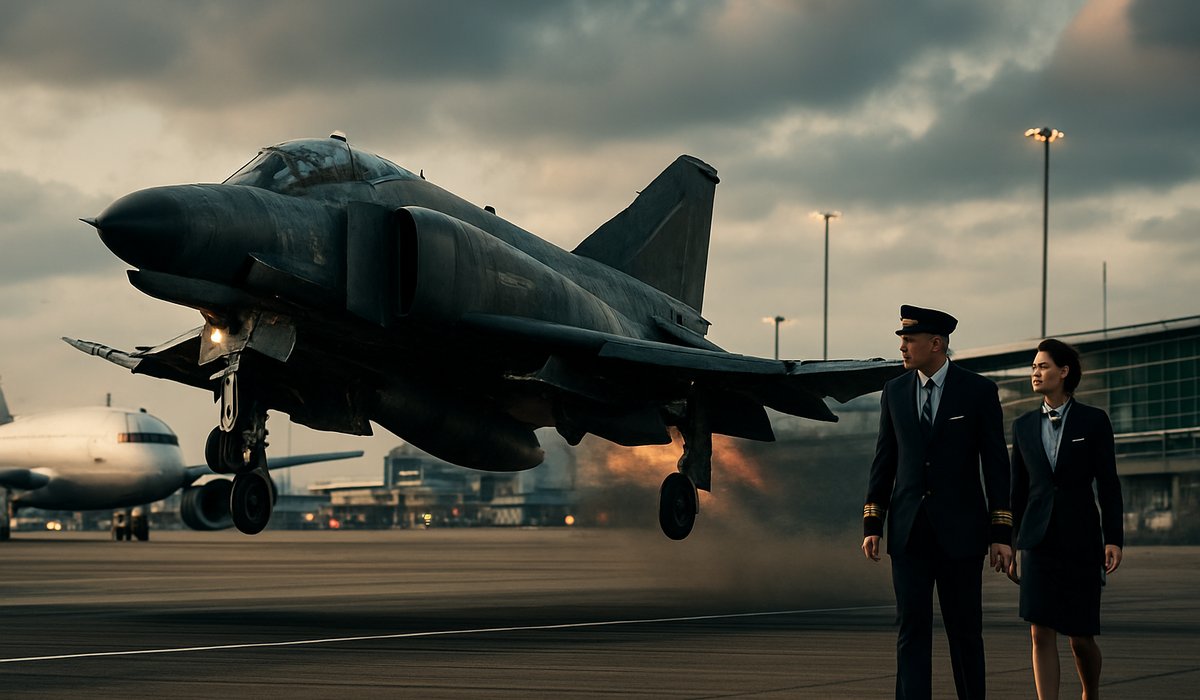
Image generated by AI
Six Decades Later, the F-4 Phantom Remains Unmatched: Why Modern Fighter Jets Still Haven't Fully Replaced Aviation's Most Iconic Warbird
The legendary McDonnell Douglas supersonic fighter continues to fly operational missions across the globe, a testament to engineering excellence that contemporary aircraft design has yet to surpass
The Enduring Legacy of Cold War Aviation Excellence
More than 60 years after its maiden flight, the McDonnell Douglas F-4 Phantom II remains one of aviation's most consequential military aircraft—and remarkably, several examples continue active service worldwide. While the United States retired its last operational Phantom in 1997, air forces from Greece to other nations maintain flyable specimens, defying the conventional wisdom that older warbirds inevitably become museum pieces.
The Phantom's sustained operational presence raises a critical question within defense and aerospace circles: why has no modern fighter jet fully replicated the raw capabilities that made this Cold War-era interceptor revolutionary?
Raw Power That Shaped Modern Combat Aviation
The F-4 earned distinction as the most extensively produced supersonic fighter in American military history, with production reaching thousands of airframes. Its combination of exceptional speed, unparalleled range, and brute-force performance created a platform that fundamentally altered air combat doctrine during the Vietnam War and beyond.
Despite mixed combat effectiveness over Southeast Asian skies following its initial combat deployment, pilots and flight crews universally praised the Phantom's fundamental engineering. The aircraft's ability to climb rapidly, sustain high-velocity flight, and carry substantial ordnance loads established performance benchmarks that influenced fighter development for generations.
Modern Constraints vs. Raw Capability
Contemporary fighter programs prioritize stealth, sensor fusion, networked operations, and computational superiority over pure kinetic performance. While aircraft like the F-35 Lightning II and F-22 Raptor represent technological leaps in avionics and tactical integration, they sacrifice certain raw performance metrics that defined the Phantom era.
The Phantom's straightforward engineering philosophy—combining powerful engines with minimal complexity—contrasts sharply with modern fifth-generation fighters burdened by sophisticated systems, software dependencies, and stealth design constraints that necessarily compromise aerodynamic agility.
A Global Operators' Asset
Greece's continued operation of F-4 variants underscores international recognition of the airframe's fundamental soundness. The Phantom's durability, maintainability, and performance envelope have proven resilient against decades of operational wear—qualities that newer, more specialized aircraft have yet to demonstrate across comparable timeframes.
As defense budgets tighten globally and emerging threats evolve, military planners continue reassessing whether contemporary aircraft truly deliver proportional capability improvements over proven platforms. The F-4 Phantom's six-decade relevance suggests that engineering fundamentals sometimes transcend technological advancement cycles.
FAQ: The F-4 Phantom and Modern Aviation
Why is the F-4 Phantom still in service after 60+ years? The aircraft's robust construction, powerful engines, and straightforward maintenance requirements enable extended operational lifespans. When properly maintained, the Phantom remains aerodynamically sound and capable of contemporary missions.
How does the F-4 Phantom compare to modern fighter jets like the F-35? Modern fighters prioritize stealth and sensor integration; the Phantom emphasizes raw speed and range. Modern jets aren't designed as direct replacements but represent different tactical philosophies suited to contemporary threats.
Which countries still operate the F-4 Phantom? Greece maintains active F-4 squadrons, alongside modified drone variants in limited U.S. service. Several other nations retain airworthy examples in reserve or training roles.
What made the F-4 Phantom revolutionary? Its combination of supersonic speed, exceptional range, powerful engines, and substantial payload capacity was unprecedented for interceptor aircraft, influencing fighter development globally.
Could modern air forces revive F-4 Phantoms instead of procuring new fighters? While operationally viable, aging airframes present sustainability challenges. New fighters provide sensor capabilities and network integration that retrofitting older aircraft cannot fully achieve.
Related Travel Guides
-
British Airways Airbus A380 Suspended on London-Los Angeles Route for Winter 2026
-
Seven New Long-Haul Nonstop Routes Transform Global Aviation Connectivity This Week
-
The C-130 Hercules: Seven Decades of Military Aviation Dominance—How Many Were Built?
External Resources
Disclaimer
This article is for informational and educational purposes only. It does not constitute legal, financial, or professional advice. While we strive to provide accurate and up-to-date information, travel policies, regulations, and conditions change rapidly. Always verify information with official sources before making travel decisions. Nomad Lawyer makes no representations about the accuracy, reliability, completeness, or suitability of the information provided. Readers should consult qualified professionals for advice specific to their circumstances. The views expressed in this article are those of the author and do not necessarily reflect the views of Nomad Lawyer.
Preeti Gunjan
Contributor & Community Manager
A passionate traveller and community builder. Preeti helps grow the Nomad Lawyer community, fostering engagement and bringing the reader experience to life.
Learn more about our team →