
Government Aircraft Procurement Goes Far Beyond Performance: Politics and Diplomacy Now Drive VIP Aviation Decisions
Breaking airline news and aviation industry updates for 2026.

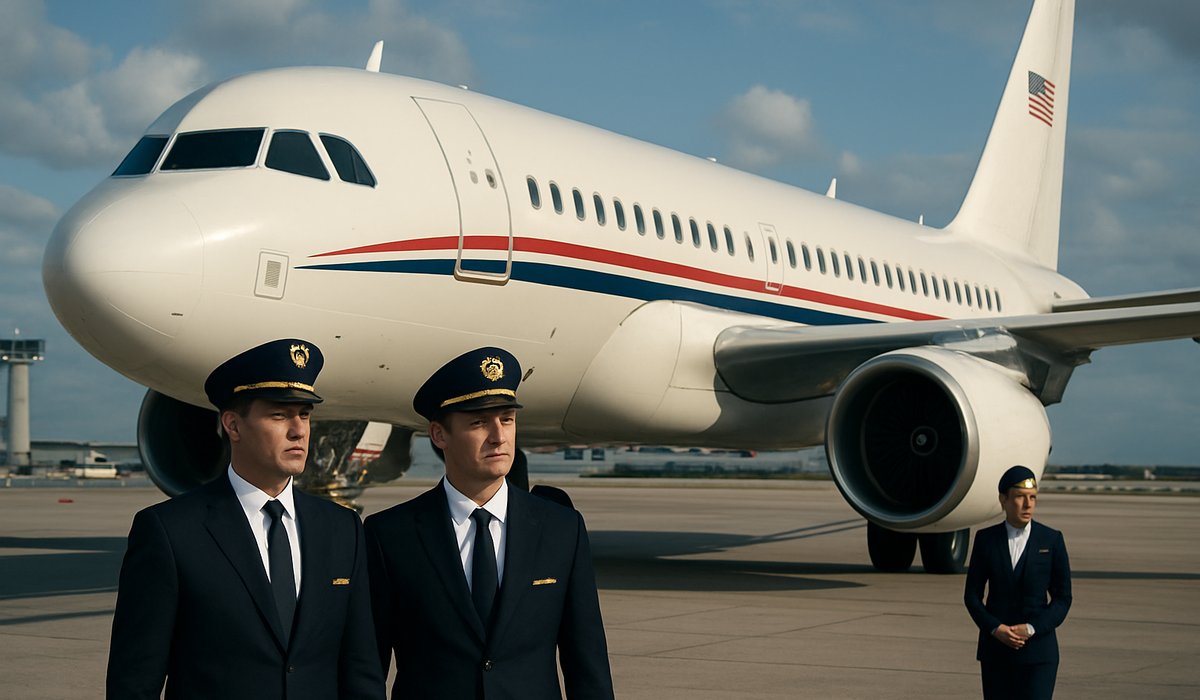
Image generated by AI
Government Aircraft Procurement Goes Far Beyond Performance: Politics and Diplomacy Now Drive VIP Aviation Decisions
As nations compete for aerospace dominance, presidential aircraft choices reveal deeper geopolitical strategies and industrial policy priorities
The Hidden Stakes Behind State Aircraft Selection
When a world leader boards an official government jet, the aircraft choice rarely reflects engineering merit alone. Instead, government aircraft procurement has become a high-stakes arena where aerospace strategy, national security imperatives, diplomatic messaging, and domestic industrial policy converge in ways that fundamentally reshape international relations and technology competition.
The decision to acquire or upgrade a state aircraft carries consequences far beyond cabin amenities or flight range. It signals geopolitical alignment, demonstrates commitment to domestic industries, and projects national power on the global stage—making every procurement decision a calculated political maneuver wrapped in technical specifications.
The VC-25B and America's Multi-Billion Dollar Air Force One Gambit
The United States' ongoing replacement of the aging VC-25B Air Force One fleet exemplifies this complex interplay. What appears to the public as a straightforward infrastructure modernization project represents one of the aerospace industry's most consequential strategic investments, directly supporting Boeing's commercial and defense divisions while reinforcing American technological superiority messaging to allies and adversaries alike.
The replacement program's timeline, budget allocation, and technical requirements have become instruments of domestic political competition, congressional appropriations battles, and industrial policy—reflecting Washington's commitment to maintaining aerospace leadership even as rival nations advance their own capabilities.
Europe's Strategic Bet on Continental Champions
Meanwhile, European governments continue their deliberate preference for Airbus and Dassault platforms for official state transport, a decision equally rooted in political calculation. These procurement choices reinforce European technological autonomy, protect continental aerospace employment, and subtly reinforce the EU's assertion of independence from American defense contractors.
France's reliance on Dassault aircraft for presidential transport, alongside broader European adoption of Airbus executive platforms, represents a conscious strategy to build indigenous aerospace capacity while sending diplomatic signals about continental self-determination.
Geopolitical Messaging Through Metal and Avionics
Government aircraft procurement functions as visible statecraft. The selection of a particular platform communicates alignment preferences, industrial partnerships, and technological confidence to domestic constituencies and international observers. Nations choosing American aircraft signal closer ties to Washington's sphere of influence, while those selecting European platforms demonstrate commitment to building independent capabilities and strengthening continental partnerships.
Each decision ripples through supply chains, employment networks, and technology transfer agreements—making VIP aviation procurement decisions consequential far beyond those who actually fly aboard these exclusive jets.
FAQ: Government Aircraft, Politics, and Aviation Strategy
1. Why don't governments simply choose the most technically advanced aircraft? Government aircraft selection prioritizes geopolitical alignment, domestic industrial support, and national security considerations equally alongside performance metrics. Technical specifications alone rarely determine outcomes.
2. How much does the VC-25B Air Force One replacement cost the U.S. government? The modernization program represents a multi-billion dollar investment extending across several budget cycles, making it one of aerospace's largest government procurement initiatives.
3. What aircraft do European leaders typically use for official travel? European governments predominantly select Airbus and Dassault platforms, reflecting continental industrial policy and strategic independence from American defense contractors.
4. How does aircraft procurement affect international relations? Government jet selection signals geopolitical preferences, strengthens industrial partnerships, and communicates diplomatic alignment to allied and rival nations—functioning as statecraft beyond transportation.
5. Does choosing a specific aircraft platform benefit domestic aerospace industries? Yes substantially—government procurement directly supports manufacturing, employment, technology development, and export competitiveness within selected aerospace sectors.
Related Travel Guides
- Major Disruption at London Heathrow: Hundreds Stranded as Cascading Flight Delays and Cancellations Grip Europe's Busiest Hub
- Avincis Unleashes Massive Fleet Expansion With 15 New Airbus H145 Helicopters to Combat European Emergency Response Crisis: Latest Airline News
- American Airlines Offers AAdvantage Miles for FIFA World Cup 2026 Tickets
Disclaimer
This article is for informational and educational purposes only. It does not constitute legal, financial, or professional advice. While we strive to provide accurate and up-to-date information, travel policies, regulations, and conditions change rapidly. Always verify information with official sources before making travel decisions. Nomad Lawyer makes no representations about the accuracy, reliability, completeness, or suitability of the information provided. Readers should consult qualified professionals for advice specific to their circumstances. The views expressed in this article are those of the author and do not necessarily reflect the views of Nomad Lawyer.
Raushan Kumar
Founder & Lead Developer
Full-stack developer with 11+ years of experience and a passionate traveller. Raushan built Nomad Lawyer from the ground up with a vision to create the best travel and law experience on the web.
Learn more about our team →