
Why the World's Largest Military Transport Plane Took 40+ Years to Get a Modern Digital Cockpit
Breaking airline news and aviation industry updates for 2026.

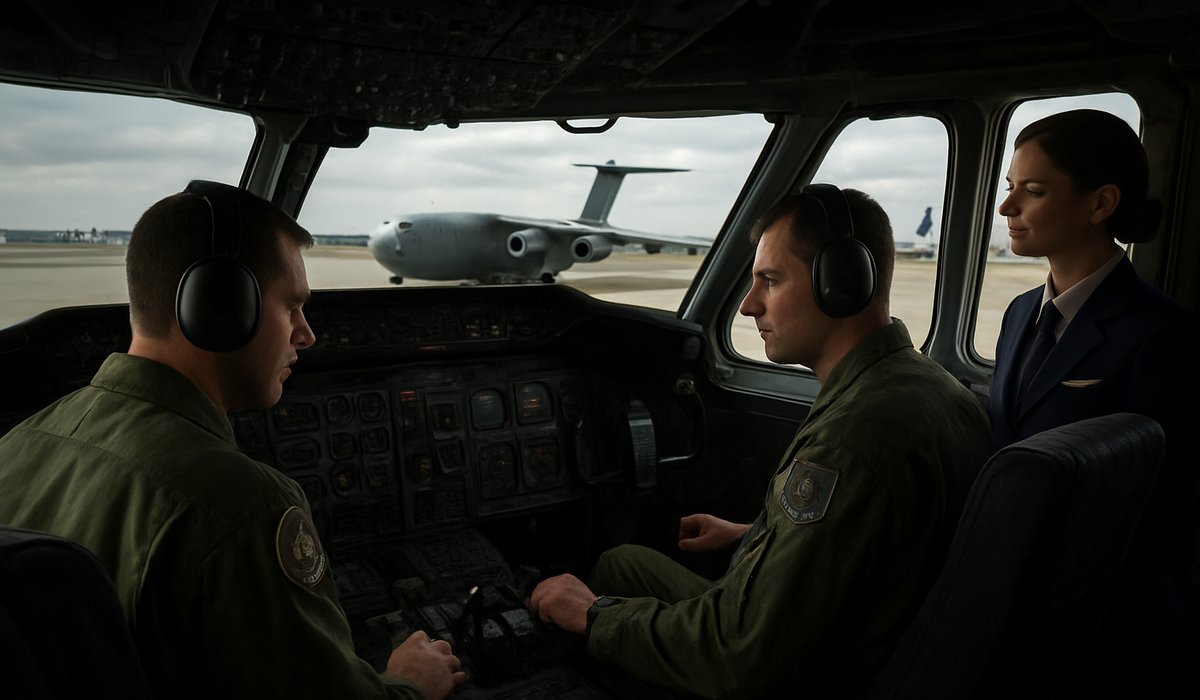
Image generated by AI
Why the World's Largest Military Transport Plane Took 40+ Years to Get a Modern Digital Cockpit
The C-5 Galaxy's delayed modernization reveals the complexities of retrofitting legacy military aircraft
A Half-Century of Analog Flight Decks
The Lockheed C-5 Galaxy, the United States Air Force's colossal strategic airlift workhorse, remained tethered to 1960s-era mechanical instrumentation for over four decades after its 1970 initial delivery—a technological lag that stands in stark contrast to commercial aviation's rapid digitization. Today's upgraded C-5M variant finally operates with modern glass cockpit displays, yet the transformation only materialized during the 2010s, more than two decades after civilian jetliners completed the same transition.
This protracted delay underscores a fundamental reality within military aviation: the institutional preference for mechanical reliability during the aircraft's original design phase created cascading challenges that made modernization extraordinarily expensive and technically complex.
Engineering Constraints and Cost Barriers
The C-5 Galaxy stretches 247 feet 10 inches (75.3 meters) in length—longer than a Boeing 747—making it the heaviest military aircraft ever built. When engineers confronted the possibility of retrofitting advanced digital avionics into this massive platform, the undertaking proved far more daunting than simply installing new displays.
The aircraft's original 1960s architecture emphasized mechanical systems and analog gauges because that design philosophy prioritized proven reliability over sophisticated electronics. Integrating modern glass cockpit technology required comprehensive rewiring, software integration, and testing protocols that demanded years of development and substantial capital investment.
The Flight Engineer Anomaly
Perhaps most revealing is the C-5's continued reliance on a flight engineer—a three-person cockpit team that vanished from commercial aviation nearly 35 years ago. The Boeing 747-400, which debuted in 1989 with fully integrated glass cockpits, eliminated the flight engineer position entirely. The Galaxy's flight engineer station still retains significant analog instrumentation, reflecting how deeply embedded mechanical systems remain throughout the airframe.
The Lockheed Martin Avionics Modernization Program (AMP) eventually retrofitted LCD displays for both pilots, yet this modernization maintained numerous analog backups and mechanical controls for critical system monitoring—a safety-first approach that civilian operators eventually abandoned after establishing digital redundancy protocols.
Strategic Implications
This modernization timeline illuminates broader military procurement realities. While commercial carriers replace aircraft every 20-30 years, military platforms like the C-5 remain operational for 50+ years. That longevity creates technical debt that becomes increasingly expensive to address decades after original design decisions locked in outdated architectures.
The U.S. Air Force's decision to finally upgrade the Galaxy's flight deck during the 2010s reflects recognition that even mechanical systems require eventual modernization—yet the delay demonstrates how legacy designs can constrain operational capabilities for entire generations of aviators.
FAQ: Military Aircraft Modernization and Glass Cockpits
Why did the C-5 Galaxy take so long to receive glass cockpit upgrades? The aircraft's 1960s design prioritized mechanical reliability, and retrofitting advanced digital systems into a 247-foot airframe proved technically complex and prohibitively expensive compared to designing new aircraft with integrated avionics.
How does the C-5's cockpit configuration differ from modern commercial aircraft? Unlike contemporary jetliners, the C-5M still operates with a three-person flight crew including a flight engineer, whose station retains analog instrumentation despite the pilots' LCD display upgrades.
When did commercial aviation transition to glass cockpits? The Boeing 747-400, introduced in 1989, pioneered full glass cockpit installations while eliminating flight engineer positions—roughly 40 years before the C-5 received comparable digital displays.
Does the C-5M's glass cockpit include full digital redundancy? No—the modernization maintains analog backups and mechanical controls as failsafes, reflecting military aviation's preference for proven secondary systems alongside primary digital instrumentation.
Why does the U.S. Air Force maintain such old aircraft instead of replacing them? Military aircraft platforms serve multi-decade operational roles, and replacing a massive strategic airlifter like the C-5 involves enormous developmental and procurement costs that exceed modernization expenses for existing fleets.
Related Travel Guides
Flight Delay Compensation Guide 2026
Understanding Airline Route Changes
Airport Security Process Updated (2026)
External Resources
Disclaimer
This article is for informational and educational purposes only. It does not constitute legal, financial, or professional advice. While we strive to provide accurate and up-to-date information, travel policies, regulations, and conditions change rapidly. Always verify information with official sources before making travel decisions. Nomad Lawyer makes no representations about the accuracy, reliability, completeness, or suitability of the information provided. Readers should consult qualified professionals for advice specific to their circumstances. The views expressed in this article are those of the author and do not necessarily reflect the views of Nomad Lawyer.
Kunal K Choudhary
Co-Founder & Contributor
A passionate traveller and tech enthusiast. Kunal contributes to the vision and growth of Nomad Lawyer, bringing fresh perspectives and driving the community forward.
Learn more about our team →