
American Airlines' Ultra-Long-Haul Strategy Hinges on Premium Cabin Economics as Industry Pursues Profitability Over Capacity
Breaking airline news and aviation industry updates for 2026.

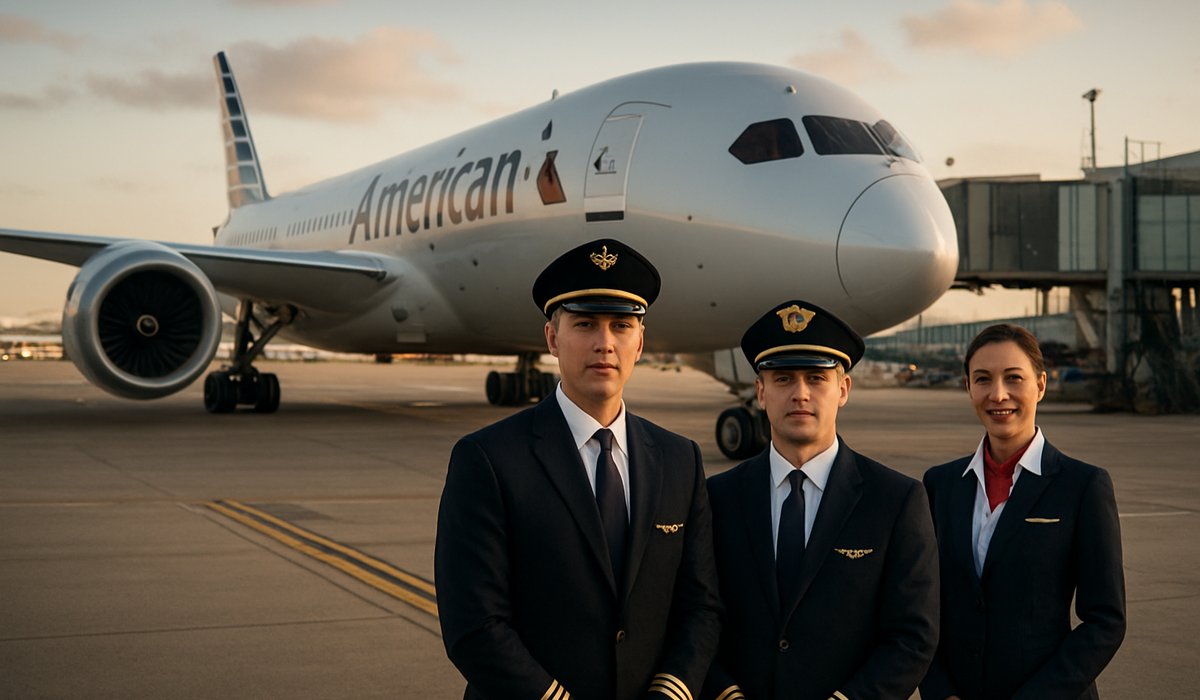
Image generated by AI
American Airlines' Ultra-Long-Haul Strategy Hinges on Premium Cabin Economics as Industry Pursues Profitability Over Capacity
How carriers are redesigning aircraft configurations to survive on the world's longest routes
The Ultra-Long-Haul Competition Intensifies
American Airlines has joined the ranks of global carriers operating some of aviation's most grueling point-to-point routes, launching its longest-ever service this year with a new nonstop connection between Dallas/Fort Worth and Brisbane. Operating the Boeing 787-9 Dreamliner on route AA 7, the carrier is banking on a lean business class configuration—reportedly just 51 premium suites—to achieve profitability on a journey spanning 7,216 nautical miles over more than 15 hours of flight time.
The move positions American in direct competition with established ultra-long-haul operators. United Airlines has dominated this segment since 2018 with its Houston-to-Sydney route (UA 101), also flown by the 787-9, while Delta Air Lines has maintained the Johannesburg-Atlanta corridor (DL 201) using the Airbus A350-900 since the late 2000s.
A Different Approach to Revenue Generation
What distinguishes American's strategy is its reliance on premium cabin yield rather than overall passenger volume. The airline's decision to equip AA 7 with a heavily business-class-focused cabin reflects broader industry trends toward maximizing revenue per available seat mile—a critical metric for routes where fuel consumption and crew costs consume substantial margins.
This approach directly correlates with volatile jet fuel prices and post-pandemic route economics. Ultra-long-haul flights require sophisticated fuel hedging strategies and premium passenger demand to offset operational expenses that can exceed those of comparable regional aircraft by 40-50%.
Industry Context: The Premium Cabin Equation
The aviation sector's pivot toward premium seating density mirrors patterns observed across the Atlantic and Pacific gateways, where business and first-class fares generate disproportionate revenue despite representing a minority of seats. With fuel surcharges remaining elevated and crew scheduling complexities on 15+ hour flights, carriers have fundamentally restructured their cabin layouts to prioritize high-yielding passengers.
American's Brisbane route represents the newest entrant in this ultra-competitive segment, arriving approximately 15 years after United's Sydney operation and nearly two decades after Delta established its Johannesburg service. The competitive landscape suggests that route success depends less on being first-to-market and more on achieving sustainable unit economics through disciplined capacity management and premium positioning.
Frequently Asked Questions
Q: Why do airlines like American focus on business class seats for ultra-long-haul routes? A: Ultra-long-haul flights incur extreme fuel costs and crew expenses. Business class fares—often 5-10 times higher than economy—generate the revenue necessary to achieve profitability on these marginal routes.
Q: How does jet fuel pricing affect airline fees and baggage charges on long routes? A: Rising fuel costs directly pressure airlines' margins, leading to increased ancillary fees including baggage charges, seat selection fees, and premium cabin surcharges to maintain profitability.
Q: What makes the Dallas-Brisbane route different from Houston-Sydney or Johannesburg-Atlanta? A: American's route is the shortest of the three major ultra-long-haul operations (7,216 NM) and the most recent launch, requiring a more optimized configuration to compete with established carriers on established corridors.
Q: Can airlines operate profitable ultra-long-haul flights with high economy seat counts? A: Historically, no. The 787 and A350 aircraft were designed with mixed-class configurations favoring premium cabins, as economy density alone cannot offset the operational costs of 15+ hour flights.
Q: How do geopolitical factors influence ultra-long-haul route planning? A: Restrictions, fuel surcharges, and overflight rights directly impact route viability. Airlines must carefully select city pairs where sufficient premium demand exists to justify the operational complexity.
Related Travel Guides
External Resources
Disclaimer
This article is for informational and educational purposes only. It does not constitute legal, financial, or professional advice. While we strive to provide accurate and up-to-date information, travel policies, regulations, and conditions change rapidly. Always verify information with official sources before making travel decisions. Nomad Lawyer makes no representations about the accuracy, reliability, completeness, or suitability of the information provided. Readers should consult qualified professionals for advice specific to their circumstances. The views expressed in this article are those of the author and do not necessarily reflect the views of Nomad Lawyer.
Preeti Gunjan
Contributor & Community Manager
A passionate traveller and community builder. Preeti helps grow the Nomad Lawyer community, fostering engagement and bringing the reader experience to life.
Learn more about our team →