
Emirates Dominates Global A380 Operations With 48-Destination Network in July
Breaking airline news and aviation industry updates for 2026.

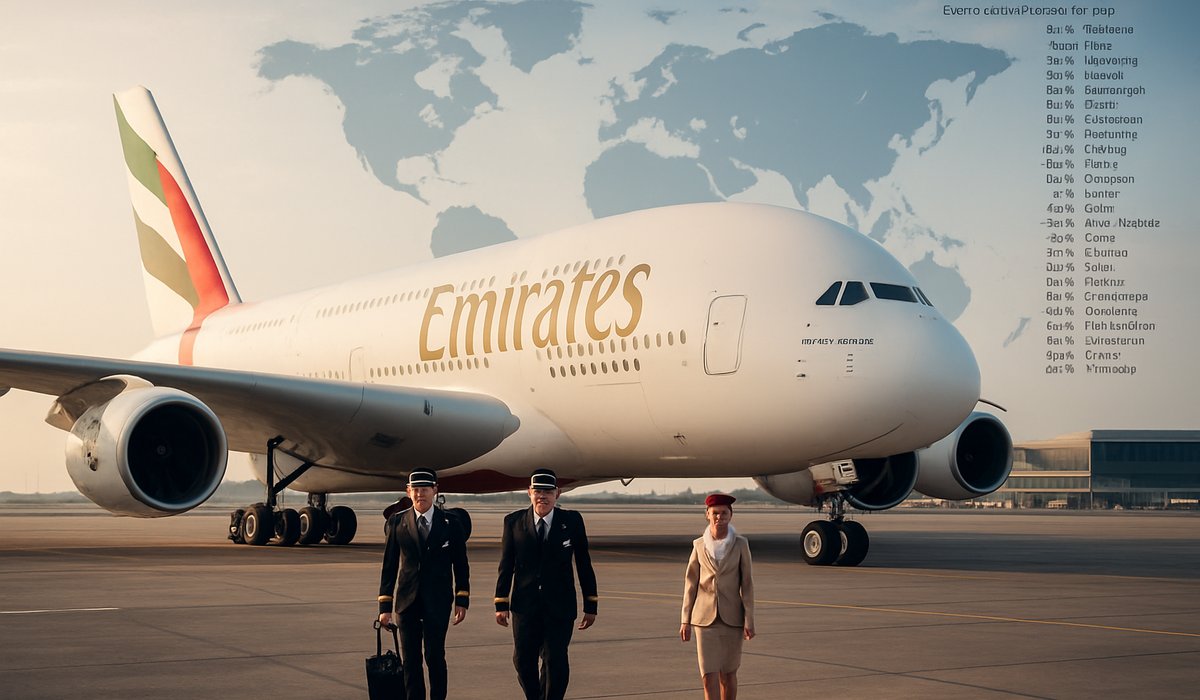
Image generated by AI
Emirates Dominates Global A380 Operations With 48-Destination Network in July
The Dubai carrier's double-deck aircraft strategy underscores aviation's recovery and the growing demand for high-capacity long-haul travel
A380 Fleet Expansion Signals Post-Pandemic Aviation Recovery
Emirates has cemented its position as the world's undisputed leader in Airbus A380 operations, with the Gulf carrier deploying its fleet of double-deck superjumbos across an unprecedented 48 global destinations during July. The ambitious scheduling reflects both the airline's confidence in international travel demand and the strategic advantages of the world's largest commercial passenger aircraft in competitive long-haul markets.
The Dubai-based carrier is projected to execute approximately 69 daily A380 departures from its primary hub at Dubai International Airport (DXB), a testament to the aircraft's centrality in its network strategy. This aggressive utilization underscores how premium international carriers are leveraging high-capacity aircraft to maximize revenue per flight while managing operational costs in an era of fluctuating jet fuel prices and evolving passenger preferences.
Emirates' Strategic A380 Advantage in Competitive Markets
As the largest A380 operator globally, Emirates operates the aircraft across a significantly wider geographic footprint than competing carriers. The 48-destination deployment demonstrates the airline's reliance on the aircraft for routes spanning Europe, Asia, North America, and Africa—regions where sustained demand for premium, capacity-intensive services remains strong despite economic headwinds.
The frequency of operations reflects both the A380's operational efficiency on trunk routes and Emirates' hub-and-spoke model, which centralizes international connectivity through Dubai. Each aircraft seats approximately 500 passengers across two decks, enabling the carrier to serve less-dense markets that would be uneconomical with smaller widebody aircraft while maintaining profitability.
Implications for the Aviation Industry
Emirates' extensive A380 deployment contradicts earlier predictions that the superjumbo would face retirement pressures. Instead, the carrier's strategy signals that ultra-high-capacity aircraft remain commercially viable for flag carriers with strong premium demand, particularly in Middle Eastern markets where Emirates maintains significant pricing power.
The schedule also reflects broader industry trends: as airlines navigate volatile fuel costs and rising operational expenses, deploying larger aircraft on popular routes reduces per-seat expenses and helps mitigate the impact of baggage charges and ancillary fees on passenger economics.
FAQ: Emirates A380 Operations and Aviation Industry Trends
How many A380 aircraft does Emirates operate? Emirates operates the world's largest commercial A380 fleet, with the aircraft forming the backbone of its long-haul network across six continents.
Why does Emirates favor the A380 over other widebody aircraft? The A380's capacity of approximately 500 passengers makes it ideal for high-demand international routes where per-seat costs are critical. On premium routes from Dubai, the aircraft maximizes revenue while maintaining competitive advantages against competitors flying smaller widebodies.
How do jet fuel prices affect A380 deployment? While larger aircraft consume more fuel in absolute terms, their per-seat fuel consumption is significantly lower than smaller widebodies. This efficiency becomes crucial when jet fuel prices spike, making the A380 more economical during volatile market periods.
Will other airlines expand A380 operations in response to Emirates' strategy? Currently, only a handful of carriers operate the A380, and most lack the network density and hub advantage that Emirates possesses. Airbus has curtailed production, making fleet expansion challenging for other operators.
How do airline baggage fees impact ticket pricing on A380 routes? Premium carriers using A380s often position themselves as higher-service alternatives, justifying lower baggage fee structures than competitors. The aircraft's capacity allows Emirates to absorb baggage costs while maintaining margins through higher base fares.
Related Travel Guides
-
Six Airlines Leading the Premium Narrowbody Revolution: Business Class Redefined in 2026
-
Neither Southwest Delta: Consumer Reports Names Cleanliest Economy Cabins 2026
External Resources
Disclaimer
This article is for informational and educational purposes only. It does not constitute legal, financial, or professional advice. While we strive to provide accurate and up-to-date information, travel policies, regulations, and conditions change rapidly. Always verify information with official sources before making travel decisions. Nomad Lawyer makes no representations about the accuracy, reliability, completeness, or suitability of the information provided. Readers should consult qualified professionals for advice specific to their circumstances. The views expressed in this article are those of the author and do not necessarily reflect the views of Nomad Lawyer.
Kunal K Choudhary
Co-Founder & Contributor
A passionate traveller and tech enthusiast. Kunal contributes to the vision and growth of Nomad Lawyer, bringing fresh perspectives and driving the community forward.
Learn more about our team →