
What Happens When A Fighter Jet is Retired?
Retired fighter jets follow diverse global pathways including military transfers, Arizona boneyards, private training fl

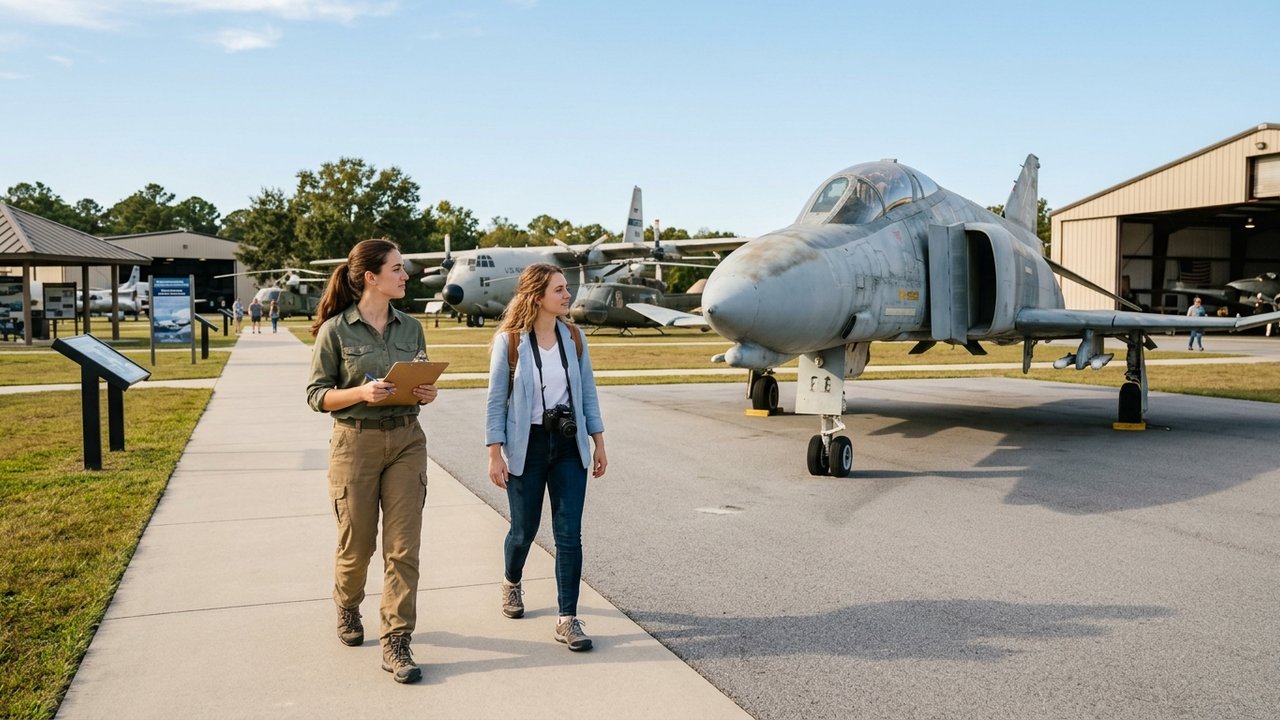
Image generated by AI
[Global Aviation Industry Report, June 2026] — When defense ministries decommission aging combat aircraft, they trigger complex logistical chains that reshape global military training, international defense partnerships, and strategic storage networks. Recent industry assessments confirm that retired fighter jets follow highly specialized pathways, ranging from cross-border military transfers and purpose-built storage facilities to private training fleets and public museum preservation programs.
Background and Context Modern combat aircraft represent massive capital investments, requiring specialized handling once they exit active squadron duties. Western European militaries typically retire platforms while airframes still possess substantial operational lifespans, enabling surplus aircraft to flow smoothly into allied defense inventories. Conversely, Soviet-era designs frequently face accelerated service terminations due to structural fatigue and stricter maintenance thresholds. The final operational MiG-21 Fishbeds likely ceased missions in 2025 when India grounded its last remaining units, while several hundred F-5 Tiger models continue active patrol duties worldwide. Geopolitical legislation, including the 2017 US CAATSA Act, significantly contracted the secondary market for Soviet-derived platforms following the USSR dissolution, though select ex-Russian types like Su-25 attack aircraft still reach forward-deployed forces in regions such as Mali.
Western European Air Forces Transfer Aircraft to Eastern and South American Allies
European defense ministries actively redistribute retiring combat platforms to strengthen partner nation capabilities. Denmark, Belgium, Norway, and the Netherlands currently coordinate F-16 transfers destined for Romanian, Ukrainian, and Argentine air forces. French defense officials have similarly allocated Mirage interceptors and Super Étendard strike aircraft to Ukraine and Argentina. Finnish authorities confirmed plans to donate sixteen Gripen C/D fighters to Ukrainian squadrons beginning in 2027. Poland and Slovakia also redirected legacy MiG-29 interceptors to support Eastern European defense requirements.
The United Kingdom retired its Harrier jump jets in 2010, with American Marines subsequently acquiring the airframes primarily for component recovery. Canadian defense procurement teams recently purchased retired Australian F/A-18 Hornets to extract functional airframes and replacement components. American military leadership rarely exports retired fighters abroad due to classified avionics, requirements for domestic reserve pools, and specialized test platform dependencies. Carrier-based Navy aircraft frequently endure accelerated structural degradation from repeated high-stress landings, further limiting their overseas transfer viability.
Arizona Storage Facilities and Global Inventory Transparency Gaps
The United States operates the world’s most systematic aircraft storage network at Davis-Monthan Air Force Base in Arizona. Retired Air Force, Navy, and Marine Corps combat jets enter a highly regulated preservation cycle where units await potential reactivation, international transfer, component harvesting, or final disposal. No other defense organization maintains comparable storage infrastructure. Russian military aviation historically relies on decentralized, ad hoc preservation methods at facilities like Lipetsk and Taganrog, complicating independent fleet assessments.
Defense analysts must estimate inventory levels by tracking satellite imagery, serial number visibility, and recent flight activity. Some published 2026 fleet lists incorrectly catalog operational Malian MiG-21s despite no credible evidence of recent flight operations. American transparency standards provide audited readiness rates and reserve counts through government oversight bodies. Chinese military aviation maintains complete operational opacity, forcing researchers to rely on indirect observation metrics and probable attrition calculations.
Target Drone Conversions and Private Aggressor Training Fleets
American military aviation frequently repurposes decommissioned fighters into unmanned aerial targets and advanced research platforms. Retired F-4 Phantom IIs transitioned into QF-4 aerial targets until structural limits required switching to converted F-16 Fighting Falcons designated as QF-16 drones. Certain F-16 airframes instead support the VENOM program, functioning as modified testbeds for next-generation flight control systems. Cold War historical records document covert American acquisitions of MiG-23, MiG-21, and MiG-29 fighters for Operation Constant Peg aggressor training exercises. Modern defense contractors now operate extensive private aggressor fleets that simulate enemy tactics for allied pilot preparation.
| Select private contractors | Approx. fleet size per Draken, TacAir, etc. | Notable aircraft types (not exhaustive) |
|---|---|---|
| Airborne Tactical Advantage Company (Textron) | 90 | Mirage F1, F-21 Kfir, Mk.58 Hawker Hunter, L-39 Albatros |
| Draken International | 150 | A-4K Skyhawks, L-159E ALCA, Mirage F1, MiG-21bis, Atlas Cheetah |
| Top Aces/Blue Air Training | Over 150 | F-16A/B, Dornier Alpha Jet, A-4 Skyhawk |
| Tactical Air Support (TacAir) | 63 | F-5E/F Tiger IIs |
| Ravn Aerospace (formerly Air USA) | 16+ | BAE Hawk Mk.67, Aero L-39ZA Albatro |
Private training firms currently operate between 400 and 600 combat aircraft, supplying realistic adversary simulation for NATO and allied exercises.
Demilitarization Protocols and Advanced Composite Recycling Challenges
Mass aircraft dismantling remains a standard disposal method, particularly for platforms with depleted aftermarket demand or classified systems. American military leadership systematically destroyed retired F-14 Tomcat airframes to prevent sensitive components from entering Iranian black markets. Historical disposal methods included ocean dumping for artificial reef creation and bulk earth burial, as demonstrated when Australia interred twenty-three F-111 Aardvark aircraft in 2011. Modern aerospace manufacturing heavily utilizes Radar Absorbent Materials and advanced composites, complicating conventional recycling streams. Ex-RAF Tranche 1 Typhoon Eurofighters require specialized handling to prevent intellectual property exposure.
Component recovery frequently supports ongoing fleet maintenance and new production lines. Swedish defense authorities allocated 2024 aid funding to Ukraine specifically for Gripen Es manufacturing components, preserving older C/D variants for diplomatic donation. Russian defense manufacturers routinely integrate salvaged parts into newly assembled Su-30, Su-34, and Su-35 airframes to maintain production velocity.
Museum Preservation Initiatives and Flying Restoration Programs
Defense ministries routinely allocate retired combat aircraft to public educational institutions. American air force leadership designated twelve F-117 Nighthawk stealth fighters for eventual museum placement across multiple states. These classified platforms undergo rigorous demilitarization at Air Force Plant 42 in Palmdale, California, before public exhibition. Australian F/A-18 Hornet retirement plans distributed three aircraft to museums, transferred twenty-five units to Canadian operators, and placed remaining airframes in Guam storage following contracted training purchases that failed to materialize.
Major institutions like the National Museum of the US Air Force house dozens of combat aircraft, contributing to an estimated global museum collection of 3,000 to over 6,000 military planes. Preservation organizations such as the Commemorative Air Force maintain actively flown historic squadrons. Legislative action passed by Congress in 2026 will transfer three remaining F-14D Tomcats to the US Space & Rocket Center in Alabama, with objectives to restore one airframe to flight status.
Drone Conversions and Tactical Decoy Deployments
Military aviation continues experimenting with unconventional post-service applications. Chinese defense programs reportedly convert aging J-6 fighters into one-way attack drones and cruise missiles designed to overwhelm enemy air defense networks. Active conflict zones increasingly utilize decommissioned airframes as tactical decoys. Russian and Ukrainian forces tow stored combat aircraft onto active flight lines to absorb incoming missile strikes and protect genuine operational assets. Unverified defense reports suggest American authorities dispatched derelict F-16 airframes to Ukrainian installations for similar decoy purposes.
Underfunded military aviation units frequently abandon retired platforms directly on tarmac surfaces. Satellite imagery reveals numerous derelict aircraft left to deteriorate across Syrian and African airbases, highlighting the logistical disparities in global aircraft retirement management.
Impact Analysis
The diversification of retired fighter jet disposal pathways directly influences international defense trade dynamics, cybersecurity protocols, and pilot training readiness. Streamlined European transfer programs accelerate allied capability upgrades while reducing domestic storage burdens. Conversely, opaque Russian and Chinese inventory management obscures true global combat aviation strength, complicating strategic forecasting. The rise of private aggressor fleets professionalizes adversary simulation, elevating allied pilot preparedness without requiring dedicated government training squadrons. Advanced composite recycling challenges force defense manufacturers to redesign end-of-life protocols, potentially increasing long-term platform sustainability costs. Decoy utilization in active conflict zones demonstrates how retired assets retain immediate tactical value, blurring traditional boundaries between decommissioned hardware and operational weapons.
Forward-Looking Conclusion
Global defense organizations will increasingly standardize retired fighter jet management through transparent storage networks, regulated component harvesting, and expanded international transfer agreements. As composite materials and classified avionics dominate next-generation aircraft, demilitarization procedures will require specialized industrial partnerships. Private training contractors will likely absorb larger portions of fleet retirement, reducing government maintenance expenses while sustaining realistic combat simulation. Strategic decoy deployment and drone conversion programs will further extend combat airframe utility, ensuring retired fighter jets continue supporting defense objectives long after active squadron withdrawal.
Related Travel Guides
Disclaimer
This article is for informational and educational purposes only. It does not constitute legal, financial, or professional advice. While we strive to provide accurate and up-to-date information, travel policies, regulations, and conditions change rapidly. Always verify information with official sources before making travel decisions. Nomad Lawyer makes no representations about the accuracy, reliability, completeness, or suitability of the information provided. Readers should consult qualified professionals for advice specific to their circumstances. The views expressed in this article are those of the author and do not necessarily reflect the views of Nomad Lawyer.
Kunal K Choudhary
Co-Founder & Contributor
A passionate traveller and tech enthusiast. Kunal contributes to the vision and growth of Nomad Lawyer, bringing fresh perspectives and driving the community forward.
Learn more about our team →