
Emirates' Airbus A380 Remains a Game-Changer for Long-Haul Travel as Airlines Phase Out Superjumbo Fleet
Breaking airline news and aviation industry updates for 2026.

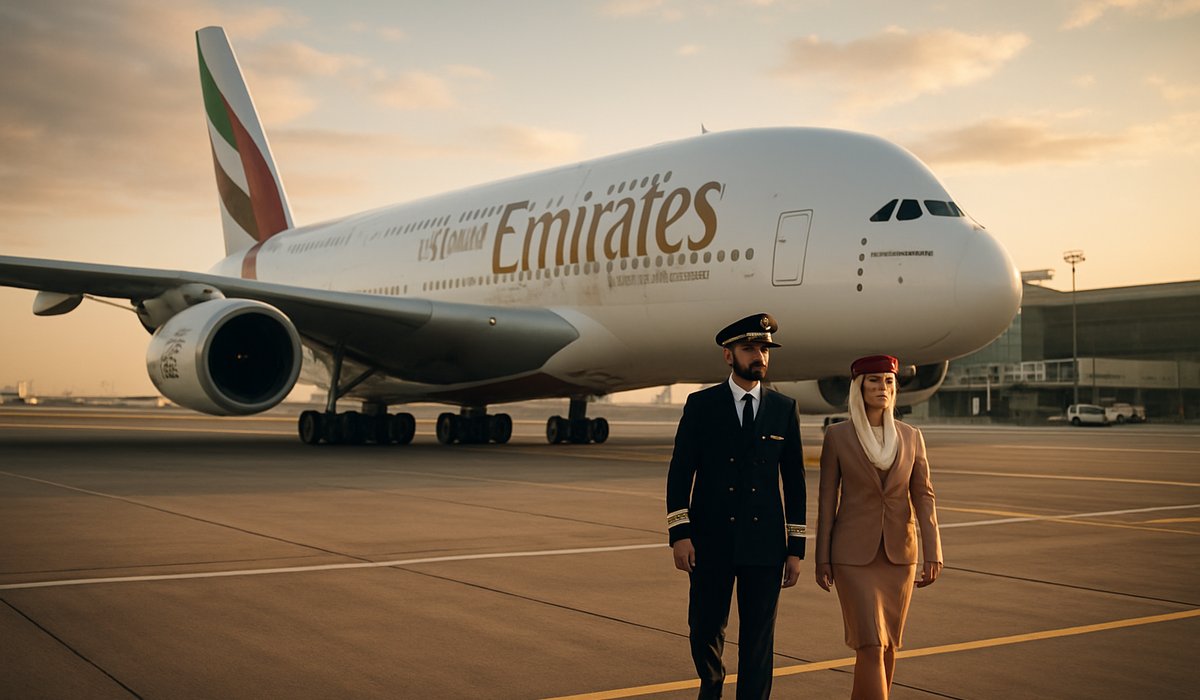
Image generated by AI
Emirates' Airbus A380 Remains a Game-Changer for Long-Haul Travel as Airlines Phase Out Superjumbo Fleet
While competitors abandon the world's largest passenger aircraft, Dubai's flagship carrier doubles down on the iconic jet—and passengers are noticing the difference
The A380 Advantage: Why Emirates Stands Apart
As airlines globally retreat from operating the Airbus A380—the world's largest passenger airliner—Emirates has made a contrarian bet that few carriers can match. The Dubai-based airline operates the planet's most extensive A380 fleet, positioning the superjumbo as the cornerstone of its premium long-haul network. This strategic commitment has transformed how passengers experience international travel, creating a competitive advantage that rivals struggle to replicate.
Unparalleled Capacity and Comfort
The A380's double-deck configuration fundamentally changes the passenger experience. With over 500 seats spread across two passenger decks, Emirates can offer significantly more premium cabin options than single-deck competitors. This translates to more first-class suites, enhanced business-class seating, and a less congested economy section—a critical differentiator when carriers are competing on routes where standard wide-body jets operate.
The aircraft's spaciousness directly impacts cabin pressure, air quality, and overall comfort levels. Passengers report noticeably reduced fatigue on ultra-long-haul flights, where the A380's size allows Emirates to deploy wider aisles, larger lavatories, and improved climate control systems compared to competing narrow-body configurations.
Premium Product Exclusivity
Emirates has leveraged the A380 to create a distinctive premium offering. The airline's first-class suites on the A380 feature enclosed compartments with direct aisle access—amenities that smaller aircraft simply cannot accommodate. Business-class passengers benefit from greater seat-to-passenger ratios, meaning shorter queues at lavatories and more accessible overhead storage.
This exclusivity matters in a market where premium-cabin revenue drives airline profitability. While budget-conscious travelers have shifted to low-cost carriers, Emirates uses the A380 to capture high-value business and first-class passengers willing to pay substantial premiums for superior comfort.
Network Flexibility and Route Economics
Paradoxically, the A380's massive capacity creates operational flexibility. Emirates can deploy the aircraft on high-demand routes while maintaining premium-heavy cabin configurations that maximize yield per available seat. On routes where competitors operate 350-seat wide-bodies, Emirates' A380 capacity allows the airline to reduce frequency while maintaining capacity—lowering overall operating costs despite the aircraft's size.
FAQ: Airbus A380 Travel and Emirates Operations
Why did other airlines stop flying the A380 while Emirates continues operating it? Most carriers found the A380 economically challenging on routes with lower demand, particularly post-pandemic. Emirates, however, operates high-capacity trunk routes between major global hubs where the A380's size generates sufficient passenger volumes to justify operations.
What are the main comfort advantages of flying Emirates A380 long-haul? Passengers benefit from superior cabin pressure, improved air circulation, exclusive first-class suites, and reduced crowding throughout the aircraft—factors that significantly reduce fatigue on flights exceeding 12 hours.
How does the A380's size impact airline pricing and baggage policies? The aircraft's massive capacity allows Emirates to offer more competitive pricing on premium cabins while maintaining generous baggage allowances, reducing additional fees that plague competitors operating smaller wide-body aircraft.
Are A380 flights more expensive than standard wide-body options? Not necessarily. While first and business-class premium products command higher prices, the A380's capacity means Emirates can offer competitive economy fares by spreading fixed costs across more seats.
Will Emirates eventually retire its A380 fleet? Currently, Emirates shows no plans to retire the A380, having invested in fleet modernization. The airline views the superjumbo as integral to its long-haul strategy for the foreseeable future.
Related Travel Guides
External Resources
Disclaimer
This article is for informational and educational purposes only. It does not constitute legal, financial, or professional advice. While we strive to provide accurate and up-to-date information, travel policies, regulations, and conditions change rapidly. Always verify information with official sources before making travel decisions. Nomad Lawyer makes no representations about the accuracy, reliability, completeness, or suitability of the information provided. Readers should consult qualified professionals for advice specific to their circumstances. The views expressed in this article are those of the author and do not necessarily reflect the views of Nomad Lawyer.
Kunal K Choudhary
Co-Founder & Contributor
A passionate traveller and tech enthusiast. Kunal contributes to the vision and growth of Nomad Lawyer, bringing fresh perspectives and driving the community forward.
Learn more about our team →