
Carnival, Royal Caribbean, and Norwegian Cruise Costs 2026: Analyzing Hidden Fee Hikes
A detailed analysis of the 2026 pricing shifts across Carnival, Royal Caribbean, and Norwegian Cruise Line, focusing on the surge in daily gratuities and unbundled beverage fees.

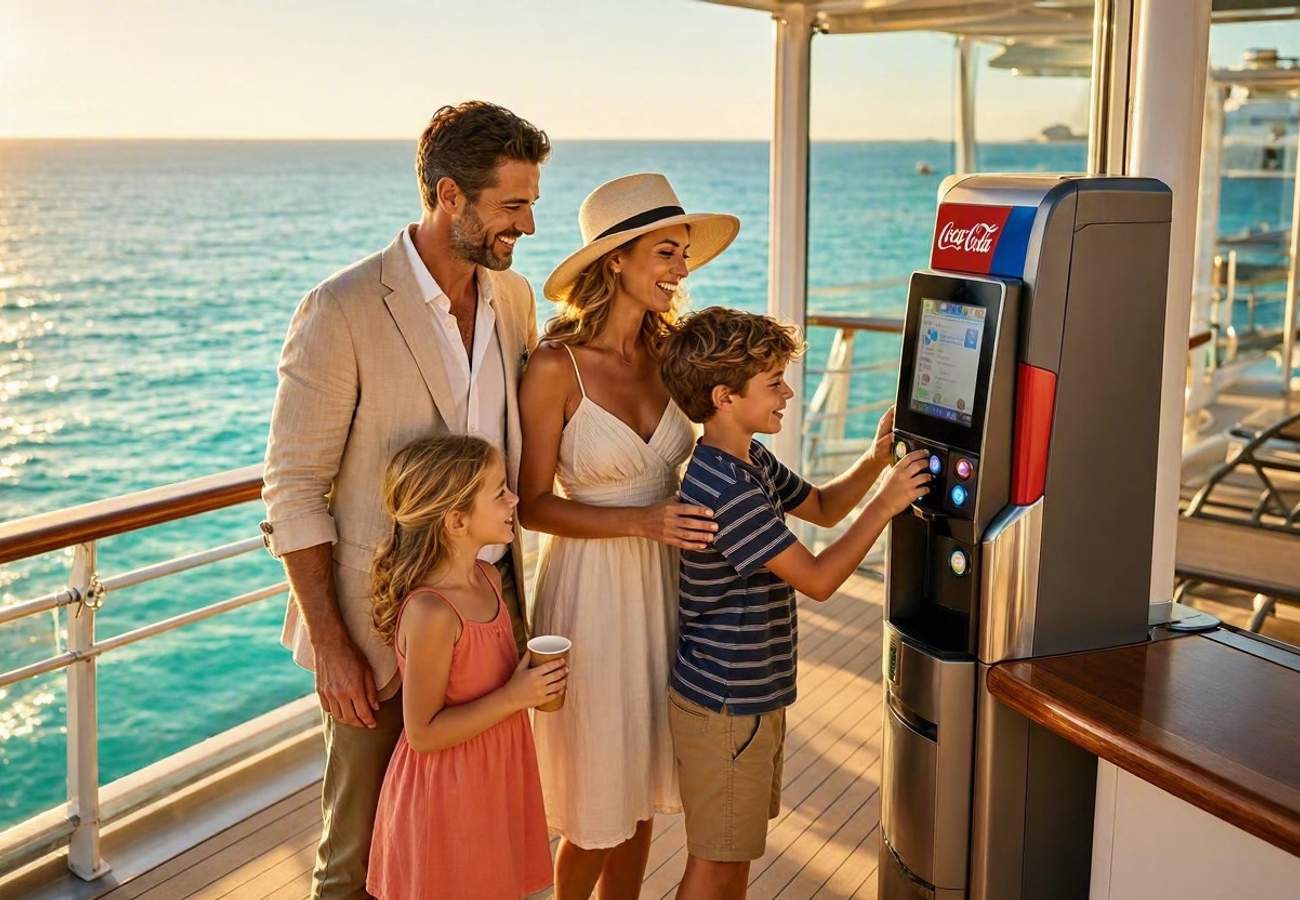
Image generated by AI
$518 is the baseline gratuity cost for a family of four on a seven-night Royal Caribbean sailing, illustrating a broader industry shift toward higher daily service charges in 2026. While the primary ticket price often remains the focal point of a vacation budget, the secondary cost layer—comprising mandatory tips, beverage surcharges, and unbundled amenities—has undergone a substantial transformation. For the modern traveler, the "all-inclusive" promise of a cruise is increasingly a misnomer, replaced by a complex pricing architecture that rewards those who can calculate the true cost of "free" perks.
The Shift in Budget Cruising: Carnival's 2026 Adjustments
Carnival Cruise Line has traditionally served as the entry point for budget-conscious families, but a series of pricing pivots implemented on April 2, 2026, has altered the financial math. The line has aggressively raised its daily service charges to offset operational overhead and crew compensation. For guests in standard staterooms, the daily gratuity now stands at $17 per person, while those in suites are billed $19 per day.
When scaled to a standard seven-night itinerary for a family of four, these gratuities alone total $476. This represents a non-negotiable expenditure that frequently escapes the notice of first-time cruisers until the final statement is produced. Beyond tips, the beverage sector has seen a sharp incline. The Bottomless Bubbles soda package for adults has risen to $11.99 per day—a roughly 26% increase. While children's pricing remains at $6.95 per day, all packages are subject to a mandatory 20% service charge. For a parent and child over a week, this adds approximately $160 to the trip cost solely for non-alcoholic drinks.
For those seeking alcohol, the Cheers! package remains a high-ticket item, often exceeding $60 per day when purchased onboard. To manage these costs, travelers should consult the official Carnival Cruise Line website to pre-purchase packages, effectively treating these fees as part of the base fare to avoid "sticker shock" upon disembarkation.
Premium Friction: Royal Caribbean's Unbundling Strategy
Royal Caribbean continues to position itself as the high-amenity leader of the "Big Three," but this positioning comes with the industry's steepest baseline fees. In 2026, standard stateroom guests are charged $18.50 per person, per day for gratuities, while suite guests pay $21.00. This results in a $518 baseline for a family of four on a week-long voyage, the highest among its primary competitors.
More concerning for veteran travelers is the trend toward "unbundling"—the removal of small, previously included perks to create new revenue streams. A July 2026 policy change now requires a $4.99 fee for the Coca-Cola Freestyle souvenir cup. Previously, these cups were bundled into various drink packages; now, they are a standalone charge.
The financial impact of these combined fees is significant. A couple staying in a suite will incur nearly $300 in gratuities alone for a seven-day trip. When combined with the new accessory fees and beverage costs, the "hidden" spend for a family of four can easily surpass $600. While the Royal Caribbean International fleet offers unmatched infrastructure, such as the Icon-class ships, the cost of accessing that infrastructure has become increasingly fragmented.
The "Free at Sea" Paradox: Norwegian Cruise Line
Norwegian Cruise Line (NCL) utilizes a different psychological pricing model centered on its "Free at Sea" promotion. By offering "free" open bars and specialty dining, NCL attracts travelers who prefer a predictable, front-loaded cost. However, the term "free" is a marketing designation rather than a financial reality.
The hidden cost lies in the service charges. Guests are required to pay a 20% gratuity based on the retail value of the "free" package. This daily service charge typically ranges between $28.50 and $32 per person, per day. Consequently, a couple on a seven-night cruise will find that their "complimentary" beverage package actually costs them over $400 in service fees.
| Cruise Line | Standard Daily Gratuity (Per Person) | Suite Daily Gratuity (Per Person) | 7-Night Cost (Family of 4, Standard) | Key 2026 Pricing Shift |
|---|---|---|---|---|
| Carnival | $17.00 | $19.00 | $476 | 26% hike in adult soda packages |
| Royal Caribbean | $18.50 | $21.00 | $518 | $4.99 fee for Freestyle cups |
| Norwegian | Variable* | Variable* | $400+ (Service fees only) | 20% retail-value service charge on "free" perks |
*NCL's costs are primarily driven by service charges on bundled packages rather than a flat daily stateroom tip.
Expert Analysis: The Financialization of the Cruise Experience
For travelers booking in 2026, the direct consequence of these shifts is the erosion of the "all-inclusive" value proposition. We are seeing a transition from Flat-Fee Pricing to Variable-Service Pricing.
The pricing pressure created by these changes means that the "cheapest" cruise line is no longer determined by the ticket price, but by the passenger's consumption habits. For example, a non-drinker is financially penalized on Norwegian Cruise Line because the "Free at Sea" model forces a service charge based on a package they may not fully utilize. Conversely, a high-consumption traveler finds more value in NCL's model than in Royal Caribbean's a la carte approach.
Furthermore, the unbundling of items like the $4.99 souvenir cup at Royal Caribbean signals a move toward "micro-transactional" cruising. This strategy allows airlines and cruise lines to maintain a competitive "lead-in" price while recapturing margins through small, high-frequency charges. To mitigate this, travelers must now employ a "Total Cost of Ownership" (TCO) approach to booking, calculating gratuities and service fees as a mandatory percentage of the fare rather than as optional tips. For precise industry standards on passenger rights and pricing transparency, travelers can refer to the International Air Transport Association (IATA) for comparative travel sector trends.
Key Takeaways
- Gratuity Baselines: Royal Caribbean is the most expensive for basic service, costing a family of four $518 for a week-long trip.
- The "Free" Trap: Norwegian's "Free at Sea" perks carry a 20% retail-value service charge, potentially adding $400+ per couple per week.
- Beverage Inflation: Carnival's adult soda packages have jumped 26% to $11.99 per day, plus a 20% service fee.
- Micro-Fees: Royal Caribbean has begun unbundling small perks, such as charging $4.99 for Coca-Cola Freestyle cups.
- Budgeting Strategy: Treat daily gratuities and service charges as a mandatory 15-25% increase over the base ticket price.
FAQ: Cruise Budgeting 2026
Are cruise gratuities mandatory in 2026? While technically optional, most lines strongly encourage them. Carnival and Royal Caribbean apply them as daily charges to your account. Attempting to remove them often requires a visit to Guest Services and may impact service quality.
Which cruise line is cheapest for families in 2026? Carnival remains the most affordable for base fares and soda packages, though its recent 26% hike in adult beverage costs has narrowed the gap with mid-tier lines.
How do I avoid the "hidden" costs on Norwegian Cruise Line? Be aware that "free" packages include a 20% service charge based on retail value. Calculate this daily fee ($28.50–$32 per person) before deciding if the "free" perk is actually a value.
Why is Royal Caribbean charging for souvenir cups now? This is part of an unbundling strategy to increase ancillary revenue. Travelers who previously received these as part of a package must now pay a separate $4.99 fee.
The era of the predictable cruise budget is over; precision in planning is now the only way to avoid the final-day bill shock.
Related Travel Guides
Disclaimer
This article is for informational and educational purposes only. It does not constitute legal, financial, or professional advice. While we strive to provide accurate and up-to-date information, travel policies, regulations, and conditions change rapidly. Always verify information with official sources before making travel decisions. Nomad Lawyer makes no representations about the accuracy, reliability, completeness, or suitability of the information provided. Readers should consult qualified professionals for advice specific to their circumstances. The views expressed in this article are those of the author and do not necessarily reflect the views of Nomad Lawyer.
Preeti Gunjan
Contributor & Community Manager
A passionate traveller and community builder. Preeti helps grow the Nomad Lawyer community, fostering engagement and bringing the reader experience to life.
Learn more about our team →