
WestJet Flight Attendants Threaten August 2026 Long Weekend Strike as 72-Hour Notice Expires
WestJet flight attendants could strike as early as August 2, 2026, threatening Canada's civic holiday travel with cancellations and airport chaos.

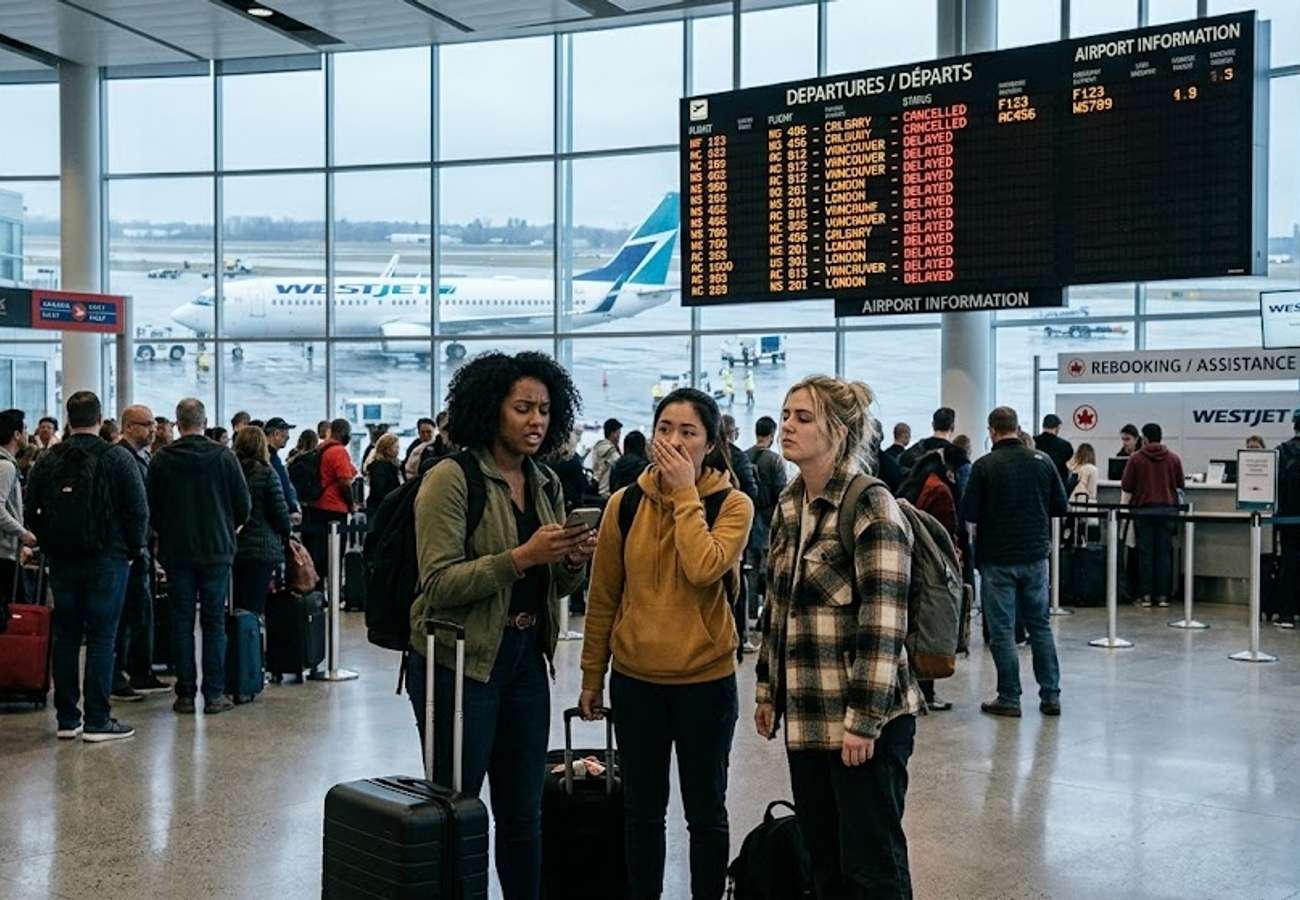
Image generated by AI
WestJet flight attendants could walk off the job as early as Sunday, August 2, 2026, throwing Canada's August long weekend into chaos. The 72-hour strike notice expires just before the Monday, August 3 civic holiday—one of the busiest travel windows of the summer.
Travelers across Canada are bracing for potential widespread disruption as WestJet's flight attendant union moves toward strike action over the August long weekend. The union secured its strike mandate in July, granting leadership the authority to call a walkout if final negotiations collapse. With the mandatory cooling-off period expired and a 72-hour notice issued, the earliest possible strike date falls on Sunday, August 2, 2026—directly overlapping with peak departure days for the Monday, August 3 civic holiday.
This timing is particularly punishing for passengers. The three-day weekend traditionally drives a surge in domestic, transborder, and leisure travel as Canadians head to cottages, cross-country destinations, and international getaways. A work stoppage during this window would hit travelers at the worst possible moment.
A Familiar Pattern of Labour Turbulence
WestJet has faced labour-related disruptions before. In 2024, a mechanics job action forced hundreds of cancellations around the Canada Day holiday, stranding passengers and drawing public frustration. That episode set a precedent that many travelers now fear could repeat over the August long weekend.
Reports indicate that WestJet has already begun operational planning for multiple scenarios—ranging from a last-minute settlement to a full work stoppage. The carrier has previously wound down operations ahead of potential strikes to reposition aircraft and crew, a strategy that can trigger cancellations even before any official walkout begins. Passengers should watch for early signs of schedule adjustments in the days leading up to August 2.
WestJet's Flexible Travel Policy: What It Covers
In response to mounting uncertainty, WestJet has introduced a flexible travel policy for customers booked during the core strike window. Passengers scheduled to fly between July 30 and August 4, 2026 can make a one-time change or cancellation without fees. However, specific refund or credit rules vary depending on fare type and booking channel.
Travelers on consumer and aviation discussion boards report confusion over whether changes result in cash refunds or travel credits. This ambiguity underscores the need to review fare conditions carefully before making any decisions. Passenger-rights advocates recommend documenting all communication with the airline, keeping receipts for out-of-pocket expenses, and avoiding preemptive cancellations unless travelers fully understand how doing so could affect compensation eligibility if a work stoppage later occurs.
The flexible policy benefits travelers with some schedule flexibility. It offers far less comfort to those with fixed-date commitments—weddings, cruises, tour departures—where even a brief disruption could cascade into significant consequences.
Network-Wide Ripple Effects
A strike by WestJet flight attendants would reverberate well beyond the airline itself. As a dominant carrier in Western Canada, WestJet operates an extensive domestic, transborder, and sun destination network. Significant schedule reductions would quickly translate into crowded terminals, long rebooking lines, and limited same-day alternatives.
Travel data from previous Canadian airline labour disputes shows that large-scale disruptions at a major carrier push spillover demand onto competitors, charter operators, and regional airlines. These smaller players rarely have enough spare capacity to absorb a sudden surge. The result: higher last-minute fares, circuitous routings, and sold-out flights on key holiday dates.
Airport authorities are monitoring the situation through publicly available statements and operational updates. Past episodes have demonstrated that terminals become congested when thousands of travelers arrive in person seeking rebooking after call centres are overwhelmed. The August long weekend already serves as an informal stress test for Canada's aviation infrastructure. Any prolonged WestJet disruption would add pressure to security screening, baggage handling, and ground transportation systems operating near peak capacity.
Broader Industry Pressures Driving the Dispute
The standoff reflects wider labour tensions across the North American airline sector. Unions have been pushing for improvements in pay, scheduling, and compensation for unpaid duties such as boarding and turnaround work. Recent flight attendant and pilot actions at other carriers have highlighted concerns about working conditions as traffic rebounds and airlines push for strong peak-season performance.
The WestJet flight attendant union has framed the dispute partly around unpaid or underpaid work and the need to align compensation with rising living costs and the responsibilities of modern cabin crew roles. WestJet has previously argued in other labour negotiations that it must balance competitive wages with financial sustainability amid higher fuel prices and intense fare competition.
A long-weekend strike gives the union maximum leverage but also carries risks if public frustration turns against employees rather than management. Past Canadian labour disputes have shown that government intervention is possible during extended disruptions affecting essential transport links, though there is no immediate indication of such steps in the current situation.
Practical Steps for Travelers
With the clock ticking toward August 2, travel planners and passenger advocates recommend several protective measures:
- Reconfirm contact details on all reservations
- Ensure airline apps and push notifications are activated
- Monitor flight status frequently in the days before departure
- Document all airline communication and keep receipts for expenses
- Review travel insurance policies carefully—many treat strikes announced after purchase differently from those known in advance, and some may exclude coverage if a labour dispute is considered a "known event"
- Map out a "Plan B" including alternative airports, rail or bus options for shorter routes, or flexible bookings with other carriers
- Approach speculative double-booking cautiously, as it may carry financial penalties
For travelers with critical, non-negotiable plans over the August long weekend, the next 72 hours will determine whether WestJet and its flight attendants can bridge their differences or whether Canada faces one of the most disruptive holiday travel periods in recent memory.
The outcome of this negotiation will not only shape August long weekend travel but could set the tone for airline labour relations across Canada well into 2027.
Related Travel Guides
Disclaimer
This article is for informational and educational purposes only. It does not constitute legal, financial, or professional advice. While we strive to provide accurate and up-to-date information, travel policies, regulations, and conditions change rapidly. Always verify information with official sources before making travel decisions. Nomad Lawyer makes no representations about the accuracy, reliability, completeness, or suitability of the information provided. Readers should consult qualified professionals for advice specific to their circumstances. The views expressed in this article are those of the author and do not necessarily reflect the views of Nomad Lawyer.
Raushan Kumar
Founder & Lead Developer
Full-stack developer with 11+ years of experience and a passionate traveller. Raushan built Nomad Lawyer from the ground up with a vision to create the best travel and law experience on the web.
Learn more about our team →