
West Virginia Outdoor Travel Guide 2026: Navigating New River Gorge and Hatfield-McCoy Trails
Master the logistics of visiting West Virginia's expanded outdoor networks, from New River Gorge National Park to the 1,000-mile Hatfield-McCoy trail system.

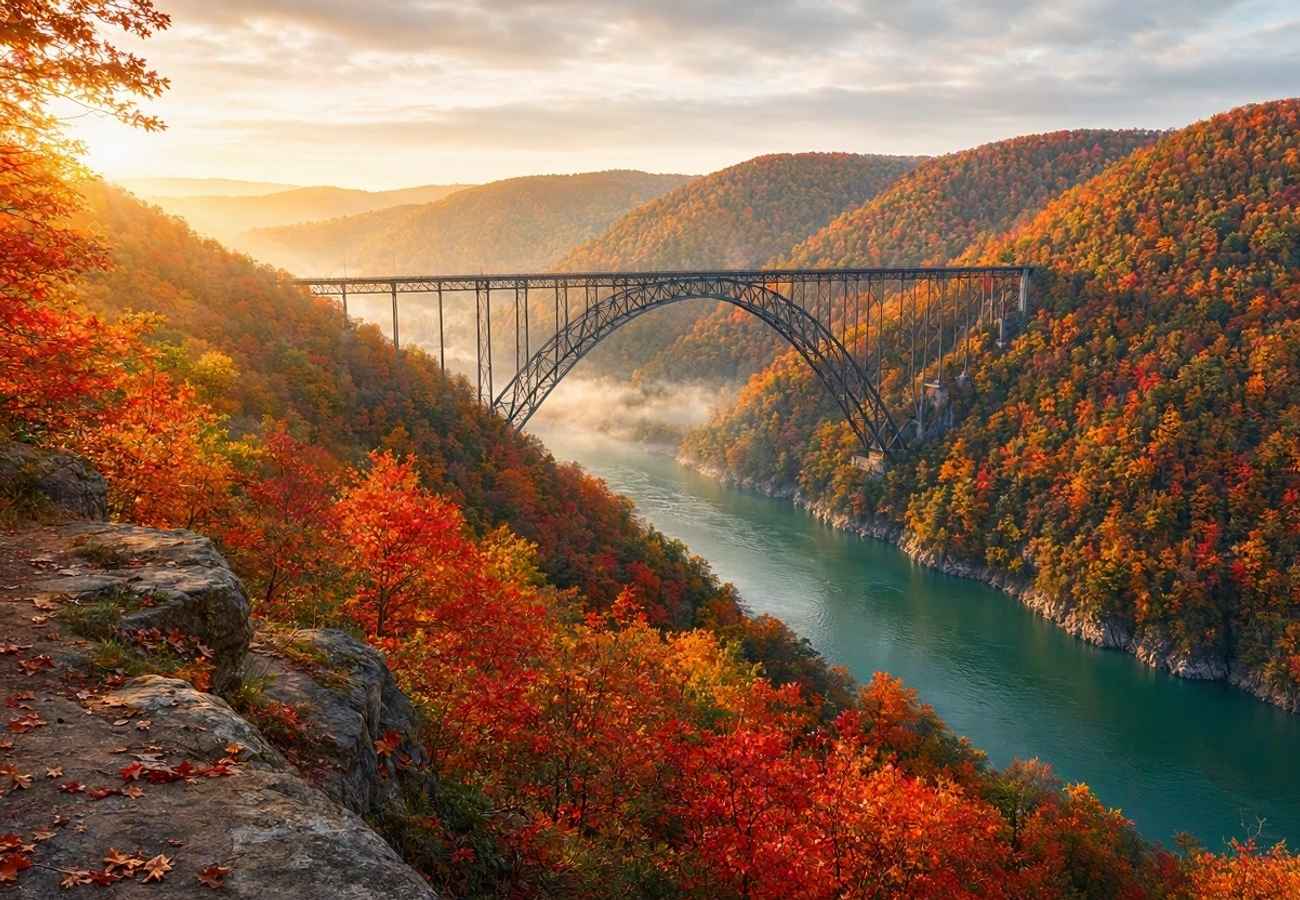
Image generated by AI
Planning a trip to the Appalachian highlands? Whether you are chasing whitewater rapids in the New River Gorge or navigating a thousand miles of off-road trails, the logistics of visiting West Virginia have shifted significantly as the state pivots from coal to a $9.4 billion tourism economy.
The Shift to High-Yield Eco-Tourism
West Virginia has transitioned its economic engine toward outdoor recreation, specifically through the federal elevation of the New River Gorge as the 63rd National Park and Preserve. This change has transformed southern West Virginia—specifically Fayette and Raleigh counties—into a global hub for sandstone climbing and whitewater rafting.
For the traveler, this means a surge in high-end lodging and revitalized commercial centers in gateway towns like Fayetteville, Beckley, and Oak Hill. Simultaneously, the state has poured over $150 million into state park infrastructure. You will find modernized luxury cabins and aerial tramways at flagship sites such as Blackwater Falls State Park in the Potomac Highlands and Cacapon Resort State Park in the Eastern Panhandle.
Route and Adventure Infrastructure
The state's transit options now cater to two distinct types of travelers: the National Park visitor and the motorized adventure seeker. The West Virginia Department of Tourism has streamlined access to these regions, but the requirements for entry and permits differ by activity.
| Route/Activity | Scale/Frequency | Primary Aircraft/Vehicle | Duration/Scope | Status |
|---|---|---|---|---|
| New River Gorge | Year-round | Passenger Car/Shuttle | National Park Scale | Active |
| Hatfield-McCoy Trails | 95,000+ Annual Permits | ATV/UTV/Off-road | 1,000+ Miles | Active |
| Ascend WV Relocation | 30,000+ Applications | Remote Work/Residential | Permanent Move | Active |
| State Park Resorts | Multi-season | Passenger Car | Regional Network | Modernized |
Traveler Logistics Guide
If you are planning a visit in 2026, follow these specific logistical steps to avoid bottlenecks and ensure permit compliance.
1. Securing Off-Road Access If you are visiting the Hatfield-McCoy Trails, do not arrive without a permit. With over 95,000 passes sold annually, the system is strictly monitored. These trails span 10 southern counties, including Logan, Mingo, Mercer, and McDowell.
- Permit Strategy: Purchase your passes online in advance. Over 80% of users are out-of-state visitors; expect high demand during peak autumn foliage.
- Equipment: While rental companies have surged by 350%, booking your ATV or UTV at least three weeks prior is recommended for weekend trips.
2. Navigating New River Gorge As a National Park, the Gorge experiences significant traffic spikes.
- Lodging: Focus your search on Fayetteville for the most authentic gateway experience.
- Transport: Use official park shuttles where available to avoid parking congestion at primary overlooks and trailheads.
3. Remote Work Relocation (Ascend WV) For those looking to move rather than visit, the Ascend West Virginia initiative targets professionals in Morgantown, Lewisburg, Shepherdstown, and Elkins.
- The Package: Qualified applicants receive a $12,000 cash grant, co-working space access, and outdoor gear passes.
- Success Rate: The program maintains a 98% retention rate, making it a viable path for those seeking lower costs of living.
4. Budgeting and Local Impact Travelers should be aware that their spending has a direct impact on local infrastructure. Tourism generates $600 million in annual tax revenue, which reduces the local household tax burden by roughly $859 per resident. Supporting local craft breweries and farm-to-table networks in the agricultural corridors is the best way to ensure these conservation budgets remain funded.
Regional Connectivity Impact
The "Almost Heaven" marketing strategy has effectively captured the drive-market within a 500-mile radius, meaning the majority of visitors arrive via the eastern seaboard from Washington D.C., Ohio, Pennsylvania, and North Carolina. This has led to a 52% increase in web traffic to state portals and a high ROI of $14 in spending for every $1 spent on advertising.
For the international traveler, the New River Gorge designation is the primary draw. The transition from an extractive industrial economy to an eco-tourism model has not only preserved the landscape but has created a sustainable financial inflow of $60 million annually specifically from the off-road sector alone.
FAQ: West Virginia Transit 2026
Do I need a permit for the Hatfield-McCoy Trails? Yes. All motorized vehicles require a valid permit. Given that 80% of users are from out-of-state, it is highly recommended to secure these digitally before arriving in the 10-county southern region.
What is the best gateway town for New River Gorge? Fayetteville is the primary hub for lodging, dining, and guide services. Beckley and Oak Hill also provide essential transit links and commercial support for park visitors.
How does the Ascend WV program work for remote workers? It provides a $12,000 relocation grant and outdoor perks to professionals who move to specific towns like Morgantown or Elkins. It has seen over 30,000 applications from 80 countries.
Are the state parks equipped for luxury travel? Yes. Following a $150 million investment, parks like Blackwater Falls and Cacapon now offer luxury mountain cabins and modernized amenities designed for high-spending visitors.
Pack for all four seasons, as the Appalachian peaks are as unpredictable as they are ancient.
Related Travel Guides
Disclaimer
This article is for informational and educational purposes only. It does not constitute legal, financial, or professional advice. While we strive to provide accurate and up-to-date information, travel policies, regulations, and conditions change rapidly. Always verify information with official sources before making travel decisions. Nomad Lawyer makes no representations about the accuracy, reliability, completeness, or suitability of the information provided. Readers should consult qualified professionals for advice specific to their circumstances. The views expressed in this article are those of the author and do not necessarily reflect the views of Nomad Lawyer.
Naina Thakur
Contributor & Travel Specialist
Travel enthusiast and legal writer covering visa regulations, responsible tourism, and cultural journeys across global destinations.
Learn more about our team →