
Richtech Robotics ADAM Coffee Robot Debuts with 70-Language Support for Global Airports in 2026
Richtech Robotics introduces ADAM, a dual-arm coffee robot capable of communicating in 70 languages, targeting high-volume transit hubs to reduce labor costs and bridge communication gaps.

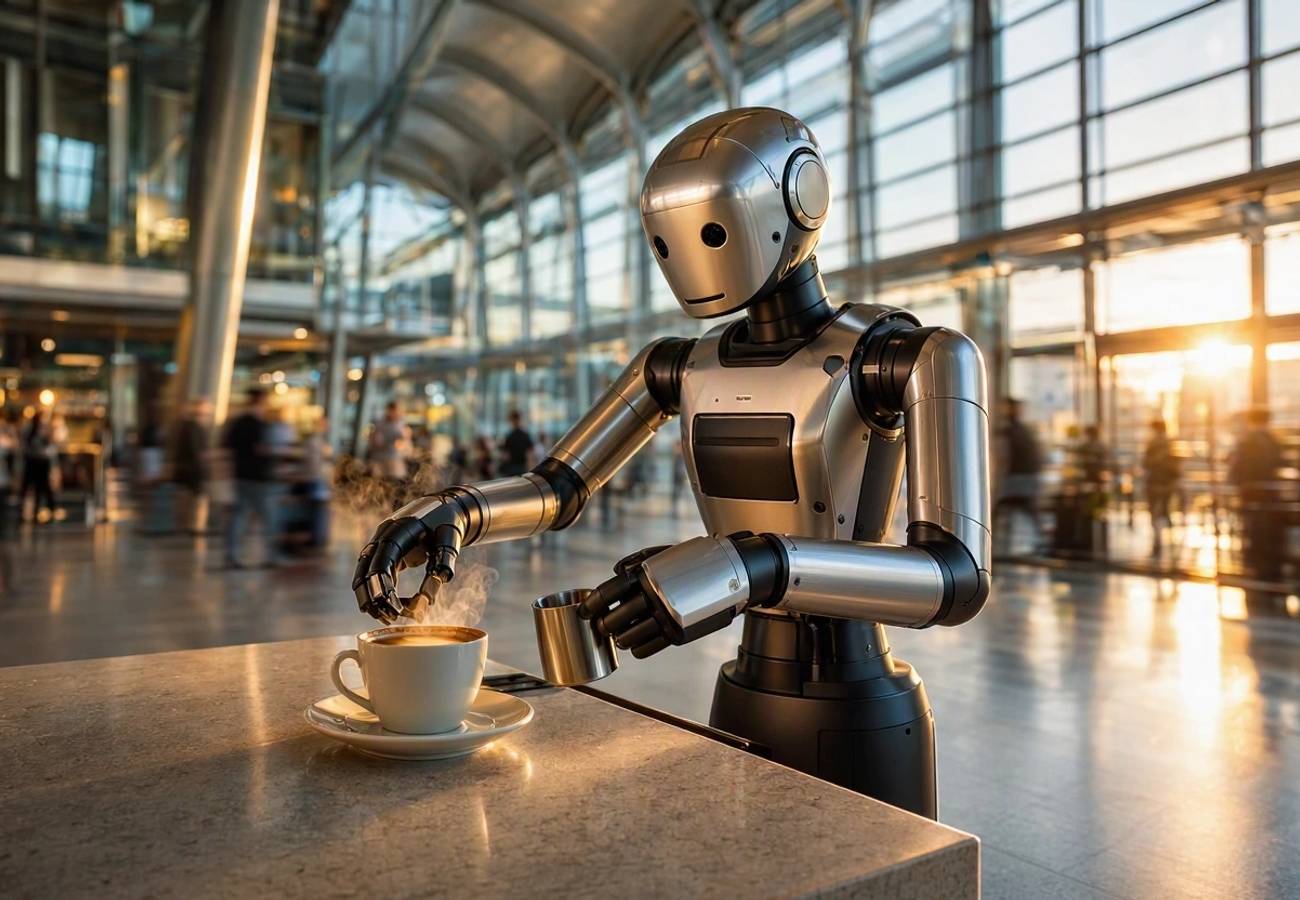
Image generated by AI
The integration of AI-driven robotics in transit hubs has shifted from novelty to utility, with the new ADAM system supporting 70 different languages—a massive leap from the basic 5-10 language interfaces seen in first-generation kiosks. This deployment by New Consultancy, featuring technology from Las Vegas-based Richtech Robotics, signals a strategic move to solve the "language barrier" in high-density international gateways.
The Automation Metric: ADAM by the Numbers
The ADAM system is not a simple vending machine but a sophisticated dual-arm robotic platform. According to Boudewijn Dornseiffer of New Consultancy, the technology is the result of more than four years of development by Richtech Robotics. The core value proposition lies in its versatility; while demonstrated as a barista, the hardware is modular.
The robot is designed for "high-volume" environments where passenger flow is constant and unpredictable. By automating the repetitive motion of beverage preparation, the system targets a reduction in operational labor expenditure. However, the data clarifies that this is a hybrid model. Human intervention remains mandatory for ingredient replenishment and general operational oversight, meaning the robot acts as a force multiplier rather than a total replacement for staff.
Comparative Market Analysis: Robotic vs. Human Service
When comparing ADAM to traditional hospitality models, the primary shift is in the "interaction-to-production" ratio. In a standard airport cafe, a human employee manages both the transaction and the preparation. ADAM bifurcates these roles, handling the production and basic multilingual communication, while humans manage the supply chain.
The following table breaks down the functional capabilities of the ADAM platform across different hospitality configurations:
| Service Application | Functional Capability | Primary Market Target |
|---|---|---|
| Coffee Service | Automated brewing and counter placement | 24-hour Airport Terminals |
| Mixology | Cocktail preparation via dual-arm system | Airport Lounges / Hotels |
| Beverage Pouring | Automated beer dispensing | Shopping Centers / Transit Hubs |
| Food Prep | Ramen preparation and assembly | High-traffic Food Courts |
| Communication | 70-language voice interaction via microphone | International Transit Gateways |
This versatility allows operators to pivot their service model without replacing the entire robotic chassis, a significant advantage over single-use automation. For a deeper look at how automation is impacting global travel standards, refer to the World Travel & Tourism Council (WTTC) reports on workforce evolution.
What This Means for Travelers
For the individual traveler, the rollout of ADAM-style robotics in airports means a shift in the "friction" of transit. If you are navigating a foreign airport where English is not the primary language, the 70-language capability reduces the stress of simple transactions.
Actionable Advice for 2026/2027 Travel:
- Expect Faster "Grab-and-Go": In terminals utilizing ADAM, the time from order to counter placement is standardized, reducing the variability caused by human queues.
- Language Accessibility: Travelers who do not speak the local language should look for robotic kiosks, as they provide a consistent linguistic interface that may be more reliable than varying staff fluency levels.
- Service Limitations: Be aware that these robots currently handle "counter placement." Do not expect table service or complex order customizations that fall outside the pre-programmed recipes.
Projection: The Future of Autonomous Hospitality
The trajectory of Richtech Robotics suggests a move toward "Omni-Service" hubs. The fact that ADAM can be reconfigured from coffee to ramen or cocktails indicates that airports will likely move toward modular robotic pods. Instead of five different vendors, a single terminal area may feature a cluster of ADAM units that change their service offerings based on the time of day—coffee in the morning, cocktails in the evening.
This trend aligns with broader data from the International Air Transport Association (IATA) regarding the digitalization of the passenger journey. As labor shortages continue to plague the aviation sector, the adoption of dual-arm robotics will likely accelerate, moving from "showcase" events to permanent installations in major hubs like JFK, Heathrow, and Changi.
FAQ: Airport Robotics 2026
Will robotic baristas make airport coffee more expensive? Likely not. The goal of reducing labor costs for the operator usually allows for price stabilization or lower overhead, though premium "robotic experiences" may carry a slight surcharge.
Can ADAM handle complex, customized drink orders? The current demonstration focuses on efficient, standardized preparation. While it can communicate in 70 languages, the actual recipe customization is limited to the robot's pre-programmed capabilities.
Is the robot replacing all airport staff? No. Human employees are still required for the "back-end" of the operation, specifically for restocking fresh ingredients and managing the technical health of the system.
The future of the airport lounge is no longer just about luxury—it is about the precision of the pour.
Related Travel Guides
Disclaimer
This article is for informational and educational purposes only. It does not constitute legal, financial, or professional advice. While we strive to provide accurate and up-to-date information, travel policies, regulations, and conditions change rapidly. Always verify information with official sources before making travel decisions. Nomad Lawyer makes no representations about the accuracy, reliability, completeness, or suitability of the information provided. Readers should consult qualified professionals for advice specific to their circumstances. The views expressed in this article are those of the author and do not necessarily reflect the views of Nomad Lawyer.
Raushan Kumar
Founder & Lead Developer
Full-stack developer with 11+ years of experience and a passionate traveller. Raushan built Nomad Lawyer from the ground up with a vision to create the best travel and law experience on the web.
Learn more about our team →