
Virgin Australia Defeats Future Travel Chaos With Massive 230-Seat Boeing 737 MAX 10 Deployment Targeted for 2027
Breaking airline news: Virgin Australia aggressively targets a late 2027 delivery for its massive 230-seat Boeing 737 MAX 10 aircraft to defeat slot congestion and travel chaos across Australian hubs.

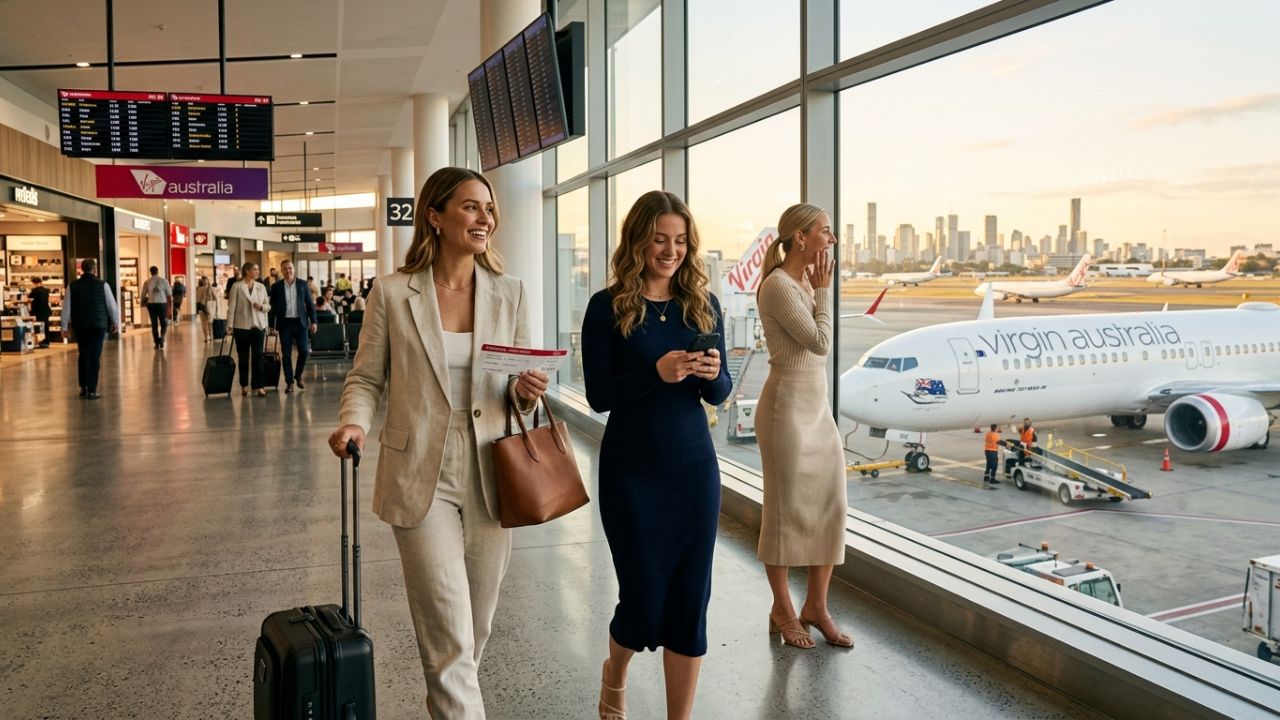
Image representing the highly strategic fleet expansion by Virgin Australia, which officially confirmed a late 2027 delivery timeline for ten massive 230-seat Boeing 737 MAX 10 aircraft to aggressively defeat systemic travel chaos and slot congestion at major hubs like Sydney, Melbourne, and Brisbane. (Image Credit: Australian Aviation Tracking Network)
Virgin Australia Defeats Future Travel Chaos With Massive 230-Seat Boeing 737 MAX 10 Deployment Targeted for 2027
A Highly Calculated Fleet Strategy Designed to Prevent Severe Airport Disruptions at Heavily Congested Sydney, Melbourne, and Brisbane Hubs
The incredibly fragile capacity limits of the Australian domestic aviation network are actively forcing major carriers into high-stakes fleet strategies to avoid total operational collapse. According to the latest breaking airline news and critical aviation updates, Virgin Australia has officially confirmed a massive fleet milestone that will radically reshape the nation's aviation landscape. The airline is actively preparing to receive its very first Boeing 737 MAX 10 aircraft in late 2027. This incredibly significant development signals the highly anticipated introduction of Boeing’s absolute largest single-aisle aircraft into the Australian domestic grid. By explicitly targeting the acquisition of these massive 230-seat narrow-body jets, Virgin Australia is executing a highly aggressive structural shift in capacity planning designed to completely defeat the widespread travel chaos currently plaguing major hubs like Brisbane, Sydney, Melbourne, and Perth as post-pandemic travel demand explodes.
The decision to heavily integrate the massive MAX 10 directly confronts a brutal operational reality: Australian airports are currently choking on unprecedented slot congestion. Because airlines physically cannot add more flight frequencies to massively constrained hubs like Sydney without triggering catastrophic airport disruptions and rolling flight cancellations, they must radically increase the sheer seating density of every single aircraft utilizing those runways. The MAX 10 allows Virgin Australia to massively boost passenger throughput without demanding additional airport slots. While highly frustrating FAA certification delays have forced the airline to push its initial delivery timeline to late 2027, the strategic integration of these 10 firm orders definitively proves that mid-size carriers are pivoting aggressively toward extreme efficiency per seat to survive the tightening Asia-Pacific narrow-body market.
Section-Wise Breakdown: The Architecture of the MAX 10 Strategy
The highly granular technical and operational data definitively exposes exactly why Virgin Australia is banking heavily on this massive Boeing airframe to stabilize its network:
The FAA Certification Bottleneck The absolute primary obstacle in this aggressive capacity expansion is the incredibly stringent United States Federal Aviation Administration (FAA). Despite massive airline demand across the globe, the Boeing 737 MAX 10 officially remains awaiting final certification. Following industry-wide safety reforms, the FAA has brutally extended validation cycles, forcing Boeing into agonizingly long engineering assessments. This regulatory bottleneck has forced Virgin Australia to highly adjust its planning timeline, officially targeting a late 2027 delivery. What the traveling public frequently misunderstands is the severe cascading effect of these delays: when new aircraft are held back by the FAA, airlines are desperately forced to operate older fleets far longer than expected. This introduces terrifying operational cost pressures and severely limits the airline's ability to quickly absorb sudden demand spikes, inadvertently contributing to the risk of systemic travel chaos.
Deploying the 230-Seat Behemoth at Sydney and Brisbane When the MAX 10 officially arrives, it will immediately dominate Australia's highest-density domestic corridors. The massive aircraft features a staggering length of 143 feet 8 inches, specifically designed to carry up to 230 passengers in a high-density layout. Virgin Australia will explicitly deploy this behemoth out of Sydney Airport (SYD), Brisbane, and Melbourne. These specific airports currently represent massive pressure points where unyielding passenger demand is consistently breaking infrastructure limits. By utilizing the MAX 10, Virgin Australia can physically move massive volumes of passengers during highly restricted peak-hour windows, actively suppressing terminal congestion and avoiding the agonizing airport disruptions caused by excessive frequency scheduling.
The Airbus A321neo Narrow-Body War The deployment of the MAX 10 represents a highly strategic counter-offensive against the massive adoption of the Airbus A321neo family across competing Asia-Pacific carriers. In high-density markets like Australia and Southeast Asia, these massive narrow-body aircraft are the absolute backbone of growth. By integrating the MAX 10, Virgin Australia will complement its existing MAX 8 operations, creating a highly unified fleet structure. This dramatically reduces maintenance complexity and training overheads, allowing the airline to aggressively challenge Qantas's market share on key trunk routes. Furthermore, powered by incredibly advanced CFM LEAP-1B engines, the MAX 10 delivers a staggering 20 percent lower fuel burn compared to older aircraft, embedding absolute financial sustainability into Virgin Australia's long-term competitive strategy.
Flight Details: The Factual Boeing 737 MAX 10 Operational Matrix
To provide exact, factual clarity on the immense technical and operational scale of this aircraft integration, aviation analysts have mapped the specific metrics defining the Virgin Australia acquisition. The following factual matrix details the precise breakdown of the MAX 10 strategy:
Factual Boeing 737 MAX 10 Operational Matrix
| Technical/Operational Metric | Factual Aircraft Detail |
|---|---|
| Airline Operator | Virgin Australia |
| Aircraft Model | Boeing 737 MAX 10 (Largest 737 Variant) |
| Expected Initial Delivery | Late 2027 |
| Firm Orders Confirmed | 10 Aircraft |
| Maximum Passenger Capacity | Up to 230 passengers (High-density layout) |
| Aircraft Physical Length | 143 feet 8 inches |
| Engine Specifications | CFM LEAP-1B Engines |
| Operational Flight Range | Approximately 3,300 nautical miles |
| Primary Deployment Hubs | Sydney (SYD), Brisbane, Melbourne, and Perth |
| Primary Regulatory Bottleneck | Pending FAA certification |
Data reflects the confirmed operational specifications and delivery timeline for the Boeing 737 MAX 10 officially ordered by Virgin Australia. (Source: Global Aviation Capacity Tracking)
Passenger Impact: Larger Bins and Stabilized Fares
For the Australian traveling public, the eventual integration of the MAX 10 will deliver highly noticeable upgrades to the domestic passenger experience. The aircraft heavily incorporates improved cabin experience elements, explicitly featuring much larger overhead bins and significantly quieter engines. More importantly, the massive 230-seat capacity structurally prevents airlines from brutally gouging passengers with exorbitant last-minute ticket prices during peak holiday seasons. By successfully moving more passengers per flight, Virgin Australia effectively lowers the unit cost per seat, which helps suppress massive fare hikes while simultaneously preventing the terrifying travel chaos that erupts when undersized aircraft cannot accommodate stranded passengers.
Industry Analysis: The Shift to Unit Cost Reduction
Aviation analysts closely monitoring the Asia-Pacific narrow-body expansion cycle emphasize that Virgin Australia's strategy is no longer about sheer network frequency, but rather absolute lifecycle cost efficiency. Airlines are facing incredible pressure regarding fuel volatility and aggressive carbon reduction targets. The 20% reduction in fuel burn offered by the MAX 10 makes sustainability a core financial driver rather than just an environmental talking point. Anup Kumar Keshan, Founder and Editor-in-Chief of Travel And Tour World, explicitly noted the importance of this shift: "The MAX 10 rollout reflects a deeper shift in global aviation strategy, where airlines are no longer competing only on routes, but on efficiency per seat and long-term sustainability alignment. Australia is becoming a critical testbed for this transformation."
Conclusion: A Massive Victory for Domestic Capacity
Virgin Australia’s highly anticipated deployment of the massive Boeing 737 MAX 10 in late 2027 represents a highly decisive victory against future travel chaos. By radically increasing passenger density rather than artificially inflating flight frequencies, the carrier is successfully shielding its passengers from the devastating airport disruptions that frequently paralyze heavily slot-constrained hubs like Sydney and Brisbane. While the highly frustrating FAA certification delays continue to severely restrict immediate growth, Virgin Australia’s incredibly calculated reliance on this 230-seat behemoth guarantees that it will aggressively dominate the high-density Australian trunk routes. As domestic tourism demand continues to smash pre-pandemic baselines, passengers can confidently anticipate a highly efficient, massively stabilized aviation grid powered by Boeing’s most advanced narrow-body technology. (Source: Global Aviation Capacity Tracking via Nomad Lawyer)
Key Takeaways
- Massive Fleet Milestone: Virgin Australia officially confirmed the arrival of its first Boeing 737 MAX 10 aircraft, specifically targeting a late 2027 delivery timeline.
- Maximum Capacity: As the absolute largest variant in the 737 family, the MAX 10 will carry a staggering 230 passengers in a high-density layout.
- Defeating Slot Congestion: The massive capacity allows Virgin Australia to move vast volumes of passengers through highly congested hubs like Sydney, Brisbane, and Melbourne without demanding new airport slots.
- Severe FAA Delays: The delayed 2027 delivery is explicitly tied to the incredibly stringent, ongoing certification process currently conducted by the US FAA.
- Absolute Efficiency: Powered by advanced CFM LEAP-1B engines, the aircraft boasts a 3,300-nautical-mile range and a massive 20% lower fuel burn compared to older aircraft.
✈️ Frequently Asked Questions (Factual Aviation Strategy Data)
Which specific airline is anticipating the massive Boeing 737 MAX 10 aircraft? Virgin Australia officially holds firm orders for the massive narrow-body aircraft.
When is Virgin Australia officially expecting its first MAX 10 delivery? Due to ongoing regulatory bottlenecks, the airline is clearly targeting late 2027 for its initial delivery.
How many firm orders does Virgin Australia currently hold for the MAX 10? The airline currently holds exactly 10 firm orders for this specific high-capacity aircraft.
What is the maximum passenger seating capacity of the Boeing 737 MAX 10? Designed for high-density operations, the aircraft can hold up to an incredible 230 passengers.
Which specific Australian airports will see the highest deployment of this aircraft? The massive aircraft will be heavily deployed to combat extreme congestion at major hubs including Sydney Airport (SYD), Brisbane, Melbourne, and Perth.
Why is the delivery of the Boeing 737 MAX 10 currently delayed globally? The aircraft is heavily delayed because it strictly remains awaiting final safety certification from the United States Federal Aviation Administration (FAA).
What specific engines power the Boeing 737 MAX 10? The highly advanced aircraft is powered by incredibly fuel-efficient CFM LEAP-1B engines.
What is the operational flight range of this massive narrow-body aircraft? The aircraft boasts a highly versatile range of approximately 3,300 nautical miles, making it perfectly suited for Australian domestic corridors and select Asia-Pacific short-haul international routes.
🌍 Related Travel Guides & Flight Resources
- Navigate Airport Disruptions Like a Pro Master the art of surviving unexpected travel chaos with our expert strategies.
- Breaking Airline News & Evasion Routes Stay ahead of the delays with our real-time aviation updates and route intelligence.
- Global Flight Cancellation Defense Grid Essential legal rights and compensation tactics when your flight goes down.
⚖️ Disclaimer
The aircraft capacity metrics, FAA certification timelines, and airline fleet strategies provided in this report are for informational purposes only. The specific aviation variables regarding the integration of the Boeing 737 MAX 10 by Virgin Australia—including the exact late 2027 delivery target, the deployment across Sydney, Brisbane, Melbourne, and Perth, and the 230-seat configuration—are highly volatile and subject to ongoing, strict safety review by the United States Federal Aviation Administration (FAA) and Boeing engineers. All data regarding this fleet upgrade has been officially sourced from global aviation capacity tracking networks as of June 15, 2026. NomadLawyer does not guarantee the absolute accuracy or current validity of the information provided and assumes no liability for sudden aircraft equipment swaps, unannounced flight cancellations resulting from older fleet utilization, or any financial consequences resulting from the use of this content. Passengers are strongly advised to verify their specific aircraft type directly through the airline's official mobile application prior to travel.
Disclaimer
This article is for informational and educational purposes only. It does not constitute legal, financial, or professional advice. While we strive to provide accurate and up-to-date information, travel policies, regulations, and conditions change rapidly. Always verify information with official sources before making travel decisions. Nomad Lawyer makes no representations about the accuracy, reliability, completeness, or suitability of the information provided. Readers should consult qualified professionals for advice specific to their circumstances. The views expressed in this article are those of the author and do not necessarily reflect the views of Nomad Lawyer.
Kunal K Choudhary
Co-Founder & Contributor
A passionate traveller and tech enthusiast. Kunal contributes to the vision and growth of Nomad Lawyer, bringing fresh perspectives and driving the community forward.
Learn more about our team →