
Vietnam Hotels Adopt Nuna AI Revenue Management to Cut OTA Dependence at HORECFEX 2026
Vietnam's hospitality sector is shifting toward AI-powered revenue management and direct booking technology to reduce reliance on third-party OTAs and increase long-term profitability.

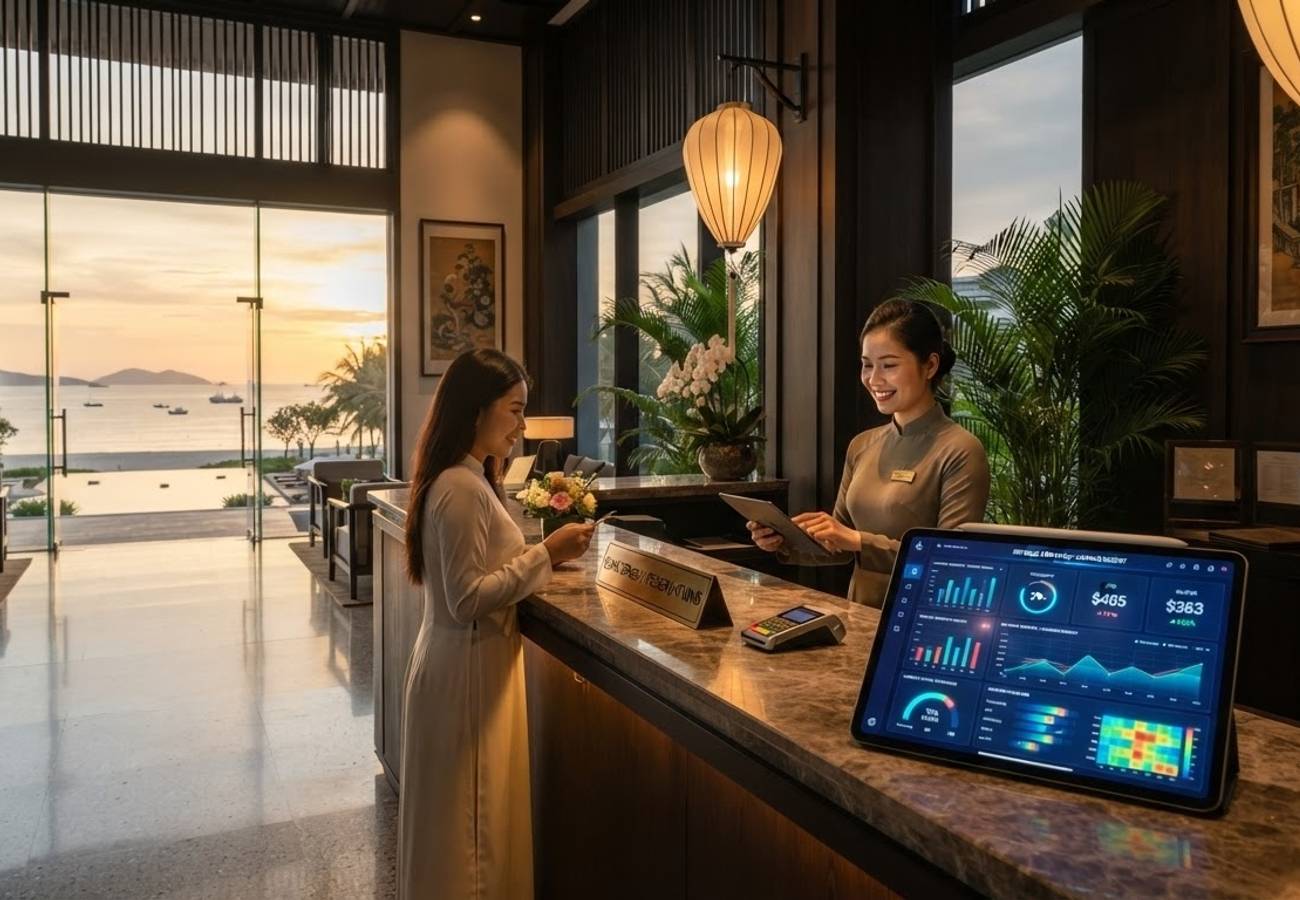
Image generated by AI
Vietnam's hospitality sector is aggressively pivoting away from third-party booking platforms. The introduction of AI-driven revenue tools at HORECFEX Vietnam 2026 marks a systemic shift toward direct-to-consumer sales models to protect profit margins.
Digital Transformation at HORECFEX Vietnam 2026
The hospitality industry in Vietnam is entering a critical digital transition aimed at reducing the dominance of Online Travel Agencies (OTAs). During HORECFEX Vietnam 2026, held from 20-21 August 2026 at the Ariyana Convention Centre in Danang, industry leaders converged to address the sustainability of current distribution models.
Our analysis of the event indicates a clear move from general technology adoption to practical, high-impact applications. Mia Le, Nunatic Project & Growth Lead at Nuna, noted that the 2026 edition of the exhibition demonstrated a heightened focus on integrating technology across food and beverage, tourism, and hotel operations to meet evolving market expectations.
The Strategic Shift: Reducing OTA Dependence
For years, Vietnamese hotels have relied on OTAs as their primary acquisition channel. While these platforms provide visibility, they often impose high commission fees and strip hotels of direct customer data.
Nuna is positioning direct booking technology as the primary solution for sustainable growth. By transitioning guests from third-party platforms to direct channels, hotels gain:
- Ownership of Customer Data: Direct control over communication and guest profiles.
- Increased Profitability: Elimination or reduction of third-party commission payouts.
- Marketing Autonomy: The ability to execute personalized loyalty strategies without intermediary interference.
This shift is particularly critical for smaller, independent properties that lack the marketing budgets of global chains but face the same high OTA costs.
AI-Powered Revenue Management and Nuna HQ
The core of this transformation is the move from static pricing to dynamic, AI-driven revenue management. Traditional distribution—relying on offline networks and fixed rates—is being replaced by real-time data analysis.
Nuna has introduced Nuna HQ, a specialized revenue management service designed to act as a virtual sales team. This is specifically targeted at smaller properties where a single employee often manages all sales and distribution tasks.
Nuna HQ focuses on four primary operational pillars:
- Distribution Strategy: Optimizing which channels are used for specific market segments.
- Pricing Decisions: Using AI to adjust rates based on real-time demand patterns.
- Sales Optimisation: Identifying underperforming segments and adjusting tactics.
- Revenue Performance: Tracking and improving the overall yield per available room.
Data-Driven Decision Making for Independent Hotels
Flight tracking and market data systems show that travel demand in Vietnam is becoming more volatile. Real-time data allows hoteliers to respond to these shifts instantly rather than relying on historical trends.
The integration of AI allows independent hotels to compete with larger groups by providing professional-grade revenue analytics. This removes the barrier to entry for high-level commercial strategies, enabling smaller operators to maximize occupancy and average daily rates (ADR) through precise, data-backed adjustments.
Passenger and Guest Advisory: The Impact of Direct Bookings
For the traveling guest, the industry shift toward direct bookings and AI pricing will result in several tangible changes. Our analysis suggests the following implications for travelers:
1. Potential for Better Rates As hotels seek to bypass OTA commissions, they are more likely to offer "Direct Booking Discounts." Passengers should check the hotel's official website before finalizing a booking on a third-party app.
2. Enhanced Personalization Direct bookings allow hotels to store preferences more accurately. For the guest, this means a higher likelihood of room preferences and loyalty rewards being honored without the "communication gap" often found in OTA bookings.
3. Price Volatility The adoption of AI-powered revenue management means prices will fluctuate more frequently based on real-time demand. To secure the best rates, travelers should monitor pricing trends and book during identified low-demand windows.
The move toward "digital independence" in Vietnam is a mirror of a global trend where hospitality providers are reclaiming their customer relationships. The reliance on OTAs created a "visibility trap"—hotels needed the platforms to be seen, but the cost of that visibility eroded their margins.
The introduction of tools like Nuna HQ suggests that the "democratization of data" is the next frontier. When small hotels have access to the same AI tools as Marriott or Hilton, the competitive advantage shifts from "who has the biggest budget" to "who provides the best guest experience."
The era of the OTA middleman is fading as AI returns the power of the sale to the hotel operator.
Related Travel Guides
Disclaimer
This article is for informational and educational purposes only. It does not constitute legal, financial, or professional advice. While we strive to provide accurate and up-to-date information, travel policies, regulations, and conditions change rapidly. Always verify information with official sources before making travel decisions. Nomad Lawyer makes no representations about the accuracy, reliability, completeness, or suitability of the information provided. Readers should consult qualified professionals for advice specific to their circumstances. The views expressed in this article are those of the author and do not necessarily reflect the views of Nomad Lawyer.
Kunal K Choudhary
Co-Founder & Contributor
A passionate traveller and tech enthusiast. Kunal contributes to the vision and growth of Nomad Lawyer, bringing fresh perspectives and driving the community forward.
Learn more about our team →