
Singapore Welcomes Marriott, Accor and Pan Pacific as HICAP 2026 Drives Hotel Investment Talks
Singapore Welcomes Marriott, Accor and Pan Pacific as HICAP 2026 Drives Hotel Investment Talks

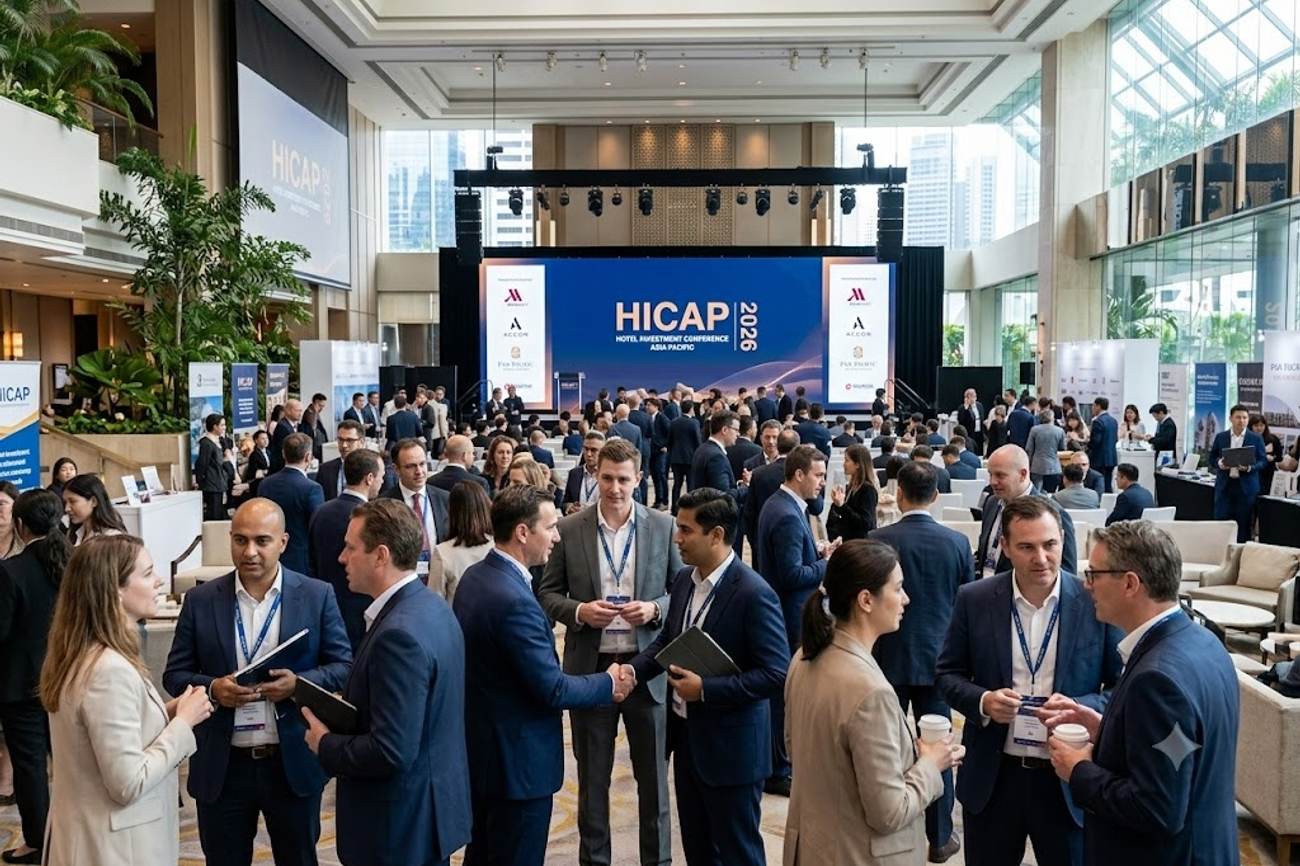
Image generated by AI
125 senior industry executives have been confirmed as speakers for the 36th Hotel Investment Conference Asia Pacific (HICAP), signaling a massive consolidation of capital and decision-making power in the region's hospitality sector. Scheduled for October 20 to 22, 2026, this gathering transforms Singapore into the primary nexus for hospitality finance, where the intersection of real estate investment and tourism growth will be dissected by leaders from 27 different countries and territories.
The Shift Toward Capital-Centric Hospitality
The 36th iteration of HICAP is not a traditional travel trade show; it is a high-stakes financial forum. Hosted at the Fairmont Singapore and Swissôtel The Stamford, the event marks a transition in how the industry views growth. While previous eras focused primarily on "heads in beds" (occupancy rates), the 2026 agenda reveals a pivot toward the granular economics of ownership. Investors are now prioritizing operating costs and long-term yield over raw visitor numbers, reflecting a more mature, risk-averse approach to Asia Pacific real estate.
This shift is driven by a volatile global financing environment. As interest rates and construction costs fluctuate, the relationship between hotel ownership and property development has become strained. The conference serves as a critical pressure valve where institutional capital—represented by firms like Brookfield Asset Management and KKR—meets the operational expertise of global brands to determine which markets are still viable for aggressive expansion.
Regional Investment Focus and Market Weight
The 2026 program assigns specific strategic weight to four primary markets: India, Japan, Australia, and Singapore. Each represents a different investment thesis. India is positioned as a high-growth development market, Japan as a hub for international capital transactions, and Australia as the anchor for Oceania's hospitality challenges. Singapore itself acts as the dual-purpose engine: a premier destination and the region's financial clearinghouse for hospitality deals.
The following table breaks down the primary regional focuses and the institutional players driving these discussions:
| Market Focus | Strategic Objective | Key Participating Entities/Leaders |
|---|---|---|
| India | Domestic tourism & development strategies | Marriott International (Rajeev Menon) |
| Japan | International capital & asset transactions | KKR (David Cheong) |
| Australia | Oceania regional investment challenges | Gaw Capital Partners (Kenneth Gaw) |
| Singapore | Regional finance & business activity | Pan Pacific Hotels Group (Peng Sum Choe) |
| Southeast Asia | Market comparison & emerging opportunities | Accor (Camil Yazbeck, Andrew L. Langdon) |
| Global Capital | Institutional asset allocation | The Ascott Limited (Kevin Goh), Langham (Bob van den Oord) |
Expert Analysis: The Institutionalization of Asia's Hotels
For the average traveler, a conference of this scale may seem distant from the guest experience, but the direct consequence is a fundamental change in the "brand" of the hotels they visit. We are witnessing the "institutionalization" of the Asia Pacific hospitality market. When firms like Ares Management and CapitaLand Investment dictate development, the priority shifts from boutique hospitality to scalable, standardized assets that satisfy the requirements of the International Air Transport Association (IATA) flight patterns and institutional portfolios.
The pricing pressure created by this shift is significant. As institutional investors demand higher returns to offset rising development expenses, these costs are inevitably passed down to the consumer through higher Average Daily Rates (ADR) and the introduction of more aggressive ancillary fees. Furthermore, the heavy presence of giants like Marriott and Accor suggests a continuing trend of market consolidation. Smaller, independent hotels are increasingly being absorbed into these global ecosystems to gain access to the financing and loyalty networks discussed at HICAP.
The inclusion of technology and AI on the agenda further indicates a move toward "lean operations." For travelers, this means a transition toward frictionless, automated check-ins and AI-driven pricing models that adjust room rates in real-time based on demand—a direct result of the "operating cost" discussions taking place between the owners and the operators at this event.
Key Takeaways
- Financial Pivot: The industry is moving away from simple growth metrics toward a focus on operating costs and long-term institutional returns.
- Market Concentration: India and Japan are emerging as the primary targets for international capital, while Singapore remains the financial hub.
- Corporate Dominance: The heavy involvement of Marriott, Accor, and Pan Pacific indicates a continued trend of brand consolidation across Asia Pacific.
- Institutional Influence: Private equity and asset management firms (KKR, Brookfield) now hold as much influence over hotel development as the hotel brands themselves.
- Tech Integration: AI and hospitality technology are being integrated not for guest luxury, but as a means to reduce operational overhead and increase margins.
FAQ: HICAP 2026 Investment Trends
Who actually attends HICAP 2026? It is an exclusive event for senior executives, including hotel owners, lenders, investment bankers, and developers. It is not a public travel fair, but a closed-door forum for those who fund and manage the hospitality industry.
How does this event affect hotel prices for travelers? As investors focus on "long-term returns" and "operating costs," they often push for higher room rates to ensure profitability, especially in high-growth markets like India and Japan.
Which countries are most influential in this conference? While Singapore is the host, India, Japan, and Australia are the primary regional spotlights. Delegates represent 27 countries, including the US, UK, UAE, and various ASEAN nations.
Will this lead to more new hotels in Asia? Yes, but the focus is on "institutional" development. Expect more large-scale, brand-name hotels and fewer independent boutiques as global capital seeks scalable, lower-risk investments.
The boardroom decisions made in October 2026 will dictate the price of your hotel room in 2030.
Tags: HICAP2026, SingaporeHospitality, MarriottInternational, AccorDevelopment, AsiaPacificRealEstate, HotelInvestmentFinance
Related Travel Guides
Disclaimer
This article is for informational and educational purposes only. It does not constitute legal, financial, or professional advice. While we strive to provide accurate and up-to-date information, travel policies, regulations, and conditions change rapidly. Always verify information with official sources before making travel decisions. Nomad Lawyer makes no representations about the accuracy, reliability, completeness, or suitability of the information provided. Readers should consult qualified professionals for advice specific to their circumstances. The views expressed in this article are those of the author and do not necessarily reflect the views of Nomad Lawyer.
Naina Thakur
Contributor & Travel Specialist
Travel enthusiast and legal writer covering visa regulations, responsible tourism, and cultural journeys across global destinations.
Learn more about our team →