
Vietnam Fast Tracks Northern High-Speed Rail Network to Transform Tourism
Vietnam accelerates ambitious high-speed rail expansion across the north in 2026, linking Hanoi to Ha Long Bay, Sa Pa, and the Chinese border. The multibillion-dollar corridor promises to reshape northern tourism and regional trade logistics.

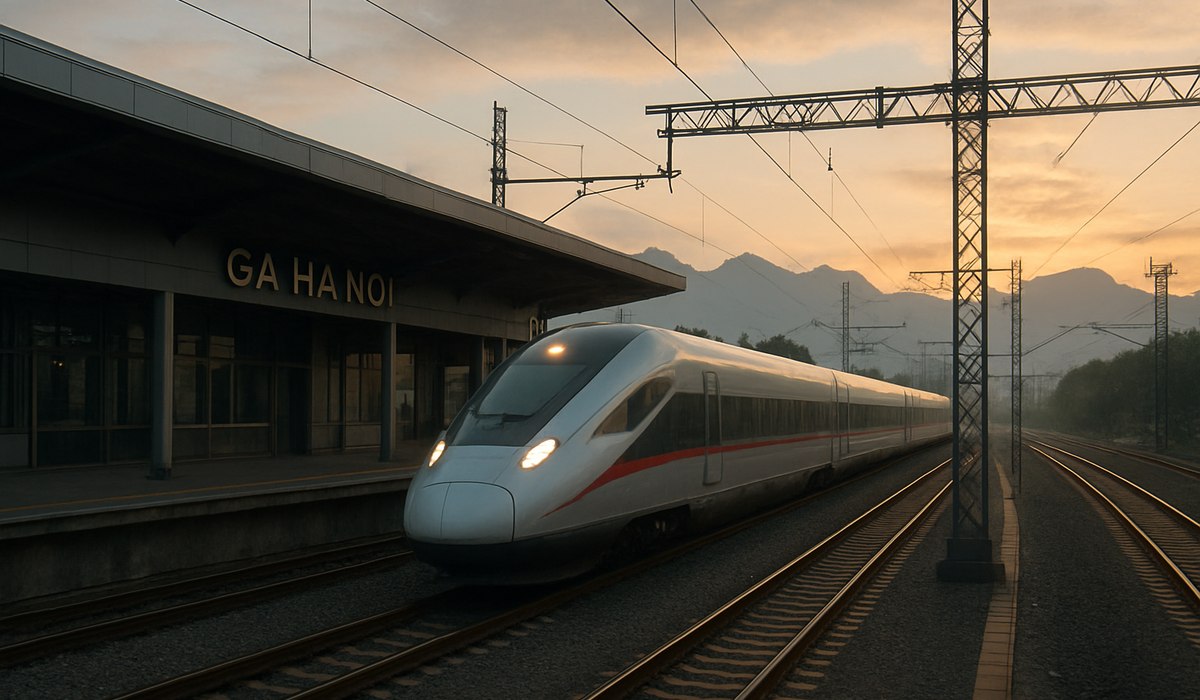
Image generated by AI
Vietnam Fast Tracks a Revolutionary Northern Rail Network
Vietnam is accelerating an ambitious high-speed rail initiative across its northern region, positioning a new generation of electrified, standard-gauge lines to connect Hanoi with the country's premier tourism destinations—Ha Long Bay, Sa Pa in the Lao Cai mountains, and the Chinese border. The multibillion-dollar infrastructure push represents a strategic pivot toward integrated northern transport systems. Government planning documents reveal that Vietnam fast tracks investment focuses on binding together Hanoi, Ha Long, Hai Phong, and Lao Cai as interconnected hubs. This vision fundamentally transforms how travelers access some of Southeast Asia's most iconic landscapes within hours rather than full days.
A New High-Speed Spine for Northern Vietnam
Vietnam's next wave of rail development concentrates heavily on the north, where tourism and trade already cluster around major urban centers and coastal zones. Public planning documents show that the emerging vision centers on a high-speed and modernized network capable of moving travelers between destinations in a fraction of current journey times, while simultaneously functioning as a long-haul freight corridor.
The cornerstone of this strategy is the Lao Cai–Hanoi–Hai Phong corridor, a 400-kilometer standard-gauge route approved with substantial government funding. This connection links Vietnam's northern port complex with the Chinese border, creating a critical artery for both passengers and cargo. Recent parliamentary resolutions explicitly describe this line as a core pillar of Vietnam's broader high-speed strategy, complementing the flagship North–South project between Hanoi and Ho Chi Minh City.
Official presentations outline a phased implementation approach, starting with key junctions around Hanoi and industrial zones that can be operational before full corridor completion. This strategy unlocks both tourism and logistics benefits early, even as technically demanding cross-border and port-access sections continue advancing. For more information on Vietnam's rail authority and infrastructure plans, visit the Vietnam Railway Authority's official portal.
The Lao Cai–Hanoi–Hai Phong Corridor: Strategic Hub
The emerging triangular high-speed tourism loop between mountains, capital, and coast represents one of Asia's most ambitious regional rail projects. Analysts emphasize that this configuration supports themed itineraries combining trekking, cultural experiences, and coastal cruising, with rail as the dominant transportation mode replacing domestic flights and highway coaches.
National railway network plans list additional northern routes, including the Yen Vien–Pha Lai–Ha Long–Cai Lan line and connections to new airports. This integrated approach ensures high-speed rail sits at the heart of comprehensive northern transport infrastructure rather than operating in isolation. Parallel investment in urban connections and last-mile transit demonstrates Vietnam's commitment to seamless, multimodal journey experiences.
The strategic positioning of this corridor as a China interface is particularly significant. Reports from regional development institutions describe a 417-kilometer modernization that partially realigns the historic Hanoi–Lao Cai pathway, knitting it into China's high-speed network at Hekou and Kunming. This cross-border integration opens entirely new markets and trade routes.
Transforming Ha Long Bay Access: The Hanoi–Quang Ninh Express
Among the most closely watched projects for international travelers is the planned Hanoi–Quang Ninh high-speed railway, designed for speeds up to 350 kilometers per hour. Information from Vietnam Railway Authority and provincial planning agencies indicates the line would slash travel time between the capital and Quang Ninh—home to Ha Long Bay and the emerging Van Don tourism zone—from over two hours by road to approximately 30 minutes by rail.
This transformation holds profound implications for how northern Vietnam can be explored. Local planning updates describe a double-track, electrified standard-gauge route intersecting with the province's growing port and industrial infrastructure. Authorities have established dedicated working groups to refine station locations and alignment, ensuring the line integrates into new urban developments rather than simply paralleling existing highways.
National media coverage confirms the Hanoi–Quang Ninh high-speed line is now written into Vietnam's official railway network planning through 2030, with vision extending to 2050. While detailed construction timelines remain finalized, its inclusion at the national level signals elevation from concept to programmatic priority. For travelers, a sub-one-hour rail journey from Hanoi's urban core to Ha Long's cruise terminals and beach resorts represents a structural shift in regional exploration. Tour operators anticipate significant adjustments to itineraries and cruise schedules as clearer delivery timelines emerge.
Sa Pa Mountains and the Lao Cai Connection
To the northwest, the historic Hanoi–Lao Cai corridor is undergoing reimagining as part of a larger Kunming–Lao Cai–Hanoi–Hai Phong axis. Current visitors typically endure six to eight hours aboard night trains or five to six hours by road to reach Sa Pa from Hanoi. A future high-speed connection could compress that journey to a few hours or less, transforming Sa Pa into a far more viable short-break destination for international visitors.
Vietnamese infrastructure briefings emphasize that while freight capacity represents a major motivation, tourism implications for Lao Cai and the Sa Pa highlands are equally profound. The improved Lao Cai link feeds directly into the Hai Phong and Quang Ninh directions, effectively creating an integrated high-speed tourism ecosystem combining mountain trekking, cultural immersion, and coastal experiences.
Phased Rollout and Early Tourism Gains
Implementation strategy prioritizes early wins through targeted infrastructure deployment. Key junctions around Hanoi and industrial zones are scheduled for initial service launches, allowing tourism and logistics benefits to materialize before full corridor completion. This phased approach maintains momentum while technically demanding cross-border segments advance.
Investment in station planning reflects modern tourism principles. Authorities across northern provinces have formed dedicated working groups to ensure stations integrate seamlessly into urban areas, creating multimodal hubs rather than isolated transit points. This thoughtful development suggests that Vietnam fast tracks projects with genuine consideration for end-user experience, not merely infrastructure checkbox completion.
How to Book the Best Fare
When services begin operating, booking platforms will likely include major rail operators' official websites and international ticketing services. The Trainline serves as a comprehensive booking resource for many Asian rail services, though direct Vietnam Railway Authority platforms will eventually offer the most comprehensive northern corridor scheduling.
Early-bird discounts typically favor travelers booking 30–60 days in advance. Monthly passes and tourist cards may emerge as premium offerings for multi-leg journeys through the northern corridor. Keep monitoring official Vietnamese railway announcements for pricing structures, as high-speed rail fares generally exceed conventional train costs but undercut flights significantly.
Integrating Northern Transport Networks
The larger vision encompasses seamless multimodal connectivity. New airport links, coastal ferry connections, and urban transit integration ensure travelers move fluidly between rail, road, and water transport. This comprehensive approach positions northern Vietnam as a genuinely integrated tourism destination where rail serves as the backbone connecting peripheral attractions to central hubs.
Investment in station development reflects commitment to tourism infrastructure. Modern terminals will feature passenger amenities, retail operations, dining facilities, and hotel connections. Integration with digital booking systems and real-time travel information will enhance user experience significantly. The Vietnam Railway Authority continues publishing updated infrastructure plans and project timelines for travelers and industry professionals.
| Route Segment | Distance (km) | Target Speed (km/h) | Current Travel Time | Projected Rail Time | Key Destinations |
|---|---|---|---|---|---|
| Hanoi–Quang Ninh | 120 | 350 | 2+ hours | ~30 |
Disclaimer
This article is for informational and educational purposes only. It does not constitute legal, financial, or professional advice. While we strive to provide accurate and up-to-date information, travel policies, regulations, and conditions change rapidly. Always verify information with official sources before making travel decisions. Nomad Lawyer makes no representations about the accuracy, reliability, completeness, or suitability of the information provided. Readers should consult qualified professionals for advice specific to their circumstances. The views expressed in this article are those of the author and do not necessarily reflect the views of Nomad Lawyer.
Raushan Kumar
Founder & Lead Developer
Full-stack developer with 11+ years of experience and a passionate traveller. Raushan built Nomad Lawyer from the ground up with a vision to create the best travel and law experience on the web.
Learn more about our team →