
Vietnam Leads Global Deep-Earth Speleology Tourism Boom Centered on Son Doong Cave
Vietnam is leading a global deep-earth tourism boom, as expedition travelers trade mountain summits for colossal caves in Phong Nha-Kẻ Bàng and beyond.

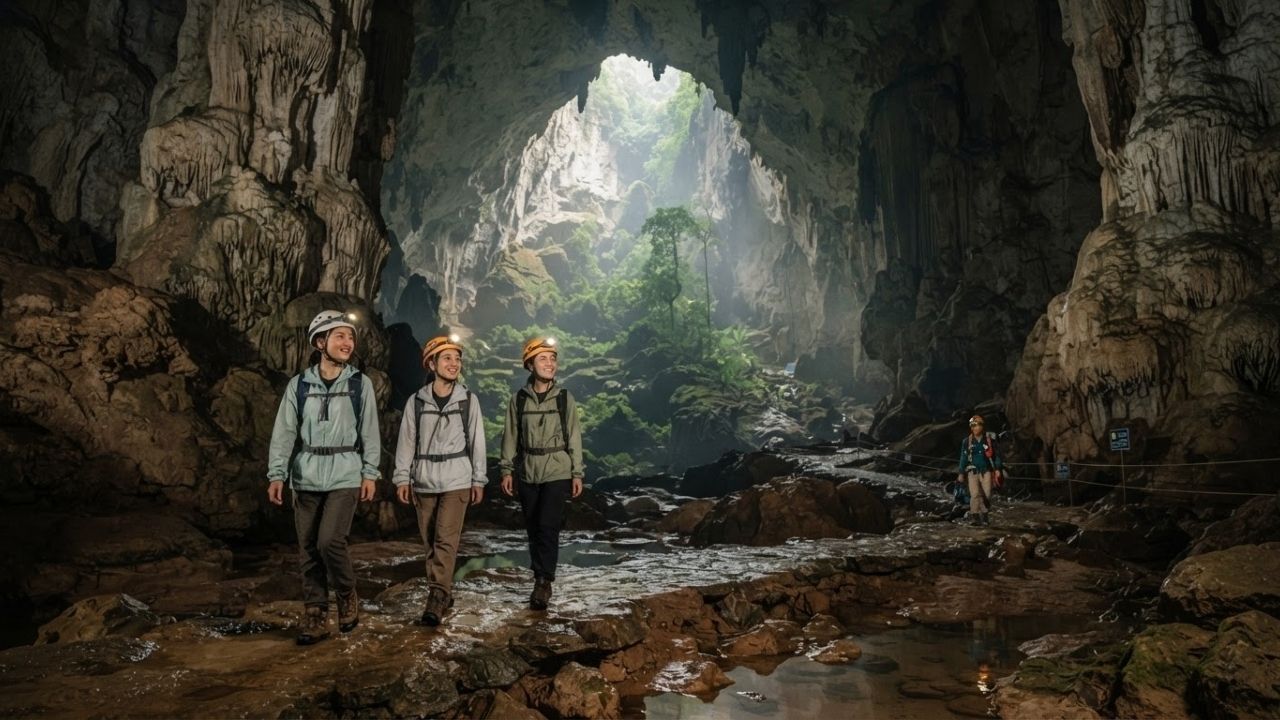
Image generated by AI
Subterranean speleology expeditions are emerging as a fast-growing segment in modern adventure travel. With Vietnam leading the movement, intrepid explorers are trading crowded mountain summits for deep-earth cave networks, underground rivers, and isolated subterranean ecosystems across the globe.
Vietnam's Phong Nha-Kẻ Bàng and the Colossal Realm of Son Doong Cave
[HANOI, Vietnam] — A growing number of international adventure travelers are turning away from conventional high-altitude mountain trekking in favor of deep-earth exploration. Vietnam has emerged as the premier global hub for this speleology boom, anchored by the subterranean networks of Phong Nha-Kẻ Bàng National Park.
The park houses Son Doong Cave, recognized as the world's largest cave passage:
- Internal Weather Systems: Son Doong is so massive that it generates its own internal microclimate, complete with localized fog and subterranean cloud formations.
- Colossal Jungle Dolines: Collapsed cave ceilings allow sunlight to penetrate deep underground, fostering lush internal jungle ecosystems hundreds of feet below the surface.
- Towering Stalagmites: The cave features giant calcite formations reaching heights of up to 70 meters.
To preserve the fragile cave environment, park authorities enforce strictly capped annual permit allocations, with booking waitlists for guided multi-day expeditions often extending several years in advance.
Global Speleology Corridors: Slovenia, Mexico, and Oman
Beyond Vietnam, subterranean tourism is expanding across diverse geological landscapes in Europe, the Americas, and the Middle East:
Slovenia: Classic Karst Topography and Blind Salamanders
In Slovenia, Postojna Cave offers access to classic karst subterranean architecture via an electric underground railway system. The cave's dark aquatic chambers protect the endemic blind salamander (Proteus anguinus), known locally as the "human fish," which survives in total darkness.
Mexico: Yucatán Cenotes and Sistema Sac Actun
In Mexico, subterranean exploration centers on the Yucatán Peninsula's vast freshwater cenote networks. Flooded cave systems like Sistema Sac Actun attract cave divers who navigate thousands of kilometers of submerged passages containing ancient Mayan artifacts and delicate limestone formations.
Oman: Al Hajar Mountain Sinkholes and Hoota Cave
In Oman, deep-earth travel highlights structural collapse features across the Al Hajar mountain range. Intrepid travelers explore the Bimmah Sinkhole alongside the expansive limestone chambers of Al Hoota Cave, which houses rare subterranean aquatic fauna and ancient rock strata.
Extremophile Ecosystems and Strict Zero-Impact Conservation Protocols
Deep-earth cave systems shelter delicate, sunlight-deprived microclimates that host extremophile microorganisms and specialized fungal networks. Because subterranean biospheres possess limited natural resilience to environmental fluctuations, human access requires stringent conservation measures.
Park management authorities and expedition operators enforce zero-impact traversal guidelines:
- Permit Restrictions: Strictly limiting daily and annual visitor numbers to prevent heat, humidity, and carbon dioxide buildup.
- Mandatory Biodegradable Gear: Requiring expedition teams to use specialized gear and pack out all organic and synthetic waste.
- Official Regulatory Portals: Booking and environmental clearance are coordinated directly through park management bodies such as the Phong Nha-Kẻ Bàng National Park Portal and Postojna Cave Park.
The table below summarizes key global deep-earth destinations, primary geological features, key species/attractions, and conservation protocols:
| Country / Region | Primary Geological Feature | Key Subterranean Ecosystem / Attraction | Conservation & Access Protocol |
|---|---|---|---|
| Vietnam (Phong Nha-Kẻ Bàng) | Colossal limestone cave systems | Son Doong Cave, internal weather & jungle dolines | Strictly capped permits & multi-year waitlists |
| Slovenia (Postojna Cave) | Classic karst topography | Electric cave rail & blind salamander (Proteus anguinus) | Regulated rail access & aquatic habitat protection |
| Mexico (Yucatán Peninsula) | Flooded cenote diving networks | Sistema Sac Actun & submerged Mayan artifacts | Certified cave-diving permits & water purity checks |
| Oman (Al Hajar Mountains) | Limestone collapse sinkholes | Bimmah Sinkhole & Al Hoota Cave chambers | Designated walkways & environmental monitoring |
Why This Matters for Passengers and Expedition Adventurers
For thrill-seekers looking for an unmapped wilderness challenge, deep-earth speleology offers an experience untouched by mass tourism. Exploring subterranean caverns requires physical endurance, technical caving skills, and psychological resilience in sensory-deprivation environments. By securing official permits and adhering to strict leave-no-trace protocols, travelers help support long-term cave conservation while experiencing some of the planet's most extraordinary natural wonders.
Frequently Asked Questions
What is deep-earth speleology tourism?
Deep-earth speleology tourism is a specialized form of adventure travel focused on descending into remote subterranean cave networks, underground river systems, and flooded sinkholes alongside professional caving guides.
What makes Vietnam's Son Doong Cave famous?
Located in Phong Nha-Kẻ Bàng National Park, Son Doong Cave is the world's largest known cave passage by volume, featuring its own internal weather systems, cloud formations, and underground jungles.
How do travelers obtain permits for Son Doong and other major caves?
Permits for Son Doong are strictly capped by Vietnamese park authorities and must be booked through licensed expedition operators, often requiring advance reservations up to two years ahead of travel.
Related Travel Guides
Vietnam Adventure Travel and Phong Nha Caving Guide
Slovenia and Central Europe Karst Travel Itinerary
10 Best Extreme Cave Expeditions in the World, According to Reddit
Disclaimer
This article is for informational and educational purposes only. It does not constitute legal, financial, or professional advice. While we strive to provide accurate and up-to-date information, travel policies, regulations, and conditions change rapidly. Always verify information with official sources before making travel decisions. Nomad Lawyer makes no representations about the accuracy, reliability, completeness, or suitability of the information provided. Readers should consult qualified professionals for advice specific to their circumstances. The views expressed in this article are those of the author and do not necessarily reflect the views of Nomad Lawyer.
Raushan Kumar
Founder & Lead Developer
Full-stack developer with 11+ years of experience and a passionate traveller. Raushan built Nomad Lawyer from the ground up with a vision to create the best travel and law experience on the web.
Learn more about our team →