
Vietnam Beverage Tourism Maps Out Hanoi Flavour Trails With QR Codes and Craft Village Discovery Plans
Following 60,000 festival visits, Hanoi develops QR-mapped beverage trails and craft village excursions linking West Lake lotus tea with artisanal brewing.

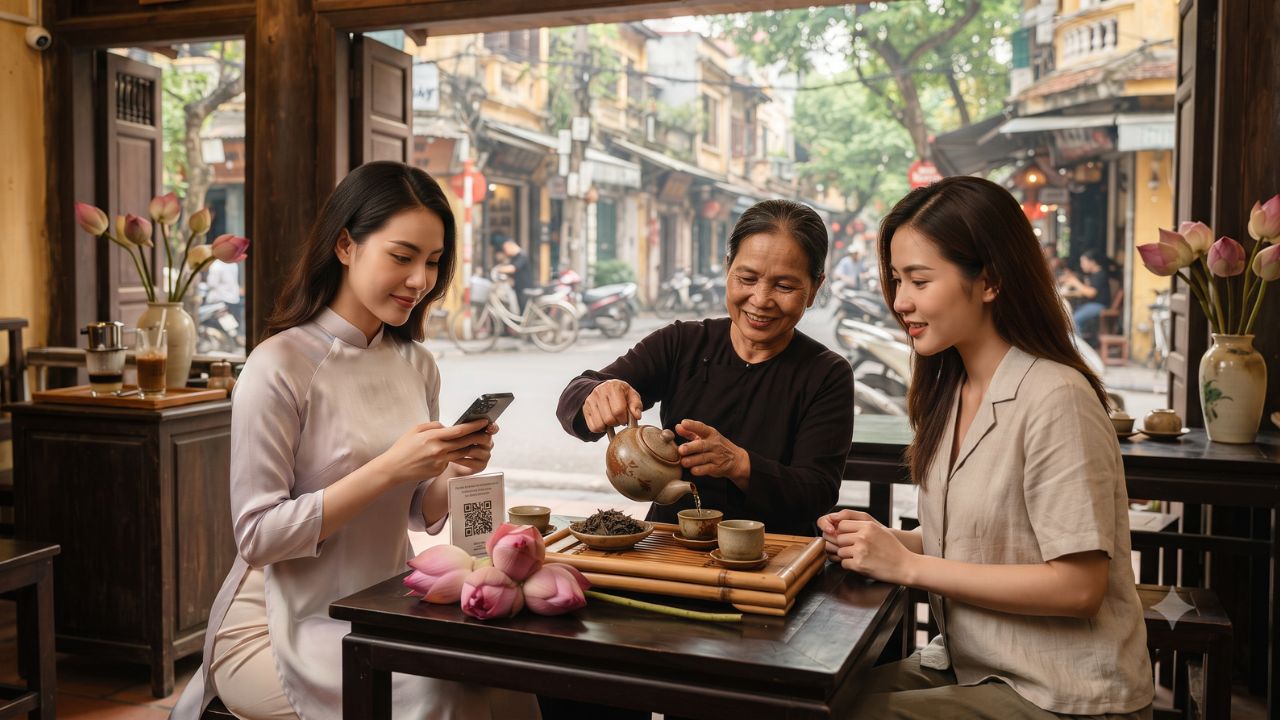
Image generated by AI
Generating approximately 60,000 visits across 70 exhibition booths in three days, the Hanoi Beverage Festival 2026 has prompted municipal authorities to transition temporary tasting stalls into permanent, QR-mapped culinary itineraries. Organized from 9 to 11 October at Astronomy Park in the Duong Noi urban area, the event brought together 60 commercial enterprises and agricultural cooperatives to showcase Vietnam's indigenous drink culture, ranging from ancestral West Lake lotus tea infusions to modern artisanal distillation.
Following the pilot showcase, the Hanoi Department of Culture, Sports and Tourism, in conjunction with the Vietnam National Authority of Tourism (VNAT), confirmed structural plans to integrate beverage heritage directly into the capital's broader 2026–2030 tourism master plan. By deploying centralized digital maps accessible via mobile QR codes, municipal planners intend to establish one to two specialized beverage tourism corridors connecting city-center tasting rooms with peripheral craft villages.
Institutionalizing Gastronomy: Digital Mapping and Craft Village Corridors
The strategic pivot reflects an effort to convert transient street consumption into high-value experiential tourism. While global food travelers readily explore Hanoi's street food stalls, artisanal beverage producers have operated with limited commercial visibility outside regional wholesale markets.
The initiative announced through the government's official administrative channels outlines a dual-track strategy. First, municipal agencies will deploy digital QR codes across registered cafes, heritage tea houses, and craft breweries. Scanning these markers directs visitors to an authenticated directory providing operating hours, foreign-language support, ingredient provenance, and direct booking interfaces for guided workshops.
Second, the program seeks to decentralize tourist spending by establishing bookable itineraries into peri-urban craft villages. Travelers will be encouraged to observe raw ingredient processing, engage in supervised preparation stages, and purchase directly from distillers and tea masters. According to cultural heritage preservation guidelines supported by the UNESCO Representative Office in Viet Nam, integrating agricultural communities into tourism supply chains provides economic incentives for younger generations to sustain labor-intensive traditional preparation methods.
Thematic Architecture: Hanoi Beverage Festival Thematic Framework
The municipal showcase segmented Vietnam's liquid heritage into four specialized operational zones, establishing the prototype categories for forthcoming citywide travel routes.
| Thematic Zone | Primary Cultural Focus & Signature Beverage | Core Demonstration Activity | Production Hub or Origin | Future Itinerary Integration |
|---|---|---|---|---|
| Heritage Tea | West Lake lotus tea (chè sen Tây Hồ), wild Shan Tuyet | Traditional scenting, multi-stage brewing | Quang An, Tay Ho District | Historic tea ceremonies and lake workshops |
| Traditional & Modern Coffee | Phin drip filter coffee, robusta, egg coffee (cà phê trứng) | Extraction mechanics, roasting styles | Central Highlands beans roasted in Hanoi | Old Quarter heritage cafe walking circuits |
| Fermentation & Craft Brewing | Traditional sticky rice wine (rượu nếp), craft lagers | Fermentation yeast cakes, distillation | Peri-urban distilling communes | Rural processing facility day excursions |
| Botanical & Fruit Creations | Tropical fruit infusions, herbal teas, seasonal mocktails | Cold-infusion recipes, herbal blending | Red River Delta agricultural belts | Eco-resort and farm-to-table tasting tours |
Data compiled from Hanoi Department of Culture, Sports and Tourism official festival documentation and municipal tourism planning briefs.
Operational Milestones for Hanoi Beverage Tourism Development (2026–2030)
The municipal administration has structured the commercial development of beverage tourism through a phased timeline designed to move from open-air festivals to bookable commercial products.
| Implementation Phase | Calendar Window | Strategic Objective | Administrative Lead |
|---|---|---|---|
| Festival Pilot | 9–11 October 2026 (Completed) | Staged 70-booth exhibition at Astronomy Park; logged 60,000 visits | Hanoi Department of Culture, Sports and Tourism |
| Digital Mapping Protocol | Late 2026 | Deployment of standardized QR code verification across pilot venues | Municipal Tourism Promotion Centre |
| Corridor Field Testing | First Half 2027 | Launch of 1 to 2 guided craft village and heritage tasting circuits | Licensed inbound tour operators and cooperatives |
| Commercial Packaging | 2027–2028 | Formal integration of beverage routes into hotel concierge desks | Hanoi Department of Tourism and hospitality associations |
| Master Plan Maturation | 2028–2030 | Recurring international festival cadence and certified sustainable packaging | Inter-agency municipal steering committees |
Expert Analysis: The Logistical Gap Between Digital Discovery and Guided Access
For international travelers navigating Vietnam's capital, the direct consequence of this municipal campaign is an expanding menu of cultural options paired with significant on-the-ground booking hurdles. While the deployment of QR codes represents a commendable modernization of visitor information, a digital marker does not automatically create a functioning tourism asset.
The commercial pressure this creates on independent craft producers means that small-scale artisans face operational friction when receiving non-Vietnamese-speaking visitors. Handcrafting West Lake lotus tea or fermenting traditional rice wine requires intensive manual labor during narrow seasonal windows. Without licensed multilingual guides managing arrivals, independent tourists arriving unannounced at rural craft workshops risk disrupting production cycles or encountering closed gates.
Furthermore, transport connectivity to peri-urban craft districts remains fragmented. While central districts like Hoan Kiem and Ba Dinh feature dense walking networks, outlying agricultural cooperatives in Chuong My or Me Linh lack scheduled tourist shuttles. Independent travelers must negotiate private car hires or rely on app-based rideshare drivers who may be reluctant to wait in rural communes during multi-hour fermentation demonstrations.
Consumers must also distinguish between promotional announcements and active booking channels. The municipal portal's digital map outlines intended thematic paths, but formal tour packages with fixed departures, guaranteed English translation, and inclusive entrance fees remain in commercial development. Travelers seeking authentic artisan interactions must confirm reservations directly with venues or work through established inbound agencies rather than expecting public QR placards to function as instant reservation systems.
Environmental compliance represents an additional operational test. The municipal festival emphasized eco-friendly packaging and reduced single-use plastics. However, expanding physical factory visits to fragile rural villages requires decentralized waste management infrastructure to ensure tourist footfall does not contaminate local water sources used in beverage preparation.
Key Takeaways
- High-Volume Showcase: The Hanoi Beverage Festival 2026 recorded approximately 60,000 visits across 70 booths at Astronomy Park, establishing strong consumer interest.
- Digital Route Integration: Municipal authorities are developing QR-coded beverage trails and 1 to 2 dedicated tasting routes under the 2026–2030 tourism strategy.
- Cultural Product Variety: Dedicated corridors focus on West Lake lotus tea, traditional phin filter coffee, craft beer, and regional fruit fermentations.
- Producer Access Constraints: Proposed rural craft village excursions require advance appointments and private transport, as daily scheduled shuttles do not yet operate.
- Language and Translation Needs: Independent foreign travelers must confirm English-speaking staff availability before departing for rural workshop facilities.
FAQ: Hanoi Beverage Tourism 2026
Can international travelers book the Hanoi beverage routes right now?
Not through a unified booking portal. While the municipal framework is established, travelers must book guided visits through local travel agencies or arrange direct appointments with individual cafes and workshops.
What does scanning the Hanoi beverage QR code provide?
The QR codes provide verified venue locations, historical cultural context, and product descriptions, but do not automatically process table reservations or factory tour tickets.
Where is authentic West Lake lotus tea produced in Hanoi?
Traditional lotus scenting centers around the Quang An area in Tay Ho District, where tea artisans incorporate natural fragrance from West Lake lotus blossoms during the summer harvest.
How do visitors travel to outlying beverage craft villages?
Because public transit routes to rural processing communes are limited, visitors should hire a private car with a driver or join an organized culinary tour departing from central Hanoi.
Connecting ancient tea ceremonies to modern smartphone screens gives Hanoi's culinary heritage global reach, provided the roads between the farm and the cup remain open to travelers.
Related Travel Guides
Thailand Proposed Departure Tax and Tourist Fee Consultation Guide
10 Best Coffee and Tea Trails in Vietnam, According To Reddit
Disclaimer
This article is for informational and educational purposes only. It does not constitute legal, financial, or professional advice. While we strive to provide accurate and up-to-date information, travel policies, regulations, and conditions change rapidly. Always verify information with official sources before making travel decisions. Nomad Lawyer makes no representations about the accuracy, reliability, completeness, or suitability of the information provided. Readers should consult qualified professionals for advice specific to their circumstances. The views expressed in this article are those of the author and do not necessarily reflect the views of Nomad Lawyer.
Kunal K Choudhary
Co-Founder & Contributor
A passionate traveller and tech enthusiast. Kunal contributes to the vision and growth of Nomad Lawyer, bringing fresh perspectives and driving the community forward.
Learn more about our team →