
Thailand Proposes 1,000 Baht Departure Tax for All Nationalities: What Travelers Need to Know

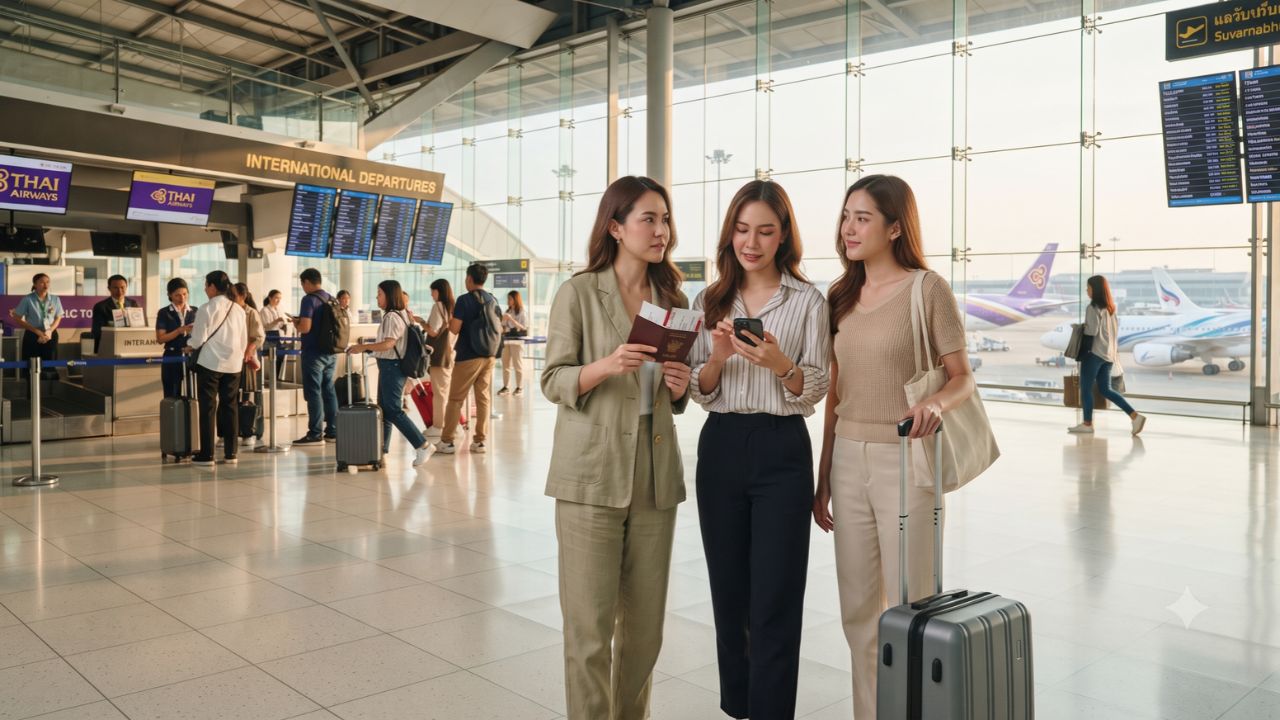
For decades, Thailand's departure tax debate was strictly an internal affair aimed at deterring Thai citizens and permanent residents from spending wealth abroad, but an expansive fiscal blueprint has placed international holidaymakers squarely in the collection queue. On 30 September 2026, the Thai Revenue Department opened a formal public consultation on draft legislation proposing an initial 1,000-baht exit tax for all passengers flying out of the Kingdom, irrespective of their nationality or passport status. While travelers planning upcoming winter escapes to Bangkok, Chiang Mai, or the Andaman islands must recognize that the levy remains in draft review through 29 October 2026, the proposed shift signals a fundamental reassessment of how Southeast Asia's most visited kingdom intends to fund its aviation infrastructure and tourism conservation.
The Revenue Department's Draft Proposal Explained
The administrative framework outlined by The Revenue Department of Thailand represents a major structural departure from past travel taxation models. Under the draft principles published for public review, the departure tax would apply universally to outbound air passengers. Previously, historical statutes debated within the Ministry of Finance focused on restricting currency outflows by taxing Thai nationals heading overseas. By contrast, the current consultation document explicitly removes nationality distinctions, pulling foreign backpackers, family vacationers, digital nomads, and corporate executives into the same legislative net.
The feedback window runs until 29 October 2026, soliciting responses from global airlines, ticket consolidation platforms, airport authorities, and international travel associations. The publication of this consultative draft does not establish an immediate financial obligation. Travelers currently holding flight reservations or purchasing autumn tickets do not owe a single satang at departure gates today. The draft functions as a formal policy sounding board before cabinet ministers decide whether to draft binding statutory amendments for legislative enactment.
Understanding this procedural sequence prevents unnecessary booking confusion. Inexperienced travelers encountering alarming headlines often assume cash counters have suddenly appeared at Suvarnabhumi Airport or Don Mueang International Airport. In reality, the proposal outlines an orderly, phased adoption process designed to protect existing consumer transactions.
Proposed Fee Structure and Legislative Provisions
The consultative paper establishes specific operational parameters for collection, statutory caps, and grace periods. Chief among these is an initial proposed rate of 1,000 baht (approximately US$27 to US$30 depending on prevailing currency exchange rates) applied exclusively to international departures by air. The draft also embeds a flexible legal ceiling, permitting authorities to adjust the levy upward to a statutory maximum of 5,000 baht per departure in future years without drafting entirely new primary legislation.
| Legislative Provision | Proposed Draft Parameter | Operational Mechanism & Passenger Impact |
|---|---|---|
| Initial Air-Departure Charge | 1,000 baht per passenger | Applied to all scheduled commercial international flights leaving Thailand. |
| Statutory Rate Ceiling | 5,000 baht per departure | Establishes the upper legal limit authorized under future ministerial decrees. |
| Overland & Sea Departures | Initially exempt | Crossings via border bridges to Laos, Malaysia, Cambodia, and cruise piers incur zero fee. |
| Collection Method | Airline and ticket agent integration | Automatically bundled into base airfares and taxes at the point of commercial booking. |
| Implementation Window | 180 days post-enactment | Six-month transition buffer starting only after formal publication in the Royal Gazette. |
| Protection for Existing Tickets | Fully protected | Tickets purchased prior to the official commencement date remain exempt from back-charges. |
| Consultation Timeline | 30 September to 29 October 2026 | Public feedback window open to travelers, hospitality leaders, and airline operators. |
Crucially, the proposal provides complete protection for advance ticket sales. Any flight ticket issued before the official commencement date will be grandfathered, ensuring travelers are not subjected to retroactive surcharge demands when arriving at the airport. Furthermore, the 180-day grace period ensures international air carriers have six full months to recalibrate Global Distribution Systems (GDS) and ticketing software once a decree receives final Royal Gazette certification.
Departures across land borders—such as the Friendship Bridges connecting Nong Khai to Vientiane or the southern road posts in Sadao leading to Malaysia—as well as maritime departures from southern ferry terminals, remain entirely exempt in the initial draft.
Impact on Vacation Budgets and Travel Industry Dynamics
For independent travelers, travel taxes represent a psychological threshold as much as a budgetary adjustment. An additional 1,000 baht per traveler adds roughly 4,000 baht (US$110 to US$120) to an overseas vacation for a family of four. In a country celebrated for exceptional street food where a bowl of steaming boat noodles in Bangkok or khao soi in Chiang Mai costs between 50 and 80 baht, a 1,000-baht charge per ticket represents the equivalent of several days of local dining.
The policy debate mirrors earlier government deliberations surrounding proposed arrival entry fees. Tourism organizations and regional hospitality groups are scrutinizing whether added ticket costs could diminish Thailand's price competitiveness against regional peers like Vietnam, Malaysia, and the Philippines, all of which are actively courting long-haul vacationers. However, tourism programs managed by the Tourism Authority of Thailand continue to emphasize high-value cultural immersion, expanded 60-day visa exemptions, and regional dispersion over pure arrival volume.
Airlines operating through hubs managed by Airports of Thailand emphasize that if the measure advances, collection must remain fully automated. Physical collection booths inside terminal departure halls would trigger catastrophic passenger queues during peak departure banks at Suvarnabhumi Airport, where processing tens of thousands of outbound passengers daily already demands tight schedule coordination.
Visitor Insider Tips: Navigating Future Travel to Thailand
- Do Not Pay Bogus Terminal Fees: If third-party touts or unauthorized service desks approach you at Suvarnabhumi, Don Mueang, or Phuket International Airport demanding cash or credit card payments for a "mandatory departure tax," walk away immediately. The proposed levy is not in effect, and if approved, it will be automatically embedded inside your airfare receipt by your airline.
- Save Your Flight Invoices and Electronic Tickets: Keep PDF copies of your original flight payment confirmations stored on your phone. Because the draft guarantees immunity for tickets purchased before the law takes effect, retaining proof of your purchase date safeguards you against administrative ticketing adjustments if the policy moves forward in 2027.
- Explore Low-Cost Overland Exit Routes: If you are an extended traveler exploring the greater Mekong region, remember that land borders remain exempt under the draft plan. Consider taking the overnight sleeper train from Bangkok's Krung Thep Aphiwat Central Terminal north to Nong Khai, crossing over into Laos via the scenic rail connection across the Mekong River without triggering air-departure charges.
- Base Yourself in Transit-Friendly Bangkok Neighborhoods: When departing Bangkok on morning international flights, avoid hailing highway taxis during monsoon downpours or morning rush hours. Stay in neighborhoods like Phaya Thai or Makkasan, which provide direct, air-conditioned access to the Suvarnabhumi Airport Rail Link, bypassing gridlocked expressway tolls and reaching departure gates in 25 minutes.
- Support Local Artisan Markets Directly: If national travel taxes rise, rebalance your personal travel spending by directing funds straight into local hands. Patronize community-run night markets like Talad Noi in Bangkok or Sunday Walking Street in Chiang Mai, purchasing hand-woven cotton textiles and street delicacies from local family vendors rather than international hotel chains.
Cultural and Environmental Context: Funding Sustainable Tourism
Thailand's public debate over tourism-related taxation reflects real ecological strains across the Kingdom. Over the past three decades, exponential visitor growth has strained marine habitats in Krabi and Phang Nga Bay, while municipal services in provincial cultural hubs struggle with waste processing, freshwater supplies, and mountain trail maintenance.
Advocates of the departure fee argue that ring-fencing public revenues for environmental stewardship and emergency healthcare for uninsured foreign tourists will build a more resilient destination model. Similar tourism levies in international destinations fund national park reforestation and historic temple conservation. Balancing affordable access with the preservation of sacred spiritual heritage—from the gilded stupas of Wat Phra Kaew to coastal coral reefs—remains the central challenge facing Thai policymakers as they shape the future of Southeast Asian travel.
FAQ: Understanding Thailand's Proposed Departure Tax in 2026
Is the 1,000-baht departure tax currently being charged?
No. The measure is currently an early consultative draft under public review by the Revenue Department until 29 October 2026. No travelers are being charged this tax today.
Will travelers who already booked flights have to pay extra later?
No. The draft explicitly protects advance ticket purchases. Any flight booked before the law's official commencement date is exempt from subsequent surcharges.
How will the tax be collected if the law passes?
Airlines and commercial travel booking portals will automatically include the fee within the standard international flight ticket price at checkout, eliminating in-person terminal payments.
Does the proposed tax apply to land border crossings into neighboring countries?
No. The initial draft exempts land and sea departures, applying solely to international departures on commercial air services.
Across the sunlit waters of the Gulf of Thailand, true travel freedom endures through mindful preparation and a deep respect for the host communities that welcome us.
Related Travel Guides
Disclaimer
This article is for informational and educational purposes only. It does not constitute legal, financial, or professional advice. While we strive to provide accurate and up-to-date information, travel policies, regulations, and conditions change rapidly. Always verify information with official sources before making travel decisions. Nomad Lawyer makes no representations about the accuracy, reliability, completeness, or suitability of the information provided. Readers should consult qualified professionals for advice specific to their circumstances. The views expressed in this article are those of the author and do not necessarily reflect the views of Nomad Lawyer.
Raushan Kumar
Founder & Lead Developer
Full-stack developer with 11+ years of experience and a passionate traveller. Raushan built Nomad Lawyer from the ground up with a vision to create the best travel and law experience on the web.
Learn more about our team →