
Venezuela Records 33.2% Tourism GDP Surge as Bilateral Charters Revive Los Roques and Canaima Ahead of 2027

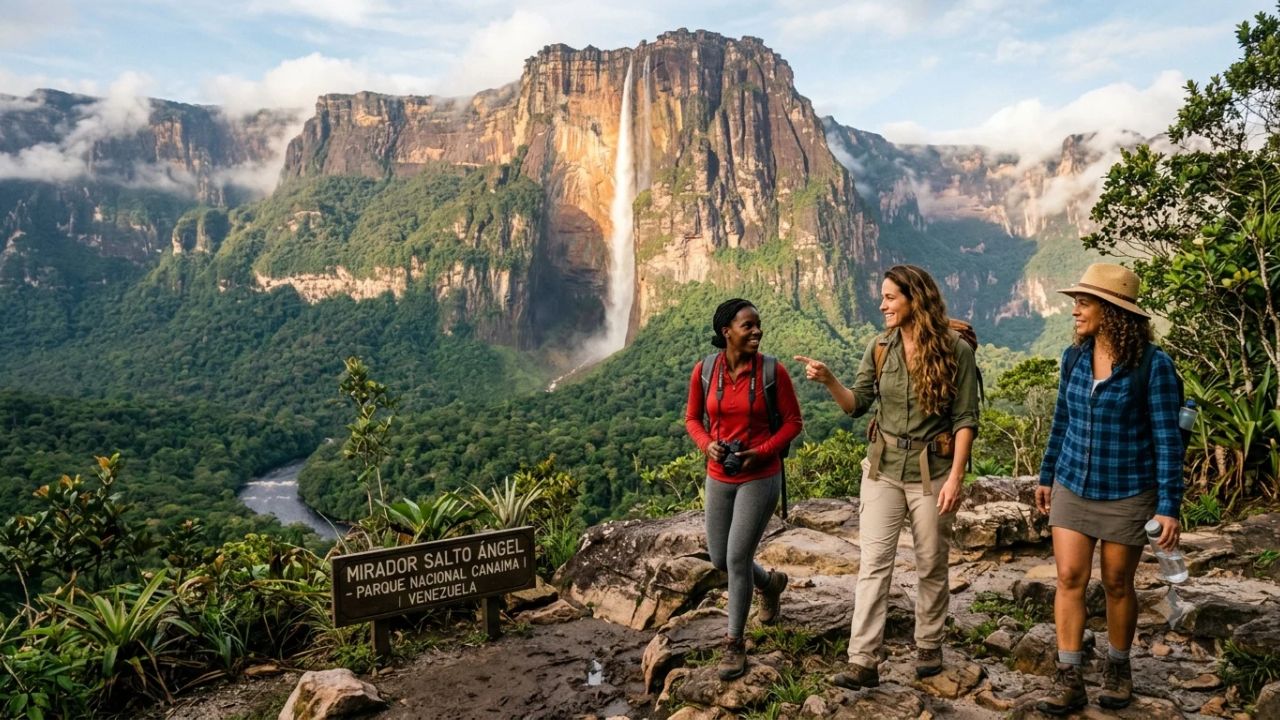
Venezuela is experiencing a targeted tourism revitalization driven by dedicated international charter corridors and a projected 33.2% surge in travel sector GDP, even as official data clarifies that the nation commands a realistic 1.5% to 3.0% share of continental South American arrivals. Documented by the World Travel and Tourism Council (WTTC) and the Ministerio del Poder Popular para el Turismo (MINTUR), the sector's rapid percentage recovery reflects a rebound from a contracted post-pandemic baseline rather than an overwhelming physical takeover of regional passenger volume. Anchored by point-to-point European and Eurasian charter routes feeding Isla de Margarita, luxury fly-in ecotourism in Los Roques, and expedition trekking to Angel Falls in Canaima National Park, the country is systematically rebuilding its receptive hospitality infrastructure.
Recent media assertions suggesting Venezuela commands more than 63% of South America's total visitor volume conflate relative economic growth rates with absolute international arrivals. Across South America's broader aviation network, which processes over 120 million scheduled seats annually, established heavyweights such as Brazil and Colombia manage more than 60% of international arrivals. Nevertheless, Venezuela's targeted economic expansion is generating over 40,000 new direct tourism jobs, standardizing more than 1,250 national travel itineraries, and modernizing dual-currency digital transaction platforms, demonstrating that specialized, niche-oriented tourism can thrive along alternative bilateral travel corridors.
Market Share vs. Economic Growth: Deconstructing the 63% Misconception
Accurate travel industry intelligence requires separating macro-economic growth velocity from physical market share. The narrative that Venezuela had suddenly captured nearly two-thirds of all South American tourism arrivals originated from a misreading of econometric models released by international travel monitoring bodies.
SOUTH AMERICA INBOUND TOURISM & MARKET SHARE REALITY MATRIX (2026)
| Entity / Route | Metrics | Operational Status |
|---|---|---|
| Travel Industry Indicator | Continental Baseline | Venezuela Documented Performance |
| Continental Aviation Capacity | >120 Million Seats / Year | ~120,000 to 180,000 Dedicated Charters |
| Share of Continental Arrivals | Brazil & Colombia (>60%) | 1.5% to 3.0% Inbound Regional Share |
| Travel & Tourism GDP Growth Rate | Regional Average (~4.1%) | Leading Region at 33.2% Projected Surge |
| Direct Tourism Employment Growth | 18.5 Million Jobs (8.3%) | +34.8% YoY Surge (>40,000 New Jobs) |
| Validated National Travel Routes | Standardized State Roster | 1,250 Certified Routes (Target: 3,000) |
| Certified Tourism Service Providers | Regional Auditing Grid | Over 8,000 Audited Tour Operators (RTN) |
| Major Holiday Domestic Movements | Varies by Territory | Over 3.6 Million Domestic Travelers |
| International Charter Origin Share | Standard Scheduled Feeder | Over 65% Sourced from Eurasia/Caribbean |
The Mathematics of the 33.2% GDP Surge
The World Travel and Tourism Council projected that Venezuela would lead South America in Travel and Tourism GDP growth with a 33.2% year-over-year increase. This robust percentage expansion is a direct mathematical consequence of base-effect dynamics. Following years of severe economic restructuring, international air connectivity constraints, and reduced leisure arrivals, the country operated from a compressed historical baseline.
When new bilateral tour agreements introduce weekly long-haul charter widebodies from European and Eurasian gateways directly into Porlamar and Caracas, the incremental revenue produces a sharp percentage spike. In contrast, mature destinations like Brazil (handling over 6 million foreign visitors) or Colombia (processing over 5.5 million international travelers) require hundreds of thousands of new arrivals to register even a single percentage point of growth.
In physical volume, Venezuela captures between 1.5% and 3.0% of total inbound international visitors entering South America. Recognizing this distinction provides travelers, investors, and policymakers with a realistic view of Venezuela's emerging, specialized tourism footprint.
Strategic Aviation Corridors: The Bilateral Charter Revolution
Unlike continental neighbors that rely on open-skies agreements and high-frequency scheduled hub connections through major global airline alliances, Venezuela's receptive tourism recovery relies primarily on bilateral point-to-point charter corridors.
VENEZUELA RECEPTIVE CHARTER AIR CORRIDORS AND SEAT CAPACITY
| Column 1 | Column 2 | Column 3 | Column 4 | Column 5 |
|---|---|---|---|---|
| Route | International Hub | Destination Terminal | Primary Operator | Capacity & Frequency |
| 01 | Moscow (SVO/VKO), | Porlamar, Isla de | Pegas Touristik / | Weekly Widebody Charters; |
| Russia | Margarita (PMV) | Conviasa Partners | 300 to 450 Passengers/Flight | |
| 02 | Warsaw (WAW), | Porlamar, Isla de | European Inclusive | Bi-Weekly Winter Charters; |
| Poland | Margarita (PMV) | Tour Charters | Package Beach Holidaymakers | |
| 03 | Havana (HAV), | Caracas (CCS) / | Regional Caribbean | Weekly Multi-Destination; |
| Cuba | Porlamar (PMV) | Direct Corridors | Shopping & Cultural Transit | |
| 04 | Direct Domestic | Los Roques Archipelago | Local Commuter | Daily Scheduled Cessna |
| Feeder (CCS / UIO) | (LRV - Gran Roque) | Air Taxi Shuttles | Caravan / Twin Otter Hops | |
| 05 | Canaima National | Canaima Airstrip | Rutaca / Conviasa | Dedicated Fly-In Expedition |
| Park (CAJ Feeder) | (Angel Falls Gateway) | Regional Charters | Embraer / Turboprop Flights |
Overcoming Transit Obstacles via Direct Island Gateways
By utilizing direct charter flights, international tour operators bypass traditional connection hubs. Receptive charter flights organized by operators such as Pegas Touristik inject between 120,000 and 180,000 direct foreign seats annually into Santiago Mariño Caribbean International Airport (PMV) in Porlamar on Isla de Margarita.
Non-traditional source markets—including Russia, Poland, Cuba, and regional Caribbean territories—now represent over 65% of Venezuela's international receptive charter volume. These travelers arrive on pre-packaged, fully escorted holiday itineraries with confirmed resort lodging, pre-cleared transport vouchers, and organized excursions, minimizing individual exposure to regional transit complexities.
The Dual Hospitality Economy: Luxury Archipelago Retreats vs. Coastal Resorts
Venezuela's accommodation sector exhibits distinct micro-market trends, contrasting exclusive, ultra-luxury eco-enclaves with domestic seaside resorts.
HOSPITALITY PERFORMANCE AND BED-NIGHT YIELDS BY REGION
| Entity / Facility | Delays | Cancellations | Details |
|---|---|---|---|
| Destination Corridor | Target Market | Average Occupancy | Revenue per Room Dynamics |
| Los Roques | Ultra-Luxury Int'l | Spikes Above 78% | High Yield ($350 to $800+ USD / night) |
| Archipelago | & High-Net-Worth | Peak Charter Season | Full-board inclusive boutique posadas |
| Isla de Margarita | Package Charter & | 55% to 65% | Moderate Yield ($70 to $160 USD); |
| (Playa El Agua) | Domestic Families | Seasonal Average | All-inclusive beachfront resorts |
| Morrocoy National | Domestic Leisure & | 45% to 55% | Weekend Surge Dependent ($60 to $120); |
| Park (Falcón Coast) | Regional Getaways | Holiday Spikes | Cabañas and boat charter rentals |
| Canaima National | High-Yield Nature | 60% to 70% | Premium Expedition ($250 to $500/day); |
| Park (Angel Falls) | & Adventure Trekkers | Dry/Wet Balance | Multi-day lodge & camp packages |
| Mature Continental | Business, MICE & | 62% to 72% | Diversified Corporate & Leisure Yield; |
| Hubs (Rio / B.A.) | Cultural Leisure | Year-Round Baseline | Consistent international conventions |
The Boutique Exclusivity of Los Roques
Positioned approximately 160 kilometers north of the central mainland in the Caribbean Sea, the Los Roques Archipelago National Park represents the crown jewel of Venezuela's high-yield tourism model. Protected since 1972, the marine reserve strictly prohibits large-scale high-rise resort construction.
Accommodation on the primary island of Gran Roque consists exclusively of restored heritage fishermen's houses transformed into upscale posadas (boutique guesthouses). Operating on full-board plans that include daily private catamaran charters to uninhabited cays (such as Cayo de Agua, Francisquí, and Crasquí) alongside gourmet Italian-Venezuelan seafood dining, these lodges command nightly rates ranging from $350 to over $800 USD. During peak winter charter windows, luxury posada occupancy consistently surpasses 78%, catering to kite-surfers, marine divers, and international travelers seeking privacy.
Domestic Mobilization: The Financial Anchor of Regional Lodging
While luxury enclaves draw foreign currency, domestic tourism serves as the primary financial foundation for everyday hospitality operators. Ministry data registered more than 3.6 million domestic traveler movements during national holiday periods, led by Carnival and Holy Week (Semana Santa).
Domestic vacationers traveling by private vehicle and regional coach fleets maintain operational cash flows for hotels, family-run inns, and beachside restaurants across the Paraguaná Peninsula, Morrocoy National Park, and coastal Aragua. Domestic spending generates over 70% of total revenue for independent hospitality enterprises operating outside the dedicated international charter bubbles, insulating local communities against fluctuations in international flight schedules.
Ecotourism Icons: Canaima National Park and Angel Falls Expeditions
Nature-based tourism represents more than 35% of all leisure journeys across South America, and Venezuela possesses mega-biodiversity assets that rank among the most spectacular on earth.
CANAIMA NATIONAL PARK AND EXPEDITION PROFILE
| Category / Entity | Details / Impact |
|---|---|
| Environmental Parameter | Conservation & Operational Specification |
| Protected Territory Scale | 3,000,000 Hectares (30,000 sq km); UNESCO World Heritage Site |
| Anchor Natural Feature | Kerepakupai Merú (Angel Falls) - World's Highest Waterfall (979 meters) |
| Geological Formation Type | Precambrian Sandstone Tepuis (Tabletop Mountains over 2 Billion Years Old) |
| Annual Expedition Volume | 15,000 to 25,000 High-Yield International & Domestic Adventure Travelers |
| Expedition Access Route | Fly-in to Canaima Lagoon; motorized curiara river ascent via Carrao River |
| Indigenous Administration | Co-managed in direct partnership with native Pemón indigenous communities |
| Optimal Seasonal Flow Window | June to November (High Water Season enables direct boat access to falls) |
Navigating the River Ascent to Angel Falls
Reaching the base of Angel Falls (Kerepakupai Merú), which plummets 979 meters from the summit of the Auyán-tepui, remains one of the world's great adventure expeditions. Because no roads penetrate the 3-million-hectare wilderness of Canaima National Park, all travel is conducted via air and river.
Travelers fly aboard regional turboprops from Caracas or Ciudad Bolívar into Canaima village. From there, expeditions navigate motorized wooden canoes (curiaras) up the Carrao and Churún rivers, passing through dramatic canyon walls before hiking through tropical rainforest to the Mirador Laime viewpoint directly beneath the falls.
Between 15,000 and 25,000 high-yield adventure travelers complete this expedition annually. Crucially, operations are managed in direct coordination with native Pemón indigenous communities, who provide boat captains, river navigators, forest guides, and rustic hammock-lodge accommodations on Orchid Island and Isla Ratón. Tour fees flow directly into indigenous village councils, financing community schools, medical supplies, and solar micro-grids.
Regulatory Quality Certification: The RTN and Route Standardization
To overcome past deficits in service reliability and ensure international safety compliance, MINTUR has enforced rigorous accreditation standards through the Registro Turístico Nacional (RTN).
MINTUR QUALITY CERTIFICATION AND REGULATORY FRAMEWORK
| Category / Entity | Details / Impact |
|---|---|
| Regulatory Component | Policy Mechanism & Strategic Objective |
| Validated Tourist Routes | 1,250 Official Routes Validated; Regulatory Target of 3,000 National Routes |
| Certified Service Entities | Over 8,000 Audited Tour Operators, Transport Firms, and Lodging Properties |
| Regional Auditing Zones | Barinas, Paraguaná, Mérida, Mochima, Roraima Plateau, and Gran Sabana |
| Guide Licensing Standards | Mandatory First Aid, Alpine Safety, and Multilingual Proficiency Testing |
| Ecological Compliance | Strict Carrying-Capacity Audits for Tepui Treks and Coral Cay Excursions |
Auditing 8,000 Tourism Operators Nationwide
Through the RTN framework, state inspectors have audited and certified more than 8,000 commercial operators, covering transport providers, mountain guides, dive masters, and hotel properties. This initiative establishes standardized pricing transparency, mandatory passenger insurance coverage, and vehicle safety inspections.
In addition, certifying 1,250 official travel itineraries—with a national target of 3,000—ensures that demanding wilderness expeditions, such as the six-day trek to the summit of Mount Roraima in the Gran Sabana, are conducted exclusively by licensed guides equipped with satellite communication gear, emergency medical kits, and waste removal equipment that enforces zero-trace camping standards.
Financial Modernization: Dual-Currency Systems and FinTech Integration
A decisive breakthrough in stabilizing Venezuela's traveler experience has been the rapid evolution of digital payment infrastructure, addressing historical currency exchange frictions.
FINANCIAL TECHNOLOGY AND PAYMENT ECOSYSTEM IN TRANSIT
| Financial Indicator | Operational Status & Practical Reality |
|---|---|
| Continental Digital Booking Share | 52% of Travel Bookings Completed Digitally Across South America |
| Local Payment Completion Rate | Increased by >40% Following Dual-Currency FinTech Integration |
| Accepted Currencies in Practice | US Dollars (Cash & Digital), Euros, and Digital Venezuelan Bolívar |
| International Card Acceptance | Foreign Visa & Mastercard Accepted at Official BCV Floating Rates |
| Digital Biopago & QR Wallets | Fingerprint and Contactless QR Readers Deployed Across Retail Hubs |
| Cash Denomination Recommendations | Pristine, Unmarked $1, $5, $10, and $20 USD Bills Strongly Advised |
Navigating Everyday Payments on the Ground
For years, foreign visitors faced complex currency dynamics marked by hyperinflation and multiple exchange rates. Today, the commercial economy operates on a transparent dual-currency framework:
- US Dollar Dominance: In primary tourism zones—including Caracas, Porlamar, Los Roques, and Canaima—prices for hotels, fine dining, car rentals, and excursions are quoted directly in US Dollars.
- Credit Card Processing: International Visa and Mastercard credit and debit cards are widely accepted at major hotels, supermarket chains, and registered restaurants, processing transactions at the official floating exchange rate established daily by the Central Bank of Venezuela (Banco Central de Venezuela, or BCV).
- FinTech and Biopago: Local merchants utilize contactless point-of-sale terminals and digital QR payment systems that instantly convert between Bolívares and foreign currencies, raising retail transaction success rates by more than 40%.
- Cash Management Advice: When carrying physical US currency, travelers must ensure banknotes are clean, crisp, and completely free of tears, ink marks, or heavy folds, as local merchants strictly inspect paper bills. Carrying small denominations ($1, $5, and $10 bills) is essential for tipping, artisanal crafts, and casual beachside purchases.
Traveler Logistics Guide: Navigating Receptive Corridors and Natural Reserves
Travelers planning an independent or organized journey to Venezuela should follow established operational procedures to ensure a seamless, secure visit.
PRACTICAL TRAVELER LOGISTICS AND SAFETY CHECKLIST
| Entity / Facility | Delays | Cancellations | Details |
|---|---|---|---|
| Logistics Element | Destination Focus | Operational Protocol | Recommended Action Plan |
| Entry Documentation | International Air | Valid Passport | Verify tourist visa requirements |
| Arrival Gateways | (>6 Months Validity) | based on nationality prior to travel | |
| Yellow Fever Vaccine | Canaima & Amazon | International Cert. | Mandatory vaccination completed at |
| Certification | Rainforest Zones | of Vaccination | least 10 days prior to jungle arrival |
| Domestic Connection | Maiquetía (CCS) to | Inter-Terminal Walk | Allow 2 to 3 hours buffer between |
| Buffers | Island / Jungle | (Domestic Terminal) | international arrival and domestic hop |
| National Park Entry | Los Roques & | Park Conservation | Carry physical US Dollar cash to pay |
| Tariffs | Canaima Reserves | Fees at Airstrip | park entry fees at terminal check-in |
Transit via Simón Bolívar International Airport (Maiquetía - CCS)
Most international travelers not arriving on direct island charters enter through Simón Bolívar International Airport (CCS) in Maiquetía, located on the coast approximately 45 minutes north of central Caracas via the highway tunnel corridor.
- Terminal Transfers: The international and domestic terminals are connected by a covered pedestrian walkway. When connecting to domestic flights to Los Roques (LRV), Porlamar (PMV), or Puerto Ordaz (PZO for Canaima), travelers should clear customs, collect checked baggage, and walk directly to the domestic check-in counters.
- Airport Transportation: Travelers staying overnight in Caracas should utilize pre-arranged private hotel shuttles or licensed black airport taxis (taxis oficiales) registered with the airport authority. Avoid accepting rides from unaccredited private drivers in the public arrivals concourse.
Health and Environmental Precautions
- Vaccinations: The Yellow Fever vaccine is mandatory for travelers visiting forested and jungle regions south of the Orinoco River, including Canaima National Park, Angel Falls, and the Gran Sabana. Proof of vaccination (the yellow WHO card) must be presented upon boarding regional flights.
- Cash Reserves: While card processing is widespread in major cities, remote wilderness destinations—such as the indigenous camps along the Carrao River or small beach bodegas in Los Roques—operate strictly on physical cash. Travelers should carry sufficient small-denomination US Dollars to cover park fees, guide tips, and boat transfers.
Sustainable Community Reinvestment and Future Outlook
The expansion of Venezuela's tourism sector is generating vital socioeconomic benefits for coastal and highland communities that historically lacked diversified income sources. According to WTTC projections, the 34.8% surge in sector employment is creating over 40,000 new direct jobs, providing stable careers for youth in hospitality management, marine conservation, and multilingual adventure guiding.
By focusing on high-value, low-impact travel—such as the small-group eco-lodges of Los Roques and the Pemón-guided river expeditions of Canaima—Venezuela is establishing an environmentally sustainable tourism model. While the country accounts for a modest 1.5% to 3.0% share of continental visitor arrivals, its extraordinary natural capital and resilient local communities demonstrate that thoughtful, grassroots tourism development can restore international confidence and build lasting prosperity.
Frequently Asked Questions
Does Venezuela hold a 63% share of South American tourist arrivals?
No. Official multilateral data indicates Venezuela captures between 1.5% and 3.0% of total South American arrivals. The 63% figure was a statistical misinterpretation confusing WTTC projected GDP percentage growth with physical visitor market share.
What is driving Venezuela's 33.2% tourism GDP growth rate?
The 33.2% projected GDP growth is fueled by a low post-pandemic baseline, the introduction of dedicated bilateral charter flights from Eurasia and the Caribbean, and expanding domestic holiday travel.
How do travelers access Angel Falls and Canaima National Park?
Canaima National Park is accessible exclusively by air via regional flights from Caracas or Ciudad Bolívar. Visiting Angel Falls requires an organized motorized canoe (curiara) river expedition co-managed by native Pemón guides.
What currency should international travelers use in Venezuela?
Travelers should carry crisp, undamaged US Dollar cash in small denominations ($1, $5, $10, and $20 bills). Major international credit cards (Visa and Mastercard) are also widely accepted at official central bank rates in cities and resorts.
Related Travel Guides
- Central and South America Tourism Surge: Cultural Expeditions, Biodiverse Nature Reserves, and Emerging Destinations Across Peninsular Corridors
- Quito Implements 15% VAT and Public Transit Tariff Revisions: How Ecuador's New Fiscal Rules Reshape Andean Travel Budgets in 2026
- US State Department Issues Q4 2026 Travel Advisories Across South America: Safety Guidance for Bolivia, Brazil, Chile, and Ecuador
Disclaimer
This article is for informational and educational purposes only. It does not constitute legal, financial, or professional advice. While we strive to provide accurate and up-to-date information, travel policies, regulations, and conditions change rapidly. Always verify information with official sources before making travel decisions. Nomad Lawyer makes no representations about the accuracy, reliability, completeness, or suitability of the information provided. Readers should consult qualified professionals for advice specific to their circumstances. The views expressed in this article are those of the author and do not necessarily reflect the views of Nomad Lawyer.
Raushan Kumar
Founder & Lead Developer
Full-stack developer with 11+ years of experience and a passionate traveller. Raushan built Nomad Lawyer from the ground up with a vision to create the best travel and law experience on the web.
Learn more about our team →