
Uzbekistan Tourism Services Exports Surge to Record $5.3 Billion in 2026 as Inbound Arrivals Surpass 10.3 Million

Uzbekistan's tourism services exports surged by 51.2% year-on-year to reach a record $5.3 billion during the first nine months of 2026, driven by 10.3 million international visitor arrivals across the Central Asian republic. Released by state economic and tourism monitoring authorities, the verified data confirms that Uzbekistan has transitioned from a seasonal, budget-oriented backpacking route into one of the world's fastest-expanding high-yield cultural and nature destinations. Supported by visa-exempt access for more than 90 nations, a 34.5% expansion in airport handling capacity, and a single-month milestone of 1.2 million foreign visitors in September, the country's travel sector generated over 142,000 new jobs while elevating average daily visitor expenditure to $514.56.
The rapid monetization of Uzbekistan's visitor economy reflects a structural pivot toward premium heritage tourism, high-speed rail connectivity, and diversified eco-adventure travel across the Kyzylkum Desert and Zaamin mountain reserves. While traditional feeder markets across Eastern Europe and Russia expanded by 30%, inbound traffic from dynamic Asian and Middle Eastern origins skyrocketed, led by a 2.1-fold increase in Chinese visitors and a 1.9-fold rise in Malaysian arrivals. With nationwide hotel occupancy averaging 76.4% and peaking at 88.2% in September, Uzbekistan is successfully deploying export revenues into infrastructure modernization and historical conservation across UNESCO Silk Road centers.
Macroeconomic Analysis: The $5.3 Billion Export Benchmark
The performance of Uzbekistan's travel sector from January through September 2026 highlights the economic impact of aggressive deregulation, targeted international marketing, and infrastructure investment. Tourism services exports expanded at more than double the rate of overall gross domestic product growth, establishing the visitor economy as a cornerstone of Uzbekistan's foreign exchange earnings.
UZBEKISTAN TOURISM SERVICES EXPORT MACROECONOMIC MATRIX (JAN-SEPT 2026)
| Macroeconomic & Tourism Metric | Historical Baseline | 2026 Verified Performance Level |
|---|---|---|
| Tourism Services Exports Revenue | ~$3.50 Billion (2025) | $5.30 Billion USD (+51.2% YoY Surge) |
| Total Foreign Visitor Arrivals | ~8.55 Million (2025) | 10.30 Million Foreign Tourists (+20.4%) |
| September Monthly Visitor Influx | ~940,000 Travelers | 1.20 Million Milestone Inbound Arrivals |
| Average Daily Spend per Tourist | ~$340 to $380 USD / day | $514.56 USD per Traveler per Day |
| Average Visitor Length of Stay | 4.2 to 5.0 Days | 6.8 Days Extended Itinerary Average |
| Direct & Indirect Jobs Created | Sector Expansion Target | 142,000 New Service Sector Jobs in 2026 |
| Total National Tourism Workforce | ~748,000 Personnel | 890,000 Active Personnel Nationwide |
| Cultural & Heritage Tour Share | 54.0% Historical Mix | 62.4% of All Foreign Travel Bookings |
| Culinary Direct Expenditure Total | ~$460 Million Baseline | $680 Million USD Dining Spend |
| Desert & Wilderness Adventure Rev. | ~$230 Million Baseline | $320 Million USD Nature Spend (+38.9%) |
Transition to High-Yield Tourism Monetization
The defining feature of the 2026 tourism surge is the sharp elevation in daily traveler expenditure. Historically, Central Asian tourism was characterized by low-cost overland backpacking, where travelers spent modest sums on local homestays and regional buses.
During the first nine months of 2026, average daily spending per foreign traveler reached $514.56 USD. This escalation was driven by the rapid growth of luxury boutique hotels in historic city centers, private high-speed rail transfers, curated architectural tours led by licensed historians, and fine dining establishments showcasing Central Asian gastronomy. By extending average lengths of stay to 6.8 days, international visitors spent more on domestic air connections, luxury textiles, ceramics, and regional excursions, channeling liquidity directly into local municipal economies.
Global Source Market Dynamics: Dynamic Multipliers Across Continents
Inbound growth across Uzbekistan in 2026 was distinguished by balanced, multi-regional expansion, combining exponential multipliers from Asia and the Middle East with solid double-digit increases from North America and Western Europe.
INBOUND VISITOR GROWTH BENCHMARKS BY SOURCE MARKET (JAN-SEPT 2026)
| Geographic Region | Source Country | Growth Metric | Strategic Driver & Market Factor |
|---|---|---|---|
| East & Southeast | China | 2.1x Increase | Direct AZAL / Air China flights, e-visa |
| Asia | Malaysia | 1.9x Increase | Halal culinary tourism, Silk Road ties |
| Indonesia | 1.7x Increase | Umrah-plus stopovers, direct Tashkent | |
| Japan | 1.5x Increase | Cultural heritage interest, JICA links | |
| Middle East & North | Egypt | 1.8x Increase | Bilateral religious & trade delegations |
| Africa | Türkiye | +15.0% YoY Gain | Common Turkic heritage, Turkish Airlines |
| Europe | Romania | 1.8x Increase | Expanding Eastern European charters |
| Germany | +25.0% YoY Gain | Eco-trekking, cultural Silk Road tours | |
| United Kingdom | +25.0% YoY Gain | Architectural heritage & academic trips | |
| France | +21.0% YoY Gain | Archaeological expeditions, arts travel | |
| Russia | +30.0% YoY Gain | High-frequency flights, CIS integration | |
| North America | United States | +40.0% YoY Gain | 24-hr e-visa, Uzbekistan Airways JFK-TAS |
The Asian and Middle Eastern Travel Expansion
Asian outbound markets delivered unprecedented arrival multipliers throughout 2026. The 2.1-fold increase in Chinese visitors was accelerated by the introduction of direct air routes linking Beijing, Shanghai, and Guangzhou with Tashkent and Samarkand. Chinese group tours and independent travelers increasingly view the Silk Road cities of Uzbekistan as essential cultural touchpoints connecting ancient imperial trade networks.
Similarly, visitor flows from Malaysia (up 1.9x) and Indonesia (up 1.7x) surged, fueled by the rapid expansion of "Umrah-Plus" tourism. Muslim travelers heading to the holy sanctuaries of Mecca and Medina increasingly book multi-day layovers in Uzbekistan to visit the historic Islamic shrines, madrasas, and mausoleums of Imam al-Bukhari near Samarkand and Bahauddin Naqshband in Bukhara.
Sustained Western and North American Demand
Western markets posted strong growth, led by a 40% year-over-year surge in travelers originating from the United States. Non-stop flights operated by Uzbekistan Airways between New York (JFK) and Tashkent (TAS), combined with a streamlined 24-hour electronic visa portal, eliminated travel friction for North American travelers.
Simultaneously, traditional Western European cultural markets recorded consistent double-digit expansions: Germany (+25%), the United Kingdom (+25%), and France (+21%). These travelers demonstrated high engagement with architectural conservation projects, artisanal craft workshops, and multi-day train expeditions connecting the desert fortresses of ancient Khorezm.
Aviation Gateways and Rail Infrastructure Modernization
Handling 10.3 million foreign arrivals—including 1.2 million in the single month of September—required substantial capital investment in transportation infrastructure.
TRANSPORTATION INFRASTRUCTURE AND LOGISTICS PERFORMANCE (2026)
| Transport Infrastructure Metric | Verified Operational Performance Benchmark |
|---|---|
| Airport Handling Capacity Growth | Expanded 34.5% YoY Across All International Gateways |
| International Flight Arrivals | >48,000 International Flights Handled (Jan through Sept 2026) |
| Gateway Passenger Throughput | Increased by 28.2% YoY Across TAS, SKD, BHK, and UGC Terminals |
| Direct Flight Connections Growth | +19.4% YoY Expansion in Direct International Routes |
| Primary International Hubs | Tashkent (TAS), Samarkand (SKD), Bukhara (BHK), Urgench (UGC) |
| High-Speed Rail Network Operations | Afrosiyob (Talgo 250) High-Speed Trains Operating at Full Capacity |
| Electronic Visa Processing Speed | Reduced to 24 Hours (Spurring 42.3% Rise in Independent Bookings) |
| Transit Visa-Free Passenger Growth | +35.8% Surge in Layover Bookings for Stopover Passengers |
Air Gateway Expansion: Tashkent, Samarkand, and Bukhara
The collective expansion of international air terminals in Tashkent (TAS), Samarkand (SKD), Bukhara (BHK), and Urgench (UGC) handled more than 48,000 international flight arrivals during the nine-month evaluation window.
The modernized Samarkand International Airport, featuring a signature open-book terminal design, functioned as a major international gateway, allowing European, Middle Eastern, and Asian carriers to bypass Tashkent and deliver tourists directly to historic Silk Road monuments. Direct international routes expanded by 19.4%, introducing non-stop services from international hubs including Istanbul, Dubai, Doha, Frankfurt, and Seoul.
The Afrosiyob High-Speed Rail Backbone
On the ground, Uzbekistan's transport network relies on the Afrosiyob high-speed train system, operated by Uzbekistan Railways using Spanish Talgo 250 trainsets. The electrified high-speed line connects Tashkent, Samarkand, and Bukhara, reducing travel times across the desert:
- Tashkent to Samarkand (344 km): 2 hours and 15 minutes.
- Samarkand to Bukhara (258 km): 1 hour and 30 minutes.
- Ongoing Electrification to Khiva: Engineering work advancing across the desert to extend high-speed service to Urgench and the ancient walled city of Khiva (Ichan Kala), replacing slow overnight diesel-hauled services with modern electric trains.
High-speed rail allows international visitors to move smoothly between imperial capitals without enduring long highway journeys, delivering an efficient European-standard transit experience across Central Asia.
Hospitality Inventory Expansion and High-End Room Availability
To support surging arrivals, private developers and international hospitality brands added significant room capacity across the country.
NATIONWIDE LODGING INVENTORY AND OCCUPANCY BENCHMARKS
| Category / Entity | Details / Impact |
|---|---|
| Hospitality Performance Variable | Documented 2026 Operating Benchmark |
| Lodging Capacity Expansion | +18.7% YoY Growth (+14,500 New Certified Rooms Added Nationwide) |
| Average Nine-Month Occupancy | 76.4% Average Across All Urban Hotel Categories (Jan-Sept 2026) |
| Peak September Occupancy Level | 88.2% Record Average Occupancy Across Prime Historic Hubs |
| 4-Star and 5-Star Capacity Growth | +22.1% YoY Increase in Premium International Luxury Properties |
| Eco-Lodges & Heritage Caravanserais | +31.5% Capacity Surge Across Mountain, Steppe, and Desert Zones |
| Certified Eco-Friendly Lodgings | 210 Properties Formally Awarded International Green Certifications |
Expanding Five-Star and Boutique Heritage Stays
Uzbekistan's lodging capacity expanded by 18.7% year-over-year, adding more than 14,500 new certified guest rooms. The luxury segment expanded by 22.1%, with international flags—including Hilton, InterContinental, Marriott, and Wyndham—opening new properties in Tashkent and the Silk Road Samarkand tourist complex.
Simultaneously, localized boutique accommodations grew rapidly. In Bukhara and Khiva, historic Jewish merchant houses and nineteenth-century caravanserais were carefully restored into atmospheric boutique hotels featuring carved wooden pillars, central courtyards, and traditional hand-painted plasterwork (ganch). These properties combine authentic architectural charm with modern amenities, including high-speed Wi-Fi, air conditioning, and contemporary plumbing.
Occupancy levels remained exceptionally robust, averaging 76.4% across the first nine months and climbing to 88.2% in September, providing hoteliers with the capital needed to maintain high service standards and invest in employee vocational training.
Heritage, Cultural, and Culinary Tourism Drivers
Cultural and architectural tourism remains the foundational pillar of Uzbekistan's international appeal, generating 62.4% of all travel bookings between January and September 2026.
CULTURAL, HERITAGE, AND ADVENTURE SECTOR MONETIZATION
| Entity / Facility | Delays | Cancellations | Details |
|---|---|---|---|
| Tourism Sector Niche | Documented Volume | Fiscal Revenue | Core Heritage Locations |
| Architectural & UNESCO | >6.40 Million | +44.2% YoY Ticket | Registan (Samarkand), Kalyan Minaret |
| Heritage Sightseeing | Foreign Travelers | Museum Revenues | (Bukhara), Ichan Kala (Khiva) |
| Regional Gastronomy & | Integrated Across | $680 Million USD | Tashkent Plov Center, Samarkand bread |
| Culinary Travel | 10.3M Travelers | Direct Dining Spend | bakeries, Fergana fruit orchards |
| Desert & Wilderness | >1.10 Million | $320 Million USD | Kyzylkum Desert yurt camps, Zaamin |
| Adventure Tourism | Adventure Guests | Direct Rural Value | National Park, Aral Sea ship cemetery |
UNESCO Monument Preservation and Ticket Yields
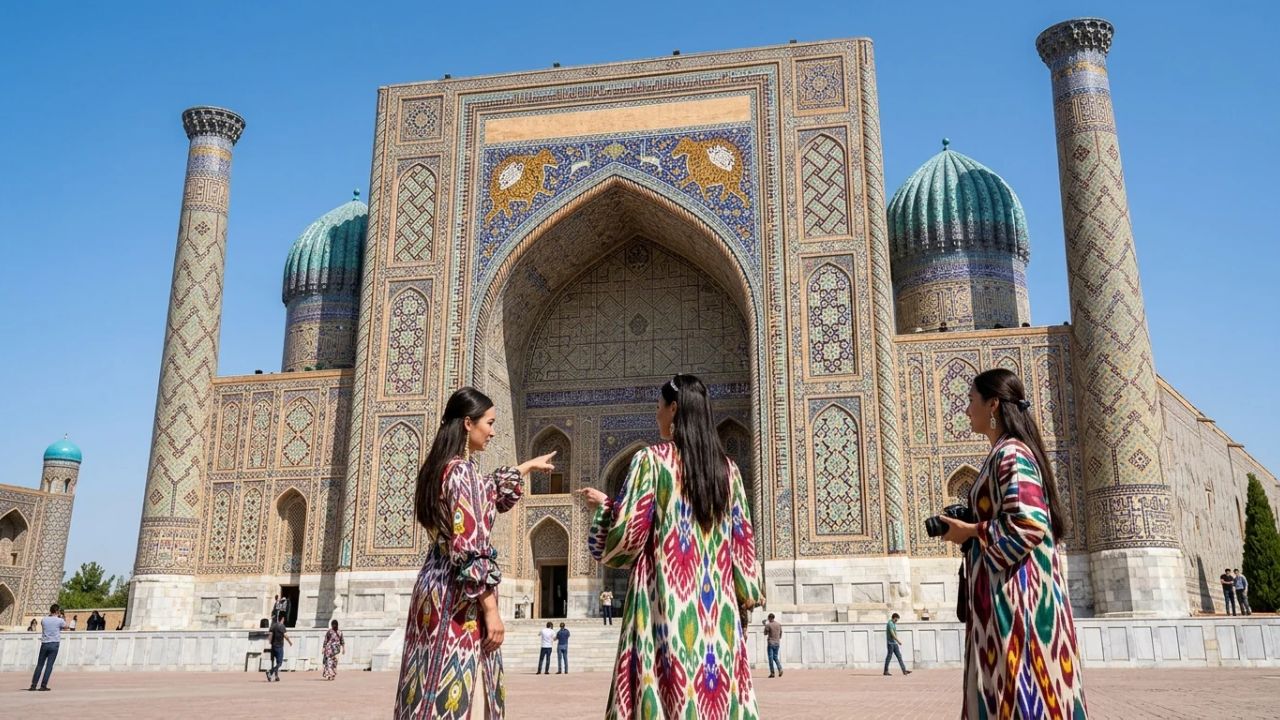
More than 6.4 million international visitors explored Uzbekistan's premier UNESCO World Heritage monuments in 2026. Sightseeing clustered around the majestic blue-tiled madrasas of the Registan and the Shah-i-Zinda necropolis in Samarkand, the ancient trade domes and the towering Kalyan Minaret in Bukhara, and the intact mud-brick fortress city of Ichan Kala in Khiva.
Ticket revenues across state monuments and archaeological reserves expanded by 44.2% year-over-year. Crucially, these entry fees are channeled into specialized restoration funds that employ local master ceramicists, woodcarvers, and masonry conservationists who restore ancient tilework using historical mineral glazes.
The $680 Million Gastronomic Economy
Culinary tourism emerged as a major economic force, generating an estimated $680 million in direct dining expenditure. Travelers actively seek out regional variations of Uzbekistan's national dish, plov (a savory rice pilaf cooked in massive iron cauldrons with lamb, yellow carrots, raisins, and cumin).
From the vibrant communal dining halls of the Central Asian Plov Center in Tashkent to family-owned tandoor bakeries producing ornate, stamped non bread in Samarkand, gastronomic experiences connect travelers with culinary traditions refined over centuries.
Seasonality Extension and Eco-Adventure Diversification
A long-standing vulnerability of Central Asian travel was its narrow seasonal window, traditionally confined to the brief spring and autumn months. In 2026, targeted policy interventions successfully smoothed this curve.
SEASONAL CALENDAR BALANCING AND ECOTOURISM EXPANSION
| Category / Entity | Details / Impact |
|---|---|
| Calendar / Eco Indicator | 2026 Strategic Performance Milestone |
| Shoulder-Season Expansion | +26.8% YoY Arrival Growth across April–May and September–October |
| Off-Peak Summer & Winter | +14.2% Inbound Growth supported by cultural festivals, wellness, and MICE |
| Occupancy Variance Reduction | Seasonal fluctuations in hotel occupancy declined by 11.5% nationwide |
| Adventure Sector Growth | +38.9% YoY Surge in Desert, Mountain, and Wilderness Bookings |
| Aral Sea Expedition Travel | Extreme adventure travel via 4WD to Moynaq and the retreating seabed |
| Mountain Ecotourism Corridors | Zaamin National Park ("Uzbek Switzerland") alpine health and hiking trails |
Wilderness and Desert Expeditions: Kyzylkum and the Aral Sea
Beyond urban monuments, international interest in remote wilderness exploration expanded rapidly, recording a 38.9% surge in bookings. More than 1.1 million visitors ventured into national parks and desert camps, generating $320 million in direct rural spending.
- Zaamin National Park: Located on the northern slopes of the Turkestan Range in Jizzakh region, Zaamin offers pristine alpine pine forests, therapeutic sanatoriums, and mountain trekking routes at elevations exceeding 2,500 meters.
- Kyzylkum Desert Yurt Camps: Travelers staying near Lake Aydarkul experience nomadic hospitality, sleeping in felt yurts, riding Bactrian camels across red sand dunes, and stargazing beneath clear desert skies.
- The Aral Sea and Moynaq: High-clearance four-wheel-drive expeditions across the Ustyurt Plateau take travelers to the former port city of Moynaq to view the iconic "ship cemetery"—rusted fishing trawlers stranded on the desert floor—providing a sobering lesson in environmental history and ecological conservation.
Traveler Logistics Guide: Navigating Uzbekistan with Ease
Planning an independent journey across Uzbekistan requires an understanding of train ticketing rules, currency regulations, and seasonal packing strategies.
PRACTICAL UZBEKISTAN TRANSIT & TRAVEL LOGISTICS GUIDE
| Entity / Facility | Delays | Cancellations | Details |
|---|---|---|---|
| Travel Parameter | Operational System | Regulatory Rule | Practical Traveler Recommendation |
| Visa & Entry Rules | Visa-Free for 90+ | Valid Passport | Citizens of US, UK, EU, China enter |
| Countries & E-Visa | (>3 Months Validity) | visa-free or via 24-hr e-visa portal | |
| Intercity Rail Travel | Afrosiyob High- | Tickets Open | Book tickets online exactly 45 days in |
| (High-Speed Trains) | Speed Electric Train | 45 Days in Advance | advance; trains sell out rapidly |
| Hotel Registration | Hotel Registration | Automated Digital | Hotels register guests digitally; keep |
| (Propiska System) | Slips (Paper/QR) | System (EMehmon) | paper slips until airport departure |
| Currency & Payments | Uzbek Som (UZS) | ATMs Disperse USD | Credit cards accepted in Tashkent; |
| & US Dollars Cash | and UZS Banknotes | carry crisp US Dollars for bazaars |
Securing Afrosiyob Train Tickets: The 45-Day Advance Window
The Afrosiyob high-speed train is the premier way to travel between Tashkent, Samarkand, and Bukhara. However, high demand means tickets frequently sell out within hours of release.
- Booking Protocol: Tickets open for reservation exactly 45 days prior to departure on the official Uzbekistan Railways website (railway.uz) or mobile app (Uzrailways).
- Service Classes: Trains feature Economy, Business, and VIP cars. All carriages are air-conditioned and include complimentary tea and snacks.
- Backup Rail Options: If the Afrosiyob is sold out, book the Sharq fast train or the Nasaf express, which operate the same routes with slightly longer transit times (e.g., 3.5 hours from Tashkent to Samarkand).
Registration Rules (Propiska) and Border Clearance
Uzbekistan maintains a modernized version of its historical tourist registration system:
- Hotel Check-In: Commercial hotels, boutique inns, and licensed guesthouses automatically register foreign guests in the state digital database (EMehmon). Upon check-out, the front desk provides a small printed registration slip containing a QR code.
- Preserving Slips: Travelers must retain these registration slips throughout their stay. While border control officers at international airports rarely demand to see every individual slip, they perform periodic audits during departure passport control.
Currency Exchange and Card Usage
- Local Currency: The official currency is the Uzbek Som (UZS). Banknotes circulate in large denominations (e.g., 10,000, 50,000, 100,000, and 200,000 Som).
- ATMs and Cards: Modern ATMs across Tashkent, Samarkand, and Bukhara reliably dispense both Uzbek Som and US Dollars, accepting international Visa, Mastercard, and UnionPay cards.
- Bazaars and Small Purchases: While contactless terminals (Uzcard and Humo) are standard in urban supermarkets and restaurants, physical cash Som is required when purchasing spices, dried fruits, ceramics, and textiles in traditional open-air bazaars such as Chorsu Bazaar in Tashkent or the Trading Domes of Bukhara.
Long-Term Outlook: Sustainable Tourism Growth Along the Silk Road
Uzbekistan's $5.3 billion tourism export milestone proves that comprehensive policy reform, capital investment in transport gateways, and respect for cultural heritage can transform a landlocked nation into a global travel powerhouse.
By expanding high-speed rail corridors, encouraging private boutique hotel development, and diversifying into nature-based desert and mountain travel, Uzbekistan has built a resilient, sustainable visitor economy. As millions of international travelers discover its architectural masterpieces and renowned hospitality, the historic crossroads of Central Asia stands firmly established at the center of modern global travel.
Frequently Asked Questions
What drove the 51.2% surge in Uzbekistan's tourism services exports in 2026?
The record $5.3 billion export total was fueled by 10.3 million foreign arrivals, a sharp increase in daily tourist spending to $514.56, extended average stays of 6.8 days, and expanded direct flights from Asia and Europe.
Do international travelers need a visa to visit Uzbekistan?
Uzbekistan offers visa-free entry to citizens of more than 90 countries. Travelers from nations requiring visas can apply through an official electronic visa portal that processes applications within 24 hours.
How do tourists travel between Tashkent, Samarkand, and Bukhara?
The fastest mode of transport is the Afrosiyob high-speed electric train, which connects Tashkent to Samarkand in 2 hours and 15 minutes, and Samarkand to Bukhara in 1 hour and 30 minutes.
When is the best time of year to visit Uzbekistan?
Spring (April to May) and autumn (September to early November) offer optimal travel weather, with mild temperatures ideal for exploring historic monuments, desert camps, and mountain trails.
Related Travel Guides
- Uzbekistan Designates 30 New Special Tourism Zones Under 2030 Master Plan: Tax Incentives and Infrastructure Investment Reshape Silk Road Travel
- Uzbekistan Silk Road Travel Economy: Managing Currency Exchange, High-Speed Afrosiyob Train Bookings, and Heritage Preservation Fees in 2026
- Uzbekistan Extends 30-Day Visa-Free Travel for Indian Citizens: Central Asian Silk Road Connectivity and Tashkent Flight Corridors
Disclaimer
This article is for informational and educational purposes only. It does not constitute legal, financial, or professional advice. While we strive to provide accurate and up-to-date information, travel policies, regulations, and conditions change rapidly. Always verify information with official sources before making travel decisions. Nomad Lawyer makes no representations about the accuracy, reliability, completeness, or suitability of the information provided. Readers should consult qualified professionals for advice specific to their circumstances. The views expressed in this article are those of the author and do not necessarily reflect the views of Nomad Lawyer.
Preeti Gunjan
Contributor & Community Manager
A passionate traveller and community builder. Preeti helps grow the Nomad Lawyer community, fostering engagement and bringing the reader experience to life.
Learn more about our team →