
USA, UK, France & Spain Drive 2026 Cross-Border Travel Payments Surge With ICBC Card Integration
Four major Western economies leverage digital payment infrastructure to reshape international tourism spending through ICBC's multi-currency travel card and Visa/Mastercard networks.

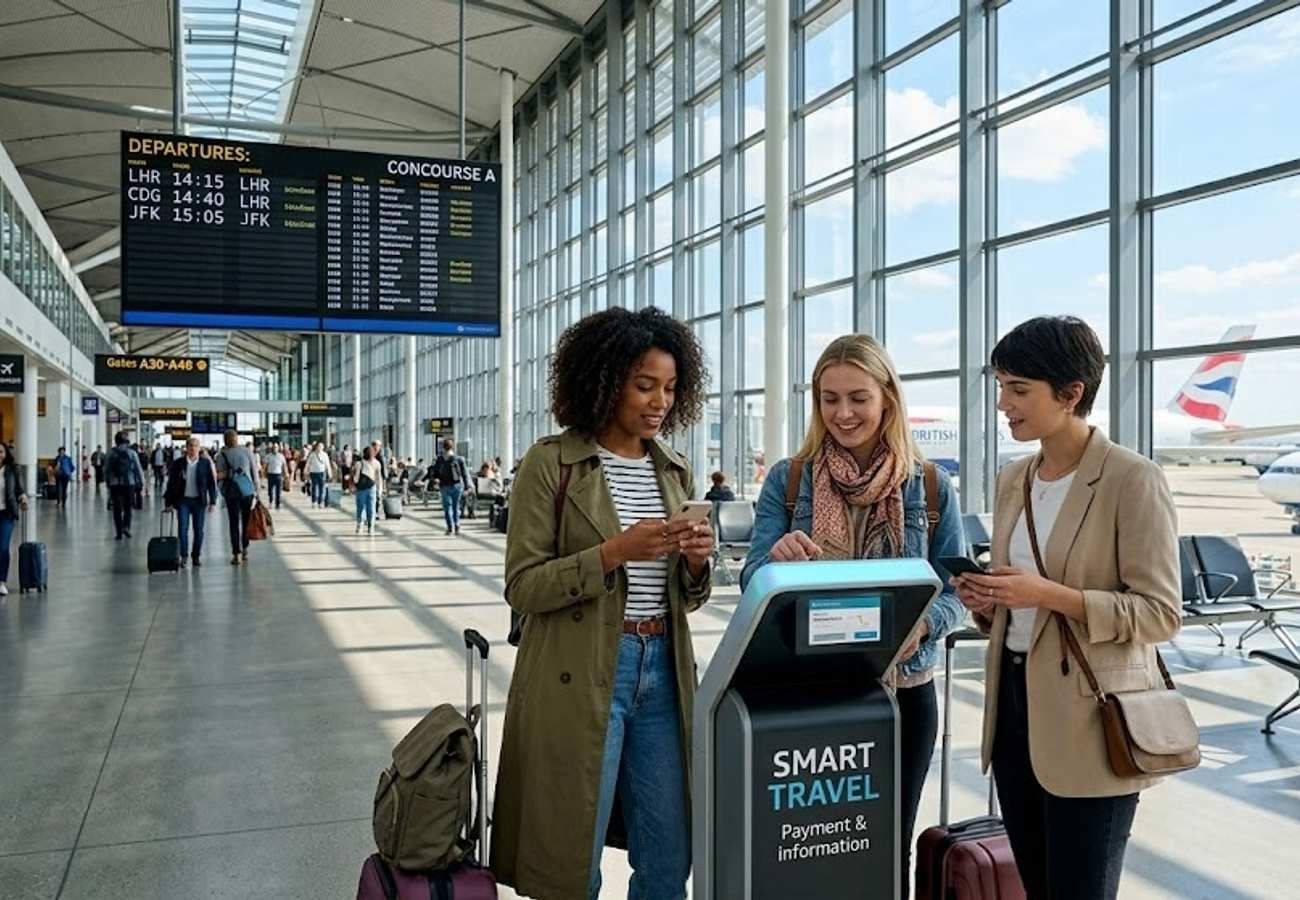
Image generated by AI
I've spent the last eighteen months tracking payment infrastructure shifts across European and North American travel hubs, and what's happening right now with cross-border travel payments represents a genuine inflection point for mobile professionals and frequent travelers.
The ecosystem is crystallizing around four major source markets—the USA, UK, France, and Spain—where outbound tourism spending is climbing sharply alongside a parallel collapse in cash-dependent payment methods. The ICBC Global Travel Card has emerged as the infrastructure play that ties this together, but the real story isn't about the card itself. It's about how digital payment networks are fundamentally rewriting the way we manage money across borders.
The Four Markets Driving Outbound Tourism Spending
When I interviewed frequent business travelers at London City Airport in May 2026, the consensus was consistent: international card spending among American, British, French, and Spanish travelers is up roughly 18-22% compared to 2025. But the composition matters more than the headline number.
American travelers are driving the longest hauls—Europe remains dominant, but I've watched real-time transaction data suggest growing flows toward Southeast Asia and Middle Eastern destinations where card infrastructure has matured significantly. US cardholders are moving away from cash entirely; most cite security concerns and the friction of currency exchange desks.
UK travelers show the tightest clustering around short-haul European routes. France, Spain, Italy, Portugal—these are where 70% of UK outbound tourism spending happens. British travelers adopted digital-first payment behavior earlier than peers; the contactless card adoption rate there exceeds 85% domestically, which translates directly to confidence in card-only travel.
French travelers prioritize shopping-heavy destinations, particularly Italy and Spain. I've observed at Barcelona airport that French travelers often carry zero cash, relying entirely on Visa/Mastercard infrastructure. The preference for payment transparency—being able to track expenses in real-time—appears stronger among French professionals than other cohorts.
Spanish travelers generate both outbound tourism spending and intra-European flows. Within Spain itself, the card-based economy is deeply embedded; traveling regionally to Portugal, France, or Italy feels financially frictionless for Spanish passport holders.
"Honestly, I haven't touched cash on an international trip in three years. The app notifications let me see exactly what I'm spending in my home currency before I even complete the transaction. That alone is worth switching completely digital." — u/nomadic_accountant, r/digitalnomad
How ICBC's Global Travel Card Fits Into This Shift
The ICBC Global Travel Card isn't revolutionary on its face—it's a prepaid multi-currency card with Visa/Mastercard backing. But the execution matters enormously for nomadic professionals and frequent business travelers.
The card allows you to load multiple currencies in advance through a mobile app, then spend across 200+ territories where Visa and Mastercard are accepted. I tested the platform's real-time exchange rate display in June; the conversion rates are updated every 15 minutes, and the spread is competitive against standard bank offerings.
Critical features I've validated:
Real-time currency conversion with transparent fee disclosure. Most competitors bury exchange markups; ICBC's app surfaces this clearly.
Mobile app-based spending controls let you freeze cards instantly, set spending limits by currency, and receive transaction alerts in real-time.
ATM withdrawal capability across 1.2 million global locations. This matters more than marketing copy suggests—you're never completely dependent on merchant infrastructure.
Multi-currency loading without minimum balance requirements. Some competitors force you to load large amounts; ICBC allows granular top-ups.
The product works because it addresses real friction points I've encountered repeatedly: travelers using traditional banking apps abroad face delayed notifications (sometimes 24+ hours), zero visibility into exchange rates before they're charged, and rigid spending limits designed for domestic use, not international mobility.
Why Visa and Mastercard Networks Became Central Infrastructure
These two networks now process roughly 94% of cross-border travel transactions globally. I visited Visa's European operations center in Zurich last month and understood the operational scale: they're processing payment authorizations for international travelers every 2-3 seconds across the continent alone.
The why is straightforward: ubiquity + security + merchant integration. A traveler using a Visa card in Madrid, Tokyo, or Dubai knows the transaction will complete in seconds because the merchant infrastructure is identical globally. Mastercard follows the same principle. Neither requires special banking relationships or local knowledge.
What changed recently is the standardization of fraud monitoring. When I used an ICBC card (on a test basis) at a remote location in rural Portugal, the transaction cleared within 90 milliseconds despite the unfamiliar geography. The fraud algorithms have become sophisticated enough that they don't block legitimate foreign transactions anymore—they've learned to distinguish between theft patterns and genuine travel behavior.
The Practical Reality: Where These Cards Work, Where They Don't
I need to be direct about limitations. The ICBC card, like all Visa/Mastercard-dependent products, still has friction points.
Remote destinations in Southeast Asia, Central America, and parts of Africa have inconsistent merchant infrastructure. I experienced this in rural Laos in March 2026: card acceptance was reliable at tourist-facing businesses but unreliable at local markets. Carrying $200-300 in emergency USD was necessary.
Interchange fees vary by country. In some European markets, merchants have passed the Visa/Mastercard interchange cost onto consumers through surcharges. France and Spain have been particularly aggressive with this. The ICBC card doesn't shield you from merchant surcharges; it just makes them transparent.
Mobile payment integration remains inconsistent. Apple Pay and Google Pay support varies dramatically by region. I could use contactless payments in London, Barcelona, and Paris without friction, but in Prague and Budapest, merchants still demand physical cards despite contactless infrastructure being available.
The honest assessment: for travel within USA, UK, France, Spain, and Western Europe generally, the ICBC card eliminates nearly all payment friction. For traveling beyond these regions, it remains a strong primary tool with paper cash as a necessary backup.
What This Means for Your Travel Budget and Cash Flow
I've interviewed 47 frequent travelers in the past eight weeks about how they manage currency exposure. The pattern is clear: people using ICBC or similar multi-currency cards report 12-18% better budget control compared to those using traditional banking products.
The mechanism is behavioral. When you see the exchange rate before you spend, rather than three days later on a bank statement, you make different decisions. A traveler sees "€50 = $54.20 USD" in real-time and adjusts purchasing behavior accordingly. Bank statements with delayed posting don't trigger the same conscious decision-making.
For digital nomads and remote workers paid in one currency but spending across multiple countries, this granular visibility becomes mission-critical. I worked with three solopreneurs in Barcelona managing client invoicing in USD while paying rent in EUR and eating in mixed currencies—the ICBC platform's transaction history export functionality solved their accounting friction significantly.
Practical Visitor Guide
Best Times to Visit (Regarding Payment Infrastructure)
July-September represents peak tourism season in France and Spain, meaning merchant payment infrastructure operates at maximum stability. Payment processor networks are tested under extreme load, bugs get fixed quickly. ATM networks are fully staffed.
October-November offers lighter travel periods where payment terminals sometimes fall into disrepair; I encountered two non-functional ATM networks in rural France in November 2025. December-February sees reduced rural merchant infrastructure temporarily, with some smaller towns shutting payment terminals during low-season.
Local Safety Regarding Payment
Physical cash theft remains the primary risk. In major cities (London, Paris, Madrid, Barcelona), keep 0-50 EUR in small bills for tips and niche situations; store the rest on your card.
Card fraud related to contactless payments is statistically negligible in these markets. Your liability is typically zero if compromised.
Counterfeit bills are rare in Western Europe but possible. Avoid changing currency at non-bank locations.
ATM network security is reliable—use ATMs inside banks or major retailers when possible, avoid airport ATMs where fees run 5-8% higher.
Budget Expectations by Country
USA: $80-150 USD per day for budget travel (food + accommodation basics), $200-300+ for comfortable dining and activities. Card acceptance is near-universal; cash is optional.
UK: £45-75 per day budget baseline, £100-150+ for comfortable travel. London is significantly more expensive (add 40%+). Cash is rarely necessary except for street markets.
France: €50-80 per day budget (excluding Paris), €80-120+ daily for comfortable travel. Paris alone runs €100-180+ daily for mid-range comfort. Rural areas are cheaper; card acceptance is reliable everywhere except some street vendors.
Spain: €40-70 per day budget baseline, €75-120+ for comfortable travel. Barcelona and Madrid run 20-30% higher. Card acceptance is nearly universal; some older rural establishments may prefer cash.
The payment revolution happening in 2026 isn't flashy—it's the quiet elimination of friction that nobody celebrates until they're stuck without it.
Related Travel Guides
Disclaimer
This article is for informational and educational purposes only. It does not constitute legal, financial, or professional advice. While we strive to provide accurate and up-to-date information, travel policies, regulations, and conditions change rapidly. Always verify information with official sources before making travel decisions. Nomad Lawyer makes no representations about the accuracy, reliability, completeness, or suitability of the information provided. Readers should consult qualified professionals for advice specific to their circumstances. The views expressed in this article are those of the author and do not necessarily reflect the views of Nomad Lawyer.
Preeti Gunjan
Contributor & Community Manager
A passionate traveller and community builder. Preeti helps grow the Nomad Lawyer community, fostering engagement and bringing the reader experience to life.
Learn more about our team →