
USA Autumn Travel 2026: NOAA El Niño Weather Map & National Parks Guide

Climate scientists at the Climate Prediction Center have identified a seventy-five percent probability that the October–December 2026 period will produce an El Niño event stronger than any recorded since 1950, with a greater than ninety percent certainty of extreme intensity extending through winter. That historic atmospheric surge, detailed in the seasonal outlook from the National Oceanic and Atmospheric Administration (NOAA), is reshaping autumn travel patterns across the United States, bringing unseasonably warm temperatures from the Pacific Northwest to New England while funneling intense precipitation corridors into the American South.
Super El Niño 2026: Inside NOAA’s Historic Autumn Climate Mapping
The autumn 2026 climate outlook follows one of the hottest summers in modern American history. Rather than transitioning into early autumn chill, NOAA’s September modeling indicates that above-average temperatures will prevail across virtually the entire continental landmass, including the Western United States, northern plains, Midwest, Atlantic seaboard, and major portions of Alaska.
This thermal anomaly creates a split precipitation map that directly influences outdoor recreation and national park access:
- The Wetter Southern Corridor: A strong subtropical jet stream is projected to deliver above-normal rainfall across Southern California, the desert Southwest, the Southern Plains, Gulf Coast states, the Tennessee Valley, and the Mid-Atlantic.
- The Drier Northern Arc: Conversely, below-average rainfall is favored across Alaska, the Pacific Northwest, interior northern mountain ranges, and the Great Lakes basin.
For millions of road-trippers and international hikers heading toward premier wilderness reserves—including Yellowstone, Rocky Mountain National Park, and Great Smoky Mountains—managed by the National Park Service, these shifting atmospheric conditions extend the comfortable outdoor hiking season while introducing heightened localized hazards, from sudden desert canyon flash flooding to delayed mountain snowfall.
Fall Foliage, Geysers, and Redwoods: How Seasonal Shifts Shape America’s Outdoors
Autumn in North America is world-renowned for its brilliant deciduous foliage displays and dramatic wildlife mating seasons (the rut).
In New England, the sugar maples of Vermont, New Hampshire, and Maine typically ignite in crimson and gold between late September and mid-October. However, prolonged warm night temperatures can delay the onset of peak foliage color while extending daytime sightseeing windows across scenic roadways like the Kancamagus Highway and Acadia National Park.
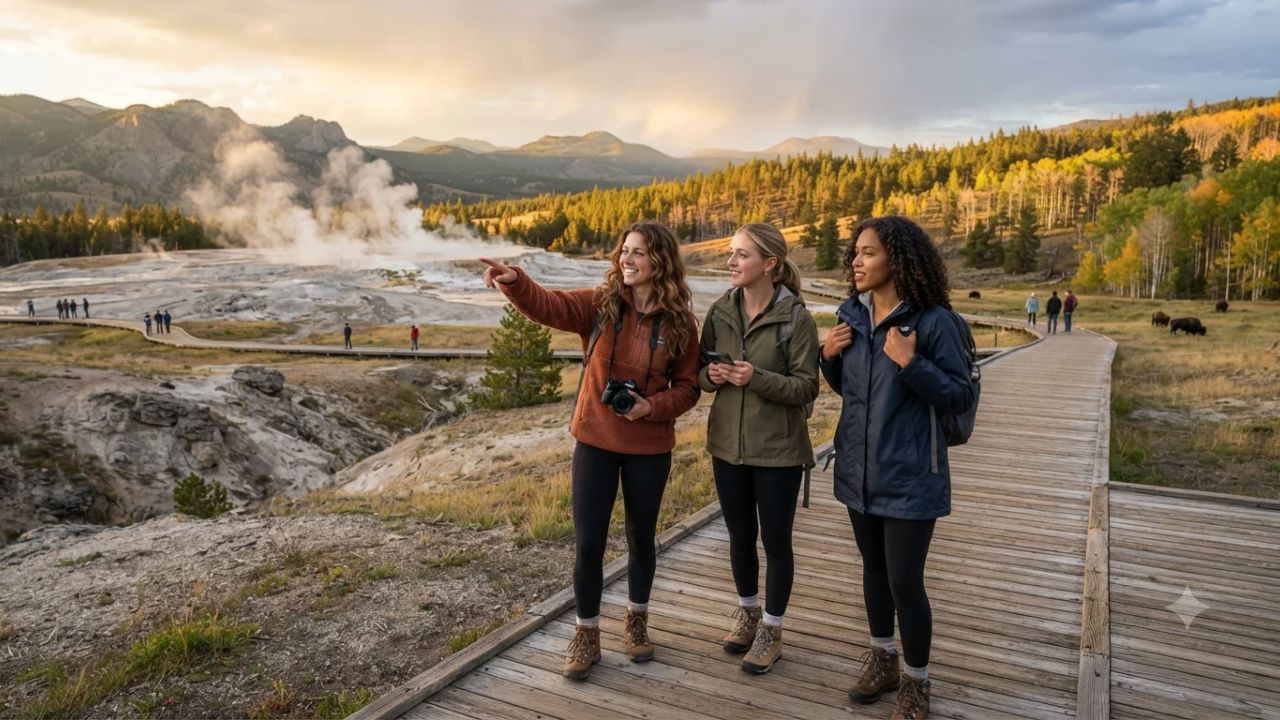
In the Rocky Mountain West, Yellowstone National Park—inscribed under the UNESCO World Heritage Convention—witnesses bull elk bugling across the Lamar Valley, while thermal features like Grand Prismatic Spring and Old Faithful billow steam into crisp autumn air. Milder conditions permit higher-elevation road passes, such as Dunraven Pass and Beartooth Highway, to remain accessible deeper into October before seasonal winter gate closures take effect.
Further west, California's coastal redwood forests and granite valleys in Yosemite experience lush greening from early Pacific rain storms. Yet in arid desert regions like Sedona, Zion, and Joshua Tree, increased autumn storm activity demands heightened respect for narrow slot canyon topographies.
Visitor Insider Tips: Navigating US Parks and Regions During an El Niño Autumn
Maximizing an autumn journey through America's wilderness requires adaptive gear choices, real-time weather monitoring, and flexible route planning.
Park Logistics and Timed-Entry Hacks
- Check Real-Time Road Status Portals: Do not rely on static paper maps. High-elevation park roads in Rocky Mountain, Glacier, and Yellowstone can close overnight due to sudden icy conditions. Check the official National Park Service app and state department of transportation road condition feeds (such as Caltrans QuickMap or MDT 511) every morning before departing your hotel.
- Slot Canyon Flash Flood Warnings: In Utah's Mighty 5 parks (Zion, Bryce Canyon, Capitol Reef, Arches, Canyonlands) and northern Arizona, never enter narrow slot canyons like The Narrows or Antelope Canyon if rain is forecast anywhere within the wider regional watershed. Flash floods travel rapidly downstream under clear local skies.
- Layering for Thermal Swings: With warmer daytime highs and rapid radiational cooling after sunset, pack a three-layer system: a moisture-wicking merino wool base, an insulating fleece or lightweight down mid-layer, and a seam-sealed waterproof Gore-Tex outer shell.
Scenic Fall Foliage Timing
- Track Foliage Reports by Elevation: Foliage color turns first at highest elevations and northern latitudes before traveling down into river valleys. If New England valley trees are still green in early October, drive to mountain passes exceeding two thousand feet to catch peak color.
- Midweek Park Visits: Avoid severe weekend vehicle congestion at iconic photo overlooks like Cade’s Cove in the Smokies or Jordan Pond in Acadia by scheduling scenic loop drives between Tuesday and Thursday.
Regional Culinary Traditions
- Savor Farmstand Cider and Donuts: When driving through upstate New York, Massachusetts, or Michigan, stop at heritage apple orchards for fresh hot apple cider donuts rolled in cinnamon sugar and unpasteurized sweet cider pressed from heirloom Honeycrisp and McIntosh apples.
- Southwestern Green Chile Roasting: Autumn in New Mexico and southern Colorado coincides with the harvest of Hatch green chiles. Roadside vendors roast bushels over open gas tumblers, offering savory roasted peppers to top local burgers, stews, and breakfast burritos.
Cultural and Environmental Context: Wildfire Recovery and Watershed Health
The developing super El Niño presents profound ecological implications across Western watersheds. Years of chronic drought and intense wildfire seasons have left large tracts of forest topsoil vulnerable to erosion.
Above-normal precipitation across Southern California and the desert Southwest provides vital groundwater recharge and helps suppress lingering wildfire risks. However, burn scars from previous wildfires require careful monitoring by the US Geological Survey to prevent dangerous debris flows during heavy convective rainstorms.
Travelers are urged to practice strict Leave No Trace principles: staying on durable marked trail surfaces, adhering to localized campfire restrictions, packing out all organic and non-organic waste, and maintaining safe distances (at least twenty-five yards from bison and elk, and one hundred yards from bears and wolves) during active autumn mating and foraging seasons.
FAQ: Planning Autumn US Travel in 2026
What makes NOAA's autumn 2026 weather forecast historically unusual?
NOAA predicts a super El Niño event with a 75% probability of exceeding the strength of all recorded events since 1950, driving widespread above-average temperatures across northern states.
Which US regions are projected to receive above-average rainfall in autumn 2026?
Southern California, the desert Southwest, the Southern Plains, Gulf Coast states, the Southeast, and the Mid-Atlantic have high probabilities of wetter-than-normal conditions.
How will the warm weather forecast affect New England fall foliage?
Above-average autumn temperatures can delay the onset of peak tree leaf coloration by several days to a week, extending the leaf-peeping season deeper into mid-to-late October.
Are US national parks open throughout the autumn season?
Yes. Major national parks remain open year-round, though high-altitude mountain passes and secondary campgrounds begin seasonal closures between mid-October and November.
From sun-warmed granite peaks to mist-shrouded autumn valleys, America's wilderness under the 2026 El Niño offers travelers a golden window of discovery.
Related Travel Guides
Disclaimer
This article is for informational and educational purposes only. It does not constitute legal, financial, or professional advice. While we strive to provide accurate and up-to-date information, travel policies, regulations, and conditions change rapidly. Always verify information with official sources before making travel decisions. Nomad Lawyer makes no representations about the accuracy, reliability, completeness, or suitability of the information provided. Readers should consult qualified professionals for advice specific to their circumstances. The views expressed in this article are those of the author and do not necessarily reflect the views of Nomad Lawyer.
Raushan Kumar
Founder & Lead Developer
Full-stack developer with 11+ years of experience and a passionate traveller. Raushan built Nomad Lawyer from the ground up with a vision to create the best travel and law experience on the web.
Learn more about our team →