
US Visa Rules 2026: Expanded Social Media Vetting for Caribbean Travelers
The United States has reinforced its visa vetting process for Caribbean nations, introducing mandatory 5-year social media disclosure and intensified digital identity screening.

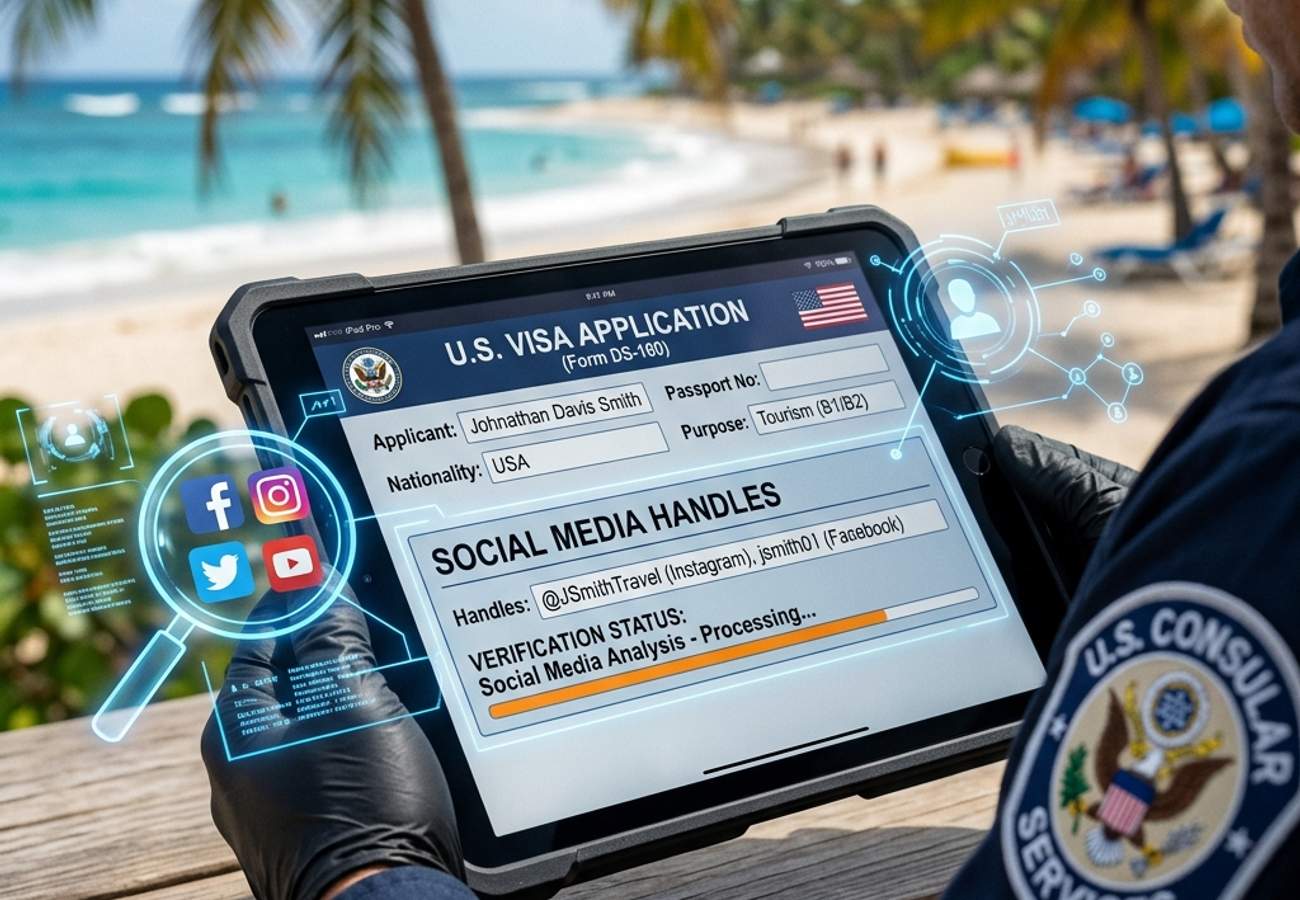
Image generated by AI
Quick Summary
- The United States has implemented a structural expansion of its visa vetting system for citizens of Barbados, Jamaica, Saint Lucia, Dominica, Bahamas, and other Caribbean nations.
- Applicants are now required to disclose all social media handles used over the past five years, moving toward a data-driven evaluation model.
- The new rules target nearly all non-immigrant categories, including tourist, student, work, and family visas.
- Impacts include increased processing times, shrinking appointment slots, and a higher degree of uncertainty for travelers with strong U.S. ties.
A major shift in global mobility is now affecting the Caribbean region as the United States reinforces its visa rules with expanded digital and social media scrutiny. This transition, effective immediately, transforms the visa application process into a multi-layered security assessment. Authorities are increasingly relying on behavioral data and digital identities to identify inconsistencies, significantly impacting travelers from nations with deep economic and diaspora connections to the U.S.
US Visa Digital Vetting & Impact Summary: 2026
The new screening measures introduce complexity for both seasonal tourists and long-term visa applicants.
| Measure Category | New Requirement / Change | Regional Impact Focus |
|---|---|---|
| Social Media | Mandatory 5-year handle disclosure | Behavior analysis & digital identity checks |
| Data Consistency | Cross-checking online posts with data | Increased risk of delays or rejections |
| Processing Time | Significant increase in review cycles | Disruption of travel, work, & study plans |
| Appointments | Shrinking availability of interview slots | Rising uncertainty for students & workers |
| Scope | Applies to nearly all non-immigrant visas | Tourism, Diaspora, and Business mobility |
The Shift to Data-Driven Security Reviews
The United States has transitioned from a document-based screening process to a data-driven evaluation model. Consular officers now utilize advanced tools to analyze digital behavior patterns over the past five years.
- Digital Transparency: Applicants must ensure their online presence is consistent with their stated purpose of travel. Even minor mismatches between social media content and application data can trigger additional security reviews.
- Behavioral Assessment: The screening enables authorities to identify potential security risks that may not be apparent in traditional documentation. This deeper background check is now a standard component of the security decision.
Regional Impact: Tourism, Diaspora, and Economic Ties
The Caribbean region is uniquely vulnerable to these changes due to its high dependence on international mobility and strong U.S. travel ties.
- Diaspora Mobility: Nations like Jamaica and Barbados rely heavily on the flow of remittances and family visits. Slower processing times and increased scrutiny directly affect these vital connections.
- Education & Work: Students and professionals traveling for specialized programs face critical delays, with shrinking appointment windows making it difficult to meet academic or contractual deadlines.
- Economic Stability: Small Caribbean economies that depend on tourism and cross-border business are feeling the friction as mobility slows and travel planning becomes more complex.
Country-Specific Scrutiny Levels
| Country | Primary Challenge | Economic Context |
|---|---|---|
| Jamaica | Highest diaspora sensitivity | Social media analysis is a critical factor |
| Barbados | Processing delays | Tourism and business mobility at risk |
| Cuba | Intense security checks | Aligns with existing geopolitical restrictions |
| Haiti | Multi-layered vetting | Intensified security and digital screening |
| Bahamas | Moderate but rising scrutiny | Strong U.S. link slows approvals |
FAQ: US Visa Caribbean Vetting 2026
Do I have to provide my social media passwords? No, you are only required to disclose your handles or usernames. Authorities will never ask for your passwords as part of the visa application process.
How does social media affect my visa approval? Consular officers check for consistency between your online activity and your application. Posts that contradict your stated travel plans or raise security concerns can lead to delays or rejections.
Are children and elderly applicants exempt? The digital screening rules generally apply to all applicants required to provide handles, though scrutiny levels may vary based on the visa category and individual risk profile.
Related Travel Guides
Disclaimer
This article is for informational and educational purposes only. It does not constitute legal, financial, or professional advice. While we strive to provide accurate and up-to-date information, travel policies, regulations, and conditions change rapidly. Always verify information with official sources before making travel decisions. Nomad Lawyer makes no representations about the accuracy, reliability, completeness, or suitability of the information provided. Readers should consult qualified professionals for advice specific to their circumstances. The views expressed in this article are those of the author and do not necessarily reflect the views of Nomad Lawyer.
Kunal K Choudhary
Co-Founder & Contributor
A passionate traveller and tech enthusiast. Kunal contributes to the vision and growth of Nomad Lawyer, bringing fresh perspectives and driving the community forward.
Learn more about our team →