
US Department of Homeland Security Ends 'Duration of Status' for F and J Student Visas in 2026
The US is replacing the flexible 'duration of status' system with fixed admission periods for F and J visa holders, introducing strict four-year caps and mandatory extension filings.

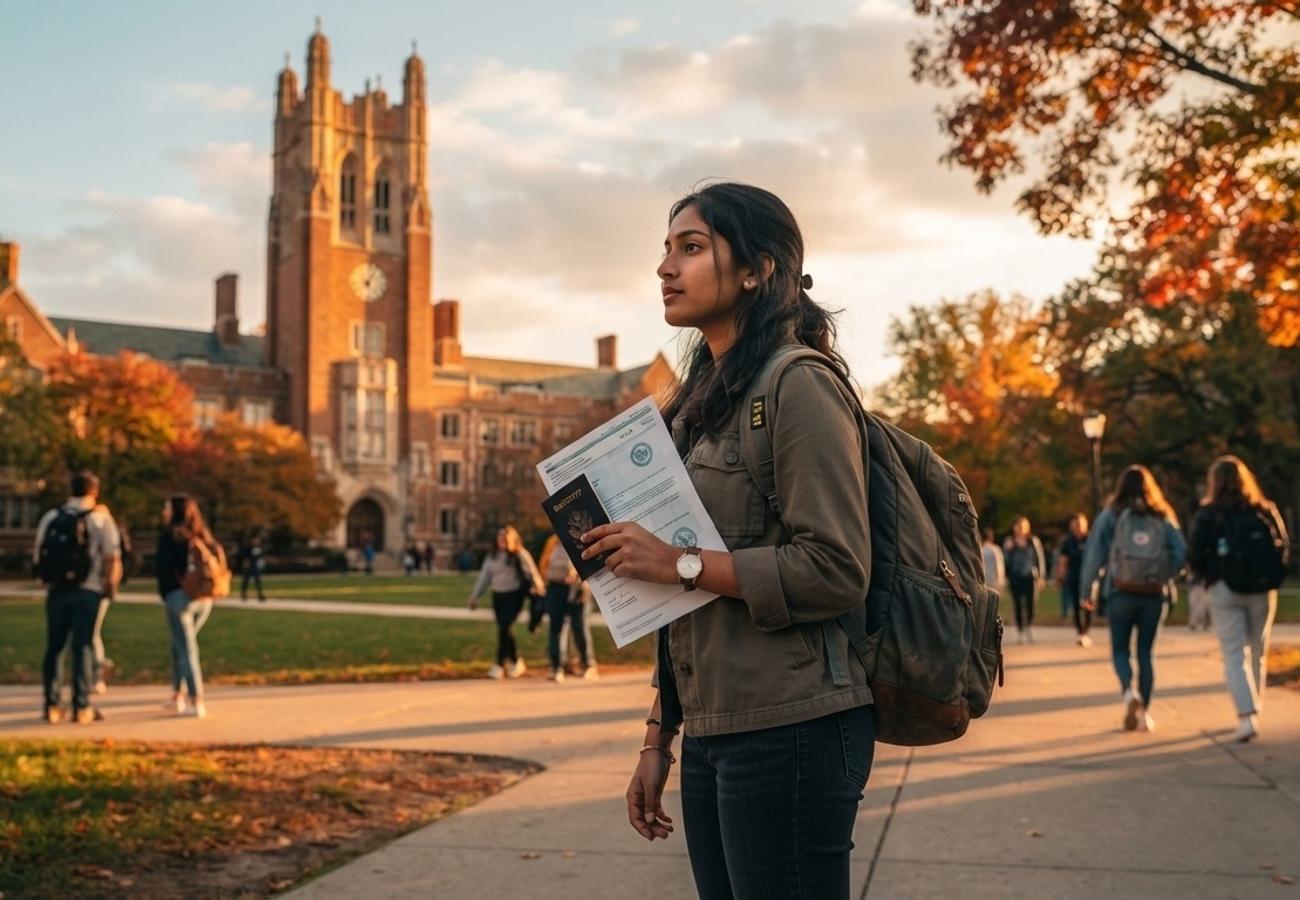
Image generated by AI
The United States has fundamentally altered the legal framework for international students, replacing the flexible "duration of status" (DUS) model with rigid, fixed admission dates. This shift forces F and J visa holders to navigate a complex system of expiration dates and formal government extensions to maintain lawful presence.
The Department of Homeland Security (DHS) is overhauling the admission process for international students and exchange visitors. For decades, the "duration of status" system allowed students to remain in the U.S. as long as they maintained full-time enrollment. That era has ended.
Under the new regulatory framework, nonimmigrants are now admitted only until the specific end date listed on their Form I-20 or DS-2019. This change shifts the burden of compliance from university advisors to the students themselves and the federal government.
The End of Open-Ended Stays
The transition to fixed admission periods means that most F and J visa holders will now face a hard deadline for their stay. While students previously relied on their enrollment status to justify their presence, they must now track a specific "admit-until" date.
Key constraints of the new system include:
- Maximum Stay: Most students are capped at a maximum admission period of four years.
- Grace Periods: Depending on the visa category, students are granted a limited window of either 30 or 60 days post-program to depart or change status.
- Extension Requirements: Any stay exceeding the initial fixed period now requires a formal extension of stay application through U.S. Citizenship and Immigration Services (USCIS).
This shift is designed to provide the federal government with precise oversight of nonimmigrant populations. However, it transforms a progress-based admission system into one governed by calendar dates and bureaucratic renewal procedures.
New Restrictions on Academic Flexibility
The new rules introduce significant hurdles for students attempting to pivot their academic focus or change institutions. The flexibility that once defined the American collegiate experience for international students has been curtailed.
Undergraduate F-1 students are now prohibited from switching majors or transferring to different schools during their first academic year, except in rare circumstances recognized by federal regulations. This prevents the common practice of "institutional hopping" during the first year of study.
Graduate students, particularly those in doctoral tracks, face a more precarious situation. Because PhD programs often exceed four years, these students will be required to file for extensions more frequently. Furthermore, those in terminal master's programs within a larger doctoral framework may find their legal status jeopardized if they are dismissed from the doctorate, as their admission is tied strictly to the primary objective on their immigration documents.
The Critical Role of Form I-539
With the removal of DUS, the "Extension of Stay" process has become the central pillar of visa strategy. Students who fall behind on degree timelines or experience research delays can no longer rely on campus advisors to simply update their records; they must now interface directly with USCIS.
The administrative burden has increased significantly:
- Financial Cost: Each extension request now requires the payment of filing fees.
- Documentation: Students must provide rigorous proof of academic progress and continued funding.
- Processing Risk: Reliance on Form I-539 introduces the risk of USCIS backlogs, potentially leaving students in a state of legal uncertainty while their applications are pending.
This is particularly critical for those applying for Optional Practical Training (OPT) or Academic Training. Students must synchronize their extension filings with their work authorization applications to avoid gaps in lawful presence.
Impact on International Travel and Reentry
The fixed-stay regime creates new risks for students traveling outside the U.S. Even those who originally entered under the old "duration of status" rules may find themselves subject to the new system upon reentry.
When a student departs and returns to the U.S. after the effective date of this rule, they may be readmitted with a fixed date. This can effectively shorten their remaining time in the country and force an earlier-than-expected extension filing. For PhD candidates, this means every international conference or home-country visit could potentially reset the terms of their authorized stay.
Summary of Visa Changes
| Feature | Old System (Duration of Status) | New System (Fixed Admission) |
|---|---|---|
| Stay Duration | Tied to program completion/enrollment | Fixed date on I-20 or DS-2019 |
| Maximum Initial Stay | Open-ended (as long as enrolled) | Generally capped at 4 years |
| Extension Process | Managed largely by campus advisors | Formal application via USCIS (Form I-539) |
| Major/School Changes | Relatively flexible via SEVIS transfer | Restricted during first academic year |
| Travel Impact | Status remained consistent | Reentry may trigger fixed-date admission |
| Cost of Extension | Minimal/Administrative | Formal filing fees required |
Key Takeaways
- Hard Deadlines: F and J visa holders no longer have open-ended stays; they must adhere to the end date on their I-20 or DS-2019.
- 4-Year Cap: Most students face a maximum four-year initial admission, requiring formal extensions for longer degrees (like PhDs).
- Reduced Flexibility: Undergraduates cannot change majors or schools in their first year without federal authorization.
- Increased Bureaucracy: Extensions now require USCIS filing fees and formal documentation, increasing the risk of status gaps due to processing delays.
Frequently Asked Questions
What happens if my degree takes longer than four years? You must file a formal extension of stay application with USCIS using Form I-539 before your current fixed admission date expires.
Can I still change my major during my first year? Generally, no. The new rules restrict F-1 undergraduates from switching majors or transferring schools in the first academic year except in very limited, federally recognized circumstances.
Does this affect students already in the U.S.? Yes. While there are transition provisions, students who travel abroad and reenter the U.S. after the rule's effective date will likely be readmitted under the new fixed-stay system.
Navigating the new US visa landscape requires meticulous documentation and proactive filing to avoid unintended status violations.
Related Travel Guides
Disclaimer
This article is for informational and educational purposes only. It does not constitute legal, financial, or professional advice. While we strive to provide accurate and up-to-date information, travel policies, regulations, and conditions change rapidly. Always verify information with official sources before making travel decisions. Nomad Lawyer makes no representations about the accuracy, reliability, completeness, or suitability of the information provided. Readers should consult qualified professionals for advice specific to their circumstances. The views expressed in this article are those of the author and do not necessarily reflect the views of Nomad Lawyer.
Raushan Kumar
Founder & Lead Developer
Full-stack developer with 11+ years of experience and a passionate traveller. Raushan built Nomad Lawyer from the ground up with a vision to create the best travel and law experience on the web.
Learn more about our team →