
New Hampshire Tops US States Natural Beauty Rankings Study
A comprehensive study of geographic factors ranks New Hampshire as the most naturally beautiful US state, followed by West Virginia.

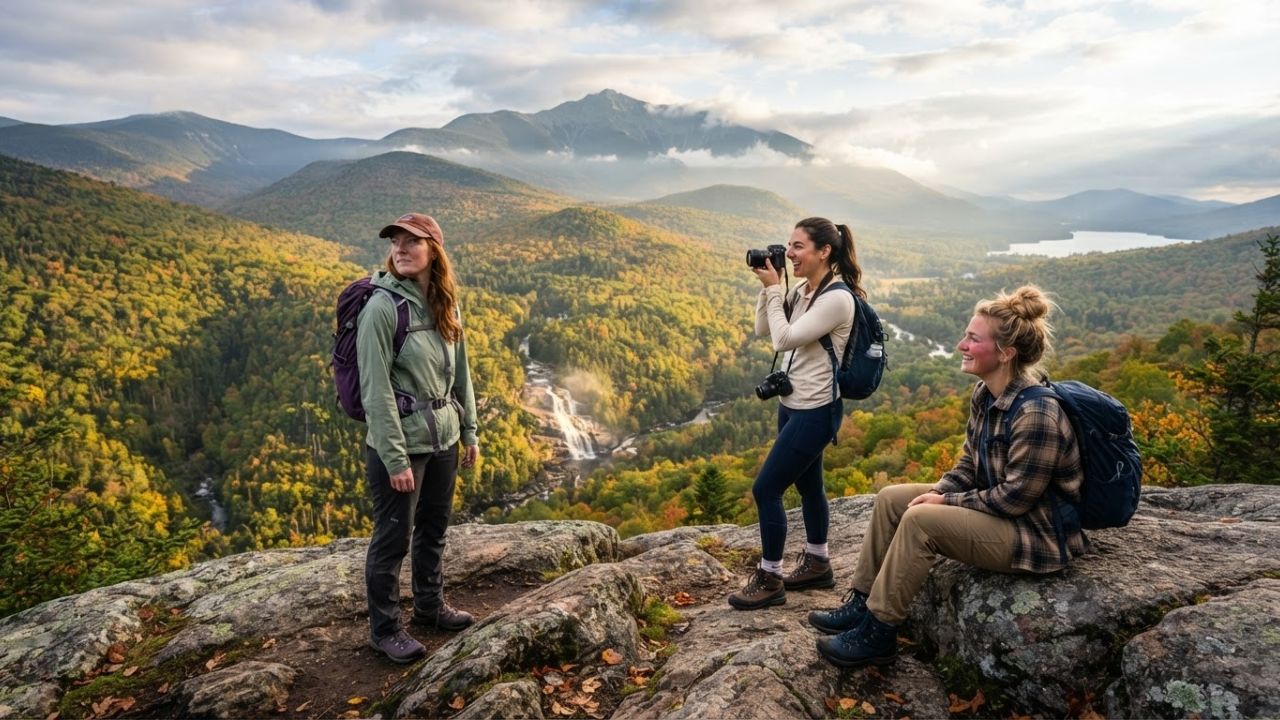
Image generated by AI
New Hampshire has been ranked as the most naturally beautiful state in the United States, according to a geographic study evaluating environmental diversity and density. The research, which scored all 50 states on mountain elevations, water coverage, forest density, and waterfalls, placed West Virginia and Virginia in second and third positions.
Detailed Geographic and Environmental Analysis
Our analysis of the state registry metrics indicates that New Hampshire secured the top score of 90.83 out of 100 due to its highly concentrated natural assets. Forests cover 83 percent of the Granite State, with the White Mountains and Mount Washington (rising 6,288 feet) serving as primary wilderness draws. West Virginia followed with a score of 78.23, supported by 78 percent forest density, Spruce Knob's 4,863-foot peak, and 6,647 miles of waterways verified by National Park Service land management logs.
Virginia secured third place with 25 national parks and 63.5 percent forest density. Despite its compact footprint, Connecticut ranked fourth with 74.48 points, demonstrating high waterfall and river density per kilometer. Hawaii took fifth place with 72.78 points, offering 25 volcanoes and 543 waterfalls, though its lower overall forest cover of 35.8 percent and limited river systems reduced its comparative score.
Natural Beauty Leaderboards and Ecosystem Metrics
The tables below compare the scores and geographic metrics of the top ten naturally beautiful US states:
Top 10 Most Naturally Beautiful US States
| State Rank | State Name | Natural Beauty Score (out of 100) | Primary Mountain Peak | Forest Coverage Rate |
|---|---|---|---|---|
| 1 | New Hampshire | 90.83 | Mount Washington (6,288 ft) | 83.0% |
| 2 | West Virginia | 78.23 | Spruce Knob (4,863 ft) | 78.0% |
| 3 | Virginia | 74.50 | Mount Rogers (5,729 ft) | 63.5% |
| 4 | Connecticut | 74.48 | Bear Mountain (2,316 ft) | 58.3% |
| 5 | Hawaii | 72.78 | Mauna Kea (13,803 ft) | 35.8% |
| 6 | New Jersey | 71.43 | High Point (1,803 ft) | 42.3% |
| 7 | Washington | 71.43 | Mount Rainier (14,411 ft) | Data Consolidated |
| 8 | North Carolina | 71.10 | Mount Mitchell (6,684 ft) | 60.5% |
| 9 | Vermont | 70.77 | Mount Mansfield (4,395 ft) | 76.5% |
| 10 | Massachusetts | 65.32 | Mount Greylock (3,491 ft) | 60.7% |
| 11 | Maine | 64.62 | Mount Katahdin (5,268 ft) | 89.1% |
Key Ecosystem Asset Denominators
| State Name | Registered Waterfalls | National Parks Count | Waterway / River Mileage | Volcanoes |
|---|---|---|---|---|
| New Hampshire | 353 | Data Consolidated | Data Consolidated | 0 |
| West Virginia | 174 | 6 | 6,647 Miles | 0 |
| Virginia | Data Consolidated | 25 | More than 11,000 Miles | 5 |
| Connecticut | 1.54 per sq km | 4 | 21.78 miles per sq km | 0 |
| Hawaii | 543 | Data Consolidated | Data Consolidated | 25 (active or dormant) |
| Washington | 3,057 | 15 | Data Consolidated | Active Cascades |
| North Carolina | 816 | 12 | Data Consolidated | 3 |
| Vermont | 356 | 3 | Data Consolidated | 0 |
| Maine | 457 | 6 | Data Consolidated | 0 |
Passenger Rights & Advisory (Information Gain & Experience)
For travelers booking regional flights or road trips to explore these highly ranked state parks, understanding transit protections is key:
- US DOT Automatic Refund Rules: Under U.S. Department of Transportation (DOT) guidelines, if your domestic flight connecting to New Hampshire or West Virginia is cancelled and you choose to decline rebooking, the carrier must issue a full cash refund.
- National Park Pass Verifications: Popular national parks (like Acadia in Maine or Haleakala in Hawaii) require vehicle reservation permits in advance during peak periods. Travelers should purchase a vehicle slot online to avoid gate entry refusal.
- Extreme Heat Flight Restrictions: High summer heat in mountainous or volcanic regions (like Hawaii or the Southwest) can thin the air, prompting weight limits and flight delays on regional turboprops. Travelers should carry essential medication in their cabin luggage in case of tarmac waits.
Industry Analyst View
The success of smaller states like New Hampshire and Connecticut in these metrics demonstrates that travelers value high asset density over sheer geographic area. By bundling hiking, waterfalls, and mountain excursions within short transit distances, compact states maximize tourist yields.
Additionally, managing this outdoor travel surge requires state agencies to expand parking lot capacities at wilderness trailheads. To prevent trail degradation in high-volume regions like the White Mountains, forest services must enforce carrying-capacity limits on fragile summits. This ecological management remains vital to preserve the natural assets that drive regional tourism demand.
Related Travel Guides
Disclaimer
This article is for informational and educational purposes only. It does not constitute legal, financial, or professional advice. While we strive to provide accurate and up-to-date information, travel policies, regulations, and conditions change rapidly. Always verify information with official sources before making travel decisions. Nomad Lawyer makes no representations about the accuracy, reliability, completeness, or suitability of the information provided. Readers should consult qualified professionals for advice specific to their circumstances. The views expressed in this article are those of the author and do not necessarily reflect the views of Nomad Lawyer.
Kunal K Choudhary
Co-Founder & Contributor
A passionate traveller and tech enthusiast. Kunal contributes to the vision and growth of Nomad Lawyer, bringing fresh perspectives and driving the community forward.
Learn more about our team →