
US Shows Concerns at Drone Risk that Intensify as United Airlines Passenger Jet Reports Close Drone Encounter Beneath Aircraft on Final Approach at Newark Airport Prompting Investigation
FAA investigates drone sighting 100 feet below United Airlines Flight 1513 during final approach at Newark Airport. Lear

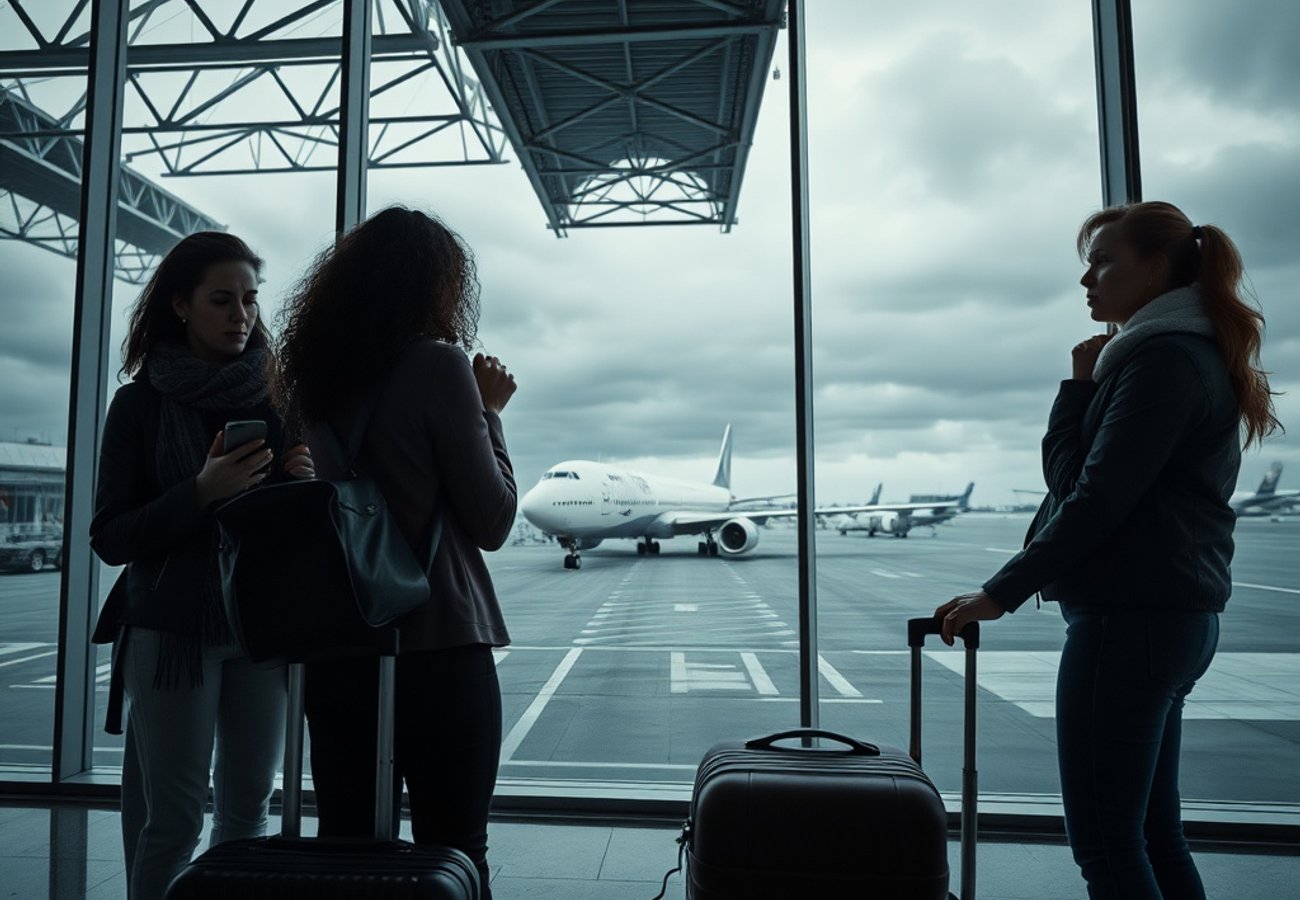
Image generated by AI
[Newark, June 28, 2026] — Federal aviation authorities have launched an investigation after a United Airlines passenger jet encountered an unauthorized drone during its final approach to Newark Liberty International Airport on June 26. The incident involved Flight 1513, which was transporting 106 passengers and five crew members from Key West, and highlights growing concerns regarding airspace security in high-traffic corridors.
The encounter occurred during one of the most critical phases of flight, where aircraft operate at low altitudes and reduced speeds, leaving pilots with minimal room for evasive maneuvers. According to flight crew reports, a circular drone measuring approximately three feet in diameter was spotted roughly 100 feet below the aircraft as it descended toward the runway. Despite the proximity of the object, the Boeing 737 landed safely without any physical impact or disruption to the passengers.
FAA Investigation Into Newark Airspace Breach
The Federal Aviation Administration (FAA) has initiated a formal review to determine the origin of the drone and the circumstances surrounding its presence in controlled airspace. Industry observers note that this is not an isolated event; a separate crew from United Express also reported a drone sighting in the vicinity of Newark, suggesting a potential pattern of unauthorized activity within the airport's approach corridor.
While the landing was executed smoothly and passengers disembarked without incident, aviation safety officials emphasize that "near-miss" events are treated with the same urgency as collisions. The reporting of such sightings is a cornerstone of aviation safety culture, allowing regulators to identify security gaps and implement countermeasures before a catastrophic failure occurs.
Operational Risks During Final Approach
The final approach phase is characterized by intense cockpit activity, where pilots must simultaneously manage descent rates, airspeed, navigation, and communication with air traffic control. The introduction of an unplanned variable, such as a three-foot-wide drone, adds significant psychological and operational pressure to the flight crew.
In a dense urban environment like New Jersey, the airspace is further complicated by surrounding infrastructure and a high volume of intersecting flight paths. A drone in this corridor does not only threaten a single aircraft but can potentially disrupt the timing and spacing of multiple arrivals, leading to systemic delays across the regional network.
Detailed Incident Specifications
The following data summarizes the verified details of the encounter for aviation safety tracking:
| Area | Detail | Travel Meaning |
|---|---|---|
| Flight | United Airlines Flight 1513 | Routine passenger service experienced drone sighting |
| Route | Key West to Newark | Domestic US travel corridor affected |
| Aircraft | Boeing 737 | Standard narrow-body commercial jet |
| Passengers | 106 passengers and five crew | Full commercial load onboard |
| Drone description | Circular, about three feet wide | Visible object close to flight path |
| Position | Around 100 feet below aircraft | Close proximity during landing |
| Flight phase | Final approach | High-risk operational phase |
| Outcome | Safe landing | No physical impact or disruption |
| Investigation | FAA review underway | Formal safety inquiry initiated |
Systemic Impact on United States Aviation Networks
Newark Liberty International Airport serves as a primary hub for both domestic and international transit. Because the aviation system relies on a precise "clockwork" of rotations, crew duty limits, and gate assignments, any uncertainty in the airspace can trigger a domino effect.
When unauthorized objects are detected, air traffic controllers may be forced to increase the separation between arriving aircraft. This increased spacing can lead to holding patterns, diverted flights, and missed connections for thousands of travelers. Although Flight 1513 arrived safely, the potential for widespread network instability underscores why the FAA maintains a zero-tolerance policy for unauthorized drone operations near runways.
Regulatory Framework and Drone Restrictions
Under FAA regulations, the operation of unmanned aircraft systems (UAS) in controlled airspace requires explicit authorization. These laws are designed to prevent drones from entering the "engine intake" zone or colliding with the fuselage of commercial jets.
Data from federal authorities indicates a rising trend of drone sightings near major U.S. airports, often occurring in departure and arrival corridors. To combat this, airports are increasingly investing in drone detection technology and rapid-response protocols to identify and neutralize threats in real-time. Public awareness campaigns continue to urge drone operators to verify airspace restrictions before launching, as accidental violations can lead to severe legal penalties and endanger hundreds of lives.
Why This Matters: The Evolution of Airspace Security
The encounter between Flight 1513 and the unauthorized drone represents a pivotal shift in aviation risk management. For decades, the primary threats to aircraft were mechanical failure or weather; however, the democratization of drone technology has introduced a new, unpredictable variable into the cockpit.
This incident provides critical "information gain" for the industry by highlighting that drone risks are no longer limited to the perimeter of the airport but are now appearing directly in the flight path during the most vulnerable stage of operation. The fact that a drone was spotted 100 feet below a Boeing 737 suggests that current detection boundaries may need to be expanded.
For the broader travel industry, this underscores a transition toward "active airspace defense." The ability of the crew to maintain stability during this event proves the efficacy of pilot training, but the recurrence of sightings near Newark indicates that regulatory enforcement must evolve as quickly as the technology it seeks to control. The safety of the U.S. aviation network now depends not just on the aircraft themselves, but on the ability to secure the invisible corridors of the sky from civilian technology.
Related Travel Guides
Disclaimer
This article is for informational and educational purposes only. It does not constitute legal, financial, or professional advice. While we strive to provide accurate and up-to-date information, travel policies, regulations, and conditions change rapidly. Always verify information with official sources before making travel decisions. Nomad Lawyer makes no representations about the accuracy, reliability, completeness, or suitability of the information provided. Readers should consult qualified professionals for advice specific to their circumstances. The views expressed in this article are those of the author and do not necessarily reflect the views of Nomad Lawyer.
Raushan Kumar
Founder & Lead Developer
Full-stack developer with 11+ years of experience and a passionate traveller. Raushan built Nomad Lawyer from the ground up with a vision to create the best travel and law experience on the web.
Learn more about our team →