
US Aviation Hubs Hit by Wave of Delays: JFK, Boston, SFO, and Miami Face Operational Strain
While nationwide cancellations remain moderate, a surge in flight delays at key US international gateways is creating a

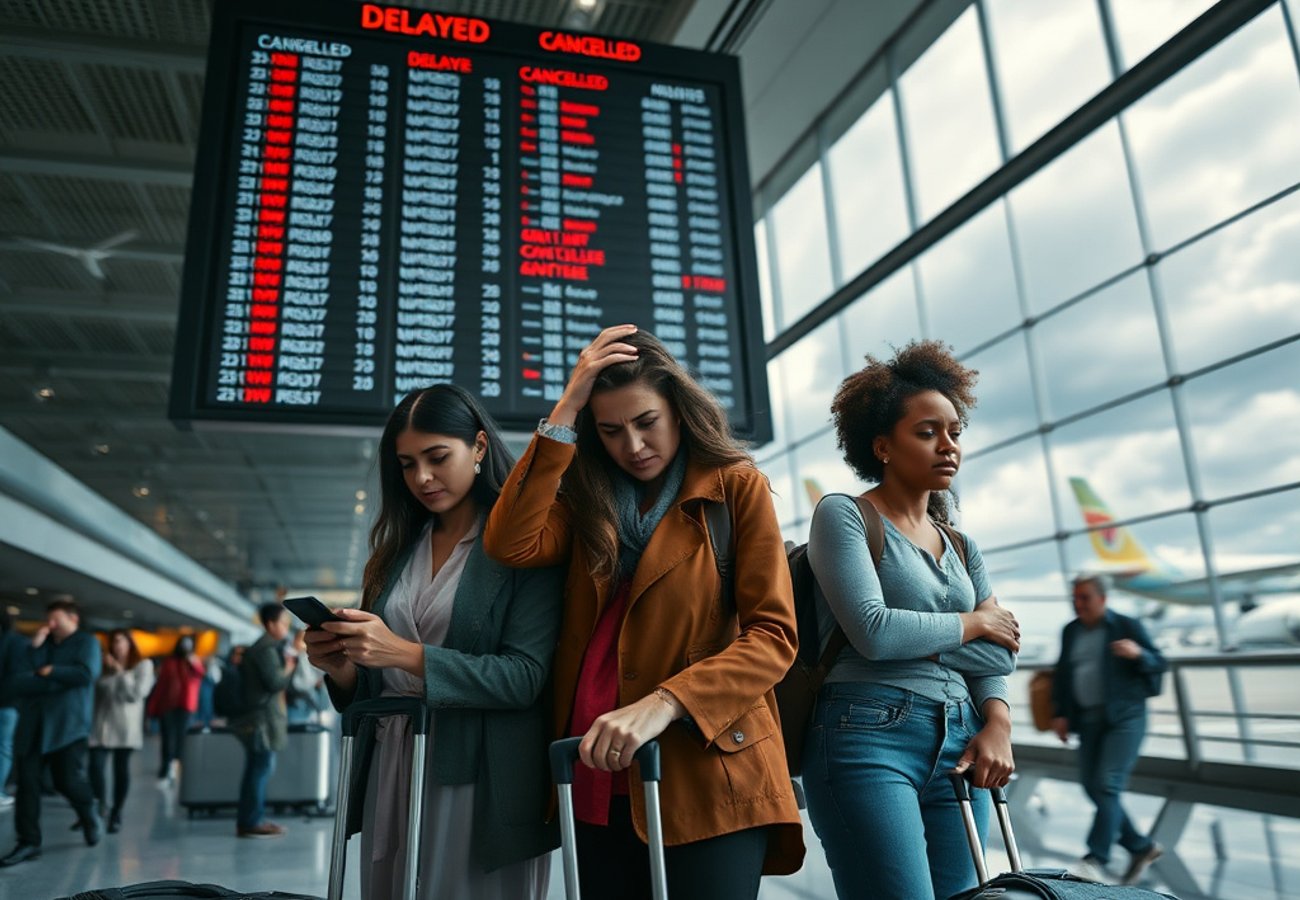
Image generated by AI
Operational Pressures Mount at US Gateways
On June 28, 2026, the United States aviation network faced significant instability, recording 638 flight delays and 55 cancellations. While the cancellation volume is low compared to major weather events, the high ratio of delays indicates a system struggling to maintain its schedule under operational pressure.
The disruption was most acute at four primary hubs: John F. Kennedy International (JFK), Boston Logan, San Francisco International (SFO), and Miami International. Because these airports serve as critical links for domestic and international traffic, these localized issues have caused cascading effects for passengers traveling to the UK, France, China, Switzerland, Qatar, Australia, and Argentina.
Strategic Shift: Prioritizing Delays Over Cancellations
A notable trend in 2026 is the industry's preference for absorbing disruptions through delays rather than outright cancellations. With approximately 11 delayed flights for every single cancellation, airlines are aggressively attempting to recover schedules.
Several systemic factors are driving this instability:
- Weather Volatility: Summer thunderstorms frequently reduce arrival rates, forcing aircraft into holding patterns.
- Traffic Management: FAA-imposed flow restrictions to ensure safety often slow departures.
- Crew Logistics: Strict duty-time regulations mean early-day delays create staffing shortages later.
- Equipment Positioning: A single late arrival creates a "domino effect" for every subsequent flight assigned to that aircraft.
- Peak Demand: High summer volumes stretch ground handling and boarding capacities to their limits.
JFK: International Operations Under Pressure
JFK experienced the highest level of disruption among the analyzed hubs, with 7 cancellations and 35 delays. The impact was felt most heavily by JetBlue and Delta Air Lines.
JetBlue saw the most significant volume of disruption with 3 cancellations and 11 delays. Delta followed with 2 cancellations and 10 delays. Interestingly, Virgin Atlantic opted for total cancellations over delays, reporting two cancelled flights (16% of its listed operations) with zero delays.
Long-haul carriers were disproportionately affected by percentages. Cathay Pacific saw 37% of its listed operations delayed, while China Airlines saw 50% of its operations delayed.
JFK Airline Performance
| Airline | Cancelled (#) | Cancelled (%) | Delayed (#) | Delayed (%) |
|---|---|---|---|---|
| JetBlue | 3 | 0% | 11 | 3% |
| Delta Air Lines | 2 | 0% | 10 | 3% |
| Virgin Atlantic | 2 | 16% | 0 | 0% |
| Air France | 0 | 0% | 1 | 8% |
| British Airways | 0 | 0% | 2 | 11% |
| China Airlines | 0 | 0% | 2 | 50% |
| Cathay Pacific | 0 | 0% | 3 | 37% |
| Endeavor Air (DAL) | 0 | 0% | 2 | 1% |
| CAL Cargo Airlines | 0 | 0% | 1 | 100% |
| Swiss | 0 | 0% | 1 | 14% |
| American Airlines | 0 | 0% | 2 | 1% |
Boston and San Francisco: High Volume Delays
Boston Logan recorded the highest total number of delays among the four airports, totaling 36. JetBlue bore the heaviest burden here, with 21 delayed flights. Cape Air saw the most cancellations in Boston with two flights scrubbed.
On the West Coast, San Francisco (SFO) mirrored the national trend of favoring delays over cancellations, reporting 18 delays against only 2 cancellations. Delta Air Lines was the most affected carrier at SFO, accounting for both cancellations and 3 delays. Regional connectivity was also strained, with SkyWest recording 4 delays.
SFO Airline Performance
| Airline | Cancelled (#) | Cancelled (%) | Delayed (#) | Delayed (%) |
|---|---|---|---|---|
| Delta Air Lines | 2 | 2% | 3 | 3% |
| Alaska Airlines | 0 | 0% | 1 | 1% |
| Cathay Pacific | 0 | 0% | 1 | 25% |
| Vietnam Airlines | 0 | 0% | 1 | 50% |
| Qantas | 0 | 0% | 1 | 50% |
| SkyWest | 0 | 0% | 4 | 2% |
| Southwest | 0 | 0% | 2 | 3% |
| Swiss | 0 | 0% | 1 | 50% |
| United | 0 | 0% | 2 | 0% |
| American Airlines | 0 | 0% | 2 | 2% |
Boston Logan Airline Performance
| Airline | Cancelled (#) | Cancelled (%) | Delayed (#) | Delayed (%) |
|---|---|---|---|---|
| Cape Air | 2 | 1% | 2 | 1% |
| Porter Airlines | 1 | 6% | 0 | 0% |
| Delta Air Lines | 1 | 0% | 5 | 2% |
| Condor | 0 | 0% | 1 | 50% |
| Frontier | 0 | 0% | 1 | 16% |
| JetBlue | 0 | 0% | 21 | 7% |
| Sata Internacional | 0 | 0% | 1 | 25% |
| Southwest | 0 | 0% | 3 | 6% |
| Swiss | 0 | 0% | 2 | 50% |
Miami: Localized Disruption
Miami International Airport remained the most stable of the four, reporting 2 cancellations and 16 delays. American Airlines faced the most significant challenge in Miami, with 1 cancellation and 10 delayed flights.
Miami Airline Performance
| Airline | Cancelled (#) | Cancelled (%) | Delayed (#) | Delayed (%) |
|---|---|---|---|---|
| Southwest | 1 | 2% | 0 | 0% |
| American Airlines | 1 | 0% | 10 | 1% |
| Aerolineas Argentinas | 0 | 0% | 2 | 50% |
| Frontier | 0 | 0% | 1 | 3% |
| Qatar Airways | 0 | 0% | 2 | 50% |
| Swiss | 0 | 0% | 1 | 50% |
Key Takeaways
- Delay Dominance: The US aviation system is currently absorbing operational stress through delays rather than cancellations (11:1 ratio).
- Hub Sensitivity: JFK and Boston Logan are currently the most volatile gateways, impacting both domestic and global connectivity.
- Carrier Impact: JetBlue and Delta have faced the most significant volume of disruptions across the East Coast hubs.
- International Fragility: Long-haul carriers with low daily frequencies (e.g., Swiss, Qatar Airways) see their performance percentages swing wildly due to a single delayed flight.
FAQ
Which airport had the most delays? Boston Logan International Airport recorded the highest number of delays among the four analyzed hubs, with 36 total.
Which airline was most affected at JFK? JetBlue experienced the highest volume of disruption at JFK, recording 3 cancellations and 11 delays.
Why are delays higher than cancellations? Airlines are prioritizing schedule recovery to ensure passengers eventually reach their destinations, choosing to delay flights rather than cancel them entirely.
Related Travel Guides
Disclaimer
This article is for informational and educational purposes only. It does not constitute legal, financial, or professional advice. While we strive to provide accurate and up-to-date information, travel policies, regulations, and conditions change rapidly. Always verify information with official sources before making travel decisions. Nomad Lawyer makes no representations about the accuracy, reliability, completeness, or suitability of the information provided. Readers should consult qualified professionals for advice specific to their circumstances. The views expressed in this article are those of the author and do not necessarily reflect the views of Nomad Lawyer.
Preeti Gunjan
Contributor & Community Manager
A passionate traveller and community builder. Preeti helps grow the Nomad Lawyer community, fostering engagement and bringing the reader experience to life.
Learn more about our team →