
US Opens Priority Visa Slots for Indian Seniors as Global Energy Crisis and Strait of Hormuz Tensions Inflate Travel Costs: How Saudi Arabia and UAE Stability Anchors the India-US Air Corridor Amid US-Iran Conflict
The US Consulate has launched priority visa slots for Indian senior citizens aged 50 and above to surmount the global energy crisis and Strait of Hormuz tensions, ensuring the India-US human bridge remains intact.

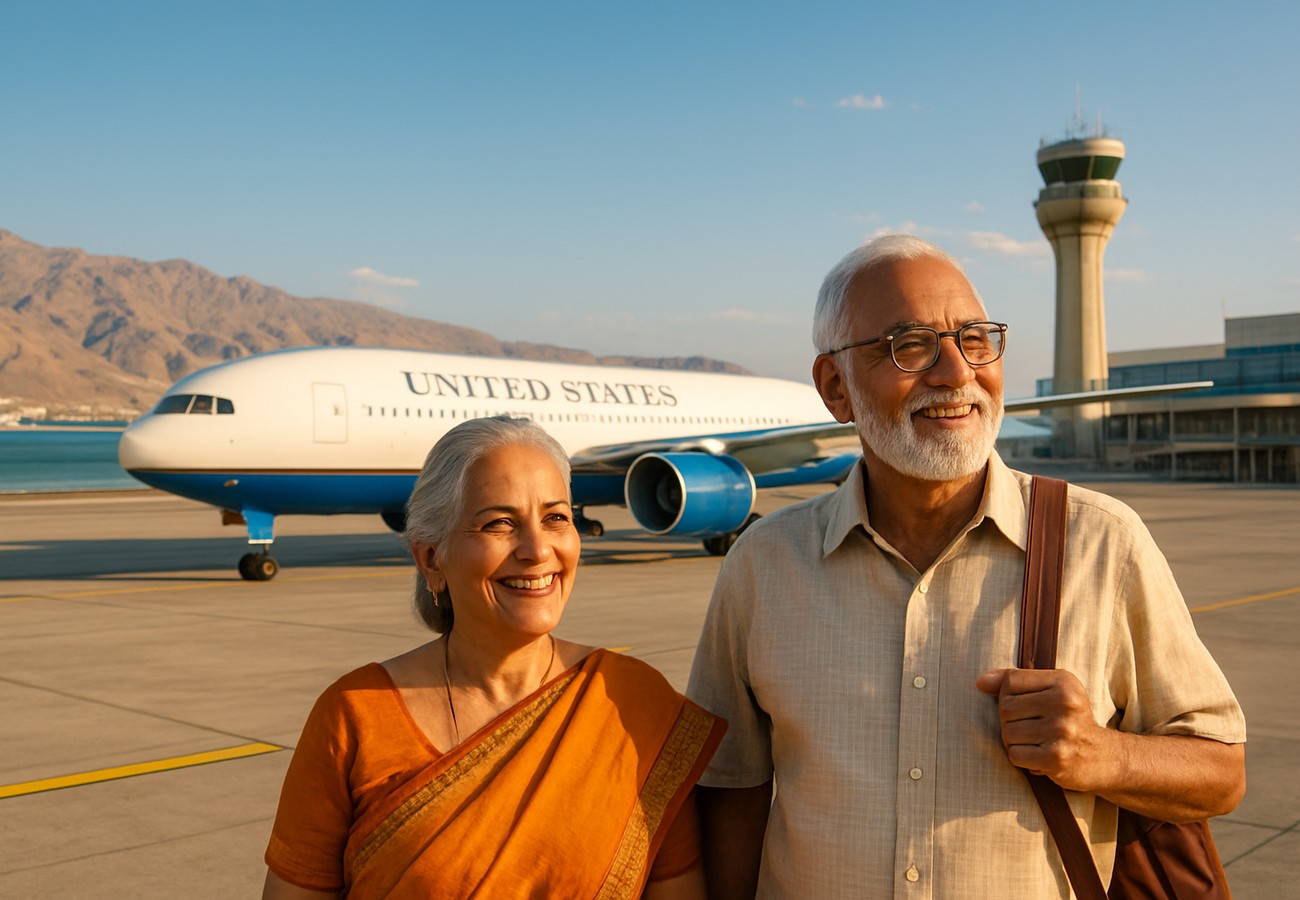
Image generated by AI
Quick Summary
- Consular Breakthrough: The U.S. Embassy and Consulates in India have officially opened specialized priority interview slots for B1/B2 (Visitor) visas, specifically curated for parents aged 50 years and above.
- Reducing Backlogs: The initiative aims to slash the multi-hundred-day wait times for senior travelers, facilitating family reunions for the Indian diaspora working on H-1B and L1 visas.
- Aviation Resilience: The priority slots surmount the global energy crisis precisely as Strait of Hormuz tensions and the US-Iran conflict drive aviation fuel and airspace insurance costs to record highs.
- Gulf Anchor: Saudi Arabia, the UAE, and Qatar are facilitating the energy stability required to keep the India-US air corridor operational, countering the threat of maritime shipping disruptions.
- Diplomatic Shield: The move is interpreted as a "People-to-People" defense strategy, ensuring that the human connection between Washington and New Delhi is not severed by Middle Eastern volatility.
- Service Locations: Priority interviews are being scheduled across five major hubs: New Delhi, Mumbai, Chennai, Hyderabad, and Kolkata.
- Source: US Consulate Strategic Travel Update / Times of India, May 8, 2026.
NEW DELHI / MUMBAI — In a monumental move to protect the $150 billion human bridge between the world’s two largest democracies, the United States has deployed a "Priority Shield" for India’s senior travelers. According to breaking reports released on May 8, 2026, the US Consulate has officially integrated specialized B1/B2 interview slots for applicants over the age of 50. This development is being analyzed by senior global affairs and energy journalists as a "Diplomatic Resilience" play, occurring precisely as Strait of Hormuz tensions and a severe US-Iran conflict drive oil prices to record highs, forcing the India-US travel sector to surmount the risks of maritime shipping disruptions through aggressive consular optimization.
Expanded Overview: The "50-Plus" Priority Corridor
The scale of the US-India travel demand has reached unprecedented levels in 2026, with elderly parents seeking to visit children and grandchildren residing abroad. By carving out a specific niche for those aged 50 and above, the US Consulate is surmounting the "Resourceful Risk" of the massive visa backlog. This strategic initiative shields senior travelers from the rigorous scheduling delays that have historically plagued the B1/B2 category, ensuring that significant life events—births, weddings, and graduations—remain accessible to the "Foundational Generation" of the Indian diaspora.
Geopolitical Context: Surmounting the Strait of Hormuz and the Human Bridge
The broader geopolitical landscape in 2026 has been dominated by the standoff in the Strait of Hormuz. As Saudi Arabia, the UAE, and Qatar work to stabilize global energy flows, the price of long-haul aviation has become the ultimate benchmark for regional health. The US-Iran conflict has created a "geopolitical tax" on the India-US corridor, with airspace rerouting and fuel surcharges driving ticket prices to all-time highs. By streamlining the visa process, the United States is essentially supporting the mental and emotional well-being of the Indian workforce, surmounting the threat of a "Security Blockade" through high-efficiency people-to-people ties.
Global Energy Impact: The Aviation Hedge Against Record Oil Prices
Rising oil prices have fundamentally redrawn the travel map for 2026.
- Operational Surcharge: The cost of flying between Mumbai and New York has spiked by 34% due to the global energy crisis, making "Priority Access" a vital economic hedge for families already facing record-high transit costs.
- Strategic Advantage: The India-US air corridor is benefiting from the energy stability provided by Saudi Arabia and the UAE, which act as the primary energy anchor for the refined jet fuels required to keep the world’s most populous nations connected.
Shipping and Trade Impact: Consular Logistics as a Stability Anchor
The ongoing shipping disruption in global trade routes has made the physical movement of documents and biometric equipment more difficult.
- Resourceful Service: The US Consulate is surmounting these delays through a shift toward "Last-Chance" digital processing and specialized interview tracks, ensuring that the energy of the 2026 season is not lost to bureaucratic bottlenecks.
- Trade Resilience: The movement of people is the cornerstone of the bilateral partnership, and by facilitating the travel of parents, the U.S. is surmounting maritime bottlenecks through the protection of "Human Capital" flows.
Regional Impact: The Five-Hub "Inclusivity" Rollout
The priority slots are being released periodically across India’s primary visa hubs:
- The Northern & Western Anchors: New Delhi and Mumbai remain the highest-volume centers, surmounting the "Resourceful Risk" of the 50+ age group’s traditional challenges with digital literacy.
- The Southern Corridors: Chennai and Hyderabad are seeing a massive surge in senior applicants visiting the tech-corridors of the US, surmounting the energy crisis through high-value diaspora travel.
- Economic Sanctuary: The initiative ensures that the Indian family unit remains a "stable sanctuary" for future travelers, surmounting the logistical fatigue of 2026 through world-class stewardship.
Industry / Expert Analysis: The Move Toward "Adaptive Stewardship"
Logistics and consular analysts suggest that the 50-plus priority slots are a "Masterclass in Adaptive Services." In an era where the global energy crisis makes every international movement an investment, the move toward age-based prioritization is the only logical path. By minimizing wait times and improving compliance, the US Consulate is surmounting the logistical fatigue of 2026, ensuring that resources can be redirected into improving the "Nature-First" experience of the traveler.
What Happens Next: Toward a Need-Based Visa Model
Following the May 8 report, several key developments are anticipated:
- Pilot Success: If the 50-plus age group rollout proves successful, similar need-based prioritizations could be explored for students and specialized workers.
- Staffing Hardening: Continued efforts to increase consular staffing and improve technological infrastructure to further surmount the Strait of Hormuz volatility.
- Global Alignment: Other Western nations are expected to adopt the "Indian Senior Standard" as they surmount the geopolitical tax of the 2026 season.
Conclusion: Reinforcing the India-US Anchor Amid Global Risk
The opening of priority visa slots for Indian seniors is a testament to the power of "Resourceful Resilience" in a world of shipping disruptions and oil price volatility. By surmounting the challenges of the global energy crisis and the geopolitical shadow of the Strait of Hormuz, the US and India are proving that the "People-to-People" connection is the ultimate defense against global instability. As the world watches the Middle East, the message from the US Consulate is clear: the lanes are open, the parents are prioritized, and the bridge is strictly protected.
Key Takeaways: US Visa Priority India 2026
- Initiative: Specialized B1/B2 priority interview slots for parents aged 50+.
- Geography: Available in New Delhi, Mumbai, Chennai, Hyderabad, and Kolkata.
- Geopolitics: Strait of Hormuz tensions and US-Iran conflict inflating aviation costs.
- Gulf Role: Saudi Arabia, UAE, and Qatar stabilizing the India-US energy anchor.
- Diaspora: Targeted at supporting families of H-1B and L1 visa holders.
- Outlook: Adaptive consular services to become the 2026 standard for high-demand corridors.
Related Tourism News
Disclaimer
This article is for informational and educational purposes only. It does not constitute legal, financial, or professional advice. While we strive to provide accurate and up-to-date information, travel policies, regulations, and conditions change rapidly. Always verify information with official sources before making travel decisions. Nomad Lawyer makes no representations about the accuracy, reliability, completeness, or suitability of the information provided. Readers should consult qualified professionals for advice specific to their circumstances. The views expressed in this article are those of the author and do not necessarily reflect the views of Nomad Lawyer.
Kunal K Choudhary
Co-Founder & Contributor
A passionate traveller and tech enthusiast. Kunal contributes to the vision and growth of Nomad Lawyer, bringing fresh perspectives and driving the community forward.
Learn more about our team →