
US Maintains Level 4 Do Not Travel Warning for Ukraine Amid Intensified Russian Missile Strikes 2026
The U.S. Department of State has reaffirmed its highest travel warning for Ukraine as Russian drone and missile campaigns expand beyond front-line zones.
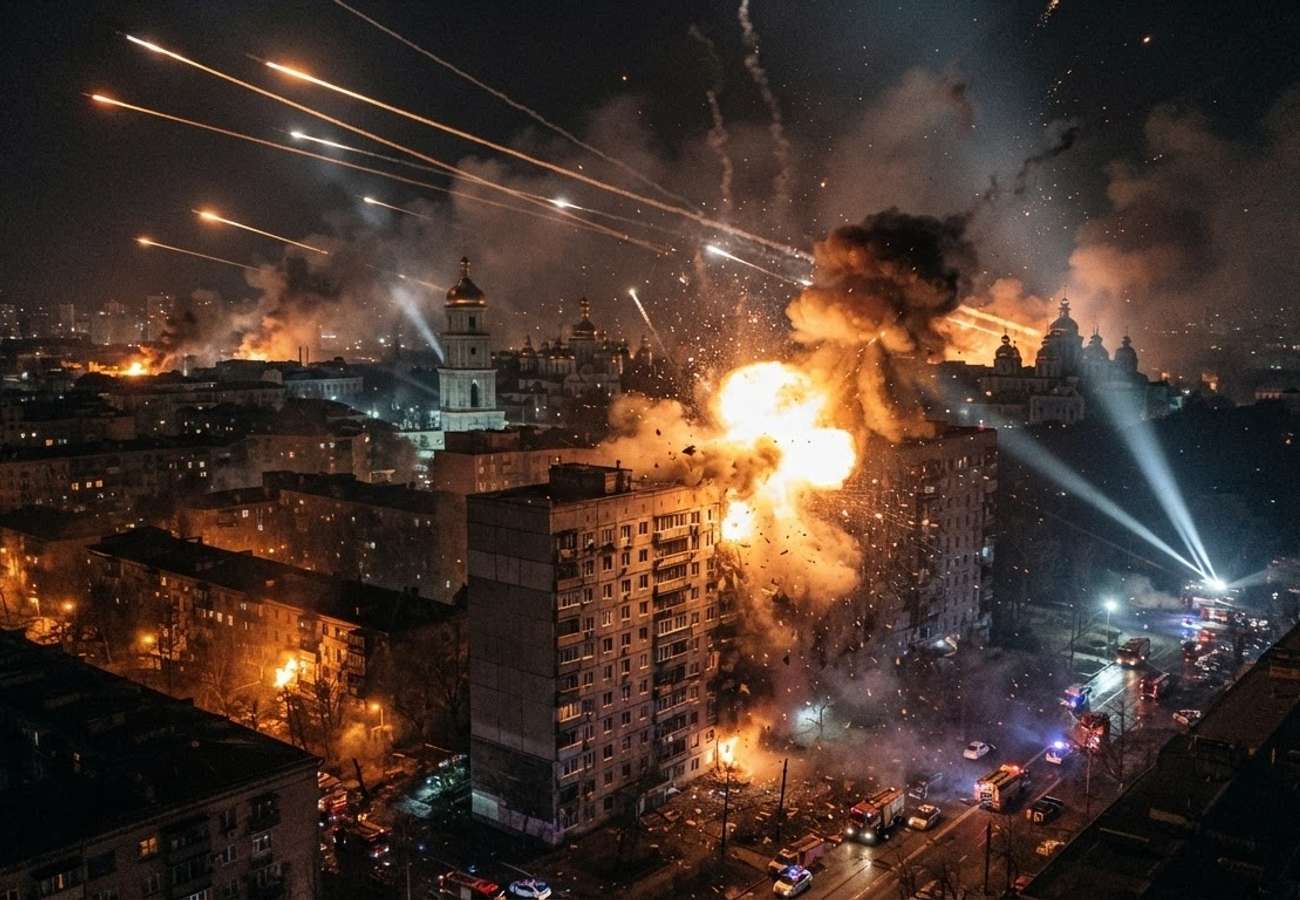
Image generated by AI
Washington, D.C., August 29, 2026 — The United States government has formally reaffirmed its most severe travel advisory for Ukraine, urging all citizens to avoid the country entirely as Russian aerial campaigns intensify. The update, issued on August 28, 2026, highlights a dangerous expansion of missile and drone strikes that now frequently target urban centers and critical infrastructure far removed from active ground combat.
The decision to maintain the highest possible warning level comes as the security environment becomes increasingly volatile. For any individual considering travel to the region, the current geopolitical climate means that no area of the country can be classified as truly safe, and the ability of foreign governments to provide emergency consular support is severely constrained.
State Department Reaffirms Level 4 Status for Ukraine
On August 28, 2026, the U.S. Department of State updated its travel advisory, confirming that Ukraine remains designated as Level 4: Do Not Travel. This is the most critical tier in the American travel warning system, signaling that the risks are so extreme that travel is strongly discouraged for any reason.
While the overall classification has remained constant, officials have revised the specific language regarding armed conflict and civil unrest. The updated guidance emphasizes that long-range Russian strikes now routinely reach deep into the Ukrainian interior. Consequently, the perceived safety of cities far from the eastern and southern front lines is an illusion, as security conditions can collapse without prior notice.
The operational reality for U.S. government personnel in Kyiv further illustrates the severity of the situation. Staff members are currently subject to strict curfews, movement restrictions, and activity limitations. These constraints directly impact the speed and efficacy of consular assistance available to U.S. citizens stranded or injured within the country. Furthermore, the U.S. government continues to prohibit family members of embassy staff from accompanying them to Ukraine, a policy that underscores the extreme risk profile of the region.
Escalation of Russian Aerial Campaigns in Urban Centers
The persistence of the Level 4 warning is a direct response to the increased frequency and scale of Russian missile and drone barrages. Recent data indicates a strategic shift toward targeting the heart of Ukrainian cities and essential utility networks.
Throughout mid-August, reports detailed sustained nighttime assaults on the Kyiv region. These operations involved coordinated waves of drones and missiles that lasted for several hours, resulting in multiple civilian fatalities and the destruction of residential apartment blocks, industrial warehouses, and energy hubs. This pattern continued into late August, with consecutive days of strikes targeting storage depots and housing in the capital's vicinity, leading to prolonged air raid alerts that have paralyzed normal civic functions.
Military analysts and government monitors report that Russia is heavily utilizing a combination of cruise missiles, ballistic missiles, and one-way attack drones. These weapons are specifically deployed against:
- The National Power Grid: Aiming to induce systemic failure before the winter months.
- Transport Nodes: Disrupting the movement of goods and people.
- Maritime Ports: Crippling economic exports.
- Industrial Assets: Eroding the nation's long-term economic resilience.
International humanitarian bodies have warned that these strikes on civilian infrastructure increase the likelihood of mass displacement and place an unsustainable burden on already fragile public services.
Hazards Beyond the Front Lines and Major Hubs
A critical component of the current risk assessment is the realization that danger is not limited to the "hot" zones of the east and south. The threat has become decentralized, meaning that rural areas and smaller towns are now equally vulnerable to long-range munitions.
Beyond the direct impact of a missile strike, the U.S. and other governments warn of secondary hazards. Air defense interceptions often result in falling debris and shrapnel, which can cause death or injury in residential districts and agricultural zones. Additionally, the presence of unexploded ordnance (UXO) remains a pervasive threat across both urban and rural landscapes.
Mobility within the country has also become a significant gamble. Ukraine's rail networks and highways—the primary arteries for any traveler—are frequent targets of both kinetic strikes and cyberattacks. These disruptions can happen instantaneously, potentially trapping travelers in high-risk zones with no viable evacuation route. For those attempting business, volunteer, or tourism trips, the combination of shifting front lines and unpredictable curfew changes makes any itinerary fundamentally unstable.
Global Consensus on Ukraine Travel Risks
The American position is mirrored by other major global powers, creating a unified international warning against visiting Ukraine. In August 2026, the United Kingdom updated its foreign travel guidance, advising against all travel to specific high-risk regions and all but the most essential travel to others, citing the constant threat of aerial bombardment.
Australia’s official travel service also maintains a strict "Do Not Travel" designation for the entirety of Ukraine, including the Crimean Peninsula and territories currently under Russian occupation. Australian officials have warned that the security situation is subject to sharp, sudden deterioration.
This global alignment has significant legal and financial consequences for travelers. Most commercial travel and health insurance policies contain clauses that invalidate coverage if a policyholder enters a country that is under a "Do Not Travel" advisory from their home government. With civilian airspace closed and commercial flights non-existent, the options for entering or exiting the country are limited and fraught with risk.
Regional Aviation and Logistical Impacts
The volatility in Ukraine is creating ripple effects across Eastern European aviation and regional mobility. Neighboring countries have reported airspace violations and drone debris landing near their borders, forcing airlines to continuously adjust flight paths to avoid potential hazards.
Aviation logistics in the region have become increasingly complex. Recent Ukrainian drone activity targeting Russian airports has led to unexpected delays and diversions for passengers traveling through the broader region. For those who must be in Ukraine for essential reasons, the U.S. State Department recommends a rigorous contingency framework, including:
- Continuous monitoring of real-time security alerts.
- Pre-identification of hardened shelter locations.
- Established, multi-modal exit strategies.
Given the current intensity of the conflict, there is no evidence that the U.S. or its allies intend to downgrade these warnings in the near future. Ukraine remains one of the most dangerous environments globally for foreign nationals.
The intersection of active warfare and urban instability ensures that Ukraine remains a prohibited destination for all non-essential travel.
Related Travel Guides
Disclaimer
This article is for informational and educational purposes only. It does not constitute legal, financial, or professional advice. While we strive to provide accurate and up-to-date information, travel policies, regulations, and conditions change rapidly. Always verify information with official sources before making travel decisions. Nomad Lawyer makes no representations about the accuracy, reliability, completeness, or suitability of the information provided. Readers should consult qualified professionals for advice specific to their circumstances. The views expressed in this article are those of the author and do not necessarily reflect the views of Nomad Lawyer.