
US Headlight Glare Rules Face First Major Overhaul in Over 25 Years Under NHTSA Review
NHTSA initiates its first negotiated rulemaking in 25 years to modernize FMVSS 108, addressing blinding LED headlight glare and height disparities on US highways.

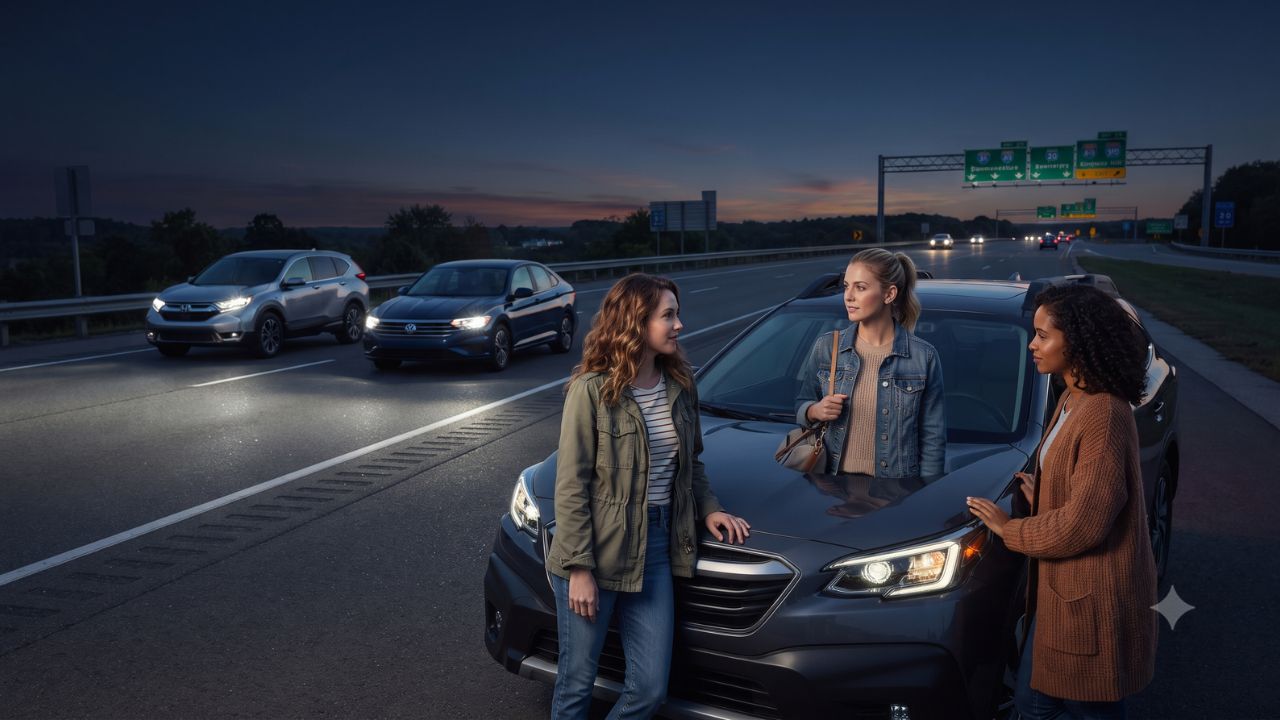
Marking the first negotiated rulemaking on federal vehicle lighting standards in more than 25 years, the National Highway Traffic Safety Administration launched a sweeping overhaul of Federal Motor Vehicle Safety Standard No. 108 on 6 October 2026 to tackle dangerous headlight glare across American highways. The regulatory initiative targets the escalating conflict between high-intensity light-emitting diode (LED) illumination and driver night-time visibility, establishing a formal committee to modernize rules that have governed vehicle lamps, reflective devices, and associated equipment for decades. Initiated under the Trump Administration through the U.S. Department of Transportation, the review seeks to reduce regulatory bottlenecks while directly mitigating the visual disability glare that afflicts motorists on two-lane corridors and high-speed interstates.
For cross-country road trippers, rental car drivers, and nocturnal highway commuters, the regulatory review addresses one of the most persistent hazards of modern automotive design. While modern lighting packages provide drivers with extended forward illumination, the combination of elevated truck and sport utility vehicle (SUV) headlamp mounting heights, cool-white color temperatures, and misaligned optical aim has created dangerous visual cutoffs for oncoming traffic. By convening up to 18 industry, engineering, and consumer safety stakeholders, federal regulators intend to balance technological innovation with physiological eye-safety limits.
The Scope of FMVSS 108 Reform and Federal Negotiated Rulemaking
The regulatory foundation under review is Federal Motor Vehicle Safety Standard (FMVSS) No. 108, a complex federal mandate establishing performance requirements for automotive lighting equipment. The decision by National Highway Traffic Safety Administration (NHTSA) Administrator Jonathan Morrison to employ a negotiated rulemaking process underscores the technical difficulty of reforming lighting mandates without stifling engineering advances. Negotiated rulemaking brings competing interests into direct dialogue before a formal Notice of Proposed Rulemaking (NPRM) is drafted, ensuring that manufacturers, safety advocates, and optical scientists agree on testable performance metrics.
Under the framework announced by U.S. Transportation Secretary Sean P. Duffy, the appointed advisory committee will comprise up to 18 representatives drawn from original equipment lighting manufacturers, motor vehicle component trade associations, highway safety research organizations, and independent engineering institutes. Public stakeholders have until 9 November 2026 to file formal submissions regarding the committee's scope, balance, and nominee appointments.
| Regulatory Domain | Existing FMVSS 108 Framework | NHTSA October 2026 Review Objectives | Direct Impact on Road Travelers |
|---|---|---|---|
| Glaring Light Restrictions | Static laboratory photometric intensity limits | Testing dynamic visual glare experienced by oncoming motorists | Reductions in temporary flash blindness on unlit secondary highways |
| Headlamp Geometry & Height | Broad mounting height tolerances (22 to 54 inches) | Evaluation of physical headlamp height, aim, and beam pitch | Reduced rear-view mirror glare from lifted pickups and tall SUVs |
| Automated Lighting Systems | Fragmented deployment of dusk sensors and high beams | Unified performance baselines for automatic high beams and dusk sensors | More reliable automatic dimming when approaching oncoming vehicles |
| Component Testing Regimes | Rigid multi-step tests for plastic optics and lenses | Simplified testing for plastic optical components and replaceable lenses | Lower replacement costs and faster deployment of advanced optics |
| Global Standard Alignment | Divergent North American photometric beam patterns | Closer alignment with United Nations (UNECE) global safety standards | Harmonized automotive lighting across imported and domestic vehicles |
A primary catalyst for the federal review is the lag between American vehicle lighting regulations and international engineering standards. In global markets operating under United Nations Economic Commission for Europe (UNECE) frameworks, adaptive driving beam (ADB) technology and matrix LED systems have operated safely for years. In the United States, outdated testing protocols—particularly rigid durability requirements for plastic optical components and replaceable light sources—have slowed manufacturer rollouts. Morrison noted that outdated statutory language frequently prevents automakers from fielding lighting innovations that improve driver reaction times without blinding opposing traffic.
Automotive Technology Under Regulatory Scrutiny
The technical scope of the review focuses on four specific vehicle lighting features that have transformed night-time driving conditions over the past decade:
- High-Luminance LED Arrays: Transitioning from halogen filaments and high-intensity discharge (HID) bulbs to solid-state LEDs has dramatically increased luminous efficacy, producing sharp blue-white spectrums that the human eye perceives as significantly harsher than warmer yellow tones.
- Automatic High-Beam Switching: Sensor-driven high-beam assist systems are designed to toggle between high and low beams automatically, but real-world driving reveals recurring sensor delays on curving roads or over cresting hilltops.
- Ambient Dusk Sensors: Automatic twilight sensors govern when low beams engage, but varying manufacturer calibration thresholds leave many vehicles traveling in low-light conditions with solely daytime running lamps illuminated.
- Replaceable Light Modules and Optical Plastics: Complex testing hurdles governing optical lenses are being reassessed to streamline replacement and repair costs after collisions.
Crash prevention analysis from the Insurance Institute for Highway Safety (IIHS) has repeatedly demonstrated that well-aimed headlights reduce nighttime pedestrian and single-vehicle run-off-road crashes. However, the agency's evaluations also show wide disparities in glare performance across late-model passenger vehicles, with many factory-installed headlights emitting excessive illuminance into opposing lanes directly off dealership floors.
Expert Analysis: Beam Geometry, Mounting Heights, and Interstate Road Safety
For travelers embarking on long-distance road trips, the direct consequence of current federal lighting disparities is severe driver fatigue and heightened nighttime accident risks. On multi-lane interstates and rural two-lane highways, oncoming LED glare triggers physiological troxler fading and temporary retinal bleaching. When a driver encounters high-intensity glare, pupil constriction takes several seconds to recover, temporarily obscuring road edges, wildlife hazards, and unlit construction barriers.
The regulatory friction this creates means that light output alone does not guarantee safety. In the American vehicle fleet, where light trucks, crossover utilities, and full-size pickups represent over 75% of new vehicle sales, headlamps are frequently mounted between 36 and 48 inches above the pavement. When a pickup truck sits directly behind a low-riding passenger sedan or compact rental car, its low-beam headlights shine directly into the driver's side and rearview mirrors. The review's specific focus on headlamp mounting height and factory aim addresses this geometric imbalance.
Furthermore, aligning American lighting standards with international UNECE benchmarks could resolve long-standing manufacturing inefficiencies. When global automakers must engineer completely separate headlamp assemblies for the North American market, consumer vehicle costs rise while advanced matrix lighting features are de-contented. Establishing a harmonized, objective glare cutoff threshold allows manufacturers to deploy software-controlled beam shaping that actively masks oncoming vehicles in real time.
Until these negotiated rules are codified, travelers must adopt proactive defensive driving habits: ensuring windshield interiors remain free of haze, utilizing anti-glare rearview mirror toggles, and resisting the urge to gaze directly into oncoming light sources.
Key Takeaways
- Historic Rulemaking Initiative: NHTSA announced a formal review of FMVSS 108 on 6 October 2026, marking the first negotiated rulemaking for vehicle lighting standards in over 25 years.
- Targeting Disability Glare: The review specifically investigates the causes of blinding glare produced by modern LED headlamps, lamp mounting heights, and automatic high-beam systems.
- Stakeholder Committee Composition: U.S. Transportation Secretary Sean P. Duffy will appoint up to 18 representatives spanning lighting manufacturers, road safety advocates, and engineering research bodies.
- Public Participation Deadline: Interested parties, safety organizations, and industry stakeholders have until 9 November 2026 to submit public comments and nominations for committee membership.
- International Harmonization: Regulators will evaluate opportunities to align domestic standards with international safety frameworks to facilitate advanced adaptive driving beam technologies.
FAQ: US Headlight Glare Regulations and Road Safety 2026
What is FMVSS 108, and why is NHTSA reviewing it?
Federal Motor Vehicle Safety Standard 108 governs all motor vehicle lighting equipment. NHTSA is reviewing it to reduce dangerous headlight glare, modernize outdated testing rules, and accommodate advanced lighting technology.
When will the new headlight glare rules take effect?
The 6 October 2026 announcement began the regulatory review process. After public comments close on 9 November 2026, the negotiated rulemaking committee will convene to develop formal regulatory proposals.
Why do modern LED headlights cause so much glare?
LED headlamps produce intense, blue-white light with sharp cutoffs. Combined with higher mounting heights on SUVs and pickup trucks and poor optical aim, they can blind oncoming drivers.
How can motorists participate in the NHTSA headlight review?
The public, safety researchers, and automotive organizations can submit formal comments regarding committee representation and regulatory priorities through the federal register docket until 9 November 2026.
As federal regulators undertake the long-overdue modernization of American vehicle lighting, night-time road trippers can look forward to a future where brighter highways no longer come at the cost of blinded drivers.
Related Travel Guides
Disclaimer
This article is for informational and educational purposes only. It does not constitute legal, financial, or professional advice. While we strive to provide accurate and up-to-date information, travel policies, regulations, and conditions change rapidly. Always verify information with official sources before making travel decisions. Nomad Lawyer makes no representations about the accuracy, reliability, completeness, or suitability of the information provided. Readers should consult qualified professionals for advice specific to their circumstances. The views expressed in this article are those of the author and do not necessarily reflect the views of Nomad Lawyer.
Raushan Kumar
Founder & Lead Developer
Full-stack developer with 11+ years of experience and a passionate traveller. Raushan built Nomad Lawyer from the ground up with a vision to create the best travel and law experience on the web.
Learn more about our team →