
Canada, UK, Australia, and Global Governments Launch AI & Deepfake Travel Scam Controls
Canada, the UK, Australia, Singapore, the UAE, and EU authorities are implementing AI fraud detection, deepfake countermeasures, and fake visa portal alerts to protect travelers.

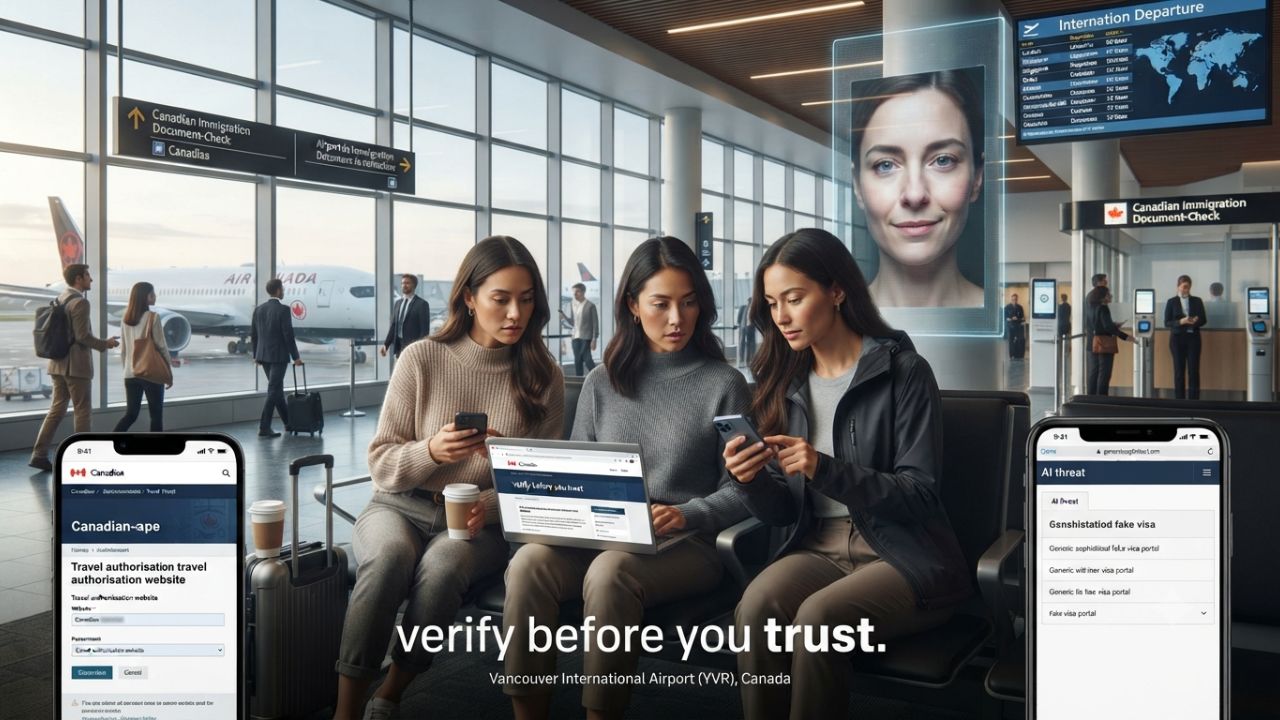
Governments globally deploy AI detection tools and public alerts to protect travelers from deepfakes and fake visa application portals.
Governments worldwide—led by Canada, the United Kingdom, Australia, Singapore, India, the UAE, and European Union authorities—are building advanced technological defenses and public verification protocols to protect international tourists from AI-generated deepfakes, voice cloning, and fraudulent visa portals.
[Ottawa, Canada, Oct 6, 2026] — A new cybersecurity threat landscape is forcing international border agencies and national tourism authorities to overhaul traveler protection strategies. Driven by the proliferation of generative artificial intelligence, cybercriminals are replacing basic phishing emails with high-definition deepfake videos, synthetic voice cloning of immigration officials, automated fake customer support bots, and deceptive travel authorization portals.
In response, governments including Canada, the UK, Australia, Singapore, New Zealand, India, Saudi Arabia, the UAE, Hong Kong, and the European Union are deploying specialized AI detection software, digital watermarking, and mandatory official verification channels.
Global Government AI Defense and Fraud Screening Matrix
| Country / Region | Primary Government Action & Technology | Specific Threat Targeted & Traveler Defense |
|---|---|---|
| Canada | IRCC AI Screening & Warnings (95,000+ fraud cases in 2025) | Fake eTA/visa portals, AI document anomaly screening |
| United Kingdom | Visa-fraud education & deepfake detection systems | Synthetic video promises of guaranteed visas/employment |
| Australia | Scamwatch & Smartraveller guidance | Voice cloning impersonation & AI travel info hallucinations |
| Singapore | ScamShield AI Ecosystem & ICA warnings | Automated URL checking & fake immigration officer calls |
| New Zealand | Immigration NZ alerts & deepfake education | High-urgency financial coercion & fake visa status calls |
| India | Synthetic media regulations & cyber-patrolling | Fake hotel, helicopter & pilgrimage booking engines |
| United Arab Emirates | SARAAB AI Model (Dubai Electronic Security Center) | Manipulated video identification & ticket scam alerts |
| Saudi Arabia | SDAIA Governance Rules | Digital watermarks, source verification & biometric protection |
| European Union | Official ETIAS Channel Verification | Countering fraudulent ETIAS travel authorization sites |
| Hong Kong | Platform cooperation & digital impersonation taskforce | Identity theft & synthetic media phishing protection |
Global Anti-AI Fraud Defensive Architecture:
[Generative AI Threat Vectors: Deepfake Video / Cloned Voice / Fake Portals]
                                 │
                                 ├─► Detection & Analytics: Dubai SARAAB Model & IRCC Anomaly Screening
                                 ├─► Verification Infrastructure: Singapore ScamShield & EU ETIAS Protocols
                                 └─► Regulatory & Public Guidance: Saudi SDAIA Watermarking & Australian Alerts
Canadian Enforcement and IRCC Artificial Intelligence Strategy
Canada has placed AI impersonation at the center of its immigration protection framework. Immigration, Refugees and Citizenship Canada (IRCC) explicitly warns travelers that visual polished credibility is no longer proof of authenticity. Scammers utilize cloned voices and realistic synthetic video to mimic official government portals, attempting to steal passport numbers, financial credentials, and payment fees for Electronic Travel Authorizations (eTA) or visitor visas.
| Canadian Security Metric / Action | Official Operational Benchmark | Traveler Impact & Verification |
|---|---|---|
| IRCC Fraud Investigations (2025) | Over 95,000 Cases Investigated | Proactive screening against misrepresentation |
| Refused Applications (2025) | Over 95,000 Refusals | Heightened scrutiny against fraudulent documents |
| AI Anomaly Detection Strategy | Algorithmic pattern verification | AI-assisted identification of application anomalies |
| Biometric Verification Core | Fingerprints & facial biometrics | Physical verification securing identity authentications |
IRCC Application Screening Protocol:
[Submitted Visitor Application / eTA Request]
                    │
                    ├─► AI Anomaly Engine: Flags irregular document patterns & synthetic images
                    ├─► Biometric Cross-Match: Validates fingerprints & physical identity
                    └─► Human Officer Review: Final manual audit before visa authorization
International Countermeasures: Synthetic Media and Fake Portals
Governments across multiple jurisdictions have introduced specialized tools to neutralize AI travel threats:
- UAE (Dubai): The Dubai Electronic Security Center launched SARAAB, an AI model capable of detecting video manipulation and synthetic deepfakes in digital media.
- Australia: Smartraveller alerts inform tourists of dual risks: malicious deepfakes and non-malicious AI "hallucinations" where generative search engines produce incorrect visa requirements or local legal advice.
- European Union: As the European Travel Information and Authorisation System (ETIAS) launches, EU authorities are directing travelers exclusively to official
.europa.euportals to block third-party scam intermediaries.
Traveler Verification Protocol for the AI Era:
├── 1. Never Trust Visual Credibility Alone: Polished graphics & video can be generated instantly
├── 2. Independent Channel Check: Access government portals directly by typing official URLs (.ca, .gov.uk, .europa.eu)
├── 3. Beware Urgent Financial Demands: Official agencies never demand immediate wire transfers or crypto
└── 4. Cross-Reference Travel Advice: Verify AI search answers against primary embassy websites
Frequently Asked Questions
How are cybercriminals using AI to target travelers?
Criminals use generative AI to build fake visa application portals, clone the voices of immigration officers, create deepfake promotional videos, and generate fake customer service bots for holiday bookings.
What is Canada doing to combat AI immigration fraud?
IRCC is issuing public alerts regarding fake eTA portals, utilizing AI-assisted document anomaly detection, cross-matching biometric fingerprints, and enforcing strict fraud checks following over 95,000 fraud investigations in 2025.
What is the primary safety rule for travelers verifying travel information?
Travelers should shift from asking "Does this look real?" to "Can I independently verify this on an official government domain?" Always access visa portals directly through official .ca, .gov, or .europa.eu websites.
Related Travel Guides
Disclaimer
This article is for informational and educational purposes only. It does not constitute legal, financial, or professional advice. While we strive to provide accurate and up-to-date information, travel policies, regulations, and conditions change rapidly. Always verify information with official sources before making travel decisions. Nomad Lawyer makes no representations about the accuracy, reliability, completeness, or suitability of the information provided. Readers should consult qualified professionals for advice specific to their circumstances. The views expressed in this article are those of the author and do not necessarily reflect the views of Nomad Lawyer.
Raushan Kumar
Founder & Lead Developer
Full-stack developer with 11+ years of experience and a passionate traveller. Raushan built Nomad Lawyer from the ground up with a vision to create the best travel and law experience on the web.
Learn more about our team →