
United States Flight Disruptions Log 79 Cancellations and 2,993 Delays
US flight delays reach 2,993 while cancellations are limited to 79. Learn about US DOT refund rights at Atlanta, Chicago, and JFK airports.

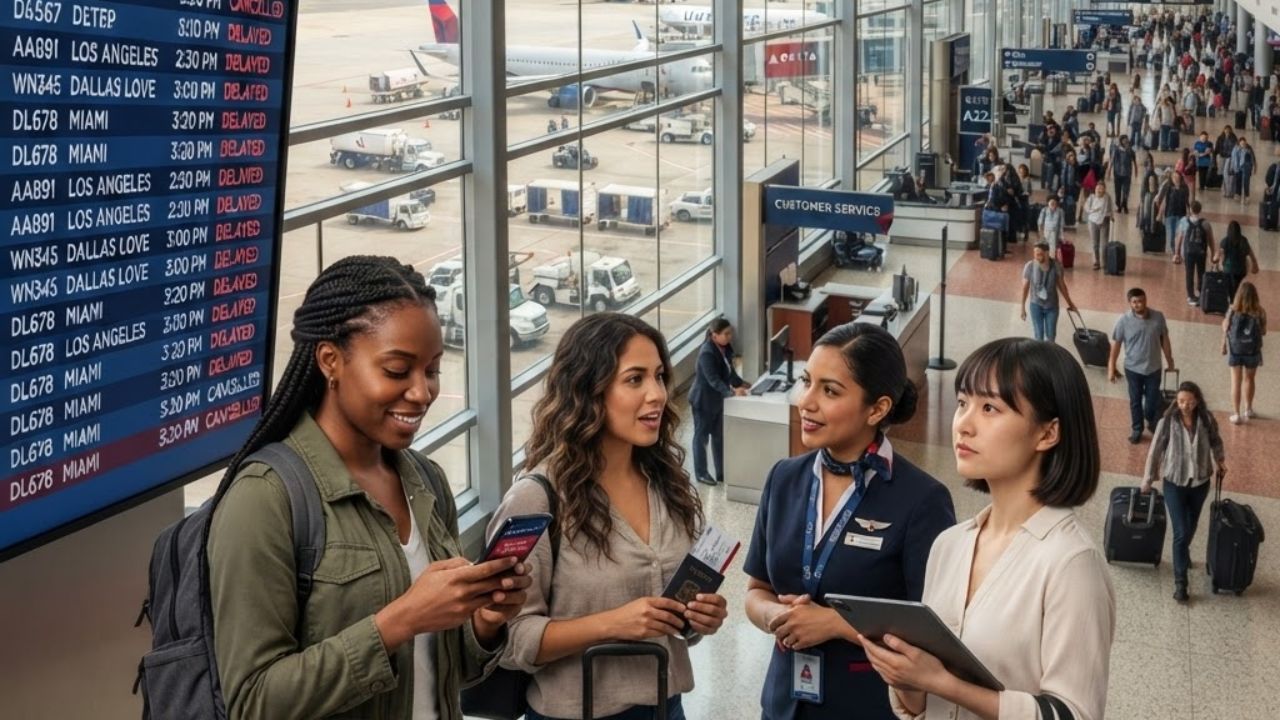
Image generated by AI
Atlanta, July 27, 2026 — Flight operations data confirms that US airports cancel flights and delay thousands of schedules today, recording 79 cancellations and 2,993 delays across domestic networks. Congestion dominates hubs.
Aviation performance registries show that rolling delays outnumber cancellations by approximately 38 to 1. This imbalance indicates that carriers are prioritizing schedule absorption over cancellations, leaving aircraft and crews to navigate localized gate bottlenecks across major East Coast and Midwestern gateways.
Hub Congestion Profiles Across Major Airports
Disruptions remain concentrated at six key domestic and international transfer hubs:
- Hartsfield-Jackson Atlanta (ATL): The busiest connecting point, heavily impacting Delta Air Lines flight rotations.
- Chicago O'Hare (ORD): A major transit crossroads for American Airlines and United Airlines, causing nationwide connecting delay cascades.
- Miami International (MIA): The gateway for Latin America and the Caribbean, causing downstream schedule issues for American.
- Orlando International (MCO): Peak summer family leisure traffic creates scheduling backlogs for Southwest Airlines and American.
- Los Angeles International (LAX): Slows transpacific and transcontinental schedules, delaying coast-to-coast aircraft rotations.
- John F. Kennedy (JFK): Records the highest cancellation rate among major gateways today.
Airline Performance and Operational Pressures
Four major airlines carry the majority of today's scheduling adjustments:
- American Airlines: Logs the highest delay volume, concentrated around its Chicago and Miami hubs.
- Delta Air Lines: Records the highest cancellation count today, driven by gate queue delays at Atlanta.
- Southwest Airlines: Point-to-point flight schedules amplify cascading delays as late arrivals affect late-day departures.
- United Airlines: Focuses delays around its Chicago O'Hare hub, resulting in minor international connection backlogs.
US Flight Disruption and Hub Impact Matrix (July 2026)
| Impact Category | Leading Affected Airline / Hub | Delay-to-Cancellation Ratio | Primary Operational Cause | Target Passenger Group affected |
|---|---|---|---|---|
| Highest Delays | American Airlines | 38 to 1 (Network wide) | FAA traffic flow management | Midwest and South Florida flyers |
| Highest Cancellations | Delta Air Lines / JFK Airport | 38 to 1 (Network wide) | Hub congestion / gate queues | East Coast and Transatlantic travelers |
| Point-to-Point Cascades | Southwest Airlines | N/A | Rolling aircraft rotations | Multi-stop leisure vacationers |
| Midwest Bottlenecks | United Airlines / Chicago O'Hare | N/A | High summer travel volume | Connectors at O'Hare hub |
| West Coast Slowdowns | Los Angeles International (LAX) | N/A | Transpacific flight delays | Coast-to-coast business travelers |
US DOT Flight Disruption Regulations and Refund Guidelines
For passengers delayed or canceled at US airports today:
- Automatic Cash Refunds: Under US DOT rules, if your flight is canceled or delayed by over three hours (domestic), you have the right to a full cash refund if you reject rebooking.
- Refund Medium: Airlines must issue refunds in cash or credit card credit within 7 business days, rather than forcing travel vouchers.
- Baggage Fee Refunds: If your checked bag is delayed by over 12 hours (domestic) after arrival, the airline must refund your baggage fee.
- Controllable Delay Care: For delays over three hours caused by mechanical issues, major carriers must supply meal vouchers. Overnight controllable delays require free hotel accommodation and shuttle service.
- Weather Exemption: If delays are caused by weather, airlines are exempt from providing hotel stays, but travelers can request a refund if they cancel the trip.
Why This Matters
For travelers on this route, the real impact is that because delays are outnumbering cancellations 38 to 1, you are highly likely to sit on the plane on the tarmac or at the gate rather than have your trip called off, making it essential to carry extra food and prescription medications in your cabin bag. From a logistical perspective, this means that travelers should check the status of inbound aircraft via flight trackers. Passengers must prepare for tight connecting gates.
Industry Outlook
Airlines are introducing predictive maintenance sensors to reduce gate-level mechanical delays during peak summer demand. As TSA checkpoints install three-dimensional bag scanners, passenger processing times will decrease. Over the next year, expect carriers to launch automated meal voucher delivery directly to passenger mobile wallets during delays. This digital capability will support customer service.
Related Travel Guides
Disclaimer
This article is for informational and educational purposes only. It does not constitute legal, financial, or professional advice. While we strive to provide accurate and up-to-date information, travel policies, regulations, and conditions change rapidly. Always verify information with official sources before making travel decisions. Nomad Lawyer makes no representations about the accuracy, reliability, completeness, or suitability of the information provided. Readers should consult qualified professionals for advice specific to their circumstances. The views expressed in this article are those of the author and do not necessarily reflect the views of Nomad Lawyer.
Preeti Gunjan
Contributor & Community Manager
A passionate traveller and community builder. Preeti helps grow the Nomad Lawyer community, fostering engagement and bringing the reader experience to life.
Learn more about our team →