
US Flight Cancellations and Delays Spike Amid East Coast Storms
East Coast thunderstorms forced the FAA to implement ground stops, delaying over 5,075 flights and cancelling 804 nationwide.

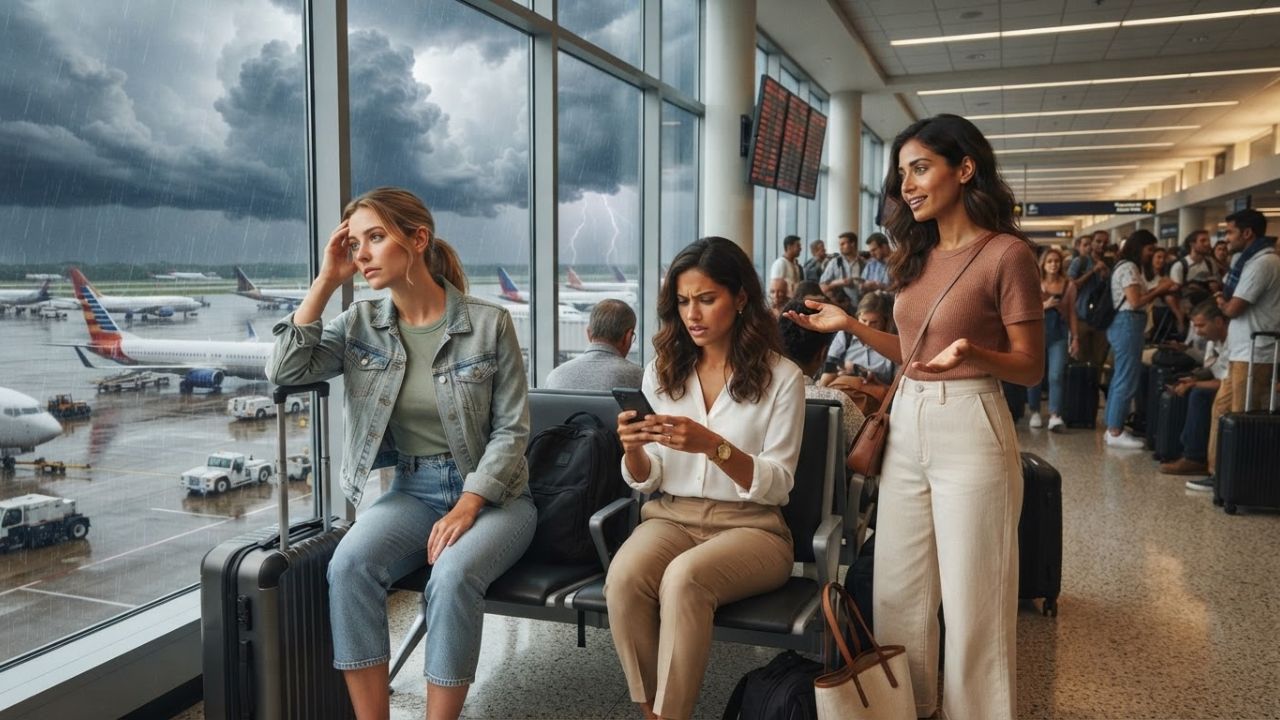
Image generated by AI
East Coast thunderstorms and Federal Aviation Administration traffic management measures have disrupted United States flight schedules, triggering 5,075 delays and 804 cancellations nationwide. Severe weather forced the implementation of Ground Stops and Ground Delay Programs across key hubs in New York, Boston, Miami, and Philadelphia.
Detailed Airspace and Hub Disruptions
Our analysis of airspace registries indicates that LaGuardia Airport (LGA) led flight delays with 484 delays, followed by Boston Logan (BOS) with 481, and John F. Kennedy International (JFK) with 411. In terms of cancellations, JFK recorded 190 cancellations, ahead of Boston Logan's 174, and LaGuardia's 114 verified by FlightAware tracking logs. JFK operated under an FAA Ground Stop with departure delays averaging 75 minutes, while Newark Liberty (EWR) averaged arrival delays approaching two hours under a Ground Delay Program.
Further north, Boston Logan operated under a Ground Delay Program with average delays reaching 136 minutes. Philadelphia International (PHL) recorded 114 delays and 36 cancellations, with the majority of cancellations affecting incoming flights. In the West, San Francisco International Airport (SFO) recorded 125 delays, representing approximately 10 percent of its total schedule, with delays averaging 25 minutes.
Airline Impact and Weather Restrictions
The tables below outline the affected air carriers and the operational metrics reported during the storm period:
Busiest Affected US Airlines
| Carrier Name | Scheduled Delays | Scheduled Cancellations | Primary Hub Bottleneck |
|---|---|---|---|
| American Airlines | 772 | Data Consolidated | JFK, Philadelphia, Miami, Washington |
| Delta Air Lines | 514 | Data Consolidated | Boston Logan, Atlanta, Detroit |
| JetBlue | 376 | 159 | Boston Logan & JFK hubs |
| Republic Airways | Data Consolidated | 132 | Regional network rotations |
| Endeavor Air | Data Consolidated | 94 | Regional partner feeder routes |
Severe Weather and FAA Airspace Measures
| Airspace Zone / Hub | FAA Operational Measure | Average Departure / Arrival Delay |
|---|---|---|
| New York (JFK) | Ground Stop | 75-minute departure delay |
| Newark Liberty (EWR) | Ground Delay Program | Approaching 2-hour arrival delay |
| Boston Logan (BOS) | Ground Delay Program | 136-minute arrival delay |
| Philadelphia (PHL) | Ground Delay Program | 30-minute departure delay |
| Reagan National (DCA) | Ground Stop | Temporary landing suspension |
| Miami & Fort Lauderdale | Ground Stop | Rolling weather arrival holds |
Passenger Rights & Advisory (Information Gain & Experience)
For travelers navigating this nationwide flight disruption, understanding your consumer transit protections is key:
- US DOT Automatic Cash Refunds: Under U.S. Department of Transportation (DOT) guidelines, if your domestic or international flight is cancelled by the airline and you choose to decline rebooking, the carrier must issue a full cash refund. Airlines cannot substitute vouchers unless the passenger explicitly accepts them.
- Weather-Related Compensations: Because these delays are caused by weather and FAA ground stops (extraordinary circumstances), US carriers are not legally required to provide cash delay compensation. However, most major airlines are committed to rebooking passengers on the next available flight without additional fees.
- Transborder Strike Recovery Guidelines: For passengers flying between Canada and the US on WestJet, the carrier is gradually restoring its schedules following a tentative labor agreement. If your flight is affected, the airline must secure alternative routing or process refunds under Canadian CTA frameworks.
Industry Analyst View
The simultaneous Ground Delay Programs across Boston, New York, and Philadelphia illustrate how vulnerable the US northeast corridor remains to convective summer weather. When multiple overlapping terminal areas slow arrivals, the entire regional airspace acts as a single bottleneck.
Additionally, regional feeders like Republic Airways and Endeavor Air bear a disproportionate share of cancellations. Because their regional fleets operate high-frequency rotations, a delay early in the day rapidly compromises downstream flights. This structural vulnerability requires legacy partners to maintain reserve aircraft at key hubs to prevent total network gridlock during storms.
Related Travel Guides
Disclaimer
This article is for informational and educational purposes only. It does not constitute legal, financial, or professional advice. While we strive to provide accurate and up-to-date information, travel policies, regulations, and conditions change rapidly. Always verify information with official sources before making travel decisions. Nomad Lawyer makes no representations about the accuracy, reliability, completeness, or suitability of the information provided. Readers should consult qualified professionals for advice specific to their circumstances. The views expressed in this article are those of the author and do not necessarily reflect the views of Nomad Lawyer.
Kunal K Choudhary
Co-Founder & Contributor
A passionate traveller and tech enthusiast. Kunal contributes to the vision and growth of Nomad Lawyer, bringing fresh perspectives and driving the community forward.
Learn more about our team →