
US Autumn Foliage 2026: Mapping Peak Leaf-Peeping Corridors Across 10 Key States

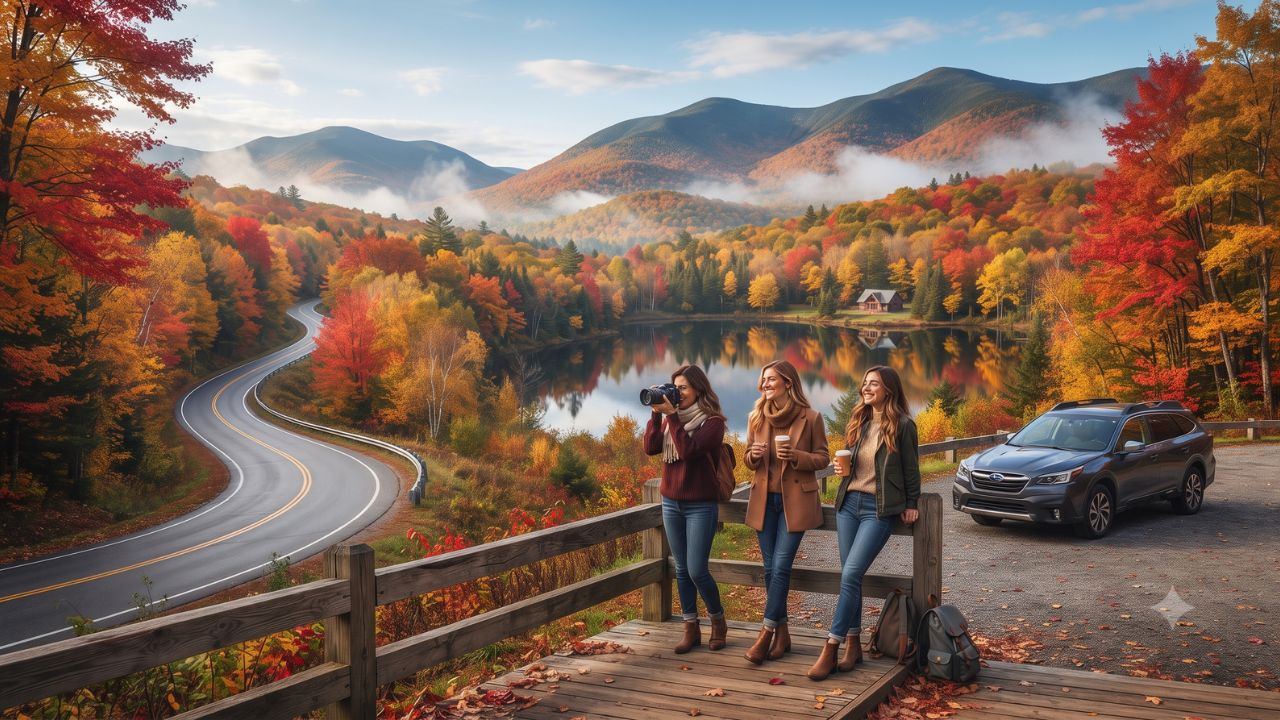
Spanning 10 distinct regional biomes and an eight-week seasonal progression from late September through mid-November, the 2026 United States autumn foliage calendar represents one of North America's most time-sensitive travel economies. Governed by elevation gradients and cooling overnight temperatures that trigger anthocyanin and carotenoid production weeks earlier on mountain summits than in low-lying river valleys, millions of road trippers are concentrating itineraries along premier scenic corridors. From Vermont's Route 100 and New Hampshire's Franconia Notch to Colorado's high-altitude aspen groves and the deep ravines of Guadalupe Mountains National Park in Texas, understanding the precise botanical timetable is the difference between witnessing pristine canopies and facing bare branches.
As domestic holiday travelers increasingly replace long-haul international flights with regional driving vacations, state tourism boards and national parks are managing historic volumes of autumn visitors. However, the commercial reality of leaf-peeping travel is defined by acute operational friction: compressed peak color windows lasting barely seven to ten days in any single valley, surging lodging rates, and strict vehicle access controls enforced by the National Park Service (NPS). Successfully executing a seasonal road trip requires analyzing how temperature shifts, rainfall, and topography dictate the color wave.
The Science of the Season: Elevation Gradients and Botanical Phenology
Autumn color transformation does not occur on a uniform calendar date; it cascades along an environmental gradient governed by latitude and elevation. The biological process begins when declining daylight hours and cooler night temperatures signal deciduous trees to halt chlorophyll production. As the green pigment degrades, yellow and orange carotenoids emerge. In specific species, such as sugar maples, bright sunny days paired with crisp, non-freezing nights stimulate the synthesis of brilliant red anthocyanins.
Because higher altitudes experience freezing temperatures and shorter photoperiods first, mountain summits and northern latitudes initiate the seasonal display. In New England, northern Vermont and elevated sections of the Green Mountains begin their transformation in late September, whereas protected valleys and southern zones maintain green foliage well into mid-October.
Similarly, the U.S. Forest Service monitors how drought conditions or severe autumn windstorms can abbreviate peak viewing by causing premature leaf drop. Conversely, a moderate season without sudden frost allows the color band to descend smoothly down mountain slopes over several weeks.
Regional Corridors: Timetables and Driving Geometry Across 10 Destinations
To assist motorists in timing their departures, tourism authorities monitor specific geographic corridors across New England, the mid-Atlantic, the Midwest, the Rocky Mountains, the Pacific Northwest, and the Southwest.
In Vermont, the classic leaf-peeping route follows Route 100, anchoring around Stowe and the Green Mountain spine, where sugar maples dominate the forest canopy from late September through mid-October. Across the state line in New York, the Adirondack Mountains present a parallel early season, with Lake Placid and Whiteface Mountain showcasing vivid canopies in September before lower-elevation lake basins peak in October. In New Hampshire, the White Mountains funnel heavy traffic through Franconia Notch, Crawford Notch, and North Conway, rewarding motorists with dramatic contrasts between granite cliffs and yellow birch stands.
Further south, the Blue Ridge Parkway weaves through North Carolina and Virginia, offering an extended viewing calendar. Because the parkway covers thousands of feet in elevation variance, upper crests ignite in late September while lower valley overlooks maintain strong displays deep into October.
This vertical dispersion is even more pronounced in Great Smoky Mountains National Park, where high-elevation spruce-fir zones give way to multi-species hardwood forests that stretch peak viewing from September at the highest ridges down to early November in lowland coves.
| Corridor / Destination | Geographic Focus & Key Transit Routes | Typical 2026 Peak Window | Dominant Tree Species | Distinctive Regional Terrain |
|---|---|---|---|---|
| Stowe & Green Mountains, VT | Route 100 corridor through central Vermont | Late Sept – Mid-Oct | Sugar Maple, Red Maple, Beech | Classic New England villages, forested ridges |
| Adirondack Mountains, NY | Lake Placid, Whiteface Mountain, High Peaks | Sept (High) to Oct (Low) | Birch, Maple, Mountain Ash | Glacial alpine lakes, high granite summits |
| White Mountains, NH | Franconia Notch, Crawford Notch, Kancamagus | Late Sept – Mid-Oct | Paper Birch, Yellow Birch, Sugar Maple | Mountain passes, granite flumes, elevated notches |
| Blue Ridge Parkway, NC / VA | Scenic parkway spine across central Appalachians | Late Sept (Peaks) to Late Oct | Red Oak, Hickory, Sourwood, Dogwood | Long ridgeline overlooks, gradual vertical descent |
| Great Smoky Mountains, NC / TN | Clingmans Dome down to Cades Cove | Sept (High) to Early Nov (Low) | Over 100 native deciduous tree species | Broadest elevation span; misty hollows and coves |
| Door County, WI | Highway 42/57 along Lake Michigan peninsula | Late Sept – Mid-Oct | Sugar Maple, Aspen, Northern Red Oak | Maritime coastal effect, historic lighthouses |
| Aspen & Rockies, CO | High-altitude passes around Aspen & Maroon Bells | Mid-Sept – Early Oct | Quaking Aspen (Populus tremuloides) | Pure golden canopies contrasted against dark conifers |
| Columbia River Gorge, OR / WA | Historic Columbia River Highway (I-84 corridor) | Throughout October | Bigleaf Maple, Cottonwood, Alder | Basalt canyon cliffs, cascading waterfalls |
| Shenandoah National Park, VA | Skyline Drive along Blue Ridge crest | Oct through Early Nov | Chestnut Oak, Red Oak, Red Maple | Continuous 105-mile ridgetop road; rolling valley vistas |
| Guadalupe Mountains, TX | McKittrick Canyon in West Texas desert | Mid-Oct into November | Bigtooth Maple, Chinkapin Oak | Isolated desert oasis; canyon walls frame autumn color |
In the Midwest, Wisconsin's Door County peninsula benefits from Lake Michigan's thermal moderation, maintaining cool, steady autumn conditions from late September to mid-October.
In the American West, Colorado's Rocky Mountains present an entirely different botanical show: instead of multi-hued maples, high-altitude passes surrounding Aspen deliver glowing monocultures of quaking aspens against dark evergreen conifers. This display is highly concentrated, frequently concluding by the first week of October.
Along the West Coast, the Columbia River Gorge features bigleaf maples framing roaring waterfalls throughout October, coordinated through state guides from Travel Oregon. Finally, for late-season travelers, Texas's Guadalupe Mountains National Park offers a striking spectacle in McKittrick Canyon, where relict bigtooth maples display rich reds and golds against arid desert canyon walls from mid-October into November.
Expert Analysis: Yield Pressures, Gate Bottlenecks, and Cancellation Risk
The commercial dynamics of the autumn foliage season differ fundamentally from summer family tourism. While summer vacationers disperse across three months, autumn leaf-peepers compress their demand into three to four consecutive weekends, creating extreme supply shortages in rural hospitality ecosystems.
For travelers booking this route, the direct consequence is severe lodging inflation combined with rigid non-refundable cancellation policies. Small historic inns, bed-and-breakfasts, and independent motels in towns like Stowe, North Conway, and Lake Placid routinely mandate three-night minimum stays during peak foliage weekends, with base room rates escalating by 150% to 250% over summer averages. Furthermore, because a sudden windstorm, torrential rain system, or early alpine freeze can strip a mountain hollow bare in 24 hours, travelers booking months in advance bear full financial exposure to natural weather volatility without the protection of flexible hotel refund policies.
The pricing pressure this creates means that tourists must adopt flexible driving strategies rather than anchoring themselves to a single town. Motorists who position their lodging bases in secondary cities—such as Burlington rather than Stowe, or Roanoke rather than rural Blue Ridge hamlets—cut their nightly accommodation costs in half while retaining the mobility to drive toward whatever elevation is exhibiting peak color that morning.
Furthermore, overtourism at premier federal and state parks has prompted strict reservation policies. Popular trailheads, scenic overlooks, and park entrances now enforce timed-entry vehicle permits, meaning spontaneous travelers face physical turnaways unless entry slots are booked weeks ahead.
Key Takeaways
- Elevation Dictates Peak: Foliage changes vertically; summits and northern tiers turn in late September, while lower valleys retain color into November.
- 10 Marquee Corridors: Top US routes span classic New England maples (VT, NH, NY), Appalachian ridges (VA, NC, TN), Midwest shorelines (WI), Western aspens (CO, OR), and desert canyons (TX).
- Concentrated Western Window: Colorado's aspen displays feature pure golden canopies but operate on a compressed calendar that often terminates by early October.
- Extended Appalachian Viewing: Broad elevation spans in the Great Smoky Mountains and Blue Ridge Parkway provide the country's longest continuous viewing windows.
- Advance Permitting Required: High visitor density on routes like Skyline Drive and around national park trailheads necessitates checking real-time NPS permits and road conditions.
FAQ: US Fall Foliage Season 2026
What is the best month to see fall foliage in the United States?
October is the primary month for the majority of the United States. Northern states and high elevations peak in late September, while southern and low-elevation zones extend into November.
Why do leaves change color earlier at higher elevations?
Cooler night temperatures and shorter day lengths arrive first at higher altitudes, causing trees to shut down chlorophyll production and reveal underlying pigments sooner than in valleys.
Can bad weather ruin peak fall foliage?
Yes. Severe autumn rainstorms, high winds, or premature freezing events can cause leaves to drop overnight, shortening the vibrant viewing window significantly.
Where can I see fall foliage late in the season?
Great Smoky Mountains National Park, Shenandoah's lower elevations, and McKittrick Canyon in Texas offer prime foliage viewing through late October and into mid-November.
[Chasing peak autumn color requires looking beyond fixed dates to track the natural descent of cool weather from mountain ridges to sheltered valleys.]
Related Travel Guides
Disclaimer
This article is for informational and educational purposes only. It does not constitute legal, financial, or professional advice. While we strive to provide accurate and up-to-date information, travel policies, regulations, and conditions change rapidly. Always verify information with official sources before making travel decisions. Nomad Lawyer makes no representations about the accuracy, reliability, completeness, or suitability of the information provided. Readers should consult qualified professionals for advice specific to their circumstances. The views expressed in this article are those of the author and do not necessarily reflect the views of Nomad Lawyer.
Kunal K Choudhary
Co-Founder & Contributor
A passionate traveller and tech enthusiast. Kunal contributes to the vision and growth of Nomad Lawyer, bringing fresh perspectives and driving the community forward.
Learn more about our team →