
Peru Secures Fourth Consecutive World Travel Award as Inbound Tourism Crosses 3.8 Million Visitors

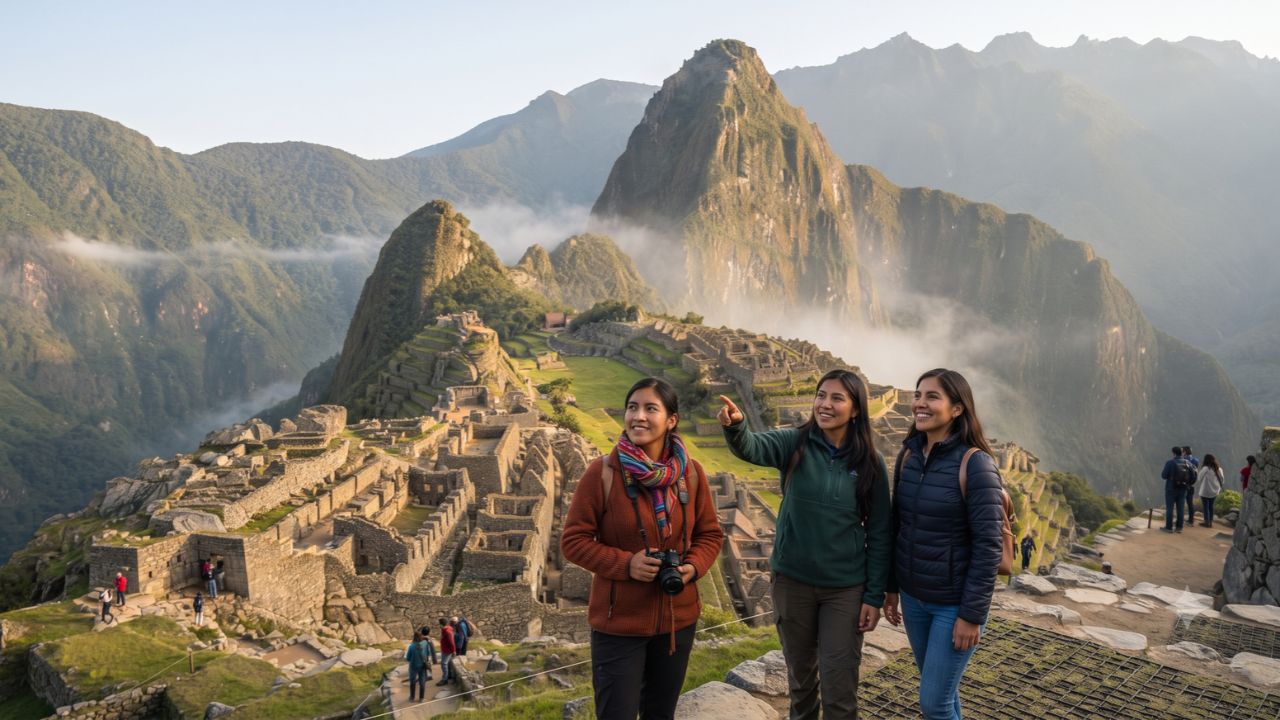
Climbing from a pandemic low of 444,331 international tourists in 2021 to 3,256,693 arrivals in 2024 and exceeding 3.81 million total foreign visitors through November 2025, Peru’s sustained post-crisis recovery has powered a historic fourth consecutive victory as South America’s Leading Destination at the 2026 World Travel Awards. Announced alongside Machu Picchu’s eighth consecutive triumph as South America’s Leading Tourist Attraction—a title the 15th-century Inca citadel has held uninterrupted from 2018 through 2026—the Andean nation outpaced regional nominees Argentina, Bolivia, Brazil, Chile, Colombia, Ecuador, Paraguay, and Uruguay. According to official reporting confirmed by state paper El Peruano, Peru captured six premier regional categories, sweepingly recognized for cultural heritage, gastronomy, nature reserves, and sustainable tourism stewardship.
The commercial resurgence reflects a remarkable structural turnaround for the Andean republic. By coordinating aviation access, heritage preservation policies, and regional tourism circuits, the Ministerio de Comercio Exterior y Turismo (MINCETUR) has restored consumer confidence following years of severe political and operational disruption. However, the data reveals an evolving visitor profile: while regional South American neighbors drive the lion's share of arriving volume, high-spending long-haul travelers from North America and Europe are demanding decentralized itineraries that extend beyond traditional Inca ruins to embrace Amazonian biodiversity, coastal desert reserves, and fine dining.
Inbound Growth Metrics: Analyzing MINCETUR's 5-Year Statistical Series
Official statistical releases from MINCETUR trace the precise trajectory of Peru's border reopenings. Following the catastrophic 2021 nadir of 444,331 international tourists, foreign arrivals expanded by 352.2% in 2022 to reach 2,009,275 travelers. Although that initial rebound remained 54% below the 2019 pre-pandemic record of 4,371,787 tourists, momentum continued building. Arrivals increased by 25.7% in 2023 to hit 2,524,658, followed by a 29.0% jump in 2024, adding over 732,000 net international visitors to finish at 3,256,693.
A comprehensive snapshot published by MINCETUR on 19 December 2025 covering the January–November 2025 operational window recorded 3,810,219 total international entries. Crucially, the federal observatory distinguishes between commercial overnight tourists and same-day excursionists: 3,130,121 travelers (82.2%) stayed at least one night in registered accommodations, while 680,098 visitors (17.8%) were same-day excursionists, primarily crossing overland borders without generating hotel room demand.
Geographically, South American neighbors remain the foundational pillar of arrival volumes, generating 59.1% of all entries (approximately 2.25 million visitors). North America represents the second-largest source market at 19.4% (roughly 740,000 travelers), followed by Europe at 14.5% (around 552,000 visitors), Asia at 3.5% (approximately 135,000 visitors), and Central America at 2.4% (approximately 90,000 visitors).
| Year / Period | International Tourist Arrivals | Annual Percentage Growth | Broader Macro & Border Context |
|---|---|---|---|
| 2019 (Full Year) | 4,371,787 tourists | Pre-pandemic historical baseline | Peak operational benchmark for national tourism |
| 2021 (Full Year) | 444,331 tourists | Pandemic low point | Severe border closures and health restrictions |
| 2022 (Full Year) | 2,009,275 tourists | +352.2% year-on-year | Reopening phase; still 54% below 2019 peak |
| 2023 (Full Year) | 2,524,658 tourists | +25.7% year-on-year | Restored flights to Lima and regional airports |
| 2024 (Full Year) | 3,256,693 tourists | +29.0% year-on-year | Over 732,000 additional arrivals over 2023 |
| Jan–Nov 2025 (Snapshot) | 3,130,121 overnight tourists | 3,810,219 total visitors (+excursionists) | South America 59.1%, North America 19.4%, Europe 14.5% |
The historical record of the World Travel Awards illustrates the competitive regional shift. Argentina captured the continental title in 2021, followed by Chile in 2022 (repeating its 2020 victory). However, from 2023 through 2026, Peru maintained an unbroken four-year reign, propelled by its multi-ecosystem offering spanning Pacific coastal valleys, high Andean mountain passes, and dense Amazonian rainforests.
Regional Dispersion: Itinerary Geography Beyond the Inca Core
While Machu Picchu remains the international anchor, national promotional agency PROMPERÚ has actively dispersed tourist traffic across complementary regional corridors to prevent heritage site degradation.
In the capital city of Lima, historical neighborhoods like Miraflores and Barranco serve as global epicenters for gastronomy, celebrating traditional coastal delicacies like fresh ceviche, lomo saltado, causa limeña, and skewered anticuchos. In the southern highlands, Arequipa showcases volcanic sillar architecture alongside regional specialties like rocoto relleno, serving as a staging ground for the Colca Canyon. Further south, Puno and Lake Titicaca deliver high-altitude indigenous maritime culture, while the desert oases of Ica and the Paracas National Reserve offer marine wildlife excursions.
| Destination Region | Core Geographic Attractions | Focus Activities & Cultural Heritage | Strategic Lodging Window |
|---|---|---|---|
| Lima Metropolitan Core | Miraflores, Barranco, Centro Histórico | Award-winning culinary dining, colonial architecture | 2–3 nights |
| Cusco Imperial City | Plaza de Armas, Sacsayhuamán, San Pedro | Inca stonework, Andean markets, altitude acclimatization | 2–3 nights |
| Sacred Valley of the Incas | Ollantaytambo, Pisac, Maras, Moray | Agricultural terraces, artisan markets, train terminals | 1–2 nights |
| Machu Picchu Sanctuary | Citadel ruins, Huayna Picchu, Intipunku | Timed circuit visits, archaeological photography | 1–2 nights (Aguas Calientes) |
| Arequipa White City | Santa Catalina Monastery, Yanahuara | Volcanic sillar heritage, traditional picanterías | 2 nights |
| Puno & Lake Titicaca | Uros Floating Islands, Taquile Island | High-altitude navigation, living indigenous traditions | 1–2 nights |
| Puerto Maldonado (Amazon) | Tambopata National Reserve, Madre de Dios | Rainforest canopy walks, guided biodiversity expeditions | 2–3 nights |
| Ica & Paracas Reserve | Ballestas Islands, Huacachina Dunes | Desert dunebashing, marine bird and sea lion reserves | 1–2 nights |
For travelers heading into the rainforest, Puerto Maldonado and the Tambopata National Reserve introduce visitors to Amazonian biodiversity and Indigenous cuisine like juane (seasoned rice wrapped in bijao leaves). By linking Amazonian lodges with Andean rail routes, Peru provides a diverse array of biomes within a single 10-to-12-day journey.
Expert Analysis: Carrying Capacity Bottlenecks and Ticketing Centralization
Behind the accolades and arrival statistics lies a complex operational struggle over resource management and preservation. The sheer concentration of tourist demand around Machu Picchu and the Sacred Valley creates intense logistical stress on fragile archaeological infrastructure.
For travelers booking this route, the direct consequence is that spontaneous visits to Machu Picchu have been rendered completely obsolete. Under strict visitor management protocols enforced by the Ministerio de Cultura del Perú, access to the citadel is governed by rigid timed circuits, dynamic capacity caps, and personalized digital ticketing. Travelers must secure their circuit permits months in advance, select specific walking routes that restrict backtracking, and coordinate tight connecting train transfers via PeruRail or Inca Rail from Ollantaytambo to Aguas Calientes. Arriving in Cusco without pre-booked citadel entry tickets risks complete lockout, leaving travelers stranded in town without legal site access.
The pricing pressure this creates means that independent travelers face mounting costs across the entire logistics chain. Because train operators, licensed mountain guides, and shuttle buses between Aguas Calientes and the citadel gate operate under limited monopolies, retail transportation costs remain high even during shoulder seasons.
Furthermore, the physical necessity of altitude acclimatization—Cusco sits at 3,399 meters (11,152 feet) above sea level—forces visitors to book extra transition nights in the lower Sacred Valley (Urumbamba or Ollantaytambo at roughly 2,800 meters) before attempting mountain hikes. Travelers must factor in medical buffer days, high-elevation travel insurance riders, and multi-tier ticketing passes, turning what was once a budget backpacking circuit into a premium, meticulously choreographed expedition.
Key Takeaways
- Four-Year Award Reign: The World Travel Awards named Peru South America’s Leading Destination for 2026, marking four consecutive victories from 2023 through 2026.
- Machu Picchu Benchmark: Machu Picchu secured South America’s Leading Tourist Attraction for 2026, maintaining an unbroken winning streak dating back to 2018.
- Rapid Volume Rebound: International tourist arrivals climbed from 444,331 in 2021 to 3,256,693 in 2024, with total entries surpassing 3.81 million through November 2025.
- Source Market Makeup: South America represents 59.1% of 2025 international visitors, followed by North America (19.4%) and Europe (14.5%).
- Six Regional Accolades: El Peruano confirmed Peru swept six categories, including Culinary, Cultural, Nature, and Sustainable Tourism titles alongside regional destination honors.
FAQ: Peru Tourism & Machu Picchu Travel 2026
What awards did Peru win at the 2026 World Travel Awards?
Peru won six major regional awards, including South America's Leading Destination, Leading Tourist Attraction (Machu Picchu), Leading Culinary Destination, Leading Cultural Destination, Leading Nature Destination, and Leading Contribution to Sustainable Tourism.
How many tourists visited Peru in 2024 and 2025?
MINCETUR recorded 3,256,693 international tourist arrivals in 2024. Through November 2025, total international visitors surpassed 3.81 million, including 3.13 million overnight tourists and 680,000 same-day excursionists.
Can you buy Machu Picchu tickets at the gate?
No. Visitors must purchase tickets in advance through the official Ministry of Culture portal, selecting specific timed circuits to comply with daily preservation caps.
How should travelers handle altitude sickness in Cusco?
Travelers should spend their first one to two nights at a lower elevation in the Sacred Valley (Ollantaytambo or Urubamba), remain hydrated, avoid strenuous physical activity, and allow time to acclimatize before exploring Cusco or hiking Machu Picchu.
[Peru’s sustained travel triumph proves that authentic cultural preservation and world-class gastronomy remain the ultimate currency in global experiential tourism.]
Related Travel Guides
Disclaimer
This article is for informational and educational purposes only. It does not constitute legal, financial, or professional advice. While we strive to provide accurate and up-to-date information, travel policies, regulations, and conditions change rapidly. Always verify information with official sources before making travel decisions. Nomad Lawyer makes no representations about the accuracy, reliability, completeness, or suitability of the information provided. Readers should consult qualified professionals for advice specific to their circumstances. The views expressed in this article are those of the author and do not necessarily reflect the views of Nomad Lawyer.
Naina Thakur
Contributor & Travel Specialist
Travel enthusiast and legal writer covering visa regulations, responsible tourism, and cultural journeys across global destinations.
Learn more about our team →