
US Border Security Overhaul 2026: 11 Major Travel Changes for Canada and Mexico Cross-Border Tourism
Canada and Mexico travelers face a sweeping US border security overhaul in 2026, featuring expanded facial biometrics and proposed ESTA social media disclosures.

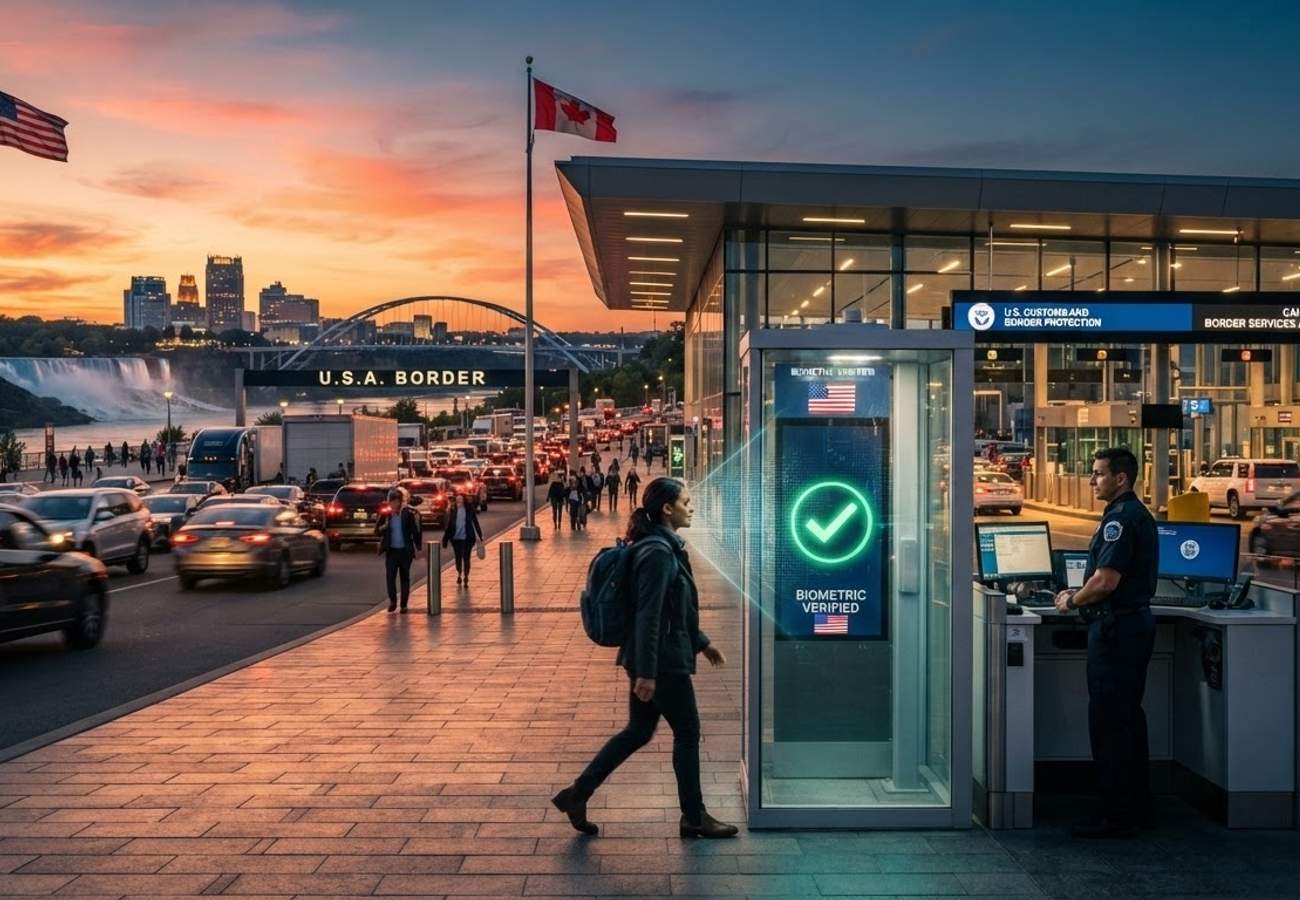
Image generated by AI
Over 420 million travelers crossed US borders in fiscal 2024, but 2026 marks a pivot toward aggressive biometric identity verification and digital vetting. From the removal of age-based facial recognition exemptions to the sunsetting of Canada's RABC program, the North American transit experience is being fundamentally rewritten.
The Shift Toward Biometric Sovereignty
The United States is transitioning from traditional document-based verification to a high-tech biometric framework. The most immediate impact is the implementation of a final Department of Homeland Security rule that mandates facial photographs for foreign nationals entering or leaving the US, regardless of age.
For years, travelers under 14 and over 79 enjoyed exemptions from facial-image collection. Those protections have now vanished. This biometric expansion is not limited to airports; it now encompasses seaports and land crossings. According to Customs and Border Protection (CBP), this facial-comparison technology boasts matching rates above 98%, effectively creating a digital "passport" based on physical features.
It is a common misconception that all biometric exemptions are gone. While facial recognition is now universal for foreign nationals, fingerprint exemptions for those under 14 and over 79 remain relevant under current frameworks. Travelers must distinguish between these two distinct biometric categories to avoid confusion during processing.
Digital Vetting and the Evolution of ESTA
The Electronic System for Travel Authorization (ESTA) is moving toward a more intrusive data-collection model. While still in the proposal stage as of the December 2025 Federal Register notice, the US government is considering mandatory disclosures that extend far beyond travel dates.
Proposed changes include:
- Social Media History: Mandatory disclosure of five years of social media information.
- Email Archives: Collection of email addresses used over the previous 10 years.
- Phone Records: Telephone numbers used during the previous five years.
- App-Only Filing: A shift where new ESTA applications may only be submitted via a mobile application.
For the visitor, this represents a shift from "travel authorization" to "digital profiling," where a traveler's online persona becomes a prerequisite for entry.
Border Search Authority and Device Privacy
While the headlines focus on biometrics, the authority of CBP officers to search electronic devices remains a potent tool. In fiscal 2024, CBP searched 47,047 devices—a small fraction (less than 0.01%) of the 420 million travelers processed—but the implications for those searched are significant.
Current policy dictates that officers can perform basic manual examinations of data resident on a device. However, there is a critical boundary: cloud-only data. Officers are prohibited from using a device to retrieve information stored solely remotely, and network connectivity (Wi-Fi and mobile data) must be disabled during the search.
The risk for foreign nationals is higher than for US citizens. While a US citizen cannot be denied entry solely because a device was encrypted or locked, a foreign visitor's refusal to provide a passcode can be used as a factor in determining their admissibility into the country.
The End of Remote Border Crossing for Canadians
Canada is simultaneously updating its own entry protocols. The Remote Area Border Crossing (RABC) programme is being discontinued, with existing permits expiring on 30 November 2026.
Starting 1 December 2026, travelers entering Canada through covered remote areas must adhere to new reporting procedures, which require either in-person reporting or the use of designated telephone systems. This eliminates the convenience previously enjoyed by frequent remote cross-border travelers.
Summary of 2026 Border Changes
| Rule or Proposal | Status | Key Date | Primary Impact |
|---|---|---|---|
| Facial Biometrics | Final Rule | 26 Dec 2025 | No age exemptions for foreign nationals |
| RABC Programme | Discontinued | 30 Nov 2026 | Remote Canada-US permits expire |
| Remote Reporting | Confirmed | 1 Dec 2026 | In-person/phone reporting for Canada entry |
| ESTA Social Media | Proposed | Dec 2025 (Notice) | 5 years of social media data required |
| ESTA Email/Phone | Proposed | Pending | 10-year email / 5-year phone history |
| ESTA Mobile App | Proposed | Pending | Applications may move to app-only |
| Dual Citizens | Guidance | 1 Jan 2026 | Passport holders not affected by specific proclamations |
Visitor Insider Tips
To navigate these changes without friction, travelers should adopt the following strategies:
- Digital Hygiene: If you are concerned about device searches, remember that CBP cannot legally access cloud-only data. Ensure your cloud backups are secure and that you are aware of what is stored locally on your hardware.
- The "Admissibility" Mindset: For non-US citizens, remember that your entry is a privilege, not a right. Refusing to unlock a device can lead to detention or denial of entry, regardless of whether a crime is suspected.
- Remote Planning: Canadian travelers using remote crossings must map out the nearest designated telephone reporting point or physical port of entry before November 30, 2026.
- ESTA Buffer: Given the proposed shift to app-only applications and expanded data requirements, apply for your ESTA at least 72 hours before travel to account for potential technical glitches in the new system.
Tourism Outlook
The move toward a "frictionless" biometric border is designed to speed up processing for the 99% of travelers who encounter no issues. However, the increased data collection creates a higher barrier for privacy-conscious tourists. Long-term, we expect a shift where "Digital Identity" becomes the primary currency of international travel, reducing the reliance on physical passports but increasing the reliance on government-managed biometric databases.
The border of 2026 is no longer a line on a map, but a digital filter.
Related Travel Guides
Disclaimer
This article is for informational and educational purposes only. It does not constitute legal, financial, or professional advice. While we strive to provide accurate and up-to-date information, travel policies, regulations, and conditions change rapidly. Always verify information with official sources before making travel decisions. Nomad Lawyer makes no representations about the accuracy, reliability, completeness, or suitability of the information provided. Readers should consult qualified professionals for advice specific to their circumstances. The views expressed in this article are those of the author and do not necessarily reflect the views of Nomad Lawyer.
Kunal K Choudhary
Co-Founder & Contributor
A passionate traveller and tech enthusiast. Kunal contributes to the vision and growth of Nomad Lawyer, bringing fresh perspectives and driving the community forward.
Learn more about our team →