
US Expands Paperless Border Checks with Electronic I-94 and Biometrics Across Major Airport Gateways
US Customs and Border Protection expands paperless entry with electronic I-94 arrival records and facial biometric comparison across JFK, LAX, MIA, and ORD.

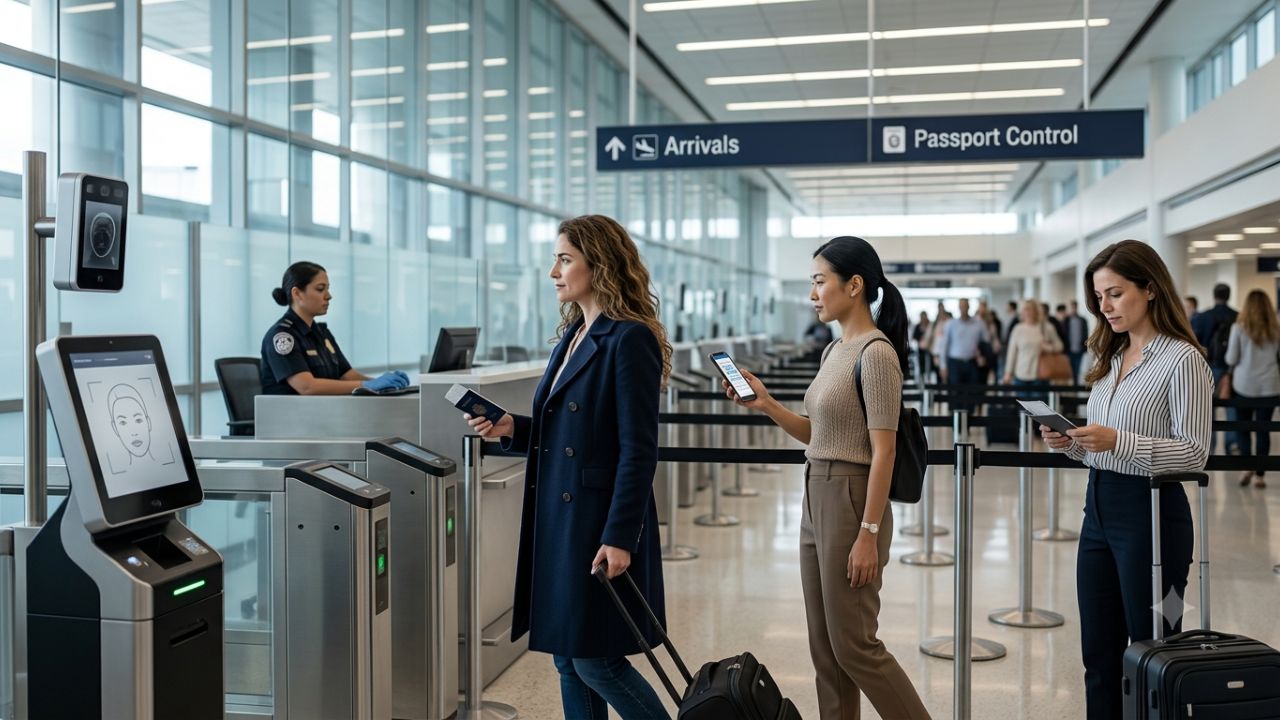
US Customs and Border Protection is expanding paperless processing with electronic I-94 records and facial biometrics across major international airports.
International arrivals across premier United States gateways—including New York JFK, Los Angeles (LAX), Miami (MIA), Chicago O'Hare (ORD), and San Francisco (SFO)—are experiencing a seamless transition toward contactless entry as U.S. Customs and Border Protection (CBP) accelerates the deployment of electronic I-94 records and advanced facial biometric comparison technology. While electronic I-94 record-keeping has steadily automated air and sea ports since its initial rollout in 2013, CBP’s expanded digital infrastructure increasingly eliminates legacy paper forms, streamlining traveler verification while enhancing national border integrity.
Rather than representing an overnight operational pivot, the initiative marks a continuous scaling of paperless border governance. With over 807 million passengers already processed through CBP’s biometric programs and more than 2,225 identity impostors successfully intercepted, the modern arrival framework redefines how tourists, corporate executives, and visiting families authenticate their immigration status at port-of-entry inspection lanes.
Core Pillars of the US Digital Border Architecture
The transition toward paperless airport screening integrates several interconnected digital platforms designed to eliminate manual data entry and expedite clearance queues:
| Border Component | Operating Agency | Digital Format | Primary Traveler Requirement | Operational Objective |
|---|---|---|---|---|
| Electronic I-94 Record | US CBP | Automated cloud record | Retrieve via official CBP website/app | Replaces paper arrival slips; establishes authorized length of stay |
| Biometric Facial Comparison | US CBP / Airlines | Real-time live camera capture | Stand for contactless facial scan | Compares live image against passport and visa photo database |
| ESTA Program | US Department of Homeland Security | Pre-travel electronic authorization | Apply online; US$40 fee | Required for Visa Waiver Program (VWP) nationals before departure |
| Physical Admission Stamp | US CBP Port Inspection | Ink endorsement in passport | Discretionary / On-request | Phasing out across major air terminals; digital I-94 remains legal proof |
The Electronic I-94: Understanding Legal Status vs. Visa Validity
The I-94 Arrival/Departure Record serves as the paramount legal document proving a foreign national's lawful admission into the United States. Under automated processing, CBP generates an electronic I-94 automatically upon commercial aircraft landing, utilizing airline manifest transmissions:
- No Paper Slip Required: Arriving passengers no longer receive the historic white paper I-94 stub stapled into their passports.
- Retrieving Admission Records: Travelers can view and print their electronic I-94 record at any time via the official CBP I-94 portal or the CBP One mobile application.
- Authorized Stay vs. Visa Expiration: A critical legal distinction for international visitors is that the expiration date on a US visa foil does not govern how long a traveler may remain in the country. The "Admit Until Date" recorded on the electronic I-94 strictly dictates the legal duration of stay.
- Passport Stamps: While CBP officers at select international terminals have discontinued stamping physical passport pages, travelers may still receive physical stamps upon request or at secondary inspection checkpoints.
Biometric Facial Comparison at Major Airport Hubs
CBP’s Traveler Verification Service (TVS) operates facial recognition technology across primary inspection booths and automated e-Gates:
- High-Accuracy Matching: As an arriving passenger approaches the inspection counter, a secure camera captures a live image. The system constructs a temporary biometric template and matches it against pre-existing photographs from US passports, visas, or previous DHS encounters within seconds.
- Robust Fraud Prevention: By eliminating reliance on visual human document comparison alone, the biometric system has prevented over 2,225 impostors attempting to enter the United States using fraudulent or borrowed identity credentials.
- Privacy and Data Protocols: Under CBP privacy mandates, photos of US citizens captured during biometric airport processing are purged from active verification caches within 12 hours, while foreign national images are securely archived in accordance with established immigration record schedules.
Critical Compliance Guidance for International Visitors
To ensure smooth travel through US international airports, visitors should adhere to several vital compliance protocols:
- Inspect Your Electronic I-94 Immediately: Within 24 hours of clearing border control, log onto the CBP I-94 portal to verify that your recorded immigration class (e.g., B1/B2 tourist/business, WT Visa Waiver) and authorized departure date match your intended itinerary. Any discrepancy must be corrected through a CBP Deferred Inspection Site.
- Prepare for Revised ESTA Application Fees: Eligible citizens traveling under the Visa Waiver Program must obtain an approved Electronic System for Travel Authorization (ESTA). Following the enactment of the One Big Beautiful Bill Act, the official ESTA application fee stands at US$40 (increased from the previous US$21 rate). Travelers must utilize only the official DHS ESTA platform to avoid fraudulent third-party surcharges.
- ESTA Is Not a Guarantee of Entry: An approved ESTA grants permission to board a US-bound carrier; the final legal determination of admissibility rests solely with the CBP officer at the port of entry.
- Tracking Land Border Departures: While commercial airlines automatically report outbound passenger manifests to close digital I-94 departure records, visitors exiting the US via land borders into Canada or Mexico must ensure their departure is properly validated if traveling on non-electronic permits.
Frequently Asked Questions
Do international travelers receive a paper I-94 when landing at US airports?
No. CBP automatically generates an electronic I-94 record upon arrival by air or sea. Visitors can retrieve and print their admission record online via the official CBP I-94 website.
What is the difference between a US visa expiration date and an I-94 date?
A visa date indicates the timeframe during which you may request entry into the US. The I-94 "Admit Until Date" dictates the exact maximum period you are legally authorized to stay in the country.
How much does the US ESTA application cost in 2026?
The official ESTA fee is US$40 per traveler following legislative fee adjustments under the One Big Beautiful Bill Act, covering travel promotion and government processing costs.
Can travelers opt out of facial biometric scanning at US airports?
US citizens may request manual document inspection instead of facial scanning. Foreign nationals entering the US are generally required to undergo biometric screening under federal immigration regulations.
Related Travel Guides
Disclaimer
This article is for informational and educational purposes only. It does not constitute legal, financial, or professional advice. While we strive to provide accurate and up-to-date information, travel policies, regulations, and conditions change rapidly. Always verify information with official sources before making travel decisions. Nomad Lawyer makes no representations about the accuracy, reliability, completeness, or suitability of the information provided. Readers should consult qualified professionals for advice specific to their circumstances. The views expressed in this article are those of the author and do not necessarily reflect the views of Nomad Lawyer.
Raushan Kumar
Founder & Lead Developer
Full-stack developer with 11+ years of experience and a passionate traveller. Raushan built Nomad Lawyer from the ground up with a vision to create the best travel and law experience on the web.
Learn more about our team →