
US Border Cities Face Economic Decline as Canadian Tourism Spending Drops to C$18.8 Billion in 2026
Major US hubs including Seattle, Buffalo, and Las Vegas report significant revenue losses as Canadian travel spending plummeted to C$18.8 billion, amid rising geopolitical tensions.

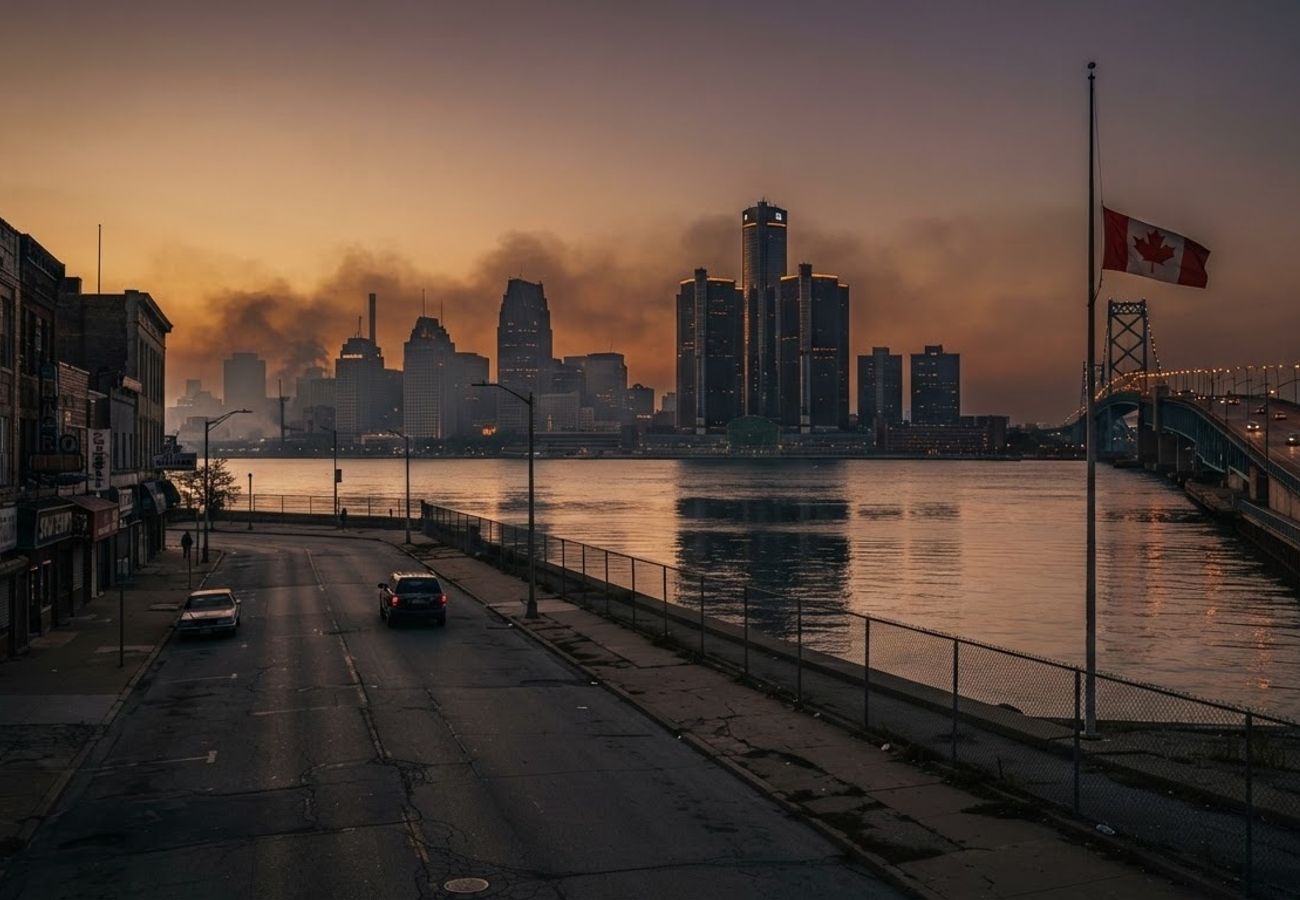
Image generated by AI
US metropolitan areas are experiencing a sharp contraction in tourism revenue as Canadian visitors pivot toward non-US destinations. This downturn is exacerbated by heightened political friction, leaving border-dependent economies in a state of volatility.
The Scale of the Tourism Contraction
The United States is witnessing a fundamental shift in its international visitor demographics. Data from Statistics Canada reveals a stark decline in cross-border expenditure: Canadians spent C$18.8 billion on trips to the United States in 2025, a significant drop from the C$22.1 billion recorded in 2024.
Simultaneously, Canadian spending on travel to destinations outside the U.S. increased by C$3.6 billion, reaching C$22.8 billion. This indicates not just a reduction in travel, but a deliberate redirection of capital toward other global markets.
Our analysis of research from the University of Toronto’s School of Cities suggests the impact is deeper than official border-crossing data indicates. While conventional data suggests a 25% fall, the research identifies a median year-over-year decline of approximately 42% in Canadian visits to U.S. metropolitan areas.
Regional Impact Breakdown
The disruption is not uniform across the US, but is most acute in cities with historical geographic and economic ties to Canadian provinces.
- Seattle, Washington: Passenger-vehicle crossings from Canada into Washington State fell 24% during the first ten months of 2025, outpacing the national decline of 20%.
- Buffalo, New York: The city reported a failure of the expected Canadian visitor wave during the 2025 summer season, prompting the "Buffalo Loves Canada" emergency marketing campaign.
- Las Vegas, Nevada: LVCVA figures show a decline of approximately 18% in Canadian tourism for 2025, equating to roughly 250,000 fewer visitors.
- Detroit, Michigan: The city is now diversifying its international marketing to include European markets to mitigate the risk of over-reliance on the Windsor-Detroit corridor.
- Grand Rapids, Michigan: Identified by University of Toronto research as one of the hardest-hit metropolitan areas, highlighting a collapse in both leisure and business-related mobility.
- Portland, Oregon: Facing simultaneous pressures on overall international demand, making the loss of the Western Canadian market particularly acute.
- New York State: Broad declines reported across the Adirondacks, Niagara Falls, and New York City.
Passenger Rights & Travel Advisory
For the affected passenger and business traveler navigating this volatile corridor, the current environment suggests several critical considerations regarding travel planning and consumer rights.
Rebooking and Cancellations Our analysis of current trends suggests that as airlines and hotel operators in border cities face lower occupancy, "last-minute" volatility in pricing may occur. However, passengers should remain vigilant regarding:
- Contractual Obligations: If you are a Canadian traveler canceling US-bound trips, review the specific terms of your booking. Under most US DOT guidelines, refunds are mandatory for significant flight delays or cancellations, but "voluntary" cancellations due to political climate usually fall under the airline's specific fare rules.
- Travel Insurance: We advise passengers to ensure their policies cover "trip interruption" for reasons beyond standard medical emergencies, as geopolitical shifts can lead to sudden changes in border processing times or entry requirements.
Border Crossing Logistics With the 24% drop in vehicle crossings in Washington State, wait times may fluctuate. Travelers are encouraged to use official customs and border protection apps to monitor real-time delays, as staffing levels often adjust based on the volume of traffic.
The current crisis is a collision of economic preference and political rhetoric. The statement from President Donald Trump—"WE DON’T NEED CANADA"—adds a psychological barrier to the existing economic one. While the political stance suggests independence, the empirical data proves a deep systemic reliance on Canadian capital.
The loss of C$3.3 billion in spending between 2024 and 2025 is not merely a "dip" but a structural shift. When a source market as reliable as Canada diverts C$3.6 billion to other global destinations, it signals a loss of confidence in the US as a primary destination.
US cities are now forced into a "diversification race." The strategy adopted by Detroit—pursuing European markets to hedge against Canadian volatility—is the only sustainable path forward. Reliance on a single neighboring market, regardless of proximity, is now a recognized strategic liability for US municipal tourism boards.
The border is no longer just a line on a map, but a volatile economic barometer.
Related Travel Guides
Disclaimer
This article is for informational and educational purposes only. It does not constitute legal, financial, or professional advice. While we strive to provide accurate and up-to-date information, travel policies, regulations, and conditions change rapidly. Always verify information with official sources before making travel decisions. Nomad Lawyer makes no representations about the accuracy, reliability, completeness, or suitability of the information provided. Readers should consult qualified professionals for advice specific to their circumstances. The views expressed in this article are those of the author and do not necessarily reflect the views of Nomad Lawyer.
Kunal K Choudhary
Co-Founder & Contributor
A passionate traveller and tech enthusiast. Kunal contributes to the vision and growth of Nomad Lawyer, bringing fresh perspectives and driving the community forward.
Learn more about our team →