
US Aviation Crisis: 214 Flights Canceled, 509 Delayed Across Florida, New York, Chicago
Major US aviation disruption on May 6, 2026: 214 flight cancellations and 509 delays grip Orlando, Fort Lauderdale, Chicago O'Hare, Newark, Denver, and Atlanta as severe weather and operational failures strand thousands of travelers nationwide.

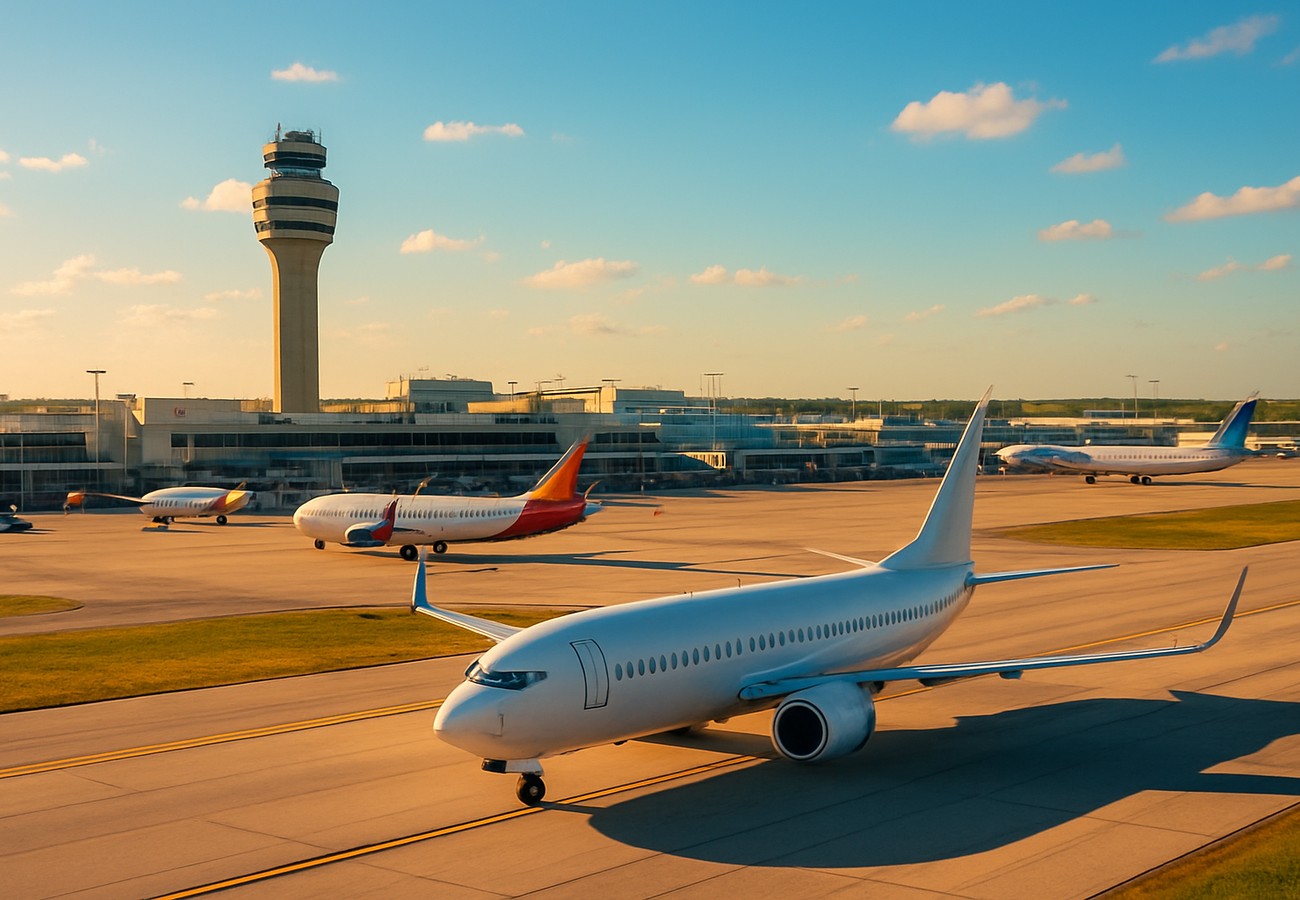
Image generated by AI
US Aviation Crisis: 214 Flight Cancellations and 509 Delays Paralyze Florida, New York, Chicago, Colorado, Georgia, and New Jersey Airports on May 6, 2026
Nationwide Operational Meltdown Leaves Thousands Stranded as Spirit Airlines Dominates Disruption Count
The United States aviation network collapsed into operational chaos on May 6, 2026, with a devastating 214 flight cancellations and 509 delays reported across the nation's busiest airport hubs. The perfect storm of severe weather, cascading airline operational failures, crew displacement issues, and aircraft rotation breakdowns has created one of the most significant travel disruption events in recent months, leaving tens of thousands of passengers stranded, furious, and struggling to reach their destinations.
Major metropolitan areas including Florida's tourism powerhouses Orlando and Fort Lauderdale, the Northeast's critical LaGuardia hub, Denver's mountain gateway, Newark Liberty International's transatlantic corridor, Chicago O'Hare's global connectivity center, and Atlanta's Hartsfield-Jackson International have all experienced unprecedented operational stress. The data reveals a troubling pattern: budget carrier Spirit Airlines emerged as the single most disruptive force, accounting for the vast majority of cancellations across multiple states, while international carriers at major hub airports absorbed secondary ripple effects from system-wide congestion.
For travelers, the consequences extend far beyond simple schedule inconveniences. Families destined for Florida theme parks have lost hotel reservations and paid attraction tickets. Business executives have missed critical corporate meetings. International tourists have abandoned vacation plans. Cruise passengers have missed ship departures. Supply chain operations have experienced disruption-related delays. The economic fallout continues mounting as the day progresses.
The Perfect Storm: How Weather and Operational Failure Created Nationwide Chaos
Today's disruption did not emerge from a single catastrophic event at one airport. Instead, it represents the inevitable consequence of how deeply interconnected the modern US aviation network has become. When severe weather systems strike multiple major hubs simultaneously, and when operational pressures force airlines into reactive cancellation strategies, the entire national network experiences cascading failures within hours.
Meteorological conditions across the Southeast and unstable atmospheric systems over several critical flight corridors forced air traffic control facilities to implement ground stops and reduce aircraft movement rates throughout the afternoon. Airports managing enormous passenger volumes—particularly Orlando, Fort Lauderdale, and Atlanta—proved especially vulnerable because their dense airline schedules leave virtually no operational slack for weather-related disruptions.
The situation deteriorated further when airlines discovered that maintaining aircraft rotations under pressure became impossible. A single cancelled flight early in the morning can leave both the aircraft and its crew stranded in the wrong city. That displacement creates a domino effect affecting subsequent flights throughout the day. Other aircraft scheduled to operate the late afternoon and evening trips suddenly become unavailable. Crews run out of legal duty time. Passengers scheduled for later flights face cancellations through no fault of weather or congestion—purely because of upstream operational collapse.
That exact pattern appears evident in Spirit Airlines' concentrated cancellation clusters across Florida, the Northeast, and beyond. But the phenomenon also explains why major hub airports like Chicago and Denver experienced extraordinarily high delay counts rather than outright cancellations: those facilities attempted to preserve schedules despite deteriorating operational conditions, accepting mounting delays as the alternative to wholesale flight cancellations.
Florida's Tourism Economy Under Siege: Orlando and Fort Lauderdale Lead National Cancellation Crisis
Orlando International Airport: 55 Cancellations Concentrated Among Single Carrier
Orlando International Airport, serving as the primary gateway for Central Florida's multibillion-dollar tourism economy, suffered a devastating blow today with 55 flight cancellations and 12 delays.
| Airline | Cancelled | Cancellation % | Delayed | Delay % |
|---|---|---|---|---|
| Spirit | 55 | 98% | 0 | 0% |
| JetBlue | 0 | 0% | 1 | 1% |
| Southwest | 0 | 0% | 6 | 1% |
| WestJet | 0 | 0% | 1 | 25% |
| American Airlines | 0 | 0% | 4 | 3% |
The statistics reveal a concentrated operational breakdown rather than broad system-wide instability. Spirit Airlines alone accounted for 98% of all cancellations at Orlando, suggesting acute fleet positioning or crew availability issues specific to that carrier's operation.
While other airlines operating from Orlando experienced only modest delays—Southwest logged 6 delays, American Airlines recorded 4 delays—the sheer volume of Spirit cancellations overwhelmed the airport's ability to accommodate stranded passengers on alternative flights. The timing proved particularly devastating because Orlando's aviation ecosystem connects directly to theme park operations, cruise ship departures, and international leisure arrivals with rigid timing constraints.
Travelers booked for Disney World, Universal Studios, SeaWorld, and related attractions faced impossible situations. Hotel reservations tied to specific arrival times became impossible to honor. Cruise passengers missed ship departures from Port Canaveral. International visitors discovered their carefully planned Florida vacations evaporating within hours.
Fort Lauderdale International Airport: 58 Cancellations Create Caribbean Connection Collapse
Fort Lauderdale International Airport, functioning as a crucial gateway for Caribbean tourism, Latin American connectivity, and South Florida leisure traffic, experienced even more severe cancellation pressure with 58 flight cancellations and only 5 delays.
| Airline | Cancelled | Cancellation % | Delayed | Delay % |
|---|---|---|---|---|
| Spirit | 58 | 93% | 0 | 0% |
| Delta Air Lines | 0 | 0% | 1 | 1% |
| JetBlue | 0 | 0% | 4 | 2% |
Fort Lauderdale became one of the worst-hit airports nationwide, with Spirit's 58 cancellations representing 93% of the total disruption. The pattern suggests significant aircraft rotation failures, crew displacement across Spirit's Florida route network, and scheduling instability concentrated within the low-cost carrier's operations.
Notably, the dramatic disparity between cancellations (58) and delays (5) indicates that airlines made explicit operational decisions to cancel flights proactively rather than attempt severely delayed departures. This strategy, while operationally sound in theory, proves devastating for passengers because cancellations typically allow less flexibility than delays for finding alternative transportation.
By opting for cancellation rather than delay, airlines avoided several operational hazards: overnight aircraft displacement, FAA slot complications at congested northeast airports, crew legality violations, and cascading passenger misconnection chains. However, this decision shifted the burden entirely to passengers who now faced rebooking onto subsequent flights or pursuing alternative travel methods.
JetBlue recorded only 4 delays despite significant pressure at the airport, while Delta Air Lines recorded a single delay, highlighting how the disruption concentrated almost exclusively around Spirit's network.
New York's LaGuardia Airport: Spirit Airlines 100% Cancellation Event
LaGuardia's Remarkable Operational Strategy: Zero Delays but Complete Cancellation
New York's LaGuardia Airport recorded 29 total flight cancellations and zero delays—a statistically unusual pattern that reveals important operational decision-making during extreme pressure.
| Airline | Cancelled | Cancellation % | Delayed | Delay % |
|---|---|---|---|---|
| Spirit | 28 | 100% | 0 | 0% |
The complete absence of delays combined with high cancellation counts indicates that airlines operating at LaGuardia made explicit decisions to abandon flight operations entirely rather than attempt recovery under pressure. LaGuardia operates within one of the most tightly constrained air traffic corridors in the United States, where the Federal Aviation Administration manages slot timing, gate sequencing, and aircraft pushback sequencing with extreme precision.
Once operational disruptions develop in this environment, recovery becomes exceptionally difficult. Gate space becomes constrained. Slot timing becomes increasingly critical. Aircraft sequencing deteriorates rapidly. The airport's geographic location—serving the New York metropolitan area with three competing major airports—means that every delay ripples across the region's entire air traffic control sector.
Spirit's concentration of 28 cancellations at LaGuardia (representing 100% of Spirit's disruption there) suggests either severe fleet repositioning challenges, crew shortages affecting the airline's Northeast operation, or cascading disruptions from earlier operational problems elsewhere in Spirit's network.
The business travel implications of LaGuardia cancellations are particularly significant. LaGuardia serves disproportionately as a gateway for frequent business travelers, government officials, finance sector workers, and northeast corridor corporate operations. Unlike leisure travelers who might reschedule vacations, business travelers often face lost meetings, disrupted deal-making, and productivity losses that accumulate across the broader economy.
Denver International Airport: Broad-Based Regional Carrier Disruptions Amid Mountain Weather Challenges
Denver's Extended Delay Profile: 28 Cancellations, 22 Delays Across Multiple Carriers
Denver International Airport, functioning as the central hub for America's Mountain West region, experienced 28 cancellations and 22 delays, but with a distinctly different disruption pattern than the Florida and Northeast airports.
| Airline | Cancelled | Cancellation % | Delayed | Delay % |
|---|---|---|---|---|
| SkyWest | 25 | 5% | 6 | 1% |
| United | 1 | 0% | 3 | 0% |
| Icelandair | 0 | 0% | 1 | 50% |
| Southwest | 0 | 0% | 12 | 2% |
Rather than domination by a single carrier, Denver's disruption reflected broad operational pressure affecting multiple airlines. SkyWest Airlines, which operates extensive regional feeder services for major US carriers, recorded 25 cancellations and 6 delays—far exceeding other carriers' disruption counts.
Because SkyWest operates critical connections feeding passengers into hub networks, these cancellations likely disrupted small and mid-sized regional markets across the Mountain West. Passengers from Billings, Salt Lake City, Boise, and similar regional cities who rely on SkyWest connections through Denver to reach major national destinations faced significant operational challenges.
Southwest Airlines absorbed substantial delay pressure with 12 delays, reflecting the carrier's extensive Denver operation but also indicating that Southwest attempted to maintain schedules despite deteriorating operational conditions. United Airlines, while Denver's largest carrier, recorded relatively modest disruption (1 cancellation, 3 delays), suggesting that the carrier maintained better operational control than some competitors.
Denver's vulnerability during severe weather events stems partly from geographic factors. The airport's high elevation creates performance limitations for certain aircraft during challenging weather. Thunderstorm development across Colorado's Front Range can evolve rapidly, creating wind shear conditions that force air traffic control to reduce movement rates significantly. The combination of weather-related movement restrictions and the airport's role as a major connecting hub creates conditions where disruptions spread rapidly across the regional network.
Newark Liberty International: Mixed Domestic and International Carrier Disruptions
Newark's Complex Disruption Profile: 17 Cancellations, 8 Delays Affecting Transatlantic Operations
Newark Liberty International Airport, serving as a critical gateway for Europe-bound passengers and international connectivity, experienced 17 cancellations and 8 delays with disruption affecting both domestic and international carriers.
| Airline | Cancelled | Cancellation % | Delayed | Delay % |
|---|---|---|---|---|
| Spirit | 14 | 87% | 0 | 0% |
| Jazz (Air Canada) | 2 | 11% | 0 | 0% |
| El Al | 1 | 25% | 0 | 0% |
| Swiss | 0 | 0% | 1 | 50% |
| United | 0 | 0% | 6 | 1% |
| Volaris | 0 | 0% | 1 | 50% |
Spirit Airlines again dominated cancellation counts at Newark with 14 cancellations, representing 87% of the total disruption. However, Newark's disruption profile also demonstrates how operational instability affects international carriers. Jazz (Air Canada's regional affiliate) recorded 2 cancellations. El Al, the Israeli flag carrier, experienced one cancellation. Swiss International, Volaris (Mexico's low-cost carrier), and United all absorbed delay pressure.
Newark's role as a primary transatlantic gateway means that even relatively modest disruptions can affect Europe-bound travelers, international business itineraries, and cargo operations moving across the Atlantic. A single delayed flight at Newark in the morning can cascade into downstream problems affecting evening European arrivals, international connection requirements, and tomorrow's transatlantic operations.
United Airlines, which operates Newark as a major hub, recorded 6 delays but avoided significant cancellations, suggesting that the carrier attempted to preserve its extensive Newark schedule despite mounting operational pressure.
The airport's positioning within the tristate region (competing with LaGuardia and JFK) means that disruptions at Newark often push passengers toward alternative New York area airports, adding congestion pressure there. Because Newark operates near maximum capacity for much of the day, even minor delays can trigger wider operational deterioration.
Chicago O'Hare International: Global Connectivity Under Severe Pressure
O'Hare's Massive Delay Accumulation: 13 Cancellations, 54 Delays Affecting Worldwide Network
Chicago O'Hare International Airport, serving
Disclaimer
This article is for informational and educational purposes only. It does not constitute legal, financial, or professional advice. While we strive to provide accurate and up-to-date information, travel policies, regulations, and conditions change rapidly. Always verify information with official sources before making travel decisions. Nomad Lawyer makes no representations about the accuracy, reliability, completeness, or suitability of the information provided. Readers should consult qualified professionals for advice specific to their circumstances. The views expressed in this article are those of the author and do not necessarily reflect the views of Nomad Lawyer.
Kunal K Choudhary
Co-Founder & Contributor
A passionate traveller and tech enthusiast. Kunal contributes to the vision and growth of Nomad Lawyer, bringing fresh perspectives and driving the community forward.
Learn more about our team →