
Spirit Airlines Shutdown Triggers Travel Chaos: JetBlue $99 Rescue Fares and Industry-Wide Relief Efforts
Spirit Airlines ceases operations, stranding thousands. JetBlue launches $99 rescue fares as major carriers mobilize emergency rebooking support and expanded routes.

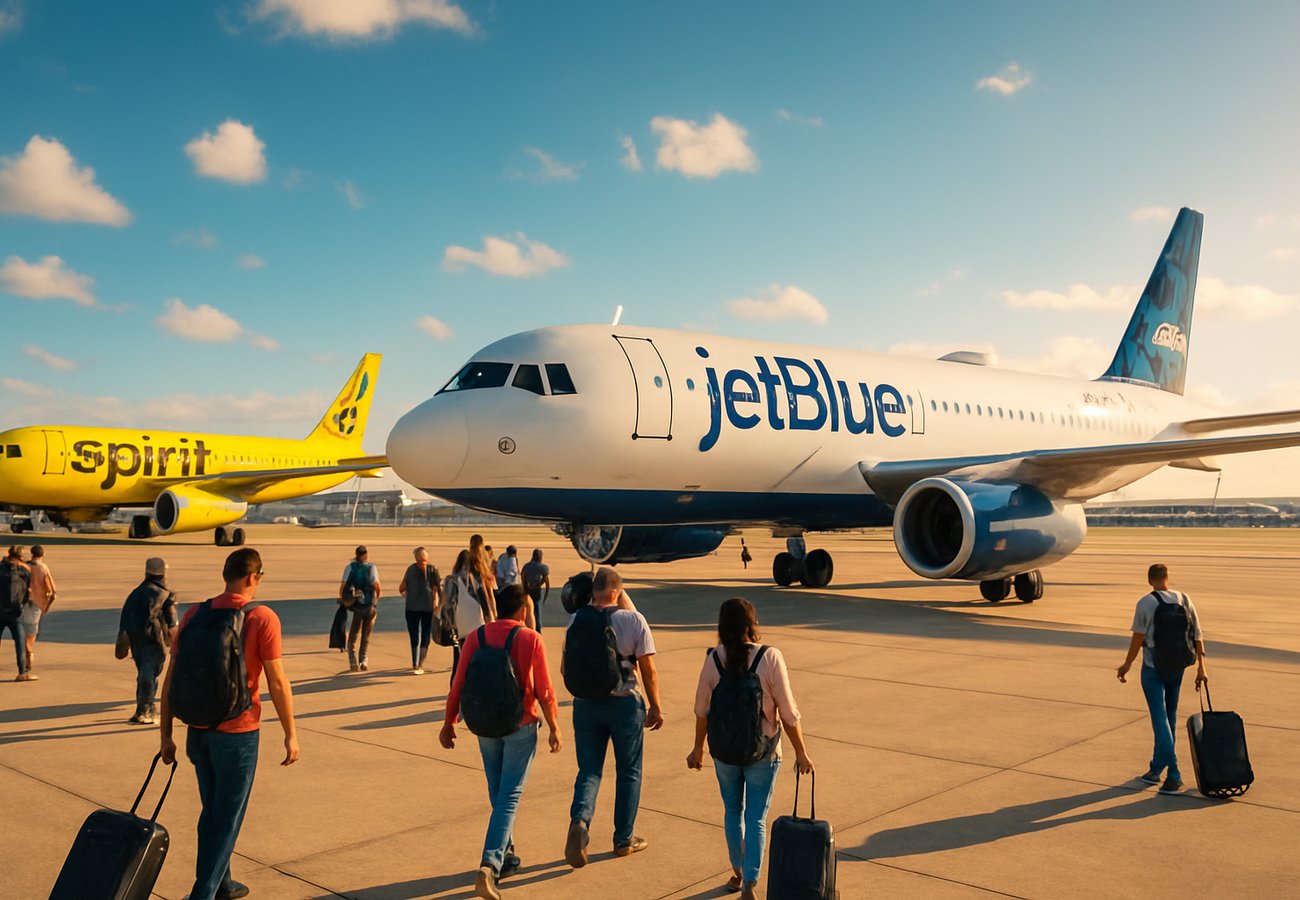
Image generated by AI
Spirit Airlines Shutdown Triggers Travel Chaos Across US Airports: JetBlue Launches $99 Rescue Fares While Industry Mobilizes Emergency Relief
Thousands of Passengers Stranded as Ultra-Low-Cost Carrier Ceases All Operations Under Chapter 11 Bankruptcy
The aviation industry faced a seismic shock on May 6, 2026, as Spirit Airlines officially ceased all operations, cancelling its entire flight schedule and leaving thousands of passengers scrambling for alternatives across major U.S. airports. The sudden collapse of the budget carrier, once a dominant force in leisure travel markets, represents one of the most significant airline shutdowns in recent U.S. history and has triggered an immediate, industry-wide mobilization to prevent a cascading travel crisis.
Spirit's demise came after the carrier failed to secure emergency financing and was forced into a court-approved wind-down plan under Chapter 11 bankruptcy protections. The timing—coinciding with surging global travel demand ahead of the peak summer season—has amplified the disruption's severity, leaving holiday planners, cruise passengers, and international tourists competing for limited seat inventory on alternative carriers.
JetBlue Airways Launches Emergency $99 Rescue Fares for Spirit Customers
In a swift response to the chaos, JetBlue Airways became the first major carrier to formally assist stranded Spirit passengers, announcing emergency "rescue fares" priced at just $99 one-way. These specially discounted fares are available exclusively to passengers holding valid Spirit itineraries on overlapping routes, providing an immediate lifeline for travellers facing unexpected rebooking challenges.
The rescue fare initiative extends through a defined travel window, with JetBlue also capping select ticket prices at approximately $299 on major leisure corridors heavily served by Spirit. Fort Lauderdale and San Juan—two airports where Spirit maintained significant operations—are priority markets for the program, reflecting the geographic concentration of disrupted travel patterns.
Beyond the $99 threshold fares, JetBlue has committed to absorbing additional Spirit customers through inventory flexibility and expanded scheduling, signalling a broader industry trend of capacity reallocation rather than wholesale rejection of displaced passengers.
Industry-Wide Mobilization: American, United, Delta, Frontier, and Southwest Launch Relief Programs
The Spirit shutdown triggered coordinated emergency responses across the U.S. aviation sector. American Airlines, United Airlines, Delta Air Lines, Frontier Airlines, Southwest Airlines, and numerous regional carriers have publicly announced special pricing measures, fare caps, and dedicated rebooking support channels for Spirit's displaced customer base.
These carriers are striving to absorb the sudden surge in bookings while preventing a full-blown travel crisis. Many have implemented:
- Price-capped one-way fares on high-demand Spirit routes
- Dedicated rebooking assistance through customer service teams and digital platforms
- Waived change fees for Spirit customers rebooking alternative flights
- Expanded seat allocations specifically reserved for displaced passengers
The collective effort underscores an industry-wide recognition that allowing stranded travellers to suffer without recourse would damage broader consumer confidence and regulatory standing. By acting swiftly, carriers are managing immediate reputational risk while capturing incremental revenue from a captive rebooking market.
JetBlue Expands Route Network to Fill Spirit's Connectivity Gap
Beyond immediate rescue fares, JetBlue has announced aggressive route expansion from airports previously dominated by Spirit. The carrier plans to launch new daily flights from Fort Lauderdale to:
- Charlotte, North Carolina
- Indianapolis, Indiana
- Columbus, Ohio
- Baltimore, Maryland
This strategic expansion addresses not only immediate disruption but also longer-term connectivity gaps left by Spirit's departure. JetBlue's resumption of Charlotte Douglas International Airport service represents a particularly significant move, having previously suspended operations at the hub.
These new routes signal carriers' confidence in sustained demand and their willingness to permanently capture market share vacated by Spirit's closure, rather than treating relief efforts as temporary accommodations.
Refund Policies, Rebooking Procedures, and Passenger Guidance
Passengers who booked Spirit flights using credit or debit cards will receive automatic refunds processed through Spirit's bankruptcy administrators or the airline's dissolution procedures. The timeline for these refunds remains subject to court approval and administrative processing, likely spanning several weeks to months depending on claim volume.
However, passengers who booked through third-party travel agents, online travel platforms (OTAs), or package tour operators face more complex refund pathways. Spirit's official guidance indicates that these passengers must contact their booking source directly, as refunds will not be processed centrally by the airline.
Importantly, Spirit has explicitly stated that incidental expenses triggered by flight cancellations—including hotel stays, ground transportation, meal vouchers, and connection accommodations—will NOT be reimbursed directly. Affected travellers are advised to:
- Review travel insurance policies for coverage of cancellation-related expenses
- Leverage credit card protections, particularly premium card benefits that cover airline-related disruptions
- Document all out-of-pocket costs for potential chargeback or insurance claim filing
- Contact original booking sources immediately for refund and rebooking status
Why Spirit Airlines Failed: The Perfect Storm of Ultra-Low-Cost Economics and External Pressures
Spirit Airlines' collapse represents a critical inflection point in the viability of the ultra-low-cost carrier (ULCC) business model. According to official bankruptcy filings and industry analysis, multiple factors converged to render the airline's operational model unsustainable:
Rising Operational Costs
Jet fuel prices—historically the largest variable cost for airlines—surged dramatically due to geopolitical tensions in the Middle East and broader global energy market volatility. As a carrier operating on razor-thin margins, Spirit lacked the scale and pricing power of larger competitors to absorb these shocks without implementing fare increases that would undermine its core competitive advantage.
Failed Capital Infusion Attempts
Spirit had previously undergone multiple Chapter 11 reorganizations and actively pursued merger partnerships and federal bailout programs. A proposed $500 million federal emergency financing package collapsed, eliminating the carrier's last major liquidity lifeline. Without external capital injection, Spirit's deteriorating cash position became terminal.
Structural Business Model Challenges
The ULCC model—characterized by ultra-low base fares, aggressive ancillary fee capture, and aggressive capacity expansion—proved increasingly vulnerable in a high-cost fuel environment. Passengers shifted toward carriers offering better overall value propositions, and Spirit's cost-reduction initiatives (including reduced in-flight service and amenities) failed to offset revenue decline.
Accumulated Debt and Restructuring Costs
Multiple bankruptcy filings, restructuring fees, and debt service obligations created mounting financial pressure that outpaced the airline's ability to generate positive cash flow, even as revenue recovered post-pandemic.
Global Travel Disruption: Cruise Passengers and International Tourists Face Cascading Delays
The ripple effects of Spirit's shutdown extend far beyond domestic leisure travellers. Cruise passengers who had booked Spirit flights to embark on voyages from U.S. ports have found their entire holiday itineraries disrupted. Cruise operators including Carnival Corporation, Royal Caribbean, and Norwegian Cruise Line have been forced to reroute passengers through alternative carriers or absorb logistical costs, in some cases delaying voyage embarkation by days.
International tourists arriving in the United States for holidays, business travel, or connecting flights to onward destinations have similarly faced unexpected delays, rerouting, and out-of-pocket expenses. The timing of Spirit's shutdown—coinciding with increased international travel demand ahead of summer peak season—has magnified disruption across overseas visitor markets, particularly affecting travellers from Europe and Latin America with Spirit-dependent connections.
Market Implications: Long-Term Airfare Inflation and Competitive Landscape Shifts
Travel industry analysts warn that Spirit's absence will likely result in sustained upward pressure on leisure airfare pricing. As the largest ULCC operator in the U.S. market, Spirit maintained aggressive pricing on routes to Florida, the Caribbean, the Southwest, and Mexico—leisure destinations historically characterized by high price elasticity and intense competition.
With Spirit eliminated from these markets, surviving competitors (particularly Frontier Airlines, the industry's other major ULCC) will face less downward pricing pressure. Analysts project:
- Baseline fare increases of 8-15% on high-leisure routes previously dominated by Spirit
- Reduced competitive intensity on Fort Lauderdale, Miami, Las Vegas, and Phoenix routes
- Capacity constraints that may persist for 12-18 months as carriers gradually increase capacity to Spirit-vacated markets
- Shift in customer demographics, with leisure travellers trading down from premium carriers or reducing travel frequency
These structural market changes suggest the era of sub-$50 transcontinental leisure fares may be concluding, with meaningful implications for budget-conscious travellers and tourism-dependent regional economies.
Navigating the Post-Spirit Travel Environment: Practical Guidance for Affected Passengers
For travellers currently navigating the aftermath of Spirit's shutdown, immediate action is essential:
Act Quickly on Rescue Fares JetBlue's $99 rescue fares and industry-wide price caps are time-limited promotions. Passengers should rebook immediately rather than waiting for Spirit refund processing, as availability on discounted fares may diminish rapidly as other carriers absorb demand.
Verify Refund Status Passengers with credit/debit card bookings should monitor their card accounts and any official Spirit bankruptcy communications for refund processing status. Third-party bookers must contact their original booking source within 24-48 hours to initiate refund procedures.
Maximize Travel Insurance and Credit Card Benefits Those experiencing out-of-pocket expenses should file claims with travel insurance providers and initiate chargebacks or benefit claims with credit card issuers, particularly premium card products offering cancellation and disruption coverage.
Remain Flexible on Routing and Timing Alternative flights, connections through hub airports, and slightly delayed travel dates may offer dramatically better pricing and availability than attempting to replicate exact Spirit itineraries.
Document All Expenses Maintain detailed records of all disruption-related costs, including hotel accommodations, meal vouchers, ground transportation, and ticket price differentials, to support insurance claims and credit card chargebacks.
Conclusion: Aviation Industry at an Inflection Point
Spirit Airlines' abrupt cessation of operations represents a watershed moment for U.S. aviation, signalling both the vulnerability of carriers operating on ultra-thin margins and the resilience of established industry players when faced with systemic disruption. While the immediate crisis has been largely contained through coordinated industry relief efforts and competitor route expansion, the longer-term implications point toward a more concentrated, higher-cost aviation market with reduced consumer choice on leisure routes.
The swift mobilization by JetBlue, American, United, Delta, Frontier, and Southwest demonstrates that major carriers possess both the capacity and commercial incentive to absorb displaced passengers without triggering broader system collapse. However, the absence of Spirit's competitive pricing pressure may result in sustained fare inflation that disproportionately affects budget-conscious leisure travellers and price-sensitive regional tourism markets.
As the aviation industry continues its post-pandemic recovery trajectory, Spirit's failure serves as a cautionary tale about the limits of ultra-aggressive cost-cutting and the critical importance of capital reserves in weathering external shocks. For travellers, the lesson is equally clear: flexibility, comprehensive travel insurance, and early rebooking are essential strategies in an increasingly volatile aviation marketplace.
Key Takeaways
- Spirit Airlines ceased all operations on May 6, 2026, leaving thousands of passengers stranded across major U.S. airports following failed emergency financing and Chapter 11 bankruptcy wind-down.
- JetBlue launched emergency $99 rescue fares for stranded Spirit customers, with price caps at approximately $299 on major leisure routes including Fort Lauderdale and San Juan.
- Industry-wide relief efforts from American, United, Delta, Frontier, and Southwest included special pricing, waived change fees, and expanded rebooking support.
- Automatic refunds will be processed for credit/debit card bookings through bankruptcy administrators; third-party bookings require direct contact with booking sources.
- Incidental expenses (hotels, ground transport) are not covered by Spirit and must be pursued through travel insurance or credit card protections.
- JetBlue announced aggressive route expansion from Fort Lauderdale to Charlotte, Indianapolis, Columbus, and Baltimore, signalling permanent market share capture.
- Long-term airfare inflation expected, with analysts projecting 8-15% baseline fare increases on leisure routes previously characterized by Spirit's aggressive pricing.
- Cruise and international tourism disruptions cascaded beyond domestic passengers, affecting voyage embarkation schedules and international visitor itineraries.
Related Travel Guides
Disclaimer
This article is for informational and educational purposes only. It does not constitute legal, financial, or professional advice. While we strive to provide accurate and up-to-date information, travel policies, regulations, and conditions change rapidly. Always verify information with official sources before making travel decisions. Nomad Lawyer makes no representations about the accuracy, reliability, completeness, or suitability of the information provided. Readers should consult qualified professionals for advice specific to their circumstances. The views expressed in this article are those of the author and do not necessarily reflect the views of Nomad Lawyer.
Kunal K Choudhary
Co-Founder & Contributor
A passionate traveller and tech enthusiast. Kunal contributes to the vision and growth of Nomad Lawyer, bringing fresh perspectives and driving the community forward.
Learn more about our team →