
The Somber Exodus of Spirit Airlines: Former Pilots Ferry Grounded Fleet to Arizona Deserts as Iconic Low-Cost Carrier Collapses; Massive Travel Chaos and Refund Crisis Looms in May 2026
In a tragic final chapter for Spirit Airlines, its fleet of yellow Airbus A320neos is being ferried to desert storage by former pilots. Following the carrier's sudden collapse on May 2, 2026, over 17,000 employees are out of work, and thousands of passengers remain stranded without refunds.

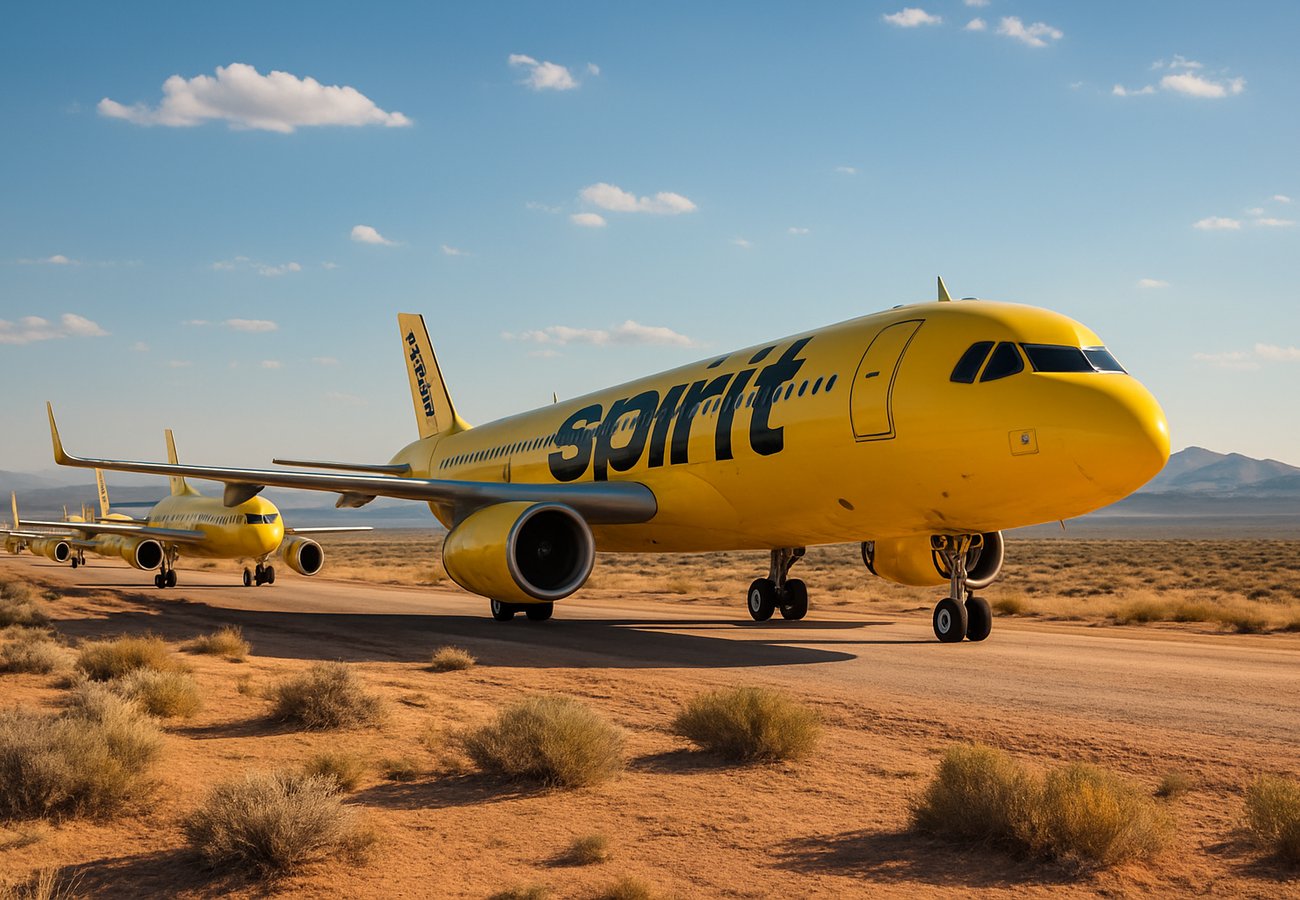
End of the line: Spirit's yellow jets begin their long slumber in the Arizona desert.
The Somber Exodus of Spirit Airlines: Former Pilots Ferry Grounded Yellow Fleet to Arizona Deserts; Historic Collapse Triggers Massive Travel Chaos and Refund Crisis for May 2026
The American aviation industry is witnessing the tragic final chapter of a once-formidable disruptor. Following the sudden and catastrophic shutdown of Spirit Airlines on May 2, 2026, a somber exodus has begun as the carrier’s iconic yellow fleet is ferried to permanent storage in the Arizona desert. In a move that blends logistical necessity with a poignant human touch, Nomadic Aviation has enlisted the very pilots who were laid off in the wake of the collapse to fly these grounded aircraft to their final resting places. This airline news update marks the definitive end of an era for the low-cost giant, leaving behind a wake of travel chaos, airport disruptions, and a massive financial crisis for over 17,000 employees and millions of stranded passengers.
As the bright yellow Airbus A320neos descend upon the arid tarmacs of Goodyear (GYR) and Pinal Airpark (MZJ), the reality of the situation is setting in. The collapse, driven by years of financial instability and a failed recovery from the pandemic’s disruptions, has left the nation’s aviation grid with a significant "Value Gap." For the traveler, the loss of Spirit means not only fewer budget-friendly options but a total loss of recourse for tickets already booked, as the carrier’s liquidation begins in earnest.
Expanded Overview: The Scale of the Spirit Shutdown
The scale of the Spirit Airlines collapse is unprecedented in recent history. At the time of its May 2 closure, the airline’s fleet was scattered across 26 different airports in the United States. The logistics of moving these multi-million dollar assets to desert storage is a monumental task. Nomadic Aviation, the firm overseeing the ferry flights, realized that the most efficient way to clear busy runways at major hubs was to hire the pilots who knew these planes best—those who had been put out of work just days prior.
This aviation update highlights a heartbreaking transition for the industry. While the ferry flights provide temporary employment for some, they also serve as a final act of "closure" for crews who saw their careers evaporate overnight. Meanwhile, the aircraft themselves are becoming the focus of a global scavenger hunt, with their valuable GTF engines and A320neo parts being sought after by a supply-chain-starved industry.
Section-Wise Breakdown: Final Destinations and Asset Liquidation
Goodyear and Pinal Airpark: The Final Boneyards
The primary destinations for the Spirit fleet are Goodyear Airport (GYR) and Pinal Airpark (MZJ). These Arizona facilities are world-renowned for their low humidity, which prevents corrosion and makes them ideal for long-term storage or dismantling. Parking aircraft at major commercial airports like DFW or JFK is prohibitively expensive, making the "Somber Ferry" to the desert a financial necessity for the creditors who now control Spirit’s assets.
The Asset Strip: The High Value of the A320neo
While Spirit as an entity is dead, its aircraft remain incredibly valuable. The fleet includes several A320neo jets, which are in high demand due to their fuel-efficient engines and modern avionics. The GTF engines specifically are the "Crown Jewels" of the liquidation process. Due to ongoing global shortages in the aviation supply chain, these engines are expected to be removed and sold to other operators, providing a vital source of parts for carriers still flying the A320 family.
The Stranded Stakeholders: A Human Crisis
The human impact of the collapse is staggering. 17,000 Spirit employees have been laid off, many without severance or immediate prospects. For passengers, the situation is equally dire. Because Spirit has ceased operations entirely, there are no refunds being issued for canceled flights. Travelers who had planned summer getaways or family reunions now find themselves without tickets and without a way to recover their funds, adding a layer of personal financial loss to the broader travel chaos.
Spirit Airlines Final Operational Profile: May 2026
The following table summarizes the key metrics surrounding the collapse and subsequent liquidation.
Spirit Airlines: Final Status and Asset Profile 2026
| Metric | Detail | Impact |
|---|---|---|
| Shutdown Date | May 2, 2026 | Immediate Cessation of Flights |
| Employees Laid Off | 17,000 Team Members | Workforce Crisis |
| Fleet Locations | 26 US Airports | Logistical Dispersal |
| Storage Hubs | Goodyear (GYR) & Pinal (MZJ) | Desert Storage/Boneyard |
| Primary Aircraft | Airbus A320neo | High-Value Assets/Parts |
| Key Components | GTF Engines | Global Parts Demand |
| Refund Status | No Recourse/Zero Refunds | Consumer Financial Loss |
Passenger Impact: Navigating a Post-Spirit Reality
For the American traveler, the collapse of the "Yellow Disruptor" is a significant blow. Spirit was the primary driver of low-cost competition on many domestic routes, and its absence is already leading to higher fares on competing carriers. However, the immediate impact is much more personal. Thousands of travelers were left at gates when the shutdown occurred, and the lack of a refund mechanism has created a "Consumer Crisis."
Those who had booked with Spirit are now facing the challenge of re-booking at much higher "last-minute" rates on legacy airlines. The loss of a major budget option is also causing a shift in travel plans, with many families being forced to cancel summer vacations entirely. The airport disruptions caused by the sudden groundings may have cleared, but the financial ripples for the average traveler will be felt for months.
Industry Analysis: The Anatomy of a Low-Cost Failure
Aviation analysts suggest that Spirit’s collapse was a "Perfect Storm" of bad timing and structural weakness. While the airline was a pioneer of the "Unbundled Fare" model, it struggled to maintain profitability in a high-cost post-pandemic environment. Supply chain issues, particularly with its A320neo engines, led to the grounding of a significant portion of its fleet even before the bankruptcy, further draining its cash reserves.
"Spirit’s legacy will be one of disruption," says a senior aviation journalist. "They forced the industry to change, but they couldn't survive the very market volatility they helped create. The demand for their parts in the desert today is a ironic testament to the quality of the aircraft they were flying, even as the company itself failed."
Conclusion: The End of the 'Yellow Flight' Era
As the final Spirit jets touch down in Arizona, the silence on their flight decks marks the end of a chaotic but influential chapter in US aviation. The yellow planes that once promised "Bare Fare" travel to the masses are now just assets on a balance sheet, destined to be stripped for parts or sold to the highest bidder. For the pilots flying them to the desert, it is a final, somber mission. For the rest of the industry, it is a stark reminder of the volatility of the skies. Spirit Airlines may be gone, but the impact of its collapse will be felt at every gate and every boneyard in America.
Key Takeaways
- Spirit Airlines officially shut down on May 2, 2026, following years of financial struggle.
- Former Spirit pilots are ferrying the grounded fleet to Arizona desert storage for Nomadic Aviation.
- Primary storage locations are Goodyear (GYR) and Pinal Airpark (MZJ).
- 17,000 employees were laid off overnight, creating a massive workforce crisis.
- The A320neo fleet and GTF engines are highly valuable and will likely be sold for parts.
- Passengers are left with zero refunds, leading to a significant consumer financial crisis.
- Spirit’s absence is expected to drive up domestic airfares as a major low-cost competitor vanishes.
/article-footer-standard
Related Travel Guides:
Disclaimer
This article is for informational and educational purposes only. It does not constitute legal, financial, or professional advice. While we strive to provide accurate and up-to-date information, travel policies, regulations, and conditions change rapidly. Always verify information with official sources before making travel decisions. Nomad Lawyer makes no representations about the accuracy, reliability, completeness, or suitability of the information provided. Readers should consult qualified professionals for advice specific to their circumstances. The views expressed in this article are those of the author and do not necessarily reflect the views of Nomad Lawyer.
Kunal K Choudhary
Co-Founder & Contributor
A passionate traveller and tech enthusiast. Kunal contributes to the vision and growth of Nomad Lawyer, bringing fresh perspectives and driving the community forward.
Learn more about our team →