
United States Mass Production Keeps F-35 Fighter Jet Costs Competitive in 2026
Lockheed Martin's F-35 Lightning II maintains industry-leading unit costs through unprecedented United States mass production volumes. Advanced fighter jet technology becomes more affordable as global procurement scales upward in 2026.

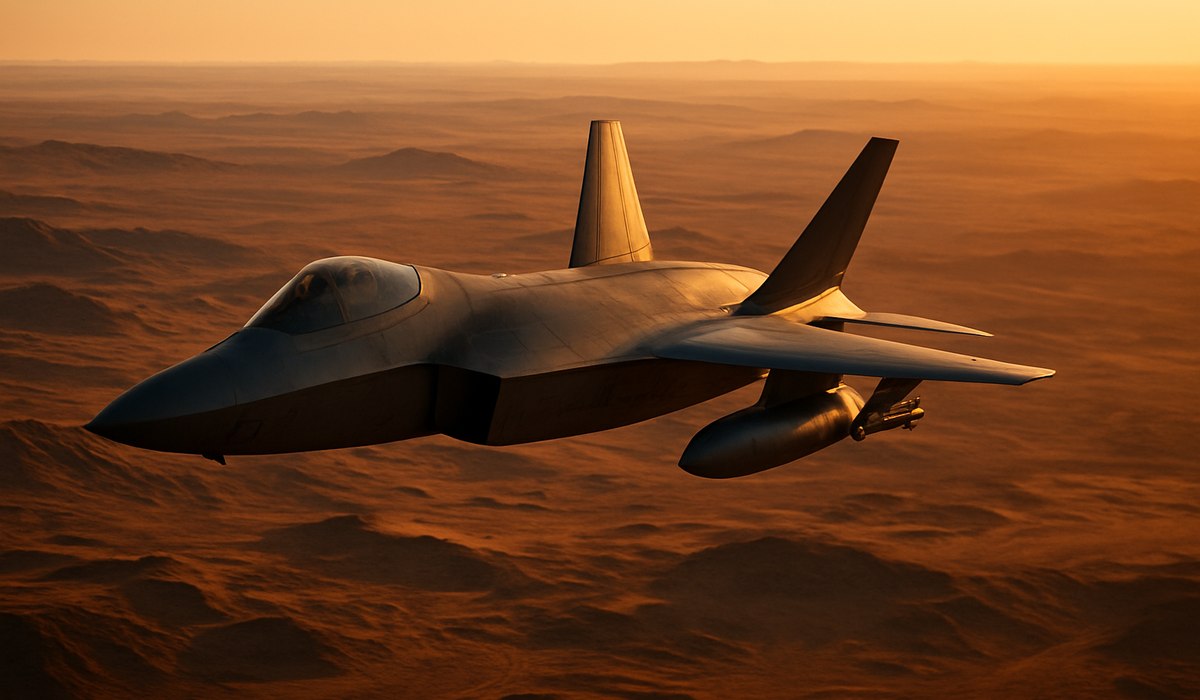
Image generated by AI
Defense Manufacturing's Role in Global Commercial Aviation
Lockheed Martin's F-35 Lightning II represents a transformative case study in how United States mass production economics fundamentally reshape military procurement costs. This advanced fighter jet maintains the world's largest production volumes among contemporary military aircraft, creating unit cost advantages that ripple across the defense sector and influence broader aerospace manufacturing practices. Delivered to allied nations across North America, Europe, and the Pacific, the F-35 program demonstrates how scaled production methodologies drive down per-unit flyaway costs while maintaining cutting-edge technological capabilities. Understanding this production model offers travelers and aviation enthusiasts insight into how modern aerospace investment decisions shape both military readiness and the future of civilian aviation infrastructure.
Production Scale Drives Down F-35 Unit Costs
The United States mass production strategy behind the F-35 Lightning II fundamentally differs from previous fighter jet development models. Traditional combat aircraft programs relied on smaller production runs, limiting opportunities to amortize research and development expenses across manufacturing units. The F-35 initiative reverses this approach through multi-decade international partnerships spanning NATO allies, Australia, and Japan.
Production volumes now exceed 1,000 aircraft delivered globally, with pipelines extending beyond 2035. This scale enables manufacturers to negotiate better supplier contracts, standardize manufacturing processes across facilities, and invest in automation technologies that reduce labor costs per unit. Early F-35s cost approximately $165 million per aircraft in flyaway costs. Contemporary production batches achieve per-unit costs closer to $78-85 million, representing a 50% reduction through production efficiency gains.
Manufacturing facilities in Fort Worth, Texas; Nagoya, Japan; and Cameri, Italy coordinate production schedules using shared specifications. This distributed production approach creates redundancy while enabling regional customization for allied air forces. Learn more about aerospace manufacturing standards from official FAA resources.
Advanced Technology Meets Affordability
Modern fighter jets integrate thousands of sensors, advanced avionics, and stealth technologies that increase complexity exponentially. The F-35 Lightning II incorporates fifth-generation capabilities including distributed aperture systems, advanced targeting pods, and integrated electronic warfare suites. Engineering such systems typically drives costs upward, yet United States mass production volumes create counterbalancing economic pressures.
Lockheed Martin invested over $70 billion in initial F-35 development. Spreading these costs across 2,400+ planned aircraft results in approximately $29 million in amortized R&D expense per unit. Compare this to lower-volume fighter programs where development costs get distributed across fewer airframes, driving unit prices substantially higher. The Eurofighter Typhoon, produced in smaller quantities across four European nations, maintains higher per-unit costs despite comparable technological sophistication.
Advanced manufacturing techniques including automated fiber placement for composite components, robotic fuselage assembly, and precision electronics integration benefit from volume discounts. Supplier contracts negotiated at higher production quantities yield 15-25% component cost reductions compared to limited production runs. For detailed information on aviation technology evolution, visit the FAA's aerospace innovation page.
Global Military Procurement Impact
International defense procurement decisions create cascading effects throughout aerospace supply chains and civil aviation sectors. The F-35 program involves contractors across 18 countries, generating skilled manufacturing employment throughout allied nations. Production decisions at Lockheed Martin's Texas facility influence hiring at 1,800+ supplier companies nationwide.
Nations purchasing F-35 fleets commit to 40-50 year operational timelines, requiring sustained logistics networks, pilot training programs, and maintenance infrastructure. These commitments drive continuous manufacturing demand, enabling suppliers to maintain production facilities and specialized workforce capabilities. When production schedules remain stable, manufacturers can implement long-term efficiency improvements and workforce development initiatives.
Smaller nations benefit particularly from this cost structure. Countries unable to justify independent fighter development programs can acquire advanced combat capabilities at price points previously reserved for superpowers. This democratization of military technology affects regional security balances, international alliance structures, and ultimately influences airspace management policies affecting civilian aviation operations.
Future Production Sustainability
Lockheed Martin maintains F-35 production commitments extending through 2040, with Block IV modernization variants entering testing phases. These future variants incorporate open-architecture software frameworks, enabling upgradeable sensors and weapons systems without complete airframe replacement. Sustainment engineering for aging aircraft fleets supports continued demand for new production units.
Climate considerations increasingly influence military procurement timelines. Developing next-generation fighters while maintaining current inventory pressures defense budgets across allied nations. The F-35's low per-unit cost through United States mass production becomes strategically valuable as militaries balance modernization against budgetary constraints. Projected demand exceeds 3,000 aircraft globally, suggesting current production lines will operate near capacity through 2038.
Supply chain resilience remains critical as geopolitical tensions rise. Distributed manufacturing across multiple allied nations reduces dependency on single-source production, improving security of supply. Investing in automation and advanced manufacturing techniques positions the aerospace industry to maintain production momentum despite labor market uncertainties and material supply disruptions. Visit US Department of Transportation resources for policy information affecting aviation infrastructure.
Key Data Table: F-35 Production Economics
| Metric | Value | Impact |
|---|---|---|
| Total Airframes Delivered (2006-2026) | 1,250+ | Achieves economies of scale |
| Initial Unit Cost (2010) | $165-180 million | Early production inefficiencies |
| Current Flyaway Cost (2026) | $78-85 million | 53% reduction through efficiency |
| Global Production Facilities | 4 major sites | Distributed manufacturing resilience |
| Supplier Nations Involved | 18 countries | International collaborative advantage |
| Planned Total Production (through 2040) | 3,000+ aircraft | Sustained demand justifies investment |
| R&D Cost Amortization | $70 billion ÷ 2,400+ | ~$29 million per unit |
| Manufacturing Employment (US only) | 135,000+ jobs | Regional economic impact |
What This Means for Travelers
Defense manufacturing decisions indirectly influence civilian aviation infrastructure, airspace management systems, and airport security protocols. Understanding how United States mass production principles drive military aircraft economics reveals broader lessons applicable to commercial aviation efficiency.
-
Cost reduction through scale: Airlines implementing similar volume manufacturing strategies negotiate better aircraft pricing from Boeing and Airbus, potentially reducing ticket prices.
-
Technology transfer benefits: Innovations developed for F-35 avionics frequently transition to commercial aviation systems, improving safety and operational efficiency.
-
Airport infrastructure investment: Defense budgets supporting fighter jet production facilities often fund airport modernization projects serving both military and civilian traffic.
-
Skilled workforce development: Manufacturing employment generated by production programs creates experienced technicians supporting commercial airline maintenance operations.
-
Supply chain resilience: International collaboration models in fighter jet production inform commercial aviation supply chain strategies, improving reliability.
-
Security protocol evolution: Military technologies eventually transition to civilian airport security systems, affecting traveler screening procedures.
FAQ: F-35 Production and Aerospace Economics
What makes the F-35 cheaper than other advanced fighters despite its complexity?
The F-35 achieves lower per-unit costs through United States mass production volumes exceeding 1,250 delivered aircraft. Spreading $70 billion in development costs across 2,400+ planned airframes reduces per-unit R&D expense significantly. Higher production quantities enable supplier negotiation, automation investment, and manufacturing efficiency improvements unavailable to lower-volume competitors.
How does distributed international production reduce fighter jet costs?
Manufacturing facilities in Texas, Japan, Italy, and the United Kingdom enable regional workforce utilization and supplier network optimization. International collaboration spreads facility investment across allied nations while maintaining competitive labor market conditions
Disclaimer
This article is for informational and educational purposes only. It does not constitute legal, financial, or professional advice. While we strive to provide accurate and up-to-date information, travel policies, regulations, and conditions change rapidly. Always verify information with official sources before making travel decisions. Nomad Lawyer makes no representations about the accuracy, reliability, completeness, or suitability of the information provided. Readers should consult qualified professionals for advice specific to their circumstances. The views expressed in this article are those of the author and do not necessarily reflect the views of Nomad Lawyer.
Raushan Kumar
Founder & Lead Developer
Full-stack developer with 11+ years of experience and a passionate traveller. Raushan built Nomad Lawyer from the ground up with a vision to create the best travel and law experience on the web.
Learn more about our team →