
Military Aircraft Generation Shifts to Information Warfare by 2051
Military aircraft generation is fundamentally redefining combat strategy. By 2051, fighter jets will prioritize networked battlefield awareness over kinematic performance, transforming aviation doctrine for the next 25 years.

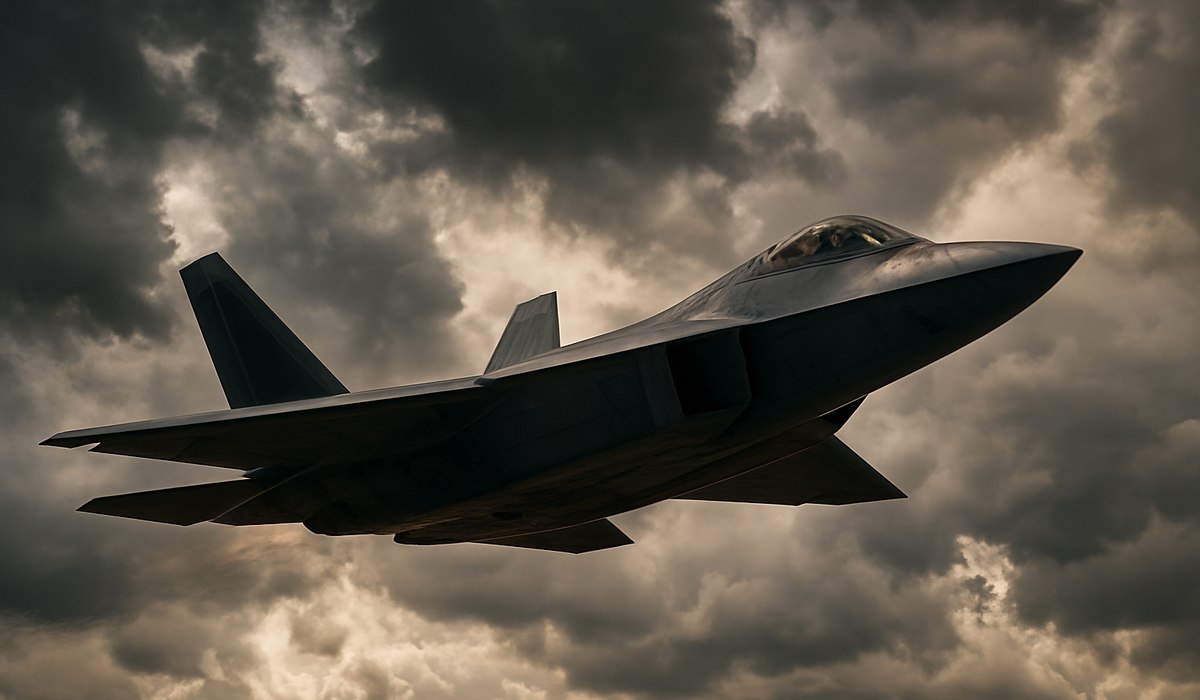
Image generated by AI
The Seismic Shift in Fighter Jet Philosophy
Military aircraft generation is experiencing a fundamental transformation that will reshape commercial aviation infrastructure for the next quarter-century. Air warfare doctrine has pivoted decisively from kinetic dogfighting tactics toward networked information dominance, establishing a new paradigm for how nations design, deploy, and integrate fighter platforms. This shift doesn't merely affect military operations—it influences airport security protocols, airspace management systems, and the technological ecosystems that support civilian flight operations globally. The traditional emphasis on speed, maneuverability, and raw firepower is yielding to sophisticated sensor networks, real-time battlefield awareness, and collaborative combat systems that fundamentally alter what "superiority" means in modern aviation.
From Kinetics to Information Dominance
The transition from kinetic-focused fighter design represents the most significant doctrinal evolution since jet propulsion itself. For decades, military aircraft generation prioritized velocity, acceleration, and turning radius as primary performance metrics. Pilots trained obsessively on dogfighting scenarios where raw performance determined survival. That entire framework is now obsolete.
Contemporary fifth-generation platforms demonstrate this shift conclusively. Modern fighters excel not because they turn faster or fly higher, but because they process information faster than adversaries can react. Integrated sensor suites, advanced radar systems, and data-sharing networks create what strategists call "persistent situational awareness." A pilot operating modern military aircraft generation systems sees the entire battlefield simultaneously—threats, allies, targets, and environmental factors—displayed across multiple cockpit interfaces. This information advantage translates directly into tactical superiority regardless of individual aircraft performance specifications. Visit the FAA's official aviation technology resources for comprehensive insight into how military innovations influence civilian airspace standards.
The F-35 Standard: Redefining Modern Warfare
The Lockheed Martin F-35 established the contemporary template for military aircraft generation design philosophy. When evaluators first assessed this platform, many focused narrowly on kinematic performance metrics and comparative stealth characteristics. That analysis missed the revolutionary aspect entirely.
The F-35's genuine innovation lies in its networked architecture and sensor fusion capabilities. Rather than operating as an isolated platform, each aircraft functions as a node within an interconnected warfare system. The fighter can simultaneously process data from allied aircraft, ground stations, naval platforms, and airborne early warning systems. This "god's eye view" capability—where pilots access comprehensive battlefield intelligence in real time—fundamentally changes engagement scenarios. A fifth-generation pilot doesn't need superior speed or agility when adversaries remain invisible, detected, and targeted before they even recognize a threat exists. The military aircraft generation represented by F-35 variants has already proven this doctrine in operational environments across three continents.
6th Generation Fighters and Beyond
Emerging concepts for next-generation military aircraft will intensify this information-dominance trend dramatically. Sixth-generation fighter programs, currently in advanced development phases, prioritize unmanned coordination, artificial intelligence integration, and expanded sensor networks over traditional performance enhancement.
Future platforms will operate in heterogeneous swarms where individual aircraft autonomy matters less than collective network cohesion. A single sixth-generation fighter might coordinate with dozens of unmanned systems, each contributing specialized sensing or weapons capabilities. The military aircraft generation of 2050 will likely feature modular avionics suites adaptable to rapidly evolving threats, rather than fixed hardware configurations. These aircraft will incorporate quantum computing elements for advanced threat prediction, distributed artificial intelligence for autonomous decision-making, and cyber-resilience features that prevent network degradation during contested operations. Development timelines suggest initial operational capabilities will emerge between 2035 and 2040.
Collaborative Combat Aircraft and Autonomous Systems
The future of military aviation extends beyond traditional fighter platforms toward collaborative ecosystems where manned and unmanned systems operate seamlessly. This military aircraft generation evolution will feature unmanned collaborative combat aircraft—autonomous or remotely-piloted systems that extend a fighter's effective range, sensor coverage, and weapons employment options.
These autonomous wingmen will execute pre-programmed tasks, respond to real-time commands, and adapt tactics based on networked intelligence. A single pilot might effectively control multiple unmanned assets simultaneously, multiplying combat effectiveness exponentially. The technological infrastructure supporting this integration includes advanced communications protocols immune to jamming, encrypted data networks resistant to cyber intrusion, and distributed processing architectures that prevent single-point failures. Military aircraft generation systems developed over the next decade will establish standards and protocols that persist through 2051 and beyond, fundamentally altering how nations structure air forces. Check FlightAware's aviation technology tracking for real-time insights into how military innovations influence civilian air traffic patterns.
Military Aircraft Generation: Key Developments Timeline
| Development | Timeline | Significance | Current Status |
|---|---|---|---|
| Fifth-generation doctrine standardization | 2015–2025 | Established information dominance as primary metric | Fully implemented across allied nations |
| Sensor fusion network integration | 2018–2028 | Enabled real-time multi-platform awareness | Ongoing enhancement and expansion |
| Autonomous collaborative systems development | 2022–2032 | Demonstrated unmanned wingmen feasibility | Advanced prototype testing phase |
| Sixth-generation fighter programs | 2024–2040 | Quantum computing and AI integration | Development and testing underway |
| Networked warfare standards adoption | 2026–2030 | Established compatible communication protocols | Implementation proceeding by nation |
| Distributed air defense architecture | 2028–2035 | Eliminated centralized command vulnerability | Planning and specification phase |
| Full autonomous combat operations | 2035–2050 | Enabled unmanned force multiplication | Concept development stage |
What This Means for Travelers
The evolution of military aircraft generation affects commercial aviation through infrastructure investment, airspace management modernization, and technological advancement pathways. Understanding these shifts helps travelers navigate an increasingly complex aviation environment.
Commercial airports are upgrading to accommodate military-grade navigation systems, necessitating temporary airspace restrictions. Airlines are investing in advanced avionics compatible with next-generation military networks, improving civilian flight precision and safety. The military aircraft generation standards being established now will influence commercial aircraft cockpit design, maintenance protocols, and crew training requirements for the next 25 years.
Traveler Action Checklist:
- Monitor airline communications regarding avionics upgrades affecting your preferred carriers—these may temporarily impact flight schedules.
- Book flights through carriers actively investing in modern avionics systems compatible with evolving military-grade standards.
- Check US DOT consumer protection guidelines for compensation policies during infrastructure modernization disruptions.
- Expect longer security protocols at major hubs undergoing military airspace integration projects.
- Plan flexibility into itineraries during calendar quarters when regional airspace undergo system upgrades.
- Request airlines provide advance notice of maintenance windows requiring aircraft downtime for military-standard compliance updates.
FAQ
How will military aircraft generation changes affect my commercial flights?
Military innovations accelerate commercial aviation modernization. Advanced navigation systems, enhanced radar capabilities, and improved safety protocols developed for military platforms eventually integrate into civilian operations, ultimately improving passenger safety and reliability.
When will sixth-generation fighters enter operational service?
Current development timelines suggest initial operational capability between 2035 and 2040. However, full fleet transition won't occur until 2050+, meaning fifth-generation systems will remain primary through 2051.
What military aircraft generation technologies already exist in commercial aviation?
Stealth design principles, composite materials, advanced avionics, redundant computer systems, and network-centric operations all originated in military programs and now enhance commercial aircraft. Modern cockpits feature military-derived glass cockpit displays and automation systems.
Will military aircraft generation changes require new pilot training?
Yes. As airspace integrates military-grade navigation and communication systems, airlines will mandate supplemental training. This applies to both cockpit crews and air traffic controllers managing increasingly complex networked airspace.
Disclaimer
This article is for informational and educational purposes only. It does not constitute legal, financial, or professional advice. While we strive to provide accurate and up-to-date information, travel policies, regulations, and conditions change rapidly. Always verify information with official sources before making travel decisions. Nomad Lawyer makes no representations about the accuracy, reliability, completeness, or suitability of the information provided. Readers should consult qualified professionals for advice specific to their circumstances. The views expressed in this article are those of the author and do not necessarily reflect the views of Nomad Lawyer.
Preeti Gunjan
Contributor & Community Manager
A passionate traveller and community builder. Preeti helps grow the Nomad Lawyer community, fostering engagement and bringing the reader experience to life.
Learn more about our team →